




Call of Cthulhu: Old Ones Origins Deep Dive
What the Community Thinks About Call of Cthulhu: Old Ones Origins
Call of Cthulhu: Old Ones Origins has generated genuine enthusiasm among board game reviewers who recognize it as a thoughtful reimagining rather than a simple reskin. Reviewers who loved Forbidden Stars, the out-of-print Fantasy Flight classic, approach this Chaosium title with high expectations, and the design team's commitment to improving the original system resonates across the community. Designer Samuel Bailey's dedication to preserving what worked while streamlining frustration points has created a game that feels both respectful to its predecessor and distinctly evolved. The consensus centers on the game as a premium strategic experience for players who enjoy complex systems, hidden information, and meaningful tactical decisions. While the heavy complexity and lengthy playtime are noted as potential barriers, reviewers consistently emphasize that the depth and player agency justify the learning curve and investment.
Core Mechanics That Define Call of Cthulhu: Old Ones Origins
Influence Token Placement and Action Resolution
The heart of Call of Cthulhu: Old Ones Origins lies in its reimagined approach to hidden order placement, a mechanic with roots in Diplomacy and brought to modern prominence through Samuel Bailey's work on Forbidden Stars. Rather than stacking orders in a single pile, the game deconstructs this into five distinct slots per region: one center position and four corner positions. When players place their face-down influence tokens, the center position guarantees first resolution in that region, while corner placements offer flexibility, allowing activation in any of the four adjacent regions. This system preserves the strategic bluffing and planning that made Forbidden Stars beloved while eliminating much of the learning friction and the feel of being locked out by the player to your left. Once all influence tokens are placed each round, players activate them one at a time, choosing from four distinct actions: Ascension (purchasing upgrades), Conjuration (summoning units and building structures), Domination (gathering resources and breaking opponent seals for victory points), and Invasion (moving units and triggering conflicts). Bailey's restructuring allows players to adapt tactically to what opponents reveal while still maintaining hidden information and meaningful long-term planning.
Escalating Conflict Through Fractures
Combat in Old Ones Origins operates through a system that grows more dangerous as the game unfolds, driven by accumulating fracture tokens that represent reality itself breaking apart under the weight of divine conflict. Each time a combat concludes with survivors remaining, participating factions add fracture tokens to that area. In future conflicts at that location, all combatants take damage equal to the number of fractures present before any other resolution occurs. This elegant mechanism ensures that no area remains static and that early skirmishes have long-term consequences. The conflict resolution itself combines dice rolling, based on unit totals, with hand management of conflict cards and spell casting powered by accumulated magic. Players draw five cards, play two of them to gain symbols for attack, defense, or magic, and may cast spells by spending magic or exhausting units. The system remains tactical and decision-heavy while streamlining the resolution compared to Forbidden Stars, moving combat along without sacrificing strategic depth. The fracture escalation also subtly encourages aggressive play, discouraging turtling strategies by making defensive positions progressively less tenable.
The Call of Cthulhu: Old Ones Origins Experience
Tense Hidden Information and Bluffing
The core emotional experience of Call of Cthulhu: Old Ones Origins centers on the tension of incomplete information and strategic misdirection. Each round, players place influence tokens face-down, creating a fog of uncertainty about opponent intentions. Reviewers describe moments of genuine concern as they watch opponents position tokens and speculate about where attacks or resource grabs will occur. The influence placement mechanic creates natural bluffing opportunities: will that token in the corner lead to an invasion of your territory or a resource grab elsewhere? This constant low-level tension keeps players engaged throughout the round, and the need to consider multiple threats simultaneously creates satisfying moments of clever positioning and defensive planning.
Emergent Narratives of Divine Conflict
Beyond mechanics, reviewers consistently highlight the thematic satisfaction of playing as elder gods at the dawn of creation, each struggling to shape reality in their image. The vocabulary around breaking seals, awakening avatars, and accumulating reality-warping ancient signs creates a consistent sense of cosmic significance. Each player represents a different eldrich being with asymmetric abilities and faction-specific unit types, meaning that the same conflict system plays out with fundamentally different tools in each faction's hands. The game generates memorable moments naturally: a desperate ally summoned through a breach in reality, an avatar awakening at a critical moment, or a clever activation of an empowered influence to trigger a special faction ability. This emergent storytelling, grounded in tangible mechanics rather than narrative scaffolding, is what separates Old Ones Origins from games that merely paste theme atop systems.
What Makes Call of Cthulhu: Old Ones Origins Stand Out
A Cleaner Take on Complex Systems
Samuel Bailey's decision to treat Old Ones Origins as a genuine reimagining rather than a port has resulted in numerous refinements that preserve Forbidden Stars' appeal while addressing its friction points. Reviewers praise the restructured order system for maintaining tension and bluffing while eliminating the frustration of being systematically locked out by a single opponent's positioning. The shift from Forbidden Stars' random events to Old Ones Origins' scheme cards, chosen by players to frame their round strategy, puts more agency in player hands. The streamlined combat, which resolves in two card plays rather than three and uses only damage resolution rather than multiple decision points, keeps conflicts impactful without the table slowdowns Forbidden Stars was notorious for. Each of these changes emerged from a designer who understood what made the original special enough to justify revisiting it, rather than chasing a quick license leverage.
Asymmetric Factions With Distinct Play Styles
Call of Cthulhu: Old Ones Origins ships with four assymetric factions, each centered on one of Lovecraft's elder gods and featuring unique units, conflict cards, scheme cards, and empowered abilities. Reviewers note that these factions do not feel like minor theme variations but rather create genuinely different strategic puzzles. Cthulhu's evasion empowerment contrasts sharply with Shub-Niggurath's conjuration advantages or Hastur's domination focus. The introduction of faction-specific avatars, powerful units awakened by spending ancient signs, adds a tactical clock to the game; rush to awaken your god, or invest in upgrades and seals? The asymmetry extends to flavor: the King in Yellow's empowered ability forces opponents to bow and exhaust units while rewarding all with resources, a thematic encapsulation of benevolent tyranny. Each faction offers distinct approaches to victory, and the empowered influence system hints at future expansion possibilities without requiring them for the base game's depth.
Potential Drawbacks
High Complexity and Significant Learning Curve
Call of Cthulhu: Old Ones Origins does not court casual players. The four action types, the five influence token slots per region, the coordinate system between influence placement and activation, the conflict deck with spells and card effects, the distinction between units and structures and their individual upgrade tracks, and the movement rules accounting for rifts and unit types all combine into a system that demands real cognitive investment. Reviewers describe playthroughs where it took a full game for the system to click, and teaching the game requires careful sequencing and patience. The rulebook is substantial, and the game generates meaningful decisions at every step, a feature for strategists but a barrier for players seeking accessibility.
Playtime and Pacing Variability
While Samuel Bailey's streamlining of Forbidden Stars improved pacing meaningfully, Old Ones Origins is not a quick game. Reviewers note that a full session, especially at four players, easily runs three hours or longer, and with the influence token system encouraging thoughtful placement and the conflict system hosting multiple decision points, the game invites lengthy individual turns. One reviewer mentioned playing a single scenario for six hours and described it as epic but long. Player count and player experience directly impact pacing; experienced players move more quickly through planning and activation, but the game's depth means even they face non-trivial decisions each turn. This is not inherently a drawback for the intended audience, but players hoping for a evening-length strategic experience rather than a campaign-style commitment may find the playtime a significant commitment.
If You Enjoy Call of Cthulhu: Old Ones Origins
Players who gravitate toward Call of Cthulhu: Old Ones Origins will find kindred spirits in fans of Forbidden Stars, which shares the designer and many mechanical DNA. Reviewers familiar with Starcraft, the original high-complexity hidden order war game that influenced Forbidden Stars, recognize the lineage and suggest that anyone who loved Starcraft's combination of planning, spatial control, and conflict resolution should explore Old Ones Origins. Game of Thrones: The Board Game, another Christian Petersen design featuring secret order placement, shares similar tension and player interaction patterns. For those seeking asymmetric faction gameplay with meaningful differentiation, Twilight Imperium and the broader 4X grand strategy space-opera genre might appeal. Ultimately, Old Ones Origins is best recommended to players who relish multi-hour strategic experiences, enjoy thinking several moves ahead, and find satisfaction in systems with multiple interacting subsystems that generate emergent tactical challenges.
What Reviewers Are Saying
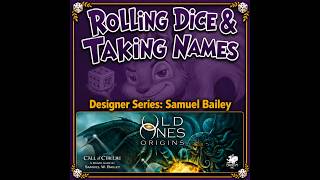
"This is not a reskin. This is a different game, but I think it's a better game. Not that Forbidden Stars wasn't a great game, but it's, you know, learned lessons from it, and be able to improve on things that were there and just refine other things."
— Samuel Bailey, Rolling Dice & Taking Names
"You're constantly planning several moves ahead with those hidden influence markers, choosing schemes for both their effects and initiative, developing faction specific upgrades, juggling multiple resources, and keeping a suspicious eye on your opponents. There's a lot to think about, but that's exactly what makes the game so satisfying."
— Meeple University
"Usually when you summon something you can summon it into somewhere which is warded, which is either a warded planet or that has a seal on another player. But when you add something it's a different rule."
— Joe Hannis, Board Gaming Ramblings