



Alone Against the Zone Deep Dive
What the Community Thinks About Alone Against the Zone
Reviewers consistently describe Alone Against the Zone as a standout entry in the solo survival game genre. The game from designers Alexey Aparin and Andrea Sfiligoi resonates strongly with players who appreciate tactical decision-making and atmospheric world-building in a solo context. One reviewer calls it a "must-have in anybody's collection" and reports being "just blown away by the book itself." Another enthusiast anticipates the game will consume free moments: "you're stuck in a hurricane, a snowstorm, it doesn't matter. You are going to find time for this." The consensus centers on a game that delivers meaningful challenge while remaining approachable to new players.
Core Mechanics That Define Alone Against the Zone
Dice-Driven Procedural Exploration
At the heart of Alone Against the Zone lies a structured yet open-ended exploration system. Players number hexes as they enter them and roll on encounter tables to discover what awaits in each space. The roll result points to a specific table, which branches further to reveal the encounter type. This cascading table structure generates surprising diversity without requiring the player to memorize endless lists. Food consumption tracks exploration distance, forcing decisions about when to move and when to rest. The system creates natural pacing: move through a hex, explore its encounter, decide whether to scavenge or push onward.
Skill-Based Solo Resolution
Characters begin with two chosen skills from a roster covering combat, survival, social, and exploratory expertise. Skills serve as the mechanism for mitigating bad luck during critical moments. When facing an intelligence test to pick a lock, possessing a relevant skill offers a bonus to the roll. In combat, skills like Agility or Dead Eye improve hit chances. Reviewers note that skill selection carries real weight: choosing combat-focused skills early matters, since the game presents frequent opportunities for dangerous encounters and combat against mutants, cultists, and military forces. Skills are not just flavor; they determine survival rates, especially in the early game when resources are scarce.
The Alone Against the Zone Experience
High-Stakes Survival in an Exclusion Zone
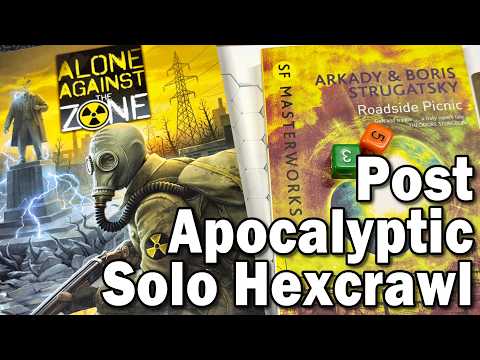
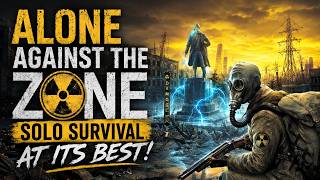
The game's setting is a post-apocalyptic exclusion zone inspired by Eastern European science fiction like Roadside Picnic. Combat is fast and unforgiving; resources are genuinely scarce. Death waits around corners, but the designers understood a solo game must not punish failure too harshly. Character creation takes only minutes, and if your operative falls, you can roll up a new one and explore the same persistent map with a fresh character. One reviewer appreciates this balance: "Death sucks, but it's not a huge deal. It's not a huge time sink." A single character might not survive long, but the world continues. Safe houses and refuges offer shelter from zone surges (escalating environmental hazards), providing recovery points where players can resupply and gather new missions.
Quest-Driven Narrative Arc
Rather than open-ended wandering, the game structures sessions around echo collection. An operative hears mysterious transmissions, encounters marked survivors, or picks up other signals from the zone. To win, the player must complete three echo quests, each involving exploration, puzzle-solving, and combat. Once three echoes are gathered, the operative can attempt the final mission into the heart of the zone. This three-quest framework provides narrative momentum while leaving room for side quests that emerge from encounters with NPCs in safe houses. Reviewers note that the game guides you through the zone without hand-holding, leaving genuine mystery about how to complete objectives.
What Makes Alone Against the Zone Stand Out
Thematic Immersion and Atmosphere
Reviewers describe an almost meditative absorption into the game world. One calls the experience "like an out-of-body experience going someplace else and thematically being absorbed by this fantastic book." The game's artwork, layout, and procedural generation combine to pull players into the post-apocalyptic setting. The dedication printed in the book underscores this: the game is committed to keeping the zone fictional, ensuring that traces of catastrophe exist only in stories and on screens. That thematic coherence resonates. The hexcrawl structure, with its careful mapping and encounter tables, creates an almost hypnotic rhythm, especially when combined with the zone's hostile beauty.
Proven Designer Pedigree and System Family
Andrea Sfiligoi, the primary designer, brought expertise from Four Against Darkness, one of the most celebrated solo games in the hobby. Alone Against the Zone follows in a lineage with Alone Against Fear, sharing procedures and mechanical philosophy. Reviewers familiar with those games find the transition seamless. One observes that Alone Against the Zone "reminds me of that quite a bit in its procedures and its mechanisms," while maintaining its own identity through the exclusion zone setting and distinct encounter tables. The game benefits from a designer who understands how to make a solo experience feel dynamic and engaging over multiple sessions.
Potential Drawbacks
Skill Roster and Specialization Depth
While the game includes roughly a dozen skills to choose from, one reviewer expressed a wish for deeper specialization options. When counting the skills available, they're comparable in number to Alone Against Fear, yet one reviewer noted: "I do wish there were a few more skills because it does feel like in Alone Against Fear, it does feel like there are a lot more skills." The tighter skill list may feel restrictive to players accustomed to systems with wider character customization. That said, the limited roster encourages focused character concepts and forces difficult early choices, which some appreciate as a design feature.
Learning the Encounter Cascade
The game relies on referencing tables that branch into other tables. New players must familiarize themselves with the table structure and cross-references. The learning curve is gentle compared to many RPGs, but it requires patience in early sessions. Reviewers who invested the time found the system elegant, but players wanting pick-up-and-play simplicity may find themselves checking the book frequently during the first game. However, the included rules summary and tabbed pages help mitigate lookup time.
If You Enjoy Alone Against the Zone
Reviewers suggest strong natural comparisons within the designer's catalog. Alone Against Fear, also by Sfiligoi, shares the same core resolution mechanics and similarly blends procedural generation with authored event tables. Players who loved that game will find Alone Against the Zone a natural next step, trading the cosmic horror atmosphere for post-apocalyptic survival. Four Against Darkness, co-designed by Sfiligoi, offers a dungeon-crawl alternative with a comparable turn structure and skill system. Both alternatives appeal to players who want more table variety or thematic alternatives to the exclusion zone. For those drawn to hexcrawl exploration and solo play without Sfiligoi's other designs, games like Thousand Year Old Vampire or other procedurally-guided solo RPGs offer related experiences, though none combine atmosphere, mechanics, and production quality quite like Alone Against the Zone.
What Reviewers Are Saying
"Combat is fast and unforgiving. Resources are scarce, but death is everywhere."
— The Dungeon Dive
"This is really spectacular. This is a must-have. A must must must-have in anybody's collection. Something really really special."
— Rob's Tabletop World
"Sit back and just enjoy almost like an out-of-body experience going someplace else and thematically being absorbed by this fantastic book, Alone Against the Zone."
— Rob's Tabletop World