







Opera Magna Deep Dive
What the Community Thinks About Opera Magna
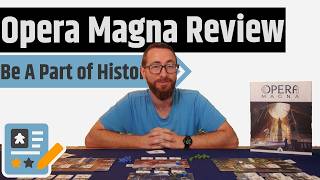
Opera Magna has earned strong recognition from board game reviewers as a remarkably polished Euro game. Reviewers describe it as a genuinely pleasant surprise from Ludus Magnus Studio, a publisher better known for more complex, heavily-miniature games. BoardGameCo calls it "incredibly tight" with "an incredibly satisfying market manipulation engine," while Board Stupid describes it as a "really fun Euro game" with classical resource management sensibilities delivered in a modern, efficient package. The Hungry Gamer praises the core market system as "glorious," calling the game "the fanciest damn cube pusher you ever saw." Across channels, reviewers express enthusiasm for how much depth the designers packed into a streamlined 60-minute experience.
Core Mechanics That Define Opera Magna
Market Manipulation Through Merchant Placement
Opera Magna's defining mechanism centers on moving merchants to different sections of three cities: Venice, Antwerp, and Constantinople. Each city has a cost section (top) and a reward section (bottom), filled with cards that determine what players must pay and what they receive. When a player moves their merchant to a section, they remove the leftmost card from that row, slide the remaining cards left, and then play a card from their hand to fill the rightmost slot. This creates an elegant system where players simultaneously pursue their own engine-building goals while altering what future opponents will encounter at the market. As the Hungry Gamer notes, players can "play your cards right" to "hit the same thing every other turn," turning the market into a carefully orchestrated dance of manipulation. Ludus Magnus Studio designed the decks so costs escalate across nine rounds, forcing players to build discounts just to keep pace with inflation.
Engine Building Through Asymmetric Tableau Development
Completing buildings is the pathway to power in Opera Magna. When players build a structure, they place it on either the left or right side of their player board. Left-side buildings unlock permanent discounts on specific resources, helping players manage the ever-climbing costs. Right-side buildings grant special abilities and unlock carts, which are the only means to contribute refined materials to the cathedral (the game's central scoring track). Each player board starts with a unique discount, and the asymmetry deepens as different building cards enter play with distinct effects. This creates meaningful tableau variation where the buildings you access and how you position them fundamentally shape your strategy and scoring path. By the game's end, no two player boards look the same, despite everyone executing the same nine-turn arc.
The Opera Magna Experience
Tight and Crunchy Decision-Making
Opera Magna delivers remarkable tension through scarcity. Nine rounds sound brief, but across three cities with two zones each, the actual number of distinct market states available is carefully limited. BoardGameCo describes the game as leaving players feeling as though their "brains are broken" before even taking a first turn, the ruleset itself creating a sense of elegant complexity. Alex Rafferty (BoardGameCo) captures the weight of this design: "You only have nine turns. You're going to take your merchant, move it somewhere, and do all the things... you have to figure out what is most important to you." Every decision ripples across the full board because merchant placement creates the market state all future players encounter. The game also involves degrading resources if unused, forcing commitment. For players who love this kind of mental exercise, Opera Magna delivers satisfying crunchiness without overstaying its welcome.
Analysis Paralysis and Engine-Building Satisfaction
The flip side of this tightness is analysis paralysis. The Hungry Gamer and Alex Rafferty both note that near the game's end, players can find themselves locked in analysis, calculating every possible path: "Okay, I got to get this one more building so I can send the thing, or I got to get the right thing so I can knock up the certificate and get the resource I need." However, reviewers also describe the satisfying tension that emerges from watching engines come online. As tableau abilities stack and builds complete, players feel increasing power and control over the market. The Hungry Gamer notes one potential disappointment: the game's fixed nine-round length means your engine "feels like it's ending just as you're getting to where you're like 'Yeah, I got a good engine.'" Some players find this satisfying (the sweet spot between too short and too long), while others would prefer more rounds to leverage their built advantage.
What Makes Opera Magna Stand Out
Elegant Market Economics
Reviewers consistently single out the market system as the game's crown jewel. The way costs and rewards inflate over nine rounds while players can manipulate both sides creates what Alex Rafferty calls "one of the more clever market systems I've seen." The Hungry Gamer describes loving "the way that works" because "if you play your cards right, you can suddenly hit the same thing every other turn just about." Board Stupid's hosts note how the design feels "classical but modern," echoing old-school Euro design principles but executing them with surprising efficiency. The market isn't just a delivery mechanism for resources; it's a negotiation space where players shape their own constraints and opportunities through card placement.
Ruthless Nine-Round Efficiency
Opera Magna achieves what many games aspire to but few accomplish: delivering a complete, satisfying experience in exactly 60 minutes. Alex Rafferty (BoardGameCo) explains the genius of the constraint: "Nine actions and it's just everything comes down to how you make the most out of the small minutia of those actions... nine actions is the perfect game length to feel like you're able to experience most of what you need to see." The fixed round structure (determined by when trade card decks deplete) means there's no fiddling with end conditions or prolonged final rounds. Players are forced to make meaningful choices immediately, knowing their runway is fixed. This severity contrasts sharply with engine-building games where later turns become exercises in executing a dominant strategy. Ludus Magnus structured Opera Magna so every round matters and no turn feels wasted.
Potential Drawbacks
Visual Complexity and Iconography Burden
The Hungry Gamer raises a practical concern: the game comes with an iconography reference booklet, "and boy, howdy, do you need it." There are numerous symbols representing different building abilities, market powers, and conversion options. The reviewer notes, "Buildings do a lot of different things, and they have a good appendix, but you absolutely need it. There's a lot of stuff going on, and [after] enough plays you'll get it and it'll be snappy, snappy, but you'll be looking stuff up definitely first time you play." This isn't necessarily a fatal flaw for experienced board gamers accustomed to Euro complexity, but it does add friction to early plays and means keeping the reference handy becomes part of the experience.
Dry Aesthetic and Engine Maturity Mismatch
Opera Magna, at its heart, is a resource-conversion game: turning basic goods into refined materials, then refined materials into building components and cathedral contributions. The Hungry Gamer is candid about this: "It's dry. You're turning this into this so you can take this to put it here." The mechanisms are elegant, but the theme is lean. Additionally, reviewers note the fixed game length creates a structural tension for players who enjoy engine-building. By the time players have optimized their tableau and are entering a compound-growth phase, the game ends. The Hungry Gamer says this feeling is "pretty satisfying," but clarifies that "if you're the type that wants to build an engine then juice it for a while, this ain't the game." Some players will see this as discipline and elegance; others may find the abbreviated engine phase frustrating.
If You Enjoy Opera Magna
Opera Magna sits comfortably alongside several excellent Euro games worth exploring. Tua, mentioned by Alex Rafferty, is another game where players contribute resources toward cathedral construction while pursuing individual tableau-building goals, offering similar satisfaction in a different package. The White Castle appears across multiple reviews as a comparison point, praised for its similar nine-action structure and the way every decision compounds into meaningful results. For those drawn to market manipulation specifically, Honey Buzz (also mentioned in the sponsorship ecosystem) offers a different approach to resource acquisition and engine-building. Barrage, Di Divided, and Empera are other designs by Tomaso Batista and Stefano Castelli (the same design team behind Opera Magna), proving the pair's mastery of economic Euro systems with different themes and mechanics. For players seeking refinement and efficiency in a modern Euro format without decades of legacy bulk, Opera Magna delivers.
What Reviewers Are Saying
"This is an incredibly satisfying market manipulation engine in which you're constantly choosing whether to affect the top or the bottom of the market, which will affect the cost or what you gain, respectively. The market is an incredibly clever mechanism. The way it's structured, it loops you into the game."
— BoardGameCo
"The way the markets work is glorious. It's just glorious the way that works. I love every turn, you're going to get to buy and sell from that market, but you're slowly shifting what's there, and you're slowly shifting the cost and slowly shifting what you need. It is so interesting how you are well, cube pushing really, but it's so elegant the way that it works."
— The Hungry Gamer
"Yeah, really fun Euro game. As a matter of fact, give me feelings of the White Castle. Not the same game at all, but just had that kind of feeling. It's nine turns long, so it's quite tight on it because it's pretty, regret you made, I should have picked up that carrot, should have done that, shouldn't have gone there. Yeah, one of those, and I love that. I've always, I always enjoy that feeling in games. So this one really surprised me. I had a lot of fun with it."
— Board Stupid