



Aberration: Oblivion's Embrace Deep Dive
What the Community Thinks About Aberration: Oblivion's Embrace
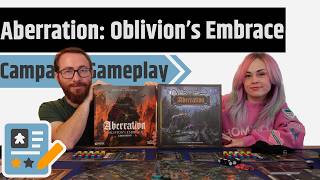
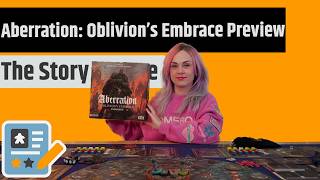
Reviewers are unified in viewing Aberration: Oblivion's Embrace as a meaningful refinement of Aberration. BoardGameCo's preview and gameplay coverage positions the expansion as addressing core pain points of the base game, most notably the lack of meaningful progression and narrative structure. The expansion's two five-scenario campaign arcs transform random objectives into a cohesive story with genuine stakes. Bower's Game Corner gave the game itself a clear positive assessment on desirability and execution, though their critique focused on the Kickstarter campaign presentation rather than the gameplay. Across reviewers, there is strong agreement that the expansion delivers a significantly better experience for players who felt the base game's progression was too slow or its objectives too arbitrary. The expansion remains a cooperative tower defense experience, but one that now rewards strategic thinking across multiple linked scenarios.
Core Mechanics That Define Aberration: Oblivion's Embrace
Bag Building and Progressive Upgrades
At its heart, Aberration uses a bag-building system where each character starts with action chips representing their abilities. Throughout each scenario and across the campaign, players add new chips to their personal bags to unlock stronger or more frequent actions. The expansion accelerates this progression dramatically. Rather than grinding for most of the base game to reach full power, players see meaningful upgrades even in early scenarios. By scenario five, players are adding multiple chips before each game begins, allowing them to meaningfully customize their character's development path. Ghostfire Gaming structured this so that the challenge ramps proportionally: enemies grow stronger at the same rate players do, maintaining tension throughout.
Story Deck Campaign Structure
The expansion introduces story decks that function as the beating heart of each scenario. Rather than reading a generic objective card, players work through a narrative sequence of prompts that guides them toward specific goals while advancing an overarching campaign plot. These story decks tie into survival tracks, doom and hope cards drawn based on victory or defeat, and interconnected consequences that persist across all five scenarios in a campaign arc. This transforms what could feel like isolated puzzle-solving into a narrative journey where decisions and losses carry weight. New mechanics like artifacts that unlock abilities and villains that grow stronger across scenarios create a sense of building confrontation.
The Aberration: Oblivion's Embrace Experience
Cooperative Urgency Under Constant Pressure
Playing Aberration: Oblivion's Embrace means coordinating frantically as waves of monsters approach. Shadows creep toward the village, transforming into increasingly dangerous aberrations. The influence mechanic slowly corrupts the board itself, shrinking available space with each passing turn. Players must balance offensive actions (killing monsters), defensive actions (controlling the board), and objective-completion actions (advancing the story). There is never enough time to do everything, creating a palpable sense of scrambling to make the best of limited resources. This pressure is intentional and praised by reviewers as the game's strongest emotional hook.
Transformation and Persistent Consequences
As heroes take damage, they begin to transform into monsters themselves, gaining powerful new abilities alongside unwanted side effects. This double-edged sword creates interesting strategic decisions: tank damage to unlock a powerful transformation ability, or try to heal instead. The expansion deepens this system with artifacts that grant unique powers and carry across scenarios. Combined with doom and hope cards that affect future games in the campaign, every choice feels consequential. Players cannot simply reset and try again; the campaign remembers what happened, and they must adapt to it.
What Makes Aberration: Oblivion's Embrace Stand Out
Campaign Structure That Transforms Objectives From Random to Narrative
The expansion's greatest achievement is replacing random scenario objectives with a cohesive five-game narrative arc. BoardGameCo's playthrough highlighted how the story decks transform the experience: instead of killing three aberrations and surviving, objectives become rescuing lost children from the forest or holding back a cult's influence. This narrative glue makes the game feel less like tactical puzzle-solving and more like an unfolding tale of survival. Two distinct campaign arcs mean players can experience different stories with different stakes, but both follow a deliberate progression. Reviewers consistently praised this shift from random to purposeful objectives.
Meaningful Player Progression That Starts Immediately
The expansion addresses what many players felt was the base game's critical flaw: upgrades came too slowly. Base Aberration could take most or all of a game to reach full power. Oblivion's Embrace frontloads progression. Players add chips to their bag before scenario one begins, with more added in later scenarios, ensuring they feel capable and customized from turn one. This solves a pacing problem without simplifying the game. The expansion maintains tension by ramping enemy difficulty proportionally, but players now have the satisfaction of power fantasy alongside the survival pressure. BoardGameCo's gameplay shows players visibly excited about the build options available even early in their campaign.
Potential Drawbacks
Requires Ownership and Familiarity With the Base Game
Aberration: Oblivion's Embrace is an expansion, not a standalone product. It assumes players already own and understand the core mechanics of the base game. The expansion adds new systems (story decks, artifacts, villains, decay tokens, transformations) on top of bag building, map control, and combat, which is not a trivial learning curve for newcomers. If a player has not enjoyed base Aberration, the expansion's additions may not change their mind.
Complexity and Campaign Lock-In
The expansion trades scenario flexibility for narrative structure. Players commit to playing five linked scenarios as a campaign arc with consequences that persist between games. For those who prefer to cherry-pick individual scenarios or replay the same scenario multiple times, the campaign structure may feel restrictive. Additionally, the new mechanics introduced (influence corruption, decay tokens, villain summoning, transformations) increase cognitive load during turns. This is intentional and appreciated by reviewers, but players new to the system may find the amount of tracking overwhelming.
If You Enjoy Aberration: Oblivion's Embrace
If the cooperative storytelling and escalating challenge of Aberration: Oblivion's Embrace resonates, consider Aberration itself as the foundation, since the base game is required to play the expansion. Scythe offers asymmetric power curves and a world that evolves as players progress, though without the tower defense pressure. Wingspan appeals to players who enjoy tableau-building and gradual character growth across play sessions. Ark Nova rewards similar long-term planning and resource management for players drawn to campaign-style progression. For pure cooperative tower defense mechanics, base Aberration is the obvious starting point, and Oblivion's Embrace is the upgrade that makes it sing.
What Reviewers Are Saying
"Aberration, Oblivion's Embrace, which is a much better version than standard Aberration. It really takes Aberration and improves multiple aspects of it, which I think is the gameplay design. Like, I think it's the design of the expansion, but basically the two main elements is it takes it from random objectives that don't have a sense of purpose to kind of more of a cohesive story. And that's something that I don't even know if I thought of that as a complaint against the original, but having seen the changes, it's just better."
— BoardGameCo
"The expansion introduces several elements meant to address some degrees of critique around the original game. One of them is that the objectives feel less random and there's more of a story going on here. So it's not just like kill a bunch of things. There's an arc and a story to what you're doing. But also each game you're ramping up. So we're game two, so the beginning of the game is we're going to add two chips to our bag. In game five we'd add five chips to our bag before the game begins."
— BoardGameCo
"Your heroes begin to transform into the very monsters they're fighting, gaining powerful new abilities along with some unfortunate side effects. This new campaign also introduces Oblivion's Embrace, which is an expansion featuring two new campaign arcs, new characters, locations, enemies, and a new enemy faction, a cult with its own goals and mechanisms. Decisions and losses carry forward as well, so what happens to your village doesn't simply disappear when the game ends."
— The Dice Tower