










Steam and Cheese Deep Dive
What the Community Thinks About Steam and Cheese
Steam and Cheese has captivated heavy euro game enthusiasts with its deceptively charming steampunk aesthetic and remarkably clever mechanical core. Reviewers consistently praise the game as a puzzle box of economic decision-making, where every turn presents meaningful strategic choices. What appears to be a cute game about mice making cheese quickly reveals itself as a genuinely demanding Euro that rewards careful planning and forward thinking.
Core Mechanics That Define Steam and Cheese
The Multi-Use Dice System
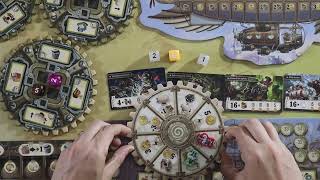
At the heart of Steam and Cheese lies a dice-drafting system that reviewers describe as entirely unique. When you draft a die published by Skellig Games, you gain a resource based on the top face you see: white dice provide milk, yellow dice provide coins, and brown dice provide rennet. But the true elegance emerges in how you use that die afterward. The number on each side of the die determines the strength of whatever action you execute. Place a die next to an action space, and the side facing that action determines your power level. Rotate the same die differently, and you access entirely different strength values on its other faces. This mechanic transforms dice from mere randomizers into tools of genuine strategic depth, where placement decisions matter as much as the roll itself.
The Dairy Economy and Spoilage Pressure
Underlying every decision in Steam and Cheese is the constant threat of milk spoilage. Raw milk placed on your player board steadily degrades each round, moving inexorably toward the trash. Reviewers emphasize that unconverted milk becomes a significant penalty: three negative victory points for each piece of trash you accumulate. This creates a self-imposed deadline on every milk resource you claim. You must either convert it to cheese (using rennet as a catalyst), pasteurize it (which resets its degradation clock), or press and refine it into more stable cheese forms. The economic tension generated by this mechanic is relentless. It forces you to consider not just what you want to do, but what you must do before time expires. Managing spoilage while pursuing contracts and building your engine becomes the core strategic puzzle that reviewers find so rewarding.
The Steam and Cheese Experience
Puzzle Satisfaction
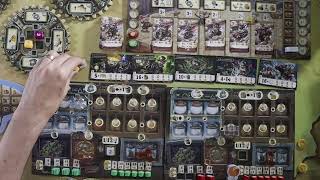
Reviewers consistently describe Steam and Cheese as a puzzle game first and foremost. Every single turn presents an intricate optimization challenge. Should you prioritize resource generation, fulfilling existing contracts, expanding your production capacity, or managing the spoilage already threatening your board? The dice values available this round constrain your options in ways that demand creative problem-solving. When your plans come together, when you've positioned your assistants on the right wheels and your ownership markers generate income at exactly the moment you need coins, the satisfaction is profound. Reviewers report feeling giddy when complex multi-turn strategies execute flawlessly. That puzzle-solving high is what keeps players engaged across all six rounds.
Steampunk Charm and Surprising Weight
The game's steampunk mice theme is not mere window dressing. Reviewers genuinely connect with the fantasy of industrious mouse entrepreneurs running cheese factories with gear-driven precision. The card art is praised as exceptional. The deluxe components feel high-quality and well-produced. Yet reviewers issue a consistent warning: do not let the charming aesthetic fool you. This is a heavy game, comparable in complexity to established Euro titans like Sweetlands and Seti. The gap between what the box promises (cute mice making cheese) and what the game delivers (a brutally tight economic engine) is intentional and delightful. Players seeking a light, accessible family game will be shocked by the depth. Players seeking a meaty puzzle will find exactly what they came for, wrapped in a theme that makes the experience memorable.
What Makes Steam and Cheese Stand Out
The Dice Mechanic Reviewers Have Never Encountered
The multi-use dice system stands alone in board gaming. Reviewers explicitly state they have never seen another game employ this mechanic in this way. The genius lies in forcing you to choose between top-face resources and action strength with every single die. Do you draft a die that gives you six coins on top (excellent money generation) knowing its sides won't align perfectly with your needed actions? Or do you take a die with weaker resource generation because its faces happen to line up beautifully with your strategic priorities? This design innovation generates puzzles that feel fresh across multiple plays, even with the same board layout, because dice rolls are never identical.
Multiple Viable Victory Paths
Steam and Cheese contains a remarkable design paradox that reviewers find delightful: you can pursue victory by actively managing spoilage, or you can paradoxically score points by deliberately allowing milk to spoil and then spending actions to clean up the resulting trash. Meanwhile, contract fulfillment, ownership marker placement, assistants on the zeppelin and wheel, and shared goal achievements all offer legitimate scoring routes. No single optimal strategy dominates the game. The dice chaos generated by six rounds of rolling ensures sufficient variability that different approaches remain competitive depending on what opportunities emerge.
Potential Drawbacks
Spoilage Mechanic Demands Constant Attention
While reviewers love the thematic fit and strategic depth, the milk spoilage system creates cognitive load. Players must actively track degradation on every turn, watch milk move down their board inexorably, and make real-time decisions about whether to take actions that advance their plans or interrupt them to manage spoilage. In early plays, reviewers admit to forgetting spoilage rules or losing track of exactly where their milk sits on the degradation track. The mechanic works beautifully once internalized, but the learning curve is steeper than it might appear.
Blocking Potential and Six-Round Brutality
Dice occupy physical spaces on action boards. Once a space is taken, other players cannot access that combination of actions. In a six-round game, blocking becomes a legitimate (and sometimes brutal) strategy. A player can position dice purely to prevent opponents from accessing key actions. Reviewers note this can feel particularly harsh in two-player games or with experienced players who understand how to deny opponents their critical production chains. The tight economy means one blocked turn can cascade into failure for the entire game plan.
If You Enjoy Steam and Cheese
If the core appeal of Steam and Cheese is the multi-use dice puzzle and the dairy economy pressure, you should explore other heavy Euro games that emphasize economic decision-making and resource conversion chains. Look for games with strong theme-to-mechanism integration where the fictional dairy industry feels mechanical rather than pasted on. Games that reward long-term planning, where each turn's puzzle cascades into the next turn's constraints, will scratch the same itch. The steampunk aesthetic and mouse theme suggest an appetite for worker placement games with character and games where anthropomorphic protagonists drive the flavor. The milk-to-cheese pipeline specifically suggests interest in production games where you transform resources through multiple stages of refinement, each stage offering strategic choices about quality versus speed.
What Reviewers Are Saying
"It's really clever. It's a really clever puzzle every single turn to figure out, okay, how can I maximize what I'm doing, make progress towards my goals for the round?"
— Hungry Gamer
"This game is really going to have you choosing between what resources you might want to gain, but then what other actions you're going to want to activate and how strong you want those actions to be."
— BoardGameCo
"This is a heavy game. Don't be fooled by the cute mice. Every single time you play, the game is going to be different just because of the way the dice roll."
— Hungry Gamer