
Game Info
Year
2025
Players
1
Age
Playtime
Publisher
War Claw Games
Collection
Ratings
Creator Score
Mechanic profile
Waiting on more creator content
Vibe profile
Waiting on more creator content
Description
A solo dark science fiction roguelike gamebook played with a tarot deck as a Riftcrawler Inquisitor
Featured Videos

Ask a Rules Question
All mentions
Browse transcript mentions, sentiments, pros/cons, mechanics, topics, quotes, and references.
Total mentions: 1
This page: 1
Sentiment:
pos 1 ·
mix 0 ·
neu 0 ·
neg 0
Showing 1–1 of 1
Video eUkmg5xOC7c
The Dungeon Dive Review at 0:18 sentiment: positive
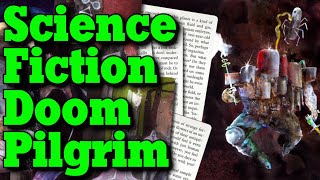
Click to watch at 0:18 · YouTube ↗
Overall sentiment (raw)
positive
Pros
- Stunning art by Wakov Treyer that enhances the otherworldly vibe
- Strong narrative focus with approachable setup for solo play
- Cards can serve as an oracle or prompt source for other games like Doom Pilgrim and Void Realm
- Accessible entry into indie, print-on-demand experiences via GameCrafter
Cons
- Some prompts read as imperfect English; readability could be improved
- High randomness can yield rapid losses or uneven play sessions
- Text can feel slightly dense; tightening the prompts could improve flow
Thematic elements
- narrative-driven exploration where prompts determine encounters and outcome tallies drive victory or defeat.
- Explorers venture through rifts into bizarre, otherworldly dimensions with sci‑fi/fantasy themes.
- text-driven prompts and art-forward cards; emphasis on story over dice
Comparison games
Mechanics (from transcript analysis)
- Character creation with missions — Character is selected with a backstory (e.g., old intelligence agent) and associated thresholds, determined via a die roll.
- Damage thresholds — Characters have limits for body trauma, physical trauma, and board trauma; reaching a limit ends the adventure.
- deck-driven encounters — Draw three cards; pick one to encounter, one to discard, and one to encounter later as you traverse rifts.
- Gemstones as currency — Gemstones act as a flexible resource to trade or influence outcomes and adjust difficulty.
- Keyword items with triggers — Items found function as triggers rather than direct stat bonuses, enabling conditional effects based on other cards.
- Scenario / Mission / Campaign Game — Character is selected with a backstory (e.g., old intelligence agent) and associated thresholds, determined via a die roll.
- Successes vs. Failures scoring — Win by accumulating more successes than failures after completing the deck; categories of successes include knowledge, fauna, flora, fungi, mineral, and unidentified.
Video topics + discussion points
No key topics recorded for this video.
Quotes (from this video)
- This game is completely random and it's all about having that journey
- I think these are games that benefit from having some kind of journal so you can keep a story going
- The art is just amazing
- I would love it if he ever got the opportunity to work with a native English speaker to help him write these prompts
References (from this video)
No references stored for this video.
Transcript Navigation
Showing 1–1 of 1