



























dnup Deep Dive
What the Community Thinks About dnup
dnup (or "Down Up," depending on who you ask) has emerged as one of the most talked-about quick card games in the board game community. The consensus is overwhelmingly positive, with reviewers praising it as both a worthy successor to Scout and a genuinely distinct experience that carves its own path. The game generates genuine excitement across diverse reviewer circles, from casual gamers to strategy-focused enthusiasts. What's particularly striking is how reviewers emphasize that dnup isn't simply Scout 2.0, but rather a refinement that takes the designer's core ideas about card flipping and pushes them in a new, more accessible direction. Players consistently report that the game rewards multiple plays, as the strategic layers reveal themselves gradually rather than all at once.
Core Mechanics That Define dnup
Card Flipping and Hand Management
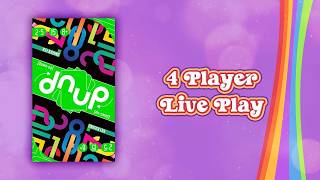
At the heart of dnup lies an elegant mechanic that distinguishes it from other card shedding games. Each card in the deck displays two different values, one on each side. Players begin the game with hands of cards, but unlike Scout, they can rearrange their cards freely at the start. However, the moment they pick up cards from the table due to being beaten, those cards flip to their opposite values. This single rule creates a cascading puzzle throughout the game. Going Analog's reviewers found themselves constantly thinking about the opposite side of cards, recognizing opportunities where losing a hand might actually benefit them if the flipped values align with their strategy. The mechanic transforms what could be a simple shedding game into something that rewards forward thinking and calculated risk.
Set Collection and Competitive Play
Players shed their hands by playing sets of cards, but dnup simplifies the set-beating mechanism compared to Scout. Here, sets compete only against other sets of the same size. If someone plays two cards, you can only beat them with another pair, not a run or a different type of set. This streamlined approach, as Might I Suggest A Game noted, removes the "murky waters" of complicated set hierarchies. The beauty of this system is that it creates multiple avenues for interaction. Players can add single cards to others' sets, forcing those cards to flip when the set gets beaten. They can claim entire sets for themselves, banking on the flipped values being more useful. This flexibility transforms every turn into a puzzle where direct confrontation and clever maneuvering are equally valid strategies.
The dnup Experience
Quick, Satisfying, and Portable
dnup delivers the core appeal of a filler game while packing surprising strategic depth. A round plays in minutes, making it ideal for opening a game night or squeezing in between heavier experiences. Reviewers consistently highlight how it fits in a pocket or small bag, allowing it to accompany players anywhere. Beyond Solitaire's reviewer described bringing it on a cruise and reported that family members immediately understood the rules and wanted to play again. The compact box and straightforward turn structure (play a set, add to someone's set, take a set, or flip your hand) mean teaching takes literal minutes.
The Puzzle of Strategic Flipping
What keeps dnup fresh across multiple plays is the constant tactical decision-making around card flipping. Board Stupid's reviewer noted the game feels "really interactive in a different way" because players are essentially asking themselves throughout the game whether to keep a card in its current state or engineer a situation to flip it. This creates memorable moments where losing a hand feels clever rather than frustrating. When a card you've been waiting to flip finally returns to you reversed, the satisfaction mirrors the feeling of pulling off a combo in a deck-building game, despite dnup being purely simultaneous action.
What Makes dnup Stand Out
Deeper Strategy Than It Appears
The game's most striking quality is how it conceals its strategic potential beneath a simple rule set. Going Analog's reviewers found themselves enjoying it more with each play, eventually concluding that dnup might overtake Scout as their preferred card shedding game. This hidden depth emerges as players recognize the value of strategic hand management and timing. The flexibility to rearrange cards at the start allows for meaningful choices about hand orientation, while the ability to engineer card flips mid-game creates planning opportunities. Board Stupid remarked that the mechanic where higher pairs cause lower pairs to flip is "clever," and this cleverness extends through the entire system. Might I Suggest A Game explicitly called it "simple yet so strategic," capturing exactly why the game has resonated so widely.
Genuine Interactivity Without Being Chaotic
Many quick card games either offer limited interaction or devolve into chaos. dnup occupies a sweet spot where player decisions meaningfully affect opponents without the game feeling unfair or swingy. The ability to play cards onto other players' sets creates moments of playful antagonism. Beyond Solitaire's reviewer noted the game allows for team-based screwery, where timing attacks on specific players becomes a viable tactic. Yet the core mechanic of card flipping prevents any single play from feeling overpowered. A brilliant attack might backfire if the flipped cards strengthen the defender's position, adding a layer of risk to aggressive plays.
Potential Drawbacks
The Name Remains Contentious
Might I Suggest A Game was refreshingly candid: "I almost didn't put this next one on my list, not because it's not a good game, but because I just don't really like the name." The confusion between "dnup," "Down Up," and other phonetic variations has proven enough of a friction point that some reviewers actively avoid using it. The game's appearance on lists sometimes includes parenthetical clarifications, suggesting the naming issue persists even as the game gains traction.
Can Feel Punishing When Stuck
While dnup's card flipping mechanic is generally elegant, reviewers noted one potential frustration point. Might I Suggest A Game mentioned getting "stuck with a card you can't play, forcing a desperation flip." Beyond Solitaire expanded on this concern: if you pick up cards expecting certain values but the flip leaves you with a card that still doesn't fit your current hand, you face another round without productive options. This isn't a fatal flaw (the game is fast enough that being stuck for one turn isn't crushing), but it occasionally creates moments where luck, rather than skill, determines your options.
If You Enjoy dnup
Those drawn to dnup for its clever card flipping mechanism should explore Scout, the designer's earlier work on which dnup builds. Scout trades dnup's simplified set system for runs and sets but shares the core flip mechanic. For players who appreciate the compact, fast-playing nature of dnup, Flip Seven offers a similar time commitment with a push-your-luck core. Those who love the hand management and strategic timing should try Panda Spin, another game where card orientation matters and flipping creates meaningful decisions. Finally, Far Away shares dnup's puzzle-like quality about sequencing and planning, though with different mechanics.
What Reviewers Are Saying
"It's a deeper game than Scout, for sure, once you start realizing these concepts and how do you set yourself up and such. It's also really tight because you're like, first one out, second one out, then the round is over."
— Going Analog
"It felt different enough and it I had a great time playing honestly. It was really fun. Like really interactive in a different way."
— Board Stupid
"It takes out all the murky waters of what sets beat what runs and what runs beat what sets because you're just playing into sets. And it gives you the flexibility of moving the cards around in your hand instead of having to keep your hand as is like it is in scout. One of my favorite things about this game though is that it's so compact and easy to take with you."
— Might I Suggest A Game