












7th Seal Deep Dive
What the Community Thinks About 7th Seal
7th Seal has captured the attention of solo gaming enthusiasts as a bold, challenging dive into apocalyptic dice combat. Published by Devir Games in 2026, this solo-only title proves that managing randomness and planning ahead remain the heart of compelling solitaire gameplay. Reviewers consistently praise its beautiful presentation and mechanical depth, though they acknowledge the game's genuine difficulty. From streamers who lost in the first wave to those celebrating narrow victories, 7th Seal inspires the kind of engagement that drives players back to the table again and again, determined to prove humanity's worth against the demons.
Core Mechanics That Define 7th Seal
Dice Assignment and Risk Management
7th Seal centers on rolled dice as both your resources and your weapons. Each turn, you roll your available dice and then assign them to accomplish two core goals: dealing damage to overlords and minions, or building your defense. The twist is that matched dice values trigger specific effects on enemy cards, creating a puzzle of optimization. You might have a roll that looks weak until you use skill markers to adjust die values, transforming a handful of mediocre results into a devastating combo. Every assignment matters because dice assigned to defense are locked until resolved, leaving you vulnerable if enemies land critical hits. The game demands constant calculation of probabilities and consequences. You must weigh whether to push for damage now, potentially giving up health later, or to defend conservatively and risk running out of time before overlords overwhelm you.
Wave-Based Progression With Seal Skills
7th Seal structures the battle across four waves, each introducing new overlords and escalating threats. Between waves, you gain permanent upgrades called seal skills, chosen from a pool of special abilities. These skills define your playstyle. Some let you reroll dice; others let you adjust die values freely or heal your hero. Each skill can be activated once per turn, making tactical decision-making as important as luck. The roguelike progression rewards learning and adaptation. A player who lost to the overlord in wave two knows exactly what skills might have helped them survive, and that knowledge shapes which seal skills they prioritize in their next run. No two campaigns play identically because hero choice, location, and seal skill selection create branching paths through the game's four apocalyptic encounters.
The 7th Seal Experience
Tension From Dice Randomness and Tight Health Pools
7th Seal specializes in moments where a single roll determines survival. Health deteriorates quickly. Taking even one damage per turn forces you to decide which cards pose the real threat, which minions you can afford to ignore, and whether you should burn a skill marker on a defensive maneuver or save it for a future crisis. The beauty lies in how reviewers describe the desperation: teetering at one health, staring down enemies that will attack before you roll again, and discovering a combination of dice and skills that threads the needle. Reviewers mention wins that felt hard-won and losses that felt inevitable yet thrilling. The game respects your attention and punishes carelessness, which makes surviving feel genuine rather than lucky.
Atmospheric Apocalyptic Dread
The art by Will Kirkby infuses 7th Seal with a dark, supernatural weight. You are fighting to prove that humanity deserves another chance against a tide of overlords, demons, and minions that feel genuinely dangerous. The game's four waves map cleanly onto a mythic struggle: each new overlord arrives with fresh mechanics and abilities that keep you off-balance. The theming is not window dressing; it shapes how the mechanical challenges land. When the hydra locks your dice or when the final overlord reveals a fury ability, you feel the weight of the apocalyptic premise. Reviewers describe the game as genuinely tense, not because the difficulty is arbitrary but because the theme and mechanics align to create a coherent, compelling solo struggle.
What Makes 7th Seal Stand Out
Gorgeous, Detailed Presentation in a Compact Package
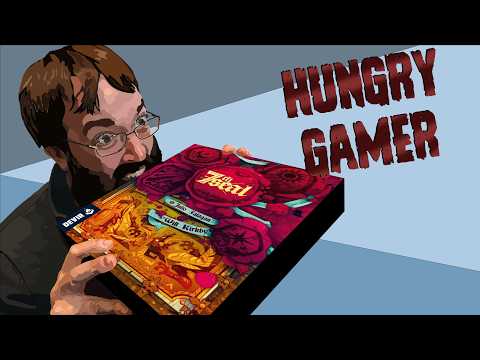
Multiple reviewers spotlighted the beauty of 7th Seal's components and box design. The art is consistently praised as exceptional, with Kirkby's work bringing the overlords and minions to life in ways that reinforce their supernatural menace. The box is small and magnetic, making the game portable and inviting. Yet despite the compact footprint, the card variety and component quality rival much larger productions. This is not a game that skimps on presentation to hit a price point. Instead, it proves that a tight scope and artistic focus can yield a product that feels premium without excess.
Mechanics That Reward Learning Across Multiple Plays
Unlike some dice games where randomness dominates, 7th Seal offers deep skill expression. Reviewers who struggled initially report that each loss teaches them something about the overlords' abilities, the minion combinations, or the seal skills that matter most. One reviewer discovered they were misremembering a rule that made the game feel impossible; once corrected, they saw new strategic paths. The game respects the solo player's growing mastery. Early plays teach the mechanics and reveal vulnerabilities. Later plays leverage that knowledge, and you begin optimizing seal skill selections and damage prioritization in ways that wouldn't be possible without repeated exposure. This learning curve ensures the game scales with your expertise.
Potential Drawbacks
Difficulty May Exceed Some Players' Tolerance
7th Seal is difficult. Not all reviewers who encountered it have won a game yet, and multiple reviewers describe losses in the first wave despite understanding the rules. The game does not offer an easy difficulty setting or a built-in tutorial campaign. New players arrive at the table facing four overlords knowing only the basic mechanics, and the overlords are unforgiving. If you prefer games where victory is within reach on your first attempt, 7th Seal will frustrate you. The challenge is not arbitrary; it is baked into the design. But players seeking a quick feel-good experience should be aware that beating 7th Seal requires patience, practice, and acceptance of repeated failure.
Skill Marker Economy Can Feel Restrictive
Each skill can be activated once per turn, and skill markers are consumed when used (though you regain them at the start of each turn). This creates moments where you desperately need an ability but cannot use it because you already activated it this turn, or because you ran out of markers. One reviewer describes this as strategically rich, forcing careful planning of which skills to activate when. However, it can also feel punishing for players who misplan early and find themselves out of options. The economy is tight by design, but it is worth noting that even veteran players sometimes face turns where their hand feels completely constrained by the skill system.
If You Enjoy 7th Seal
If 7th Seal hooks you, consider exploring other solo dice-management games that share its philosophy. Hercules and the 12 Labors offers a similar structure of rolling dice to overcome challenges, though it spreads the difficulty across a longer campaign. The 12 Labors (or just Labors as some call it) shares 7th Seal's respect for the solo player's time and attention: you roll, you solve a puzzle of assignment, and you advance or fall back based on your decisions. Both games ask you to optimize within constraints, and both reward mastery across repeated plays. 20 Strong is another excellent parallel, offering a dice-driven solo experience where randomness is tempered by skill selection and tactical planning. Finally, if you love the roguelike element of choosing upgrades between runs, games with seal-skill-like progression systems will appeal to you.
What Reviewers Are Saying
"Oh, that sounds cool. Oh, that's neat. Oh, this is exactly the kind of game that I like. Oh, man. This is this is for me."
— Hungry Gamer
"It is absolutely gorgeous. This art by Will Kirkby. Holy cow."
— Paula Deming
"It is a dice um worker placement game solo only where you are going through and you're placing dice on certain cards to do certain things. Kind of gives me 20 strong vibes as well as Hercules and the 12 laborers. That kind of vibe. The art is absolutely gorgeous and it looks like a very fun game."
— The Board Game Garden