



Book of Dungeon Deep Dive
What the Community Thinks About Book of Dungeon
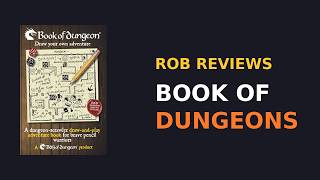
Rob's Tabletop World treats Book of Dungeon, the solo pencil-and-dice adventure book from Gunpowder Studios, as a release that rewards anyone who enjoys dungeon crawling. The reviewer sets the book against a board game market crowded with expansions and licensed IP that rarely deliver, and sees Book of Dungeon as a counterexample: a simple, complete experience contained in a single book. The praise is direct. The review calls the book "a home run" and says it is one of the best games played in a long time.
Core Mechanics That Define Book of Dungeon
Dice-Driven Dungeon Building
The book has no fixed map. A hero starts with a random roll for race, class, and a strength bonus, then heads into one of the book's one hundred dungeons. The dungeon takes shape during play. Two six-sided dice and a chart in the back of the book produce each new feature: a roll of four draws a corridor, and a roll of ten can turn a corridor into a four-way intersection. The book caps some features, so only two chests can appear in one dungeon. Sixes and eights, which the review calls very common rolls, bring monsters onto the map. Caverns follow their own rules and bring traps, which the review describes as "a lot of different spicy things." Since the layout forms as the hero explores, the review notes that "it's never the same," and that the formation of each dungeon changes from one run to the next.
Two-Dice Combat Resolution
Combat runs on the same two dice. The hero rolls both and adds the strength bonus along with any item bonuses, while the monster rolls a single die and adds its own modifier. The review walks through a goblin that rolls a five and adds one for a total of six. The hero rolls a total of ten after bonuses, and the difference leaves four damage against a goblin with five health. Battles continue round by round until one side falls. Equipment matters from the first fight, since the starting reward in the first dungeon is an iron axe that adds two to combat. The larger goal is to find the ring of creation and then defeat the dragon, which completes the dungeon. The hero can then carry on to the next one, and the review presents that carry-over as the hook that keeps a run going.
The Book of Dungeon Experience
An Old-School Pen-and-Paper Feel
The reviewer describes the game as pen and pencil with an old school feel. Everything needed sits on the page, including the dungeon charts, the item tables, space for combat tracking and notes, and a line for the final score, so the book itself serves as the play area. The review also points out that the pages can stand in for dice. Flipping through the book in place of rolling keeps the game running, which the reviewer finds appealing because the whole adventure is "just all in front of you."
Unpredictable Replay From a Single Book
Variety is the second quality the review keeps returning to. The dungeon forms as the reader explores, and the alternate rules in the back of the book add further situations, so an opening adventure can play out differently each time. The design is lighthearted but demanding. The first dungeon, the review warns, "is going to take you some time," and the traps and cavern rules make the game "not as easy as you think." The reviewer also argues that the book can be campaigned in many ways, which gives the single volume more room to change than its page count suggests.
What Makes Book of Dungeon Stand Out
The Spirit of Bag of Dragons in Book Form
The central praise is that the book is "everything that Bag of Dragons is in a book and it is just fun." The reviewer has a long attachment to Bag of Dragons and credits Gunpowder Studios, naming designers Tim, Russ, and Paul along with the game testers, for another design that feels simple on the surface yet carries real depth. That link to a well-regarded predecessor frames how the review judges the book from its opening minutes.
Illustration and Presentation
Art and production earn their own praise. The review describes the book as beautifully illustrated and says the presentation is done so well that the simple rules never come across as a shortcut. A solo adventure keeps the reader looking at the pages through the whole run, so the visual quality becomes part of how the book is played rather than decoration added on top.
Potential Drawbacks
Writing in the Book and Limited Replays
The book is meant to be written in. Combat tracking, notes, and the final score all go into the pages, which makes the single copy a consumable item. The reviewer says they do not want to ruin the book and offers two ways around the problem: a photocopier, which the reviewer owns, or flipping through the pages without dice. Players who want to replay the adventure many times, or who want to keep a pristine copy, will need to plan around this from the start.
A Slow and Heavy Start
The setup and the first dungeon are a poor fit for anyone who wants a quick, casual session. Before any fighting begins, a player rolls for race, class, and strength, copies items from the charts, and then works through caverns, traps, and alternate rules that add weight at every turn. The review says the first dungeon alone "is going to take you some time," and that cost lands hardest on a player with a short evening to spare. The simple dice rules make the book look light on the table, but a short session can end before the first dungeon is through.
If You Enjoy Book of Dungeon
The closest match is Bag of Dragons, the game from the same studio. The review frames Book of Dungeon as that game's spirit in book form, so readers who like its dice-driven exploration and quick combat will recognize the approach. Anyone drawn to the single-book format from Gunpowder Studios can start with Bag of Dragons as a reference point.
What Reviewers Are Saying
"It has this old school feel to it. It's beautifully illustrated. It's It's done so well. So simple, yet so much passion put into it."
— Rob, Rob's Tabletop World
"you could play that first adventure four times and it's different every single time."
— Rob, Rob's Tabletop World
"You need to get this. Go on Amazon. Pick this up. You are not going to be disappointed."
— Rob, Rob's Tabletop World