




Very Big Monster Deep Dive
What the Community Thinks About Very Big Monster
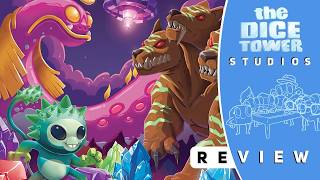
Reviewers at The Dice Tower have responded to Very Big Monster, Explor8's 2026 card game, with real enthusiasm. Tom Vasel gave it an 8.5 and opened the review by addressing its appearance directly. The bright art and tidy box can suggest a children's game, but Tom Vasel describes it as a family-weight title that adults will enjoy as much as kids. Mike Delisio, also of The Dice Tower, awarded the same score in a weekly roundup and called it very, very fun. The shared view is that this is a quick, teamwork-driven filler that rewards players who like building small tableaus and reading what their partners need.
The praise centers on how the game plays at the table. Reviewers describe few rules to teach, a play time that stays brisk, and a steady flow of small decisions. Tom Vasel also notes that Explor8 has a record of distinctive designs ranging from big Euro games such as Federation to smaller trick-taking titles, placing this release on the lighter end of that catalog.
Core Mechanics That Define Very Big Monster
Team Drafting With Keep and Pass
Very Big Monster is a drafting game played in fixed teams of two, and Explor8 builds the experience around passing cards. Each player receives a hand of ten cards, keeps one, and places the rest on the table for a teammate, an opponent, or a neighbor. The hand then shrinks from nine to two cards, with each player keeping one card from each stack. Tom Vasel notes that over the course of a game each player drafts eighteen cards, which keeps the total card count manageable. Players can hold a passed stack for their own tableau only under a narrow condition, so most passing becomes a deliberate signal to a partner or a deliberate denial to an opponent.
Tableau Building With Multi-Way Scoring
Each card joins a tableau that must sit adjacent to existing cards and face the same direction. Tom Vasel describes several ways the tableau scores. Connected shapes such as rings, green gems, and an X that requires four cards each pay points. Full portals are worth 15 points apiece. Desert cards score for diagonal lines and flip over when another desert card is played, and ice monsters flip to higher values once enough mutagens point at them. Shared scoring tokens sit in the middle of the table, and the first player or team to reach a threshold, such as four green backgrounds, claims one. Explorer cards score across a player's own area and a teammate's area. At the end, each team's score equals the lower of its two members' totals, and the highest team score wins.
The Very Big Monster Experience
Playful Family Fun Without Being Childish
The game feels bright and light without feeling juvenile. Tom Vasel stresses that it is a family-weight game, expecting children to enjoy assembling the creatures. The pleasure comes from the physical act of connecting shapes and watching points accumulate, so each turn has a clear visual payoff. Reviewers describe a tabletop full of giant monsters, portals, and ice and sand formations, and each finished piece produces a small burst of satisfaction. The game also works as a filler, a choice that Tom Vasel recommends for groups that want something short between larger games.
Friendly Teamwork and Table Talk
Team play is the emotional center of the experience. Tom Vasel describes passing cards to a partner as a kind of silent conversation. A player places a stack on a teammate's side hoping they notice a wanted card and return it. Because a team's score is pulled down by its weaker member, players are motivated to help. Tom Vasel says that if a teammate's card rewards green gems, a player would build some green gems to lift that partner's total. The social side of the game is what keeps reviewers talking about it after the box is closed.
What Makes Very Big Monster Stand Out
Scaling From Two to Six Players
Reviewers consistently praise how the game grows with the table. The number of decks follows the number of players, so a six-player game uses six colored decks and keeps a similar volume of cards in circulation. Tom Vasel says the game scales really well and notes that with six players there is even more going on in the passing, also observing that very few fillers work as well at that player count, which makes the title a practical choice for larger groups that want something short.
Many Routes to Points
Tom Vasel emphasizes that each game offers a different path to victory. Some cards score on their own, some reward patterns across the whole table, and the shared tokens reward racing for specific card types. Tom Vasel summarizes the appeal by saying that every time you play, you can try a different way to score. Players who enjoy picking a direction, such as chasing water monsters or completing portals, get meaningful choices without a long setup, because there are not a lot of rules to explain.
Potential Drawbacks
A Disjointed Look and Missing Pieces
Tom Vasel's main concern involves the finished tableau. Because different terrains sit next to one another, the arrangement can look disjointed. Players sometimes search for the last section of a portal and find it is not available, or they want to close off a monster and cannot find enough matching cards to do so. Tom Vasel still enjoys the racing for tokens in the middle of the table, but treats the shortage of fitting pieces as a genuine frustration that can interrupt the flow of play.
Team Scores Can Feel Punishing
Because each team's total equals the lower of its two scores, a strong player can lose the game when a partner falls behind. Tom Vasel acknowledges this dynamic and encourages players to focus on their teammate's needs. Some players also resist the passing mechanic when it is described as real-time play, since the stacks are picked up and passed on the fly. Tom Vasel argues that the time pressure is not a big deal, because the decisions amount to choosing a card and deciding where the stack goes. Even so, the concern may affect which groups will enjoy the game most.
If You Enjoy Very Big Monster
Tom Vasel explains that Very Big Monster is set in the world of Big Monster, one of Explor8's earlier releases. Players who enjoy the creature theme and the light family-weight play should look to that game next. For a heavier experience from the same publisher, Federation is the natural step. Tom Vasel describes it as one of the big Euro games that Explor8 is known for, which makes it a useful contrast to the lighter tone of Very Big Monster.
- Big Monster: the earlier Explor8 game whose world Very Big Monster is built on, a natural follow-up for fans of the monster theme.
- Federation: a heavier Explor8 title that suits players who want more weight after enjoying the publisher's lighter card games.
What Reviewers Are Saying
"As soon as I was done playing it, it was one of those few games when I was done playing I said, Ah, man, I want to play this again right now."
— Tom Vasel, The Dice Tower
"It's teams of two where you're drafting and building a tableau, but you care about what your teammates' tableau does, too. An 8.5, very very fun."
— Mike Delisio, The Dice Tower
"But everything else makes sense fitting things together. It's fun to build these monsters."
— Tom Vasel, The Dice Tower