


Too Little Time Deep Dive
What the Community Thinks About Too Little Time
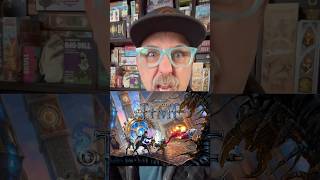
Too Little Time is a single-session boss battler from Chip Theory Games, presented as a sequel to Too Many Bones, and coverage so far is limited to first impressions. The most detailed take comes from Grant Lyon, who visited the Chip Theory Games office to play the game. That reviewer had never played Too Many Bones and still described the game as worth attention for anyone who enjoys big cooperative epic games. The Dice Tower covered the game in a brief preview segment, focusing on the premise and the Gamefound campaign rather than on play experience. BoardGameCo took a broader view, placing the game in Chip Theory's catalog and describing it as a new entry in a line of games that the host considers consistently strong.
The reviewers broadly agree on three points: the game is approachable for its depth, it works as a jump-in boss fight rather than a long campaign, and it will appeal most to people who already know the Too Many Bones universe. Because so few reviewers have published in-depth opinions, there is little open disagreement. Most of the uncertainty concerns the finished product, since every reviewer was reacting to a preview copy or a crowdfunding page.
Core Mechanics That Define Too Little Time
Branching Character Upgrades
Grant Lyon located the game's complexity in character progression rather than in the turn structure. Taking a turn is straightforward, but the upgrade system offers many routes for a single hero, along with a range of special abilities and branching paths. Lyon argued that this is what gives the game its replay value: the same character can be played again while choosing different upgrades and abilities, and the character plays differently each time. The Dice Tower noted that the playable characters come from the Too Many Bones universe.
Chip-Based Boss Battles Across Past, Present, and Future
The Dice Tower explained that each game pits the heroes against a different boss, using the chip system that Chip Theory Games uses across its titles. The chips stacked beneath a boss represent its hit points, so the fight tracks its health through the same physical components. The segment described the scenario structure as a trip through time: players must find four temporal lynchpins in the past and fix them, while recruiting allies, fighting enemies, exploring, and ultimately defeating the temp agency. BoardGameCo's Alex Radcliffe framed the time element as a degree of time management, noting that the game remembers actions in ways that affect future plays. Radcliffe said they found that intriguing even without having played the game.
The Too Little Time Experience
Simple Turns, Rich Decisions
Playing Too Little Time feels more like an accessible tabletop adventure than a heavy strategy game. Grant Lyon stressed that the act of playing is easy, and that nothing on a turn is especially complicated. The weight arrives through build decisions, as players decide which upgrades to pursue and which special abilities to unlock. That split gives the game a comfortable rhythm for newcomers, who can focus on the immediate fight, while leaving room for players who want to plan a longer arc with the same hero.
An Irreverent, Fourth-Wall-Breaking Adventure
The Dice Tower described the setting as a not-so-serious universe in which bad things have happened in the past, and characters from Too Many Bones are sent to fix them while the game occasionally breaks the fourth wall. That tone sets the emotional register: the fights are epic, but the framing is playful. Grant Lyon separately predicted that investing in the game pays off in big epic memorable moments and inside jokes with friends.
What Makes Too Little Time Stand Out
Accessible Despite Its Depth
Grant Lyon was surprised by how approachable the game felt. The reviewer had worried about feeling overwhelmed by a sequel to a game they had never played, but found that the core of each turn was easy to grasp. The complexity sits in the upgrade paths, special abilities, and branching routes that accumulate over play, so a new player can start without mastering the whole system at once.
Jump In and Jump Out Without a Campaign
Grant Lyon highlighted that Too Little Time is not a campaign game. Each session is a self-contained scenario with its own boss, so players can join for a single fight without committing to a long series. The reviewer noted that long campaigns are difficult to get to the table, and that this format removes that barrier. The Dice Tower made the same point from the other direction, describing each game as a brand-new experience.
Potential Drawbacks
Rules Overhead and a Learning Curve
Grant Lyon did not present the game as effortless. The reviewer acknowledged that there are a bunch of rules and a real learning curve, and that the game asks players to invest in its systems before the payoff arrives. The reviewer argued that the investment is worthwhile for groups willing to learn the upgrade structure, but players looking for a light, quick pickup-and-play game may find the early sessions demanding.
Preview-Stage Uncertainty
None of the three reviewers reported on finished components, long-term balance, or the complete set of bosses and characters. Grant Lyon played a preview copy at the Chip Theory Games office, and The Dice Tower covered the game as a Gamefound campaign rather than as a finished product. Impressions of the upgrade paths and boss fights may shift once the rules and content are finalized, so readers should treat current praise as a first read rather than a verdict.
If You Enjoy Too Little Time
Fans of Too Many Bones are the clearest audience for this game. The Dice Tower introduced Too Little Time as a sequel that uses characters from Too Many Bones, while BoardGameCo described it as Too Many Bones adjacent and a natural next step for anyone who likes the original. BoardGameCo also noted that Too Many Bones has been around for about ten years and has become a cult classic, which suggests that its fans will recognize the chip-based combat and irreverent tone. Players who want the same heroes and the same style of cooperative fight, but in shorter sessions that do not require a campaign commitment, are the readers most likely to enjoy this standalone sequel.
What Reviewers Are Saying
"I was honestly a little bit surprised at how accessible Too Little Time is. I was worried I was going to feel overwhelmed and be like, I'm a little too dumb for this. But the act of playing the game is actually pretty easy."
— Grant Lyon
"So instead of playing through a campaign, you're going through here and each of these fighting these different campaigns using their chip system where the different chips underneath them are the number of hit points they have. It's a brand new experience every game, every time."
— The Dice Tower
"This is a degree of time management. The game remembers your actions impacting every future play. I'm intrigued by that."
— BoardGameCo