10 Board Games based on traditional classics
Games in This Video
5 games are featured in this video — they unlock as you watch.



Transcript
hi I'm Adam Porter and this is my board gaming vlog and today I'm continuing my series where I'm answering questions that have put to me by YouTube viewers and once again today this is a question from Carrie who who was asking about publishers who take a public domain game and then repackage it and sell it so the examples that were clearly irritating Carrie were uno and Yahtzee and specifically the fact that people talk about the Yahtzee mechanism and they talk compare other games do note you know style games as if you know and Yahtzee were the originators when in actual fact they're both based on old public domain games and an actual fact to be fair Yahtzee is the name of the original game albeit spelt a bit differently and I'm sure it had different names as well but Yahtzee is one of the traditional names for that idea of long and i sorry Rowling and so on which was then repackaged many decades ago into the version that we know and have seen on this in the stores uno is based on that Crazy Eights system maomao is another name for it in Germany and so uno comes from that family of games other ones that you'll see are things like Parcheesi so every country has their own sort of version of Parcheesi in the UK we call it Ludo in Germany it's called menchaca ich nicht in France it's the little horses a petty shovel I've actually made my own version
of a Parcheesi style game with my co designer Rob Fisher it's a variant on Parcheesi but it is very much based on that system and hopefully that will be coming out later in the year or next year so what so I've done this I've taken a public domain game and I've reworked it and and and and and then hopefully produced a product that people will want to to play so in this video I'm going to look at ten different games that where publishers have done this taken something which was already in the public domains taking the traditional game that people were already playing and packaged it and sold it to you as a product and I'm going to talk about the reasons why I think they do it and why those products might have some you the first reason I think a publisher might do this is just to introduce a game to a wider audience perhaps it's a game that comes from a specific region in a specific country that a specific designer or publisher really loves but nobody else has heard of it apart from that small group of players in that small area of the world I think this is what's happened with freedom and free seas version of five cucumbers front of gherkin I'm not saying this is a little-known game I think it's actually a really popular one cucumber in some countries I believe in Scandinavian countries if I remember correctly but it's not worldwide renowned as a game and yet full of gherkin was released and add not only a huge you know acclaim or anything like
that but I got hold of a copy I know Pete other friends who have got copies in the UK and and you wouldn't normally see people sitting around playing cucumber with a regular deck of playing cards so it has served its purposes introduced that game to a wider audience I enjoy the game if I was going to play that game I'd always reach for my copy of five cucumbers not for the original deck of playing cards let's have a quick look at full gherkin in full gherkin there are no suits just the numbers 1 to 15 each represented four times the starting player can play any card from their hand and then each subsequent player must either play a matching or higher numbered card or they can play the lowest card from their hand the player who wins the trick by playing the highest card then leads the next trick and the only trick which matters for scoring is the seventh and final trick of the round the player who wins this trick must take the number of cucumbers indicated on their winning card and when a player has collected five cucumbers after two three four rounds then they're eliminated from the game the game is won by the final player remaining so the second reason that I think publishers sometimes do this is because they see an opportunity to make a really attractive package from a game that they know is a classic popular game so I mean one thing with Yahtzee is it's not pretty is even in its published version it's it's packaged version it's not a pretty game but there are companies that have done
this so Richard Garfield I believe it was made the game goose goose ghost which came out from yellow this is basically the game as I wish I would know it I mean I played that a lot as a teenager with a standard deck of playing cards and I mean everybody of certainly of my age group would have been playing that sort of game it was introduced spread all around the world that game by backpackers and you know it's it's it's it's a very very random game it's but it's it's fun it was fun enough for us and so why not have a published version with some lovely lovely artwork and so that's what we see with yellows version goosed with some slight tweaks on the rules but then everybody plays that game differently even when they play it with the traditional deck of cards anyway so there's one example another example is the game black spy and it was an Allen moon's take on the game hearts the traditional sort of trick-taking game hearts which is a trick-taking game where you want to win some rounds you don't want to win other tricks because they've got the cards in that you don't really want I think they're black Queens in some versions in this in this game out there the black spies the sevens but essentially it's a game that you can play with a standard traditional deck of cards has been played for centuries with a standard deck of playing cards but here we have an attractive package to
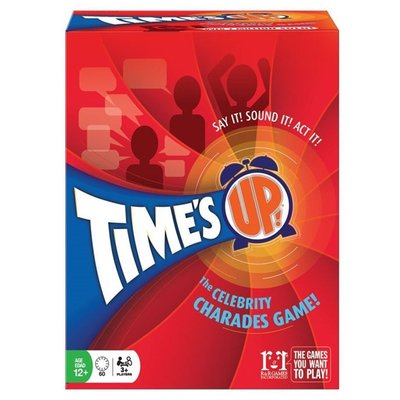
pull off your shelf and say right we're going to play black spy rather than using a deck of playing cards okay so the third reason that I think a publisher might republish a game which is already in the public domain is to curate the content within that game so an example this became time's up so times up is a game that I would know as in the UK the Hat game where everybody writes down names and they put them into a hat and we create this this draw deck pulling names out of a hat then and then we have to describe those name so in times up first round one player is describing a series of names to their their their teammate over in 30 seconds they see how many names they can describe over 30 seconds in the second round you'd be using the same set of names but now you're only allowed to describe them using a single word so everyone knows what's in the Hat but now that one word has to identify the person and in the third round you're doing charades you're you're doing mimes to try and give away that same information same pool of people in that hat now in times up you've got a deck of cards with names written on them so it takes out that first step of having to create the the deck of cards and the version of times up that I had also had a little electronic little battery-powered timer in it for a count in those 30 seconds that ran out of batteries I think probably before I even opened a box I don't remember ever actually managing to use the timer but I do have the deck of
playing cards which saves a little bit of time albeit the problem with having that deck of cards is that I don't know who half these people are particularly because it's an American sort of centric version that I have whereas in the Hat game people are only writing down names of people that people are likely to know so it has its positives in that it's quicker to set up a game of times up and it has its negatives as well but the content has clearly been carefully thought about by the publishers they've chosen certain things to go into that deck to make a rich surrounded experience another example is the game balderdash in balderdash one player reach out to question to the others they each then write down a made up but believable answer and hand it back to the person who read the question this person then reads out the real answer and all the made-up answers in a random order the others must guess which is actually correct and you score movements on the board for each player who is conned into believing that you're made-up answer was actually the real one as well as for choosing them real and often unbelievable answer the sort of categories you see on the cards are words what's the definition of this word people what's this person known for initials and what do they stand for events or what and in this place or on this date and laws we have to complete the law so I love balderdash and this is based on the dictionary game this is where you would choose an obscure word from the dictionary and then everyone would have to write down a definition and then
you'd mix that in with the real definition and people would have to try and sort of well same as in balderdash you'd have to try and get people to vote for your made-up version rather than the version that's actually in the dictionary what balderdash does well is it curates that content really well it gives you these different categories so so you can get some really funny outcomes from a game of balderdash and again people don't tend to play it you don't tend to late for points really you just tend to it gets sillier and sillier the longer you play I don't I've ever seen a game through to completion without it just any other people writing silly answers and then I saw falling about laughing I haven't got the best set of doubled - I've always developed the best set of balderdash is the one that has obscure movie titles in it and then you get the plots and you have to write the plot to the movie and it gets muddled in with the real plot which is often more absurd than any plot that anyone could come up with I don't know whether that's in the most current versions of balderdash it's not in the one that I purchased I don't know probably fifteen years ago or something like that but this is a game where the content is really carefully curated to make a really funny funny game where the dictionary game I think asks a lot more of the players in order to do that the fourth example of why I think a publisher might see value in taking a public domain game and releasing it is just making it easier to play you know if you can make the packaged version something which is far easier to use than a traditional version then that makes things very attractive in that package and the best example of
this is the game tell astray shion's Intelli straightens each player takes a sketchbook and a dry white marker each player draws a card and a dice roll to show which word each player should use each player then writes their name and secret word on the first page of their book they then turn to the next page and all players simultaneously have 60 seconds to draw their word they passed their book to the player on the left that player looks at the sky which turns the page and then writes down a guess for what the drawing represents this is then passed on to the next player and that player draws an image based on what was written and the book is then passed on and so simultaneously there's a whole process repeating of drawing guessing drawing guessing until the book comes back to its original owner then everyone shares the images and the guesses and there are some rules for scoring but nobody cares so till astray shion's is based on a pen and paper game called eat poop you cat where you write a word write a word person fold it over the person draws you fold it over but are some rights a guest you fold it over and so on now clearly the components Intelli straightens enhance the game so much that flipbook is brilliant the fact that they're dry white markers makes it harder to draw well and the great thing about this game is when someone draws badly it improves the game because it means the guess is going to be a little bit off and then when the guests are off you get these wild sort of flights of fancy and the whole thing and becomes much more ridiculous
so everything in that package makes the game easier to play you've got a deck of cards with the words there for you so you don't have to think of words to put down you've got the timer there to kind of speed through the play and those flip books are fantastic so this is a perfect example I mean why play you poop you cat when you could have a copy of tellest raishin which is going to make everything flow so much better so this is a great product a great example of taking a public domain game and improving on it another example is the game Peru dough in Peru dough each player starts with a cup than five dice all play a shake and hide their dice and then one player looks at their own dice makes a guess of how many dice there are of a particular number under all the cups combined any dice which show ones count as being wild the player to the left of the player who made that initial bid then either declares a higher bid increasing either the number of dice or the value of the dice so for example a call of seven fours could be raised to seven fives or eight twos etc or the player calls dieudo which halts the bidding when the bidding stops then all dice are revealed and if the highest bid was wrong the player who made it loses one died if the highest bid was less or equal to the number of dice then the player that halted play loses a die and then starts the next round with a new bid the winner
is the last player remaining with any dice at all so Peru dough is based on the traditional game I think it's called judo actually or Bluff in some countries it's probably got other names I know that it's often known as Liars dice as well but Peru dough has their colored cups which are lovely they've got that there they're nicely sort of sculpted around the edges and you know if they just feel nice and then you've got the matching colored dice I mean this is so much easier and more attractive than gathering a bunch of mugs from your from your kitchen and sticking a bunch of random dice in of all different colors and getting them muddled up and haven't got enough dice have we got enough cups you know if you're going to play a game after you know after a dinner party whatever these are the sort of times I tend to play games I'd be much more inclined to pull a game like Peru dough off my shelf and put it on the table then I would be to use some sort of makeshift components from my kitchen cupboard and the final category of games this is a little bit of a cheat because these are the games where someone has taken that traditional game and and then twisted it turned it on its head manipulated it in some way but use that basic concept as the core of something totally new an example of this is the game shot and Totten also known as battle line depending on which Edition you get this was Ryan in it Co it's one of his classics it's a two-player game where two people are playing multiple poker hands but they're spread across a
series sort of sort of locations in a row across the table and you're trying to compete to win those sort of mini poker hands on each one if you win three in a row you know three right next to each other then you win the game or if you win any five from the entire row of nine then you win the game also it's a it's a fantastic system so simple so familiar if you'll no poker but yet changes it totally and actually this inspired one of my upcoming games which is called mission 21 mission 21 is a game which uses blackjack but makes it into a two-player game and again those blackjack hands are spread across multiple different little mini competitions with special powers and things mix in there as well another game actually which I'll show you now is the game black jockey in black Jackie each player attempts to be the last cat standing in each round everyone tries to get as close to 21 as possible with their mouse cards at the same time messing with all the other players each player is dealt two mouse cards and the others form a deck and one card goes onto a face-up discard pile on a player's turn they may play a card action from their hand adding that card face up into their display but then they must either twist swap or knock if you twist you take a card from the deck into your hand if you swap you discard a card from your hand and take one from the deck or the top of the discard pile if you knock then you end the round and all other players have one final turn players then total the cards in their
hands in their display and if you have 21 or more then you lose a life if everyone is under 21 then the lowest player loses a life when three lives are lost you're eliminated from the game the deck contains two twos 3 threes 4 4 s 5 5s and so on and the card powers allow you to end the round early or to force players to swap cards or to force people to draw cards or to add +1 to a player's total or to add 0.12 your own total and so on so black Jackie is again by Ravensburger it's for you know multiple players it's not a two-player game and it's extremely chaotic and silly and you know you're there's a lot of take that in there and and loads of loads and loads of luck in there and that sort of thing unfortunately it's only available in Germany it's it's a it's a ravenous burger game and you can pick it up just in supermarkets in Germany but I've not seen an English translation and in fact there is a rules translation on the BoardGameGeek website I know that because I wrote it myself using Google Translate and I think it's accurate I think I'm playing by the right rules but as far as I know that's the only English translation of the rules that I've seen but it's perfectly playable if you've got that rule set even though the writing on the cards is in German and you know there's not that many powers and and it's it's worth playing I think it's a really fun little card game and quite good sort of family-style game as well another example of a game which takes a traditional game and turns it completely on its head turns into
something much bigger much richer is the game rock paper wizard in rock paper wizard players are attempting to have their playing piece closest to the treasure of one end of the board and if successful they score points they manipulate their position on the board by casting spells at the other players and in any given round there are 4 spells revealed on the table the players call out rock paper wizard and simultaneously make one of the hand gestures shown on one of the spell cards pointing their gesture at a specific player around the table the spells are them resolved from the start player and continuing clockwise they're going to move players pieces forwards or backwards on the board or swap their positions or steal gold from other players and the spell might even alter the target of another spell if two players cast the same spell on each other then a wild surge occurs and they instead draw a random spell and cast that one on their target instead the closest and second closest players to the treasure after all the spells are cast earn some gold and once the player has 25 gold pieces the game ends and that player wins so rock paper wizard is equally as silly and equally as chaotic and random as playing a game of rock-paper-scissors with your you know as you would have done you know as kids or you might do now you know it's it's equally as chaotic and silly but that it's it's hilarious what paper wizard it's so funny you know though it's it takes everything that was good in that party game cache and guns and sort of I
don't know something more satisfying about the variety of powers you know and all those silly different and gestures that you get to do in the game and the fact they all have different meanings and then trying to get your head round what are people gonna do in this round based on the powers that are there and it draws a crowd you know if you play this in a we play it in a cafe or you know in a gaming group then people are gonna gather on the table and watch what are you doing it's one of those games that can become a spectator sport I absolutely love rock paper wizard it's one of my favorite games but essentially it is a packaged version of rock paper scissors just dialed up of it given a little bit more substance so those are all examples of games there where publishers have taken public domain games traditional games and they've turned them into something which people might buy off the shelves anyway I hope this was interesting to you maybe you could come up with a game that you've enjoyed since you were a kid maybe your family play it your friends play it but it's not that well-known you know there's nothing wrong with making a few tweaks on that game twisting it adding in some variants and then and then you know pitching that to publishers that's absolutely fine as long as you're honest and open about what you're doing I don't think anybody cares the key thing is you've got to be adding some sort of value even if that's just making it a really attractive package or curating the content anyway I hope you enjoyed this video if you did please watch some my others on board game geek I'm Adam 78 on YouTube I'm Adams board game wails and on Twitter and at board game wails thank you very
much for watching all the best