Fromage, Oranienburger Kanal, Marabunta...should you OWN them, PLAY them or SKIP them?
Games in This Video
3 games are featured in this video — they unlock as you watch.


Transcript
How's going everyone? Carlo here from All You Can Board. I'm here with my cousin Dylan as always. And today we're doing another episode of our series Own It, Play It, or Skip It. So, this is where we're going to review some games together, and we're going to tell you basically on that three-point scale, is this a game that we want to own or glad we own, is this a game we are sort of glad we have played but don't feel the need to own kind of thing, or is it a game that we kind of wish we would have skipped. So, this is just from our perspective, not necessarily saying that it should be own, play, or skip for you. But, we've got three games we're going to look at today. And why don't you just kick things off right away? I will. And it's going to be the smallest of the bunch. And it's a Reiner Knizia game because we can't do any video these days without a Reiner Knizia game.
[snorts]
And that's Maracaibo. This is a game that we've talked about briefly in a bunch of different ways but never fully given our thoughts in a single video. So, I'm excited to finally do that. We joke a lot or I joke a lot that like I forget what we have and haven't covered in Own It, Play It, or Skip It. And this along with Radlands are probably the two games that for the longest time I was like, "No way. We definitely covered this." Since we started our Dig In or Move On kind of first impression style series a couple years ago, I think this is the first game that has appeared in Dig In or Move On that we're now reviewing.
Right. True. True. And I think that's why I was confused a me a little bit. Right. Yeah. Yeah. So, yeah. Maracaibo is a two-player I split you choose roll and write game all mixed into one. And basically you'll have this little board in front of you that each person has their own sort of player board side attached to it. And then you have this middle territory type thing with six different territories where you're going to be writing in different numbers. Each of them is represented by a different color. And the way that this game works is we're essentially rolling dice. And say I roll the dice, I have to split them up and then Carlo would get to choose which pile he takes first and then I am left with the other pile. And so, the biggest decision space of this game that is really how do you split these dice in such a way that you leave yourself with something and ideally with the better pile, but your your opponent's going to choose first. If you make one of the piles really obviously better, you're not going to get that pile. So, you really have to sort of understand the game states and also just understand what is a good die versus a bad die. And because it's all randomized with the dice, sometimes you get There We've had games in Maracaibo where you get a whole bunch that are going to increase the point values in a bunch of different territories. And so, that matters more that game. Versus sometimes you don't get those a lot and the values of all the territories stay relatively low. So, if one even happens to go up by a a bit, suddenly that's a really desirable territory. And so, a lot of these dice have numbers on them. If it's say like a number three and I take that, it'll be like a green three. That means I'm writing a three
into that territory. And so, you're kind of choosing numbers based on which territories you're trying to win over your opponent. You want to have a higher value with all the numbers that add up in that territory. But, the amount of points you get is based on every territory has its little like scoring area. And that can show up on dice and that increases this the value of the different territories. So, really everything comes down to that I split you choose and and comes down to like how you choose things cuz once you actually get the dice, you're really just kind of filling things in. And then like the decisions
just dice. Right. Sorry. The tie There are little tiles as well and they get shuffled into a stack and you don't know which order those tiles are going to come out in. They They have a variety I won't go over them all but they have a variety of different incentives and added bonuses that you can get in the game. And then when you get through the entire stack of tiles, there's like one at the end that is just like perpetually there to kind of expedite the the end of the game because one of the ways the game or the main way the game ends is there's these things you have to cross off on the board. And when all of them have been crossed off or used or claimed, then the game ends. And so, that last tile just sort of expedites that. But yeah, I would say like the the main enjoyment I get out of this game is that dice splitting decision because really once you've done that, you're kind of just filling in what you've got. There's still some decisions you're making like which crates do you use to get these bonuses, where you're putting some of these numbers. It's not like there's it's completely devoid of decisions at that point. But, it's definitely like the most interesting decisions you're doing is sitting there with the dice.
And so, the one thing I'll say like I'll actually I won't even bury the lead here. This is a play it for me. I It's not like a game that I'm I I will probably part with this one day. I don't play it a whole ton and I don't feel like I'm upset about that. But, it is one I'm happy to go back to and I will still play this with a bunch of people in my life. But, I will say that the the the intro of the game where you're doing that dice decision is the best. And so, everything after that wanes just a little bit in terms of what I'm doing. It's still fun to interact on that board. It's still great to sort of see what you have to compete with, see what's different in this game versus the last game. But, it is one that it sort of has its highest moments at that start of every turn. And because that, a lot of that is basically waiting for your opponent to make those decisions. And you don't want to rush them because this is the the biggest decision you're making. So, you're sort of watching them, you know, split dice.
And it's not It's not like boring because I'm interested in what they're going to get split as. But, you will spend a lot of time in that most interesting part of the game watching or then engaging yourself and kind of thinking, "Okay, like well like this and then maybe I move this one here. Maybe I move this one back." And you're doing these little micro decisions.
But, sometimes there's that thing where you like split and then you look at your opponent to see them react to it. Are you going to take this pile if I did it?
What if I do this? But, is that in the spirit of the game, Carlo? I think it is. I think it is. So, yeah. This is a play it for me. And and it's really good. Like I you know, I I mentioned in another video but it's still worth bringing it up here. And it could just be our climate, could just be my copy. But, I have had a lot of component issues with this game and enough that it's not just like a minor thing. I have peeling. I have things that are going to potentially affect my ability to like do the writing of a roll and write on it. And so, it is pretty bad. It's still usable and everything. It just It doesn't look very good and it's like seems to be getting worse. We live in a really cold climate that shifts to really hot climate and that affects a lot of board games here. And it's not something that I think they factor in when they're making board games for an area as specific as ours. So, it could be that. It could just be the the copy I got. I just want to throw it out there cuz there's a chance that you could experience something like this too. It is obviously susceptible to that.
But, that aside and and actually I'll touch really quick on the theme. There is this theme of like ants and and like insect army stuff. I got to say I've never really thought about the theme anytime I played this game. I'm someone who will get engrossed in a theme if I want to and if it feels like it pulls me in. This isn't one of those to me. I just kind of treat this as an abstract game So, you're saying the cupcakes didn't do it for you? No. And and I don't fully understand Like I guess the cupcakes is like like they would It's like an ants raiding a picnic and getting the things. But, yeah. Like I It's funny because I was going to say when I said crossing off the markers, I in my head I was like about to say cupcakes. I'm like, "It's not cupcakes." It's kind of It's kind of cupcakes. Yeah. There are cupcakes on your little player board. That is the timer for the end of the game. It's cupcakes. But, it is a really solid game. And for the price you're going to pay, for the size of it on the shelf, for like two-player like it's an interesting roll and write.
And because it's a genre that is just so oversaturated, having an interesting one that also uses a mechanic that I just personally don't see enough of, the I split you choose, but I really really like and leads to like I I don't think I've ever played a game with that mechanic that even if I didn't like the game that I didn't leave saying I liked that mechanic in the way it was implemented. So, yeah. It's a play it for me and I would say that if you if anything I've said here like resonates with you or sounds interesting or you're looking for another roll and write that isn't just sort of like what you're used to with games like use the Next Station series where it's just sort of like you do something and you write it on your own sheet. You do something you write it on your own sheet. Like you guys are competing together on this board. And even though it's not like tons of player interaction on the main board, there is some. And even the last time we had played it, where you put numbers matters. You can block people out of different areas. So, it does become a really thinky version of a two-player roll and write. I really like that. So, play it for me. Happy to have it in my collection for now. Whether it stays, you know, long-term, we'll see. Just be aware this is in our shared collection.
So, we have to agree whether we're wanting to part with it or not.
You know what? It's just been at your place for a while cuz I thought you liked it more than me. Maybe I do. But, once we get something into the OCB collection and enters my home, all bets are off. That's
That's what I've decided. No, I'm going to say I I I honestly Yeah, I thought you liked it quite a bit more than me. But, it sounds like maybe we like it the same similar amount. It's a play it for me as well. If I had to rate it, it's probably a seven out of 10. Like I maybe maybe go up to an eight. But, I think it's probably a solid seven for me. I totally agree that the I split you choose the the brilliance of it to me is the fact that there's six dice and one tile every round. So, you're never going to be able to feel like it's equal because there's going to be three pieces for one person and four for the other. Sometimes you actually do two and five. Like you might put a die and a tile and then five dice on the other end. And sometimes that person is actually going to You're going to put that one die with that tile knowing they need those. They really do. And because of that, I'm probably going to get five dice back. And it's So, it has a bit of almost push your luck cuz sometimes you're like, "I could do this. But, what if I try to also put this and hope they take that pile and they take the other one?"
You're like, "I got greedy." So, there's I I really really like that. And I just have to credit like this is one of those games I've seen someone on I don't remember which Discord it was. Someone referred to this as a tile laying game. And I hadn't really thought about it that way. But, it's a tile laying game in the same way that like Through the Desert and like Kingdom Builder are tile laying games in the sense that it's just a component choice. If they put this in a bigger box and instead of using dry erase markers on a board, they gave you things that you're placing out on a map, it could have been a tile laying game. But, they've put it in this thing and it's not even a roll and write with sheets. It's dry erase. So, it's a tiny box and it's there's no waste. There's no like why run out of sheets like with a typical roll and write. So, I think it's really interesting that Space Cowboys like published the game in that way just as far as components to save on cost and box size and whatnot. So, yeah. I don't have too much to add. I think it's It shows that like for a a designer who hasn't even done that many kind of like roll and write style games that this is still probably one of the better ones I've played from the past 5 10 years.
Um The last thing I'll mention that I really like is I just like that it's a game that really rewards you for understanding the board state, the game state.
Yes. Because the your you splitting the dice and you choosing which pile you're taking completely reflects how you're interpreting the game in front of you. And so it's also interesting to be able to like have this tell constantly every single round about how your opponent is interpreting the game versus how you are. Because there's been times where you split the dice a certain way and in my head I might be like I've made it really tough for them. And then they quickly choose on it and I'm like, did I misunderstand that or did they? And then that becomes a whole other element that you're trying to figure out. Or did they just like you thought it was going to be a harder thing for them to discern but there was one thing that in their head they're like, realistically, as long as I get more than one thing, I need that green three and I'm going to take whichever pile it goes into. Like knowing that board state is makes you better and making it really hard. If I know Carlo if I knew in his head I he's saying I need that green three. Maybe there's a way that I can just put that green three with one other thing and pile everything else there to make him say, well, if you want it, you're going to get nothing with it, right? But that's a risky thing. That's the push your luck element. So, there are some really genius decisions that come out of it. Um, but in yeah, it really I mean even now as I'm thinking about the components to like the marker colors too, we always had a problem with as well because it's like they do a different color for each person so you know who's written stuff on the board.
And so you don't have the generic black marker that would show up the best.
Right. And so some of them blend in with territories and like really components aren't I would say the best, but luckily the game is so good that it makes up for it. But yeah. Yeah, that's Maracaibo. Okay, and next up is Oranianburgerkanal. So, I will say So, this is a Uwe Rosenberg game for one or two players. This is the version that came out published by Spielworks a couple years ago. But I will say they've kind of re-implemented it recently under the name just Canal. They just got rid of the Oranianburger part and that one's published I think by Mayfair. And there's some slight differences between the two versions which I'm not going to get into here. But and just this also my version I got with the additional expansion decks for the cards. But basically if you're familiar with any of the Uwe Rosenberg games where they use the resource wheels like Ora et Labora, Glass Road, or even more recently Black Forest, he has taken that kind of resource wheel and designed another game around it. So, the basic idea here is that it's a worker placement game and each player has a big player board in front of them that has this kind of I think it's a 4 by 4 grid. And the whole game revolves around sort of acquiring these cards that are called buildings or structures, putting them in the different slots on your board, and then sort of in between on all four sides of these you can put these different little route tiles. Or they're like these little skinny little tiles. There can be like regular paths, there can be roads, there can be railways, there can be canals, and I think that's maybe it. There might be one more type. And so, some of them have different values. There's different
rules like you can only have one canal on your board and one railway on your board I believe. But like the paths and and roads and stuff can be you can have multiple ones that aren't connected. And throughout the game you're taking different actions. I think there's seven different actions on this worker placement board. And you're taking turns with player with the other player. And an action can only be used once per round. I think the game plays over seven rounds. And your resource or your actions are basically either just like getting different resources, putting down these different route tiles in between the buildings, or buying building cards to put down. Other than that you have a couple of sort of like anytime actions where you can like spin the the resource wheel if there's room for it. I'll get back to the resource wheel in a little more detail afterwards. Um, but basically the conditions on these cards are only going to trigger twice. So, it'll have a every card has a scoring condition that will say something along the lines of like if it is surrounded by at least one canal and two roads, then you get this. And they get really some of them can get really complex like if you have at least one of these, then for every canal that you have you can trade in this amount of resources for this thing. At first you look at it and it just looks like complete nonsense. Like what After a game or even halfway through your first game, by the second game, it starts to make sense and you usually don't need to be looking up in the appendix what all these things do.
Um, so I've really struggled with what to land on this one. Like I think even now I'm I'm struggling to say it. Like I I think it's a skip it for me. A very very like it was going to be on the very lowest end of play it. I think the reason why I've settled on skip it and what is kind of to me one of the more interesting things about why we do this series of games is that saying it's a skip it doesn't mean that I think it's a worse game than every game I've ever rated as a play it, okay? There's the context here of the designer, his other games, all that kind of stuff. So, when I think about the time I've spent like playing this game, replaying it solo and two players, and maybe I'll touch afterwards about the the comparison between solo and two players. I just feel it hasn't done enough different. There there isn't one thing that I can think of in this game that makes me go, I really like that one thing or I'm really glad I played it because of this. The resource wheel in my opinion is much less interesting and much less fun and less dynamic than in Glass Road. And to be clear, I haven't played Ora et Labora or Black Forest, so Glass Road is the only other one I can compare it to when it comes to the resource wheel. But in Glass Road you have two different resource wheels where one produces glass, one produces brick, and on each of those wheels you have like multiple resources. And in those games it's like the wheel is being trying to turn it all times as in as soon as you have can produce the resource the wheel will turn automatically so you're forced to produce. In this game the wheel only turns at the end of every round each player can turn their wheel once for free. Otherwise, one of the anytime actions you have is that you can pay to
to force the wheel to spin. But again, you have to have the room and then one of the other anytime actions you do is spending money to bump certain resources up. So, what this ultimately ends up being is like a very soulless pure efficiency puzzle. There's very little artwork in here. Like the art the artist Harald Lieske does all the art or most if not all the art for like the Freedom and Fries games from 2F-Spiel. And if you've seen those, you know they have quirky fun art that has a lot of personality to them. And in this, especially when you've played games like Agricola where you see that artwork or you've played like Fields of Arle and it has this like nice kind of like pastoral kind of welcoming feel. This game just like I said, it's so soulless and all the cards will just have a name and then just a massive icons. And so, nothing feels I don't know. It just it feels devoid.
Like I don't feel invested. And because the resource wheel just feels so mechanical and like mathematical. Like you're just purely calculating efficiency. How can I extract these things? And the buildings are only going to score when they get fully surrounded on all sides. Or when you have two of these bridges connecting the buildings to other buildings. So, it's just it's about what you put on your board at what times and when do you build the bridges to activate those buildings to squeeze out as like as many points as you possibly can. So, when you're playing with two players, it's just a matter of you have this super intense thinky puzzle that you're worried about and someone can kind of mess with your plans. And I don't find this game to be that fun with two players trying to get in my opponent's way. Like when we played it with two players, I just kind of felt like I'd rather see our stuff come to get like weirdly like I like more interactive games, but this is one that I much preferred playing solo because it gave me the time to kind of just like see my plans come through without us both getting in each other's way a lot.
But both both ways solo and two player both just felt unsatisfying. So, last thing I'll say here is just that um, like the last Uwe Rosenberg game we covered in this series was Atiwa about a year or two ago. And I said Atiwa was a play it. Realistically, I think Oranianburgerkanal is probably a better game than Atiwa. Um, but the reason why this is a skip it is because it feels like it rehashes the resource wheel in an uninteresting way and it's a let down in terms of just the overall package in terms of like the price point too. Like this game was like $100 or something like that. So, anyways, yeah, it's a skip it on the very high end. I think if you're really into those really intense efficiency puzzles and if you're looking for a solo game to really agonize over, then this might be worth checking out for you. But for me I kind of wish I hadn't If I didn't have a YouTube channel, I would have regretted the time I spent playing it. Let's say that. Yeah, this is I for some going into when you first bought this game, I would have if someone would have asked me, I would have said that you would end up liking it more than I do.
And I think I might like it more than you do, but it's not by a lot. I this this will be a play it for me, but I will preface preface, but I will say that that it's a play it because I do want to play it solo. I also agree I don't think it's one that's really compelling me to come back to as a two player game. But especially now that I'm getting into solo games more, the last time I played it there were a few things in it that I really did enjoy. I liked the the interaction of the the the roads, the canals, the railways, and everything and how I had to like puzzle out where to put them on my boards. And I made mistakes. I recovered from some of those mistakes. Some of them I I didn't. I boxed myself in where I couldn't get my railway to go where I wanted because I think it's the railway and the canal you can only have one chain going, right? And so once you kind of commit, you're locking yourself out. And you once you place certain buildings, you realize, oh, I can't get this canal to here to get this bonus. I really did enjoy that. I think also me not having as much of experience with Glass Road makes it that I am enjoying the resource wheel more. But I I would still say that from what I remember about Glass Road, if I played Glass Road now, I would probably agree with you and say, yeah, I I enjoyed the implementation of that wheel in Glass Road better. But I didn't have as many issues with it. To be honest, when I left our session, I didn't really like nothing about the resource wheel stayed with me good or bad. I was just like, cool. Like I it was fun. It worked. But I didn't have like any negative impressions of it either. Um, but I I am I am with you on the fact that this is game seems like it
either it was dealing with budgetary constraints or which is weird because there's other things about it that like there's clearly time put into it or it was just like there was a bunch of weird decisions made because the fact that they're reprinting this as Canal with changes with different artwork everything. It's like they realized all their mistakes and are fixing them, but it's just like some of the mistakes seem obvious to me. It's not that like
[snorts]
for a game like this, why call board games are already out there. Why call it Oranienburger Canal and try to get someone to have to say that when you know that if someone is going to be saying do you want to play that like to their friends what should we play tonight? They're probably going to abbreviate themselves anyways and be like we should we can play Canal or something. So like the fact they went there, they ended up at the right spot, but it's just a weird decision to make in the first place. The artwork and the style same kind of thing. It seems like that's something they've they're improving or touching on in Canal from like the cover I saw. I don't know about the actual components, but again like there was time put in here, but not in the right was places not enough to like have it sit alongside Uwe Rosenberg's collection and feel like it deserves its spot there. So yeah, I I'm I'm really intrigued to play it solo because if I do enjoy that puzzle in in solo as much as I did in two players, I could see this being one that I want especially with the fact that you have the expansion stuff in there that I could like set it up a handful of times and and get into it. I just don't know what that's going to look like after I played half a dozen times.
Right. I played this like six times am I still going to feel like yeah, you know, I'll wake up on a Saturday morning and I'll set up Canal or am I going to be like really at this point that puzzle has played itself out. It was really only a six play game and at that point for 100 bucks for a new Uwe Rosenberg game, that's disappointing.
Yeah. It just it's about the relative like relative to other games. Like even just in the Uwe Rosenberg games like I'd rather play solo like Nusfjord, Fields of Arle, Glass Road. Like I could list pardon me
[clears throat]
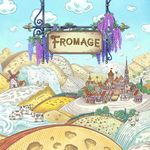
a bunch of them that I'd rather play solo. So Yeah. Yeah, it's unfortunate. I was I was genuinely looking forward to this. Um, and the expansion like I said, if you like it, there's a ton of replay value in the box cuz there's so many cards here you could and different combinations of the cards that are going to come up for the different structures. So if you do like it, you'll get your money's worth, but uh this is one probably won't stick in my collection very much longer. So that was Oranienburger Canal a skip it for me and a play it from Dylan. Last up, game we're both going to speak to, but I've played it a little bit more than Carlo and that is this pretty game here called Fromage. Uh, so Fromage is a simultaneous worker placement game. What that means is there is four quadrants of this board. You're all cheese makers, competing cheese makers, and you are always going to be interacting with one slice of your board. And once everyone has interacted with their slices I let I'm just using the example that we're playing with four players.
Once everyone's interacted with placing their workers to make cheese as well as to produce resources, the two areas you can place in this game, the entire board spins. You spin the board. I think there was like a deluxe version that came with an actual lazy Susan to spin it a little bit easier. And then you're interacting with a new slice of that board that was just impacted by the person on your right. And so you're kind of seeing what they have done and that's where that simultaneous aspect comes into play. You are getting order cards that are specific cheeses you need to create and and deliver to be able to get extra points. You are getting structures. This is probably the best point part of the game is you get these little structures that you put on these building spots that are either inherently on your board or with the the best way to play the game is with the additional tiles that you can do a draft at the start and then you're able to get these new abilities that cover up the ones that are built into the board. Once enough structures are on those tiles or on those spaces, that's an active ability that you have now. Those really drive your strategy. They shape how you're going to approach Fromage. Uh, the more I play it, the more I realize like those absolutely are the best part of the game. That's what it where the variability comes from. That's where the the you know, sort of uncovering everything the game has comes in. Um, and then you have two spots that you can place your workers. So you have the on that slice you have the main board where you can actually interact and make cheese and they all have different scoring conditions. Some of them are like little area control things. Some of them you just have to get onto as many of the shelves as you as you can and they each give you different bonuses. They're all different, but the in the center of the board as part of what spins is where you
can produce resources. And so depending which one's facing you, you can produce one, two, or three resources. And I didn't even mention, but when you place your workers, they're either going to stay on the board for one, two, or three turns until you get them back, which is a key part. So if you're on the resource spot for instance, say I'm just going to take one resource, you get that back on the very next turn. It's just like a regular round of worker placement game. If you go two or three, you're not getting those back until the point of the cheese based on how the board board spins faces you. And so you have to factor in when are you going to get your workers back? If I need the blue worker to do something that's coming my way on the very next board, I'm not going to put that blue worker on anything that is a two or three turn wait because I'm not going to get that back. But as an example, I just played a game of Fromage on online where I had an ability that is anytime I discard an order card that I haven't fulfilled yet, I can take my blue worker back no matter where they are anywhere. And that changed the entire way I played the game because now my blue worker was the most important worker the entire game and all I would do is stack up a whole bunch of orders.
Every time that came back to me, I would use the three. I would use the blue worker on it. I'd take the blue worker back on the next turn and I could just use that freely. That's the kind of like shifts that you'll get from Fromage when you play is like those those ability tiles really change the game a lot. Uh, there's some other things we'll get into. There's like fruit scoring where certain spots um take fruit and that is multiplier at the end of the game that gets you points. There's cows that get you these bonus placements of cheese that are really important. Um, ultimately what I'll say is this is a strong play for me. I want I want this so badly to be and own and I want this to be something I'm playing like regularly and I want to want to buy Fromaggio the expansion cuz it gives you four new quadrants and it can be played standalone, can be played in conjunction. There's so much to like here. And I have moments when I play Fromage that I'm ecstatic about the game that I'm playing. And then I have other moments when I play Fromage that it starts to feel samey and then I'm not as excited by. The tie the ability tiles always the buildings there. I'm always excited by them. Always always really in interested in not only interacting with my own, but seeing how everyone else is interacting with theirs. Whereas I would say that the actual quadrants which is this is one of the reasons that I would love to get the expansion, the standalone one, is that the quadrants aren't not interesting, but having I think I played like six or seven games now of this, they do start like nothing super super exciting about interacting with some of them. Especially like the shelf one.
It's like that comes around and that'll either be the one where I'm okay if I don't have a worker that I can place based on where they are on the board that I don't get that one. Or it's like I'm doing it because like I could really use this free resource and and really you're just keeping in your head the more shelves I get onto, the more points I get. But it it's not super interesting. I'd almost love to see like and maybe I I don't know anything about Fromaggio like and how how the boards are, but I would love to see this grow if if it's popular and what they introduce is much more complicated. Um, this is just me. Much more complicated quadrants. Like I don't care if it increases the length of the game cuz as it stands right now it says you can get it done in 40 minutes. I just think it'd be so interesting to have much more complicated and complex decisions you're making. And then when something comes back to you, you're really agonizing and it really matters more cuz it just felt like sometimes the quadrant come back to me and I was it's not like I was hoping oh please no one take that spot. No one take that spot.
And I wanted to. I wanted to be devastated and then be yelling across the table being like I can't believe you did this, you know what I mean? And there was moments of that, but not enough and I think that was it feels like that was in terms of making this a little bit more accessible. And it is an accessible worker placement game even just by the fact that it's simultaneous. I am someone who at the stage I am at for board games would love a less accessible, but more complex version of this game. Yeah. Okay, so it's a play it for me as well and at a similar level like a strong play and I think this is one of those games that is very easy for me to recommend to a lot of other people. There are a lot of other people who I would straight up just recommend like you should buy this for you and your family. This would be great. You would love this. Like if I was maybe newer to the hobby, this would have kind of like blown my mind seeing a game that's simultaneous worker placement with the spinning board. But like just the just from like a functionality point of view, the components and the way that that works and the fact that there's like the stickers on the cheese or on your little workers so that when you turn the board, it's you just look up once and you can immediately tell which ones you're taking back cuz they're facing you now.
It like it's easy to read everything on the board state and everything and that's like incredibly well done. Um I will say the best part of the game in my opinion is those buildings like you mentioned or the whatever they're called that you have on your board.
Yeah. And but it also in a way is was almost a a knock on the game in this sense. So I'll I'll say I played this I think three or four times on Board Game Arena and then only have played it once in person and that was the most recent play. And I think the time we played it in person was the only time I've won playing this. And it felt like from the initial draft and the buildings that I had on my board, it was pretty obvious what my strategy should be. I had two of these building tiles. One of them was that I could get a lot more of these order cards easily. I can't remember what it was. I think oh I think it was just put a worker there and get an order card for free off the top of the deck. And then I had another building there or structure or whatever they're called, a building, that was um complete like just put an incomplete cheese in your completed pile. So I was like okay, so I have a way to get a bunch of them easier and I can just complete them for free basically. So from the beginning I just said I'm going to disregard everything else on the board pretty much and my whole game plan is just going to be get as many orders as possible and complete them. And then the actual placements of my cheese on the board are just going to be fulfilling the order like I have all these orders that are unfulfilled. So I'm just going to try to fulfill those while sticking with this strategy and I don't really have to waver from it at all. And like I I I'll say I'm not very good at this game. I got like I lost by quite a margin the first few times I played it, but I won very comfortably this last time and I felt like I didn't have to adjust my strategy at all throughout the game. Now, part of that could be that it was just like I got lucky that I got those tiles and they lined up and maybe that is sort of like I don't want to say an unbeatable
strategy, but it's like that kind of synergy when you have that in a game you almost know like I'm in a good spot. If I don't win, it's because I probably played poorly. Yeah. But it's also the thing we've talked about before with these kind of like mumble games when it's simultaneous and you're not watching what every single like we're not going to sit here and be like okay before we spin the board, what did you do? Okay, cool cool cool. Okay, what did you do? Okay. What did you do? Okay, okay and I did this. Okay, we all we all know it's okay. Let's spin the board together. Like we're trying to keep the game going at a decent pace. We're not like tryhards and we're not trying to I don't say that in like a as a pejorative way as in like people who are whatever trying It's more so I would say that this game is clearly designed to not be played that way and you can you can play it that way. There's nothing I think it even says in the rulebook. I think there's nothing stopping you from saying let's do this in turn order so everyone knows what's going on. But like it's trying to be a worker placement game in its simultaneous nature that can get done in 40 minutes. And I think that if you are playing with four people for instance that all know how to play the game and you are leaning into the simultaneous nature where you're not really explaining to anyone what you're doing because you know that you're not you don't really need to. Like you're just you're doing your worker action, you're spinning it and then you're finding out what your opponent did. Absolutely you can play this in 40 minutes. I I think that what you're describing it's like if you play it that way then you're probably playing a game that's an hour to an hour and a half and if it'll feel a little bit more like a traditional roll and write with this weird or interesting weird a good weird spin mechanic, right? So Yeah, it just feels like if I were to see those same buildings come up again and I were to play like I would be I'd feel like well like it doesn't make sense to do anything
different if I have this. It's such an effective strategy, but it's also going to feel kind of boring just like making this plan and making these obvious decisions all the way throughout knowing I'm going to score a ridiculous amount of points from just this one like just the order cards alone I had like 50 or 60 points which is ridiculous.
So I I have a question for you cuz we've talked about on the podcast now here a few different times. We've had like things about competitiveness come out spirit of the game all this kind of stuff. What you're describing I I agree that like when I saw your strategy and as it as it was going working out I was like this is going to be a super powerful score at the end. But I also thought this could be like kind of not the most engaging way to play for Fromage cuz you are ignoring so much of the other elements of the game and so it kind of feels like less interesting. Are you someone where say you got that hand again or even just in that instance where you get the draft and you can be like oh man like I can draft this and I know it's going to be good. Would you if you're like I want to have a more interesting fun game of Fromage so I'm not going to draft that. Does that upset you and make you like almost sort of not angry at the game but like make you feel have a lesser impression of the game because you're having to force yourself to say I'm going to take a less optimal strategy to have more fun. Is that something you face as a like a dilemma in this situation? Not in not in this game because it doesn't feel like a very competitive
Yeah. Okay.
confrontational game. Like it's not one of those games where I you're trying to constantly block your opponents and where everything you do affects the other players. Yeah. So I would be looking to do something completely different. Like maybe I'd try to get into the the fruit multiplying thing. But I I'll say the other times I've played it in the past I was trying to do too much and be active on all four quadrants. And this time I think two of the quadrants I didn't even have a single cheese on them. And I just like stubbornly was like whatever I don't I don't need to get myself involved in that as long as I follow this one strategy, it's just going to get me a ridiculous amount of points. So it just made me feel like my gameplay felt a little more narrow in terms of the decisions Yeah. than I would have liked. So it's it's very well designed and I think it's an easy game to recommend. I don't think I would ever turn down playing it, but it's not a game that I'm probably going to request playing myself.
Yeah. I really really do enjoy how many different types of strategies emerge from it and how they all seem viable but you can't do everything because even the last game I played it wasn't me but someone else went really hard into the fruit multiplier in a way I've never seen. And I think they got like 30 points alone from fruit. And I've never usually I get like six points from fruit, 12 points from fruit. And so they almost double the highest one I ever got was like you know they approached a basically engine that they had started with or created for themselves to say I can get the bulk of my points here. Just like you said I can get the bulk of my points from completing as many orders as I can. I in the game that that last game I was talking about I pretty much almost controlled like all of the regions. Like I I didn't get them all but like I got so many points from them. And so it's interesting the only thing that like I worry about and and this is I haven't seen this happen yet so this is just a thing is like how often is it going to happen where you get it where everyone sort of has their lane and it's like this person's going into fruit. This person's going into orders. This person's going into like these two boards and this person's going to the other two boards. We all dabble in the other things but we each have our strong suits. So it just feels like then that quadrant gets to you. Well, if I have to let something go it's this one. I'll do a little bit I'm not going to fight Carlo on this. Like does it start to feel like you just resign yourself to lanes or can you just approach the game where you're like I'm going to get in everybody's way and have my one thing I'm trying to do that they're too busy managing what I'm stopping them on that I get my done. Like it it is it is a compelling game that I am going to come back to. I just wonder same thing how
often am I going to be hosting game nights where I'll say hey like let's play Fromage. It'll happen and especially cuz my partner really does like Fromage and we know some people that I think would really enjoy it that it'll get played more. But I just have a feeling what will end up happening is this will just be a game that's always in rotation on my board game arena async games cuz it is really good async and I do want to play it. It's just it's hard to picture it getting the table ahead of a bunch of other games that I like a little bit more than it. Especially because it's by far best with four. Like I don't think either of us would suggest playing it with two or three necessarily. And like if you're getting four players together, that's a competitive like there's a lot stiff competition for what game you're going to end up playing. I will say one last thing is that I lucked into even getting those tile like the last the the building tile that I used the most it was most responsible for me getting that ridiculous score was the last one that someone passed to me in the draft. I was planning on going for a different strategy until I got that and then I looked and I thought I'd be stupid not to go for this now. Like thank you so-and-so for passing me that.
But they didn't even realize. So it just like it also felt like I lucked into this sort of easy obvious strategy. So anyway Great game. Great artwork. Great presentation. Great components. Like the way that the the the each of those quadrants has like a piece of paper not paper but like a material thing cardboard thing that you slide in to kind of fill in the the dual layered spots that you're putting into. And you can use either side. Obviously Fromagio introduces new ones you can slide in. So like there there's it's just a really really solid game all around. Like I don't have a ton bad to say about it. It's just this is a symptom of there being a really high competition for table time for a lot of them. But but who knows And the price point is very I a lot of games would have just been like nope sorry you you have to have the lazy Susan. This is going to be a $100. You know which game I'm talking about. I'm not going to call you out here specifically. That'll come in a different video some other day. But I like that they have this version that's like 40 or $45 that it's it works just fine. It's been just fine. You don't need a big lazy Susan with a giant hunk of plastic. Yeah. And as a quick quick little aside solo mode is just okay. I played the solo mode a couple times. It captures some of the same essence but as Carlo alluded to this is just a game that feels like if if it wasn't a it wasn't going to hurt the sales in the market of the game you would almost just want to say this is a four player game. Like to not have someone on one of the quadrants you lose a lot of the interaction. To sort of play it solo the ways they try to make up for that it's not a bad implementation. It's just this really does feel almost like Captain Sonar where it's like Captain Sonar you want to play with eight and
Fromage you want to play with four. Yeah. Yeah. That's Fromage. Play it from both of us, right? That was the plan? And that's all we got. So just to recap here Marabunta was a play it from both of us. Iranian Burger Canal now known as Canal was a skip it from Carlo and a play it for me. And Fromage was a play it from both of us.
If you had to rank the three games, how would you? I I would say Fromage number one Marabunta Canal. Same actually. Fromage and Marabunta are pretty close with Iranian Burger Canal being a step Okay. I would say that Fromage for me has a there's a bit more of a gap between Marabunta. Not a ton but it's not not quite as close. Yeah. Fromage is now that I'm even talking about more it has what we've talked about this in a lot of games but it has that interesting thing where like I have like a couple days away from it and I'm thinking about it. I'm like man I could really go for Fromage. And I've had that with games I don't like as well. Like Rocket Men and stuff like that. Like there's certain things where it's just like certain games like it scratch a certain itch or there's a aspect of them that feel good and you want to kind of table it again. So that's a good sign for from four Fromage Fromage. There could be more depth to it than we're giving it credit for if we'd played it 10 15 times. So who knows.
Yeah. And if we can play it with the expansion standalone expansion one day maybe that'll even just be a thing where it'll be like with this it sort of takes it to the next level. We'll have to see. Yeah. That's all we got. So those are the three games. Let us know in the comments which you which of these games you'd rate for yourselves. Which way is that's a really weird way of saying that.
Try to decipher what I'm saying. Let us know in the comments what you think of these games. If you have any games that you'd love to hear our thoughts on or you know that we've talked about but you're wondering if it's going to show up on the channel, let us know as well. If you want to support us liking the video, subscribing to the channel, leaving comments, telling your friends. And then lastly if you want to support us financially, we do have a Patreon. You get some perks on there. You have opportunities for free games. You get uh
episodes of our podcast that are exclusive to Patreon. Um and we also have a Discord, so join us on Discord if you want to chat with us more or play some online games with us, all of that there. Otherwise, thanks so much for watching, and we'll see you next time.