Arthurian Knights, Kronologic, Oh My Orchids, Ducks in a Row, Coral Islands - Ranked & Reviewed
Games in This Video
6 games are featured in this video — they unlock as you watch.





Transcript
Hey everybody and welcome to another Chairman of the Board ranking video. This is where I rank and review the last five new to me board games that I've played. Now, before I get started on these five games, I want to give a shout out to the show sponsor, keyander.co.uk, who are my go-to online retailer. And if you use the link in the show notes or the QR code, then you can get 5% off your first order. At number five, I have Coral Islands. So, this is kind of an abstract strategy, puzzly, spatial awareness game as you are placing and stacking dice of your color trying to build particular formations based on these objective cards. So, these cards might say, well, you want a dice placed here, here, and here, and you want at least one, you know, opponent's dice in the middle. Um, so this pattern is is made. Basically, if you do that, you'll get points.
There are or there is a reason why dice are used and that is because you can only stack dice of higher numbers on top of a die of of a lower number. So you know you can't just put a a five on top of a six. Um the only way you can loop it around is by placing a one because a one can go on top of anything and then of course you can start again from that position. So there are a lot of games like this out there. I think this one is a little bit overwhelming to look at. I think a big portion of that is because I am quite strongly color blind and the dice colors used in this game were not helpful at all. In fact, you know, the greens and the reds look the same to me and the purples and the blues look the same to me. So, automatically I was starting off on a kind of a handicap really and it was very difficult for me to fight my way through those dice to try and build those patterns. But also, you will find that dice will get buried kind of in the shuffle and still you're not quite sure if you've built those patterns or not. So, it did become a little bit laborious, a little bit labor intensive when it came to trying to work out if you're actually successful uh or not. So, sadly, this one again, I think a big portion of it is because of, you know, my color blindness was why I didn't enjoy this one as much as I maybe could have. Um, but still, I do think there are better examples out there. You know, if you want a game like this, I think we're spoiled for choice really.
And I suppose the go-to games have been games like, you know, Harmonies or Cascadia. I think those games are are leagues above Coral Islands, unfortunately. So, I can't recommend this one. I think the competition is just too strong, a little bit too busy. And of course, if you're colorblind, um, this is going to be a big no no. So, that's Coral Islands at number five. At number four, I have Ducks in a Row. So, this is an upcoming crowdfunding game. I'm not sure exactly what platform or when this one is is going live, but it is a hybrid deduction party game. So, kind of a weird mix of game types there. But in this one, each round, there's going to be someone called the conductor, uh, who has seven of these duck cards placed in a random order, and the other players are going to be playing action cards to try and wean information to try and replicate or mirror the conductor's display of ducks by placing their ducks in in the same order. And points are going to be based on your long longest uninterrupted run that mirrors the conductor's ducks. And so you're going to be again playing these action cards which will be things like maybe name three guard cards and the conductor will tell you which one's in the center or name two ducks and you'll see if those ducks are next to each other in the row and so on. So there's good a good degree of um of kind of logical reasoning and a deduction going on here. But there is a nice degree of memory as well because you have to remember the clues that you had
asked earlier so that you can orientate your ducks accordingly and sometimes things can even move which can throw an extra spanner in the works. So I actually did like how well this game was boiled down just staying true to that you know very simple formula just playing an action card getting more information and trying to work out that order before the timer runs out. And I have to say I think the uh the the end game or the end of round triggering mechanism was a little bit off on this one which I have fed back to the uh to the designer. I know he wanted to go for a more punchy kind of under pressure uh feel of the game for me. I think the game could have brewed a little bit longer by shuffling in that end of round card lower in the deck rather than it just being random in that deck. Just thought the game or the rounds ended abruptly sometimes. Now, additionally, I thought there were some small details that could have been ironed over. And the first of which is going to be these secret cards. So, you know, with a lot of deduction games, you'll often ask something and everybody else will get a small bit of information. And this game does that really well, but this game also comes with these secret cards where you'll ask something and you'll get a direct answer that only you know from the from the conductor. And that well usually is very strong information by saying you know what duck exactly is in position number two. And because of the the random drawing of the cards, if you keep on drawing those secret cards, it's kind of a no-brainer that that's what you're going to be playing. Um because why wouldn't you take concrete information over more vagueness? So
again, a small suggestion I said to the designer was um maybe just give someone one piece of concrete information at the start of the game so that you have something in place but nothing or the rest of it you're going to have to use actual deduction which is the whole point of the game. Um so yeah, apart from the endgame trigger um that the secret cards, I thought the game was very enjoyable. I think has a lot of potential and also to to reach a wide audience actually because I think deduction fans are going to enjoy this because you do get actually some good um something to sink your teeth into and try to work things out under pressure but at the same time people who aren't into that stuffy nature that pure you know 100% concrete information that deduction games require they might actually enjoy this one because you can kind of wing it and sometimes do well.
So again, I suggested to the designer that there should be a variant that pure party mode which is a bit more chaos and also something slightly more tailored towards more seasoned gamers and fans of deduction. And I believe he's taken that information on board and might be um using that which I hope they do because I think this game is is very enjoyable. It looks lovely. It's fast. Um and yeah, there's it kind of fits this another niche in a very saturated um you know genre of games. Deduction games have really blown up in the last few years. There are so many to choose from. And yes, there's a lot of crossover between them, but Ducks in a row kind of carves out its own little place in that genre by being a little bit sillier and being a lot faster and a bit more kind of going off a feel rather than concrete evidence at times, which I actually think works in this game's favor. So again, I hope it does really well and with that variant, I would happily play this one any time. and yeah, wish them all the best with the campaign. So, uh that is ducks in a row.
At number four, at number three, I have Oh My Orchids. So, this is a little drafting and contract fulfillment game as you are trying to collect seeds, cash them in in order to buy these different flowers. Uh the seeds themselves come in different colors as well as different seed types. And that is of course the requirements to uh complete these little flower contracts. So some contracts might say well you want uh three cards of the same color or you want three cards of different colors or maybe four different seed types and so on. And of course the more uh points heavy cards will be a lot more difficult to complete because it might say you want three cards of the same color that are all different seed types which is of course a lot more niche and more difficult to tailor your hand uh towards. Um, but the the drafting system is pretty cool because it works much like, you know, rummy where you can take all cards of the same color or all cards of the same seed type. And of course, sometimes the display will work out just in your favor and you get like say four cards in a single turn. Um, but you've got to be quite careful about which what cards you draft because there is a strict hand limit of seven cards, which is, you know, very standard stuff. But in this one, you are either forced to cash in a contract or you are forced to take C cards. So you don't have that option to pass. And any cards that you end up drafting that go over your seven card hand limit will be negative points at the end of the game. So you kind of have
to walk that tight rope of wanting to have quite a few cards in your hand so you have flexibility to, you know, zig and zag and go towards what's available, but you don't want to have too many where a single more draft will get you into the negative points and you don't want to have too few cards because you're not going to have the options to get what you want. Um, the game is pretty punchy as well because the game ends once somebody has completed seven card contracts or these flower contracts. So it doesn't really kick its heels. It works at a very nice pace. And as you can probably tell from the description here, this is pretty standard fair. There's a lot of games out there like this where you're just collecting your currency and then cashing them in to um against contracts to get you points. That's what this game is in a nutshell. That small hand limit twist I think is is definitely um worth mentioning and it makes the game much more interesting, but the rest of it is pretty standard. It's pretty predictable, but it works. It's very smooth. It looks nice and it's punchy.
Um, so yeah, I can't really um really criticize u this game at all. It just does exactly what it's supposed to do. But if you have games like, you know, like Romy Rammy or Splendor in your collection, you probably don't need this one as well. Um, and I suppose a lot of players might enjoy um, a notch or two of engine building in their games like this. This game doesn't do that. You are always just collecting cards and cashing them in. you don't really get better as you go, which might work against it as well when comparing it to some other uh card drafting and contract fulfillment games, but still good stuff. Um, just nothing to really write home about. Nothing remarkable. Uh, that is Oh my Orchids at number three. At number two, I have Chronologic. So, this is a pure deduction game uh where you are trying to work out a particular mystery. So, I've only played one scenario of this, and that scenario was to try and work out who killed this particular character and at what time. So, what we were trying to work out is at what time was this particular character in a room with somebody else and nobody else was there.
So, that was the the kind of mystery and what we were trying to solve. The game system here is as clean as you can get. Um, and your player sheet is basically a a blueprint of this building over six different time periods. So, it's a six the game is played over six hours and you're trying to work out where each person was during each of those hours. And there are layers of the deduction here because each hour um every person is going to be in somewhere in that building, but they have to move at every hour. So, they can't just sit still. And of course, if someone's right over this side of the building by the fifth hour, you know that they're not going to be able to get over to this side of the building by the sixth hour because they can only move one room at a time. And that is the that's kind of the USP of this game is that little timing mechanism on where people could possibly be be and you need to use that information to to, you know, rule out certain people being in certain zones.
Now, the actual way that you get the information in this game is really clever. Um, as you have these location cards, uh, as well as the character cards and what and also time cards as well. And you're going to basically choose a bit of information what you want to know about and you'll place it against these location boards basically and it will show you a bit of special information that only you know, but it'll also give a bit information for everybody else to know. to it. Maybe it will say um at 4:00 there was four people in the museum or in the you know in the in the theater and you as the question asker might know exactly who one of those people were and that's it basically you're trying to work what it's what work out what it's going to be where everyone was at each hour to try and solve that mystery. So again there are so many other uh deduction games out there so many that use fancy little contraptions and things. I loved how simple the turn system in this game is.
I love how easy and quick it is to get that information without twisting all these strange dials and working out strange stuff with apps. This game kept it so clean and easy to understand, but kept the deduction part of the game really juicy um and gave you something to sink your teeth into and to really enjoy and mull over if you like that logical deduction puzzle. Now, this game is going to be directly compared to games like Awkward Guests, which also did the the blueprint thing, which I'm not sure many other games did that or have done that over the years, despite there being so many deduction games out there. That for me is one of the most interesting things about Awkward Guests and about Chronologic. I I love that visual appeal, that actual tangible information on where people could possibly possibly be and the roots they've gone and who they've shared rooms with. I find that stuff fascinating. Now, I think actually Chronologic is a much cleaner game um in terms of setup and just the game mechanisms, but I think if you want a more cinematic and maybe a bit more I don't know, maybe a almost like a bit more realistic um murder mystery, then I think Awkward Guest might be the one to go for. But you have to consider that that comes with a downside as well because you it takes a lot more setup.
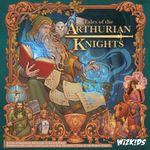
It's a lot more fiddly and a lot longer. Whereas Chronologic keeps it a bit more maybe not sterile, but a bit more procedural, but it still toys with those ideas of, you know, moving around the building of where people could be. So, I think, you know, if you want to lean more into the thematic side of things, choose awkward guests. If you're really focused on nice pure punchy deduction, then I'd go for Chronologic. But still, two excellent games. I just thought I couldn't really talk about one without talking about the other. But I was thoroughly impressed. Um, I didn't really know anything about the game before going into it and it's definitely a top tier deduction game after having played so so many. This is definitely one of the best ones that I've played. So that is Chronologic at number two. And finally, at number one, I have Tales of the Aruran Knights. So, this is a reworking of the classic Tales of the Arabian Knights, which was a game that I sadly never had the chance to play despite really wanting to. But when I heard that Whiz Kids were relaunching the game or reworking the game based on the Arththeran Legends, I knew this was a game that I had to pick up because, you know, the Arththeran Legends, you know, medieval stuff, and that's right up my alley. It's one of my favorite themes, uh, in board gaming and just books and everything. So, I love anything to do with, you know, chivalry, knights, and so on. So, um, be aware this game is barely a board game, although it is a game you play on a board. Um, mechanically, it's there's next to nothing going on here. Just a few dice rolls and building up some stats. So, think of it more of a
storytelling game, more of a role- playinging adjacent game than a traditional, you know, board game where you're making tons of decisions. More of a choose your own adventure if you want to put it that way. But essentially, you have your own knight character and with a bunch of stats. you know, your your sword and shield fighting, your your mounted ability, and so on. And as the game goes on, you're you're sliding up these tracks, getting more powerful, getting better skills, which will effect effect effectively mitigate your dice rolls, making them a lot stronger when it comes to these encounters that you'll run into as you are traveling around the map trying to complete your missions. Now the I suppose the the cool thing about this game is all about this uh this story of or this book of tales if you want to put it that way where when you come into a certain um location you'll draw a card and it will say refer to this passage in the book and then you'll read the spiel from that particular passage which can be tons of different things that you'd expect you know fantastical things um you know heroic deeds and so on. Um, but you are of course allowed to make the choices on what path you want to go down. So just as a a pluck out of the air example, maybe you're going through the woods and you bump into a king and the king has been um a stray too far from his kind of hunting party. So you're alone with him.
you know, do you try and guide him back to his party and hope to get rewarded that way or do you just say you to hell with it? Let's rob him right now and spend the rest of the game looking over my shoulder because you're going to gain like um a bad reputation and stuff like that, but you might have got a quick gain. So again, you're getting legendary legend points, you're improving your stats, you're collecting items that will let you do powerful abilities or let you um get out of sticky situations if you really need it. uh you're gaining traits as well or different kind of um you know things that could affect your character like paranoia or maybe you're feeling especially brave or there's someone following you. You've got companions that will help you through different situations and so on. So, you know, the game is a mish mash of random encounters, but the stories you can tell over the course of the game are really enjoyable. I think the book is well written. Um the choices you can make are very interesting as well. And yes, it does all come down to a dice roll. But if you really get into it and you don't focus too much on the on the dice rolling and just focus on how those encounters are going and trying to um I suppose get into it, then you can get a lot of fun from this game. So for me, this is almost like a time piece game that I'll keep for the rest of my life.
It's a game that I'm not going to really play very often. Uh maybe, you know, even just once or twice a year. But when I do play it, I want to make an event of it. you know, I want everyone to know what they're getting into when they play it. Um, prepare for just a night of storytelling. You know, put the medieval music on, light some scent candles and so on and really get into the vibe of the, you know, the Arthuran legends. So, again, a bit different for me, you know, maybe it's not the nor kind of game that I play. Um, but, you know, recently I have started to dip my toe into these styles of games. You know, recently I covered Lands of Galia on the channel, which I did also enjoy. For me, this one is just kind of it's that same kind of thing, but more tailored towards me because, you know, I I prefer the setting and the idea and the concept of fighting dragons and going through dungeons and fighting bandits much more than the cuty little critters that you get from a game like Lands of Galia. But I think if you like the original um Tales of the Arabian Knights, I believe this one's a little bit more muted.
Maybe not in terms of like um the breadth of encounters. It's maybe a little bit zany, little a little bit less wacky, a little bit less zany than the original one, but it still is compelling. I think again, the storytelling is good. There's some really epic things that kind of can happen and that do happen. And I was very impressed with the system in its entirety. I suppose I'm a little bit apprehensive about the replayability, hence why I'm not going to play it very often. Uh, yes, there are, you know, thousands of different entries into that story book. Um, but I don't want to be overexposing it. Hence why I only want to play it a few times a year. Um, so that every time I'm going into it, it feels fresh to me and I'm not going to know what I'm going to run into. Um, also the scalability.
Um, I think maybe with three or four players, be prepared for a longer game. I know we played a three-player game of this one recently and it took, I think, two and a half to three hours. So again, be prepared for it to be long. I think two players might be the sweet spot. Um, but three players is if you want to to share that experience with more people, it's probably a good option. Well, as well, four players, again, be prepared with what you're getting into because it's going to take quite a long time. Uh, looks lovely. Um, clean mechanically, lots going on, but still all comes down to that storytelling. Uh, that is the Tales of the Arurian Knights at number one. So, there we have it. That concludes another video. Hopefully, you have enjoyed it. If you have, please be sure to hit like and subscribe to the channel. But for everybody else, I'll see you next time on Chairman of the Board.