Final Titan VS King of Tokyo Big Box - BUY THIS, NOT THAT (board game review)
Games in This Video
2 games are featured in this video — they unlock as you watch.
Transcript
We have been playing King of Tokyo Big Box and Final Titan backtoback for weeks. And somehow we ended up arguing more about which one you should buy than about who actually won the games.
Yeah. Which is very on brand for us, but it also means we have a lot of real plays of both to pull from. Same designer at the core, Richard Garfield, but completely different vibes. King of Tokyo Big Box is the loud kaiju dicefest from ELO and Final Titan from NerdLab Games is this tactical arena battler where your drafted team of champions does the heavy lifting.
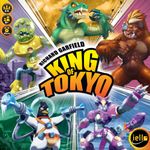
So quick lay of the land from our sessions. King of Tokyo Bigbox is basically that monster box style edition. Base game plus power up and Halloween in one package. We had 10 different monsters on the table, each with their own evolution decks thanks to powerup costume cards from Halloween, a big stack of power cards, energy cubes, and those big custom dice. Our games with three or four players usually wrapped in about half an hour, including setup and tearown. And even at five or six players, we were generally done in under 40.
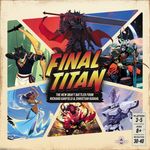
Final Titan, when we played it, felt like a roughly 40minute game at three or four players once everyone understood the icons. You draft a small team of champions, each with a speed stat and unique abilities, and you hold a hand of upgrade cards that you can attach to them. One champion is the current Titan in the arena, and going around the table, people either challenge that Titan or pass. The last player with any champions left wins. There is also a co-op mode where we teamed up and fought through a stack of enemy champions instead of punching each other.
And the way we tested these was pretty deliberate. We would run King of Tokyo, clear the table, then run Final Titan with the same group on the same night, then swap the order the next week. Playing them side by side like that really showed where each one shined and where they stumbled. So, if you are staring at both boxes thinking, I only want one monster battle dice game. Which should it be? That is the question we are going to answer.
Let us start with how they actually play because that is where the fork in the road really appears. In King of Tokyo, your turn is basically a chaotic little engine. Roll six dice, keep what you like, reroll the rest up to two more times, then resolve. Claws deal damage, hearts heal you if you are not in Tokyo. Energy gives you cubes to buy power cards, and matching numbers give you victory points. The famous Tokyo twist is that being inside the city makes you the target and the star at the same time.
In our games, that Tokyo decision never stopped being fun. Jump into Tokyo and you score immediately. and then two more at the start of your turns if you stay, but you cannot heal while you're in there. And every claw you roll glass everyone outside the city. So every time someone went in, there was that tablewide, do they really think they can survive a full round feeling. The big box content layered more onto that powerup let us trade three hearts for evolution cards that gave each monster its own tricks. And Halloween added costumes that granted temporary bonuses other players could steal. Final Titans core loop, in contrast, lived way more in pre- battle decisions. In our plays, everyone started by drafting a small team of champions from a shared pool, looking at their stats and special abilities. Then there was this ongoing rhythm. Whoever currently held the arena as the titan sat in the middle. And as we went clockwise, each of us chose whether to challenge with one of our champions or sit back and wait. When you did challenge, you secretly attached upgrade cards from your hand, then revealed and fought using custom dice where speed determined who went first, and faces added damage, dodges, extra actions, or nasty effects like poison.
Our sessions made really clear that King of Tokyo's outcome often rested on the dice in a big way, whereas Final Titans wins and losses felt a lot more connected to earlier choices. There were King of Tokyo nights where someone played brilliantly, made smart buys, timed their Tokyo exits well, and still got wiped because the roles didn't cooperate. In Final Titan, when one of us lost badly, it almost always felt like we had drafted the wrong mix of champions. Mis Red went to challenge or burned the wrong upgrade too early.
The win conditions drive that feeling, too. King of Tokyo lets you either be the last monster standing after everyone else gets knocked out or be the first to hit 20 victory points. In practice, we saw both. Sometimes someone rushed points while everyone ignored them. Other nights, it was a total brawl and the final survivor took it. Final Titan is much more blunt about it. No points, no side objectives, just be the last player with champion still alive. Our games never had that, oh, they quietly hit 20 and the game is over surprise. You watch the endgame coming as teams got thinner.
Complexity-wise, King of Tokyo Big Box sits in that super approachable space. In our experience, we could teach a full table in 5 minutes. Roll up to three times. Claws hurt. Hearts heal. Energy buys cards. Numbers give points. Tokyo is good for points, but bad for your health. The evolution in costume rules added a tiny bit of overhead. Mostly just rolling three hearts can also grab a new power, but even kids and non-gamers internalized it after one game. Final Titan definitely took more explaining. Our first few teaches were closer to 15 minutes because we had to talk through the draft champion stats, upgrade cards, speed order, and what each die face did. People also needed that first play to see how upgrades stuck around or carried over and how a champion's role shaped your whole team.
After a few sessions, the rules faded into the background, but it never hit that explain once and everyone instantly gets it level that King of Tokyo did.
That extra complexity shows up in the turn structure and pacing, too. In King of Tokyo, turns fly. You roll, re-roll, resolve, maybe buy one card, and you are done. The only slowdown we saw was when someone agonized over which card to buy, and even then, the rest of the table was usually still laughing about the last roll. In Final Titan, every challenge kicked off a miniame where two people played intensely while everyone else watched. And if both champions had defensive abilities or healing, those duels could stretch a bit.
Over a full night, that difference mattered. We could easily fit two or three King of Tokyo games into the time it took us to draft and play one or two Final Titan matches. That meant King of Tokyo naturally encouraged rematches, silly house rules, and one more game energy, while Final Titan felt more like a focus session we planned around. Neither style is wrong, but playing both backto-back really underlined how different the tempo felt. Let us talk player counts and how they scale because we tried to stress both ends. With King of Tokyo Big Box, we played at 2 through six. Two-player games were fine, but pretty flat. It turned into a predictable seessaw of one monster in Tokyo and one outside trading hits and heals. At three and four, the game really clicked for us. There was enough danger that entering Tokyo was a real risk. Enough people that attacks felt satisfying, but still quick turn cycles.
Once we hit five and six players, King of Tokyo got rowdier and funnier, but also a bit harsher. In a couple of sessions, someone got knocked out early and then had to watch the rest of us finish the game, which took another 10 or 15 minutes. Some folks were totally fine with that because they were just enjoying the chaos. Others really did not enjoy being sidelined. So, for us, King of Tokyo's sweet spot was four players with three also very good if you want a tighter game.
Final Titan doesn't even pretend to be a two-player game in our eyes. It really started at three. At three players, it worked, but felt a little sparse because whenever two of us fought, the third person just sat and watched the whole duel. At four players, it hit the best balance in our sessions. There were enough champions drafted that team building felt rich, enough people making challenge decisions that the arena rotated, but not so many that you were waiting ages between your turns. At five players, some of those longer fights made the downtime more noticeable. Interaction-wise, King of Tokyo is basically nothing but direct conflict. Every class symbol is hitting someone and often multiple someone's. And the Tokyo mechanic means you're constantly deciding who to aim at or whether to step into the hot seat yourself. Our tables were full of why are you hitting me? They have more points jokes. Alliances that lasted exactly one roll and sudden dog piles on whoever looked like they were close to winning. Final Titan's interaction was more focused because you're always fighting the current Titan in a one-on-one duel. It felt less like getting ganged up on and more like stepping into a ring. The rest of the table still cared about those fights because the outcome changed who controlled the arena and how strong that Titan became with leftover upgrades, but you never had that feeling of three people punching you in one turn. It's still confrontational, just in a more contained tactical way. That leads straight into strategic depth versus complexity. Over our weeks with both games, King of Tokyo really settled into
that light tactical space. You make real decisions. Do you chase points, go hard on claws, buy a defensive engine, or lean on evolutions, but the dice can overwrite even good choices. We had plenty of games where the better plan lost to a silly streak of lucky rolls. In Final Titan, our sense was that you were rewarded more consistently for good planning. Drafting champions that work together, deciding who to send when, and choosing which upgrades to burn early versus saving them for a future fight, all made a big difference. When one of us pulled off a comeback win with the last champion usually felt earned because of those earlier calls, not just because the dice finally behaved. One of my favorite comparisons from our plays was that King of Tokyo often gave us those I can't believe that just happened moments, while Final Titan gave more of I knew that would happen if I said it upright moments. Remember that King of Tokyo game where you were on 19 points, went into Tokyo for the win, and we all just hammered you off the board before your next turn? In Final Titan, the equivalent drama was that match where your last champion slowly stacked upgrades over multiple fights and then finally took down my supposedly unbeatable Titan. Replayability fed into that difference. King of Tokyo stayed fresh for us mainly because of the chaos and the content in the big box.
Different monsters with different evolution decks, different power cards appearing in the market and different people at the table all kept it lively, but the core loop never changed. Final Titans replayability leaned more on that large champion pool and the co-op option. Changing which champions you drafted genuinely changed how your team played from game to game.
Themes supported that too. In King of Tokyo, the Kaiju theme did a ton of work at the table. People immediately understood I'm a giant monster smashing Tokyo. And that made things like entering the city, attacking everyone at once, and buying wild power cards feel intuitive. Final Titan's mix of gods, monsters, and other champions looked fine, but it never grabbed people's imaginations the same way. It felt more like a well-designed system that happened to have monsters rather than a big cinematic event on the table. Now, when we dug into components and table presence, handling both boxes one after the other made the contrast obvious. King of Tokyo Big Box threw bright standes, big dice, and a compact board at us, and the table just looked fun within seconds. The health and victory point dials on the monster boards were easy to read. The icons on the dice were clear, and the extra content tucked into the box made it feel like a complete package.
Final Titans production in our plays felt solid and functional rather than flashy. The custom dice and champion boards did their job. Tokens tracked all the little effects, and nothing got in the way of actually playing. But it did not have the same immediate wow reaction when we set it up next to King of Tokyo. It also asked for a bit more table space because everyone wanted their drafted team and upgrades laid out clearly.
In terms of setup and tearown, King of Tokyo definitely won. Toss down the board, hand out monster boards of standees, shuffle the deck, done. Final Titan needed more layout time for the draft pool, upgrade decks, and all the tokens, and then a bit more sorting at the end. None of that is terrible, but if you value pull it out and be playing in five minutes, King of Tokyo matched that much better in our sessions.
When we talked about cost and value after all these plays, we kept coming back to two ideas. First, King of Tokyo Big Box felt like a safe buy because it bundled the base game with those expansions and gave us plenty of content for repeat nights. Second, Final Titan felt like the more interesting long-term bet if your group really dug into its draft and co-op mode, but it did not have the same long history of working with every crowd yet. We also noticed that in practice, King of Tokyo gave us more plays per evening, which matters when you're thinking about value. If your group plays once a month and you want a game that can easily hit the table multiple times in that one night, King of Tokyo delivered that consistently. Final Titans still earned its spot when we were in the mood for it, but it never felt like the default let us squeeze in just one more choice.
So, with all that in mind, who should actually buy which one? From our experience, King of Tokyo Big Box is the better fit if your group is a mix of kids, casual players, and hobby gamers. It is easy to teach. Turns are fast. Everyone understands what is happening. And even when the dice are cruel, people usually laugh it off because the whole thing is so over the top.
Final Titan made more sense at our table when everyone in the group liked tactical games and wanted to think of it. Our friends who enjoyed building decks, tuning lists, or mastering card interactions gravitated toward it immediately. They appreciated that wins and losses felt more tied to draft choices and timing than to wild dice spikes. Even though the dice still created big moments,
fun when losing was another big difference. In King of Tokyo, as long as you did not get eliminated right away, you usually still had a good time because the silly moments carried you through. In Final Titan, when someone misdrafted or misunderstood a champion, they sometimes felt behind for most of the game. That doesn't mean it wasn't fun, but it was more punishing if you made early mistakes.
So, here's our buy this, not that take after all those sideby-side nights. If you mainly want a game that works with almost anyone at a wide range of player counts, and you don't mind some brutal luck and player elimination, buy King of Tokyo Big Box. And don't worry too much about Final Titan. You'll get plenty of value out of that one box. If instead you have a steady group of three or four players who enjoy drafting and tactical fights, and you want something shorter and tighter than a big heavy strategy game, then buy Final Titan. And don't feel bad about skipping King of Tokyo. You lose some of the wild party energy, but you gain more control over how your decisions shape the outcome.
For me personally, if I had to keep only one based on our plays, I would keep Final Titan. I like that the draft and upgrade decisions actually reward paying attention, and I'm okay with the extra teach and the slightly drier look to get that added depth. King of Tokyo was great with the right crowd, but it started to feel sy for me after a lot of plays.
And I would keep King of Tokyo big box because when I picture our best nights with these games, it's always the King of Tokyo sessions where everyone is shouting about ridiculous dice rolls and clutch escapes from Tokyo. If I'm buying something that needs to work for family, friends, and gamers, that's the box I trust more.
So, the shared recommendation is basically this. For most people, especially if you're not sure what your group prefers, King of Tokyo Big Box is the safer first buy. Final Titan is the more specialized choice for groups who already know they enjoy tactical drafting and don't mind a bit more overhead.
In other words, King of Tokyo is your loud Friday night Dame. Final Titan is your focused weekn night skirmish. Our sessions with both made that distinction really clear, and hopefully hearing how they felt back to back helps you decide which monster battle deserves your shelf space. Thanks for hanging out with us while we unpacked our time with King of Tokyo Big Box and Final Titan.