/pic8643479.jpg)







Final Titan Deep Dive
What the Community Thinks About Final Titan
Final Titan has arrived as a standout entry in the competitive arena battler space, earning consistent praise for its energy and execution. Reviewers across multiple channels agree on its core appeal: a fast-paced, high-stakes battle experience built on careful pre-game decisions and ridiculous in-game moments. The game sits somewhere between the chaotic fun of King of Tokyo and a more tactical draft-and-battle format, though most reviewers emphasize it carves its own path. Where reviewers diverge is mainly on who benefits most from its design. Those who value the pre-battle decision space and asymmetrical champion interactions find it exceptional. Players seeking pure luck-driven party fun may find its complexity a step up, while strategy-focused groups appreciate how meaningful the drafting phase becomes.
Core Mechanics That Define Final Titan
Drafting
At its heart, Final Titan is a game where your initial choices shape your destiny more than the dice ever will. Before any champion steps into the arena, players draft a small team of titans from a shared pool. Each champion brings different stats, speeds, and special abilities, and the draft order means early picks matter deeply. Reviewers consistently noted that the draft rewards careful sequencing and synergy-hunting. Unlike pre-constructed deck games, here every player sees the same pool and must decide whether to grab what helps them or deny what would help opponents. The co-op mode, mentioned by reviewers, adds variety by letting players draft together against enemy titans controlled by the game itself, proving the draft system flexes across multiple play patterns.
Combat: Dice
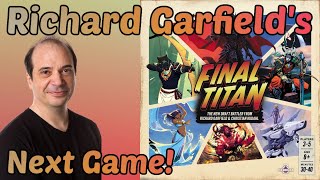
Once champions enter the arena, combat is resolved through dice rolling, but the narrative behind those rolls matters more than the outcomes themselves. Each champion has a unique die with symbols representing attacks, special abilities, charging up for ultimates, or complete misses. Speed determines turn order, and special abilities often override basic outcomes. The frame is reactive: you roll, you resolve. Yet reviewers found this mechanical simplicity hides surprising depth. Upgrade cards can modify how dice resolve, champion abilities chain into powerful combos, and the possibility space explodes across 100 titans from Nerdlab Games. The designer Richard Garfield, known for Magic the Gathering and King of Tokyo, embraced intentional imbalance here. Everything is overpowered in isolation, but the author designs them to cancel each other out, letting wild moments feel earned rather than arbitrary.
The Final Titan Experience
Chaotic Energy and Arena Theater
Final Titan brings a particular theatrical energy to the table. Reviewers described it as feeling like Mortal Kombat colliding with King of Tokyo. The game is loud, absurd, and unapologetically luck-driven, but reviewers found the chaos works in its favor. The risk-reward decision of whether to challenge the current titan or pass and give up a card to the prize pool creates this delightful tension. Early on, passing is free. But as upgrades accumulate in the arena, the cost of abstaining rises, forcing tougher decisions about when to step in. One reviewer noted the key to this dynamic: there is enough agency in the pre-battle choices that the chaos feels fun instead of frustrating. You decided to draft this team, you chose which champion to send in, and you picked which upgrades to attach. The dice may betray you, but your fingerprints are all over the loss.
Standup Moments and Memorable Interactions
The real hook reviewers kept returning to is the game's ability to create memorable, shareable moments. From the ridiculous card abilities (a sandworm that deals 99 damage on one die face, a character who mind-controls your opponent) to the absurd matchups that emerge, Final Titan consistently produces stories worth telling. Even eliminated players stay engaged because watching a sandworm duel a drain-heavy champion or seeing an overpowered ultimate trigger is simply entertaining. Reviewers noted this is rare in elimination games. The speed of elimination means games don't overstay their welcome, and the spectacle is high enough that spectating becomes part of the experience. One reviewer summed it up perfectly: the game skips the whole first half of King of Tokyo where nobody has interesting powers yet. Final Titan is all interesting powers, all the time.
What Makes Final Titan Stand Out
Asymmetrical Champions with Zany, Balanced Abilities
The 100 titans in the base box represent the game's deepest asset. Each champion is genuinely different from the others. Health totals vary wildly. Speed values create different arc trajectories. But the special abilities are where the identity lives. Reviewers highlighted a Mindbug champion (a reference to another Nerdlab title) whose ultimate lets you take control of the opponent's champion. They showed a character whose attacks drain life back to the controller. Others deal massive conditional damage if they survive early-game poverty. Some support bench teammates instead of fighting themselves. This radical imbalance is the point. Nothing feels weak because everything is overpowered in some direction. The design elegance is that a glass cannon with a nuclear ultimate feels fair against a tank with gradual damage output. Reviewers found this system keeps games unpredictable while ensuring no single champion feels useless, driving high replayability.
High Replayability from Vast Rosters and Variable Upgrades
With 100 titans, the draft pool is enormous enough that multiple plays feel genuinely different. At four players, only 16 of 100 champions even see the table in a single game. This means returning to the game doesn't feel formulaic. Add in upgrade cards that layer on effects like poison, drain, armor, and extra actions, and the combination space expands further. One reviewer emphasized this directly: other games stay fresh through chaos or content volume. Final Titan leans on both, but the drafting itself becomes the engine. Which champions you assemble genuinely changes how your team plays from session to session. The co-op mode adds a second dimension, letting the game flex between competitive and cooperative tension. Reviewers found this variety justified returning to the table repeatedly without feeling like they were retreading the same path.
Potential Drawbacks
Rule Complexity and Teaching Overhead
While Final Titan's rules are not overwhelming, the sheer number of unique champion abilities creates friction for new players. Teaching takes longer than it does for King of Tokyo. Reviewers noted the first few plays require explanation of draft mechanics, champion stat lines, speed order, what each die face means, how upgrades stack and persist, and then the ability interactions themselves. After a play or two, rules fade into the background. But the initial teach can stretch 15 minutes or more, longer than expected for a game marketed as quick and punchy. Additionally, rule ambiguities arose in player groups. With 100 characters each bringing asymmetrical effects, edge cases exist where the rulebook doesn't perfectly clarify an interaction. Reviewers found these minor and resolvable through table discussion, but they warrant acknowledgment if you plan to teach strangers at conventions.
Elimination and Downtime with Larger Groups
As a full-elimination game, Final Titan removes players once their team is defeated. At higher player counts, this can create sitting-out periods. Reviewers found the game's speed and spectacle soften the sting considerably. Games rarely drag, and the arena theater keeps eliminated players invested. But at six players, some wait periods emerge, particularly if fights stretch due to defensive abilities and healing. The game works best at three or four players, where the elimination pace matches game length. Reviewers also noted this is a luck-driven system. Smart play and good drafting matter, but the dice can override them. If your group dislikes player elimination or strongly prefers strategic control over chaotic moments, Final Titan's design philosophy may not align with your table's taste. It is unapologetically what it intends to be: a raucous, dice-driven battle arena.
If You Enjoy Final Titan
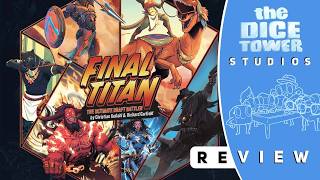
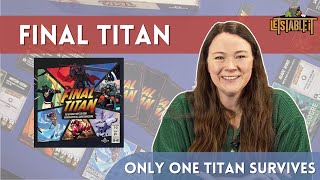
Almost every reviewer reached for King of Tokyo, another Richard Garfield design. Let's Table It summed Final Titan up as Mortal Kombat crashing into King of Tokyo, and BoardGameCo likened it to playing King of Tokyo for the first time again. The Dice Tower's review drew the line more finely: King of Tokyo gives you a few more choices, but it misses the wild craziness that Final Titan's powers create. The Game Boy Geek pointed to Mindbug, from the same publisher and design team, as one of the best card games ever made, a natural stop for anyone who loves these designers' zany powers. In a Dice Tower round-up, fans of Thunder Road: Vendetta, a game you play as an experience to see what happens, were told Final Titan offers that same kind of ride.
What Reviewers Are Saying
"Final Titan feels like Mortal Kombat crashed into King of Tokyo. And honestly, that's exactly the energy it brings to the table."
— Let's Table It
"I'm giving this one a nine. I think this game is incredible. It's so punchy. It's so fun. Yes, it's an auto battler, and yes, you don't really make a lot of strategic choices, but the choices you do make with drafting and when to kind of go in to not go in, I think that those decision points are phenomenal."
— The Dice Tower
"It's very rare to create memorable experience with all the flooded board game market today. But Final Titan creates standup moments with even those being previously eliminated players cheering on for their favorite Titan, sometimes for revenge."
— The Game Boy Geek