AYCB Podcast: Episode #9 - The Board Game Quest
Games in This Video
3 games are featured in this video — they unlock as you watch.


Transcript
Hello and welcome to episode 9 of the All You Can Board podcast. I'm Carlo. And I'm Dylan. And I'm Braden. And on today's episode our main course will be the board game quest. So, what does it mean to embark on your board game quest? Does everyone have the same quest? Where are we on our board game quests? Where are you on your board game quest? All of this and more on today's episode, but first let's I mean normally we jump into a little appetizer here and this week it is going to be tapas style, but why don't we give the floor to Braden here who's making his podcast debut? Oh my goodness. So, I'm the appetizer? Is that what you're saying?
I didn't say that. I guess I did. Uh what do you want what do you want me to talk about? What are we Where should we start? Give give the folks like a little just for the folks out there what listening who may not have may have heard your name, but don't know you know your your involvement or everything you do. Give give them like the quick summary of who Braden is as a human being. Oh my gosh, okay. All right. How much time do we have here?
Um No, uh so I've been playing board games for a long long time, but really getting into the hobby for let's say about 10 years now. Um maybe a little bit more than that and uh at All You Can Board now When did I join? Like 20 2023.
2023? Yeah, that sounds right.
something like that. It's around that time cuz it was after our 24-hour live stream or like a month after or whatever. Yeah. Yeah, so I've been on some videos. Um and I mostly right now focus on some of the behind-the-scenes stuff. So, obviously being in the Discord, playing games on BGA, but mainly doing the thumbnails for the YouTube channel is the primary responsibility, I think, at this point in time. But, also, you know, working on some videos in the background, which hopefully will see the light of day at some point. Who knows when? And that's kind of the gist of it. I'm part of the the board game group that we we regularly play games with. So, yeah. My my favorite game is Blood on the Clock Tower at the moment. Nice. Yeah, super pumped to have you have you on here now. It's We've been talking about it for a while, but and this will probably be like a thing that happens going forward where it's like as certain topics especially seem more appropriate to make like to have all of us involved, we'll be having Braden on. But, hopefully more more so than than not cuz it's it's great to have all of us here.
Yeah, I like to think I'm the chaotic cousin of the three of us where I'm just everywhere and also my tastes are a little bit more on like the party side of the spectrum when it comes to board games. But, as you guys alluded to last episode, I do I do enjoy good crunchy game as well.
Yeah, you have put a lot of games on our radar though that we wouldn't maybe be like seeking out otherwise and yeah, happy to have discovered a lot of these thanks to you. And yeah, awesome to have you on the podcast finally. So, we've yeah, we've had all kinds of all kinds of topics that you know, Dylan and I Braden as well, we've talked about that we want to get done on episodes like this. So, yeah, before we get into our board game quest, why don't we jump into our appetizer? So, this week we are just going to do one shared kind of appetizer topic here and we're going to be recapping our experience at Canada Plays, which was a local I guess we'd been kind of maybe mistakenly referring to it as a convention cuz it's considered more of a trade show and conference. It's not something that's open to the public, Um, why don't one of you maybe describe a little more about what what kind of event this is?
Sure, I can
it was and all that. Yeah, I can give a quick little little overview here. So, yeah, it was in Hamilton, Ontario. And it like Carlos said, it was more of a trade show, but that there was lots of board game playing opportunities. There's a game room that was pretty much always open. Like they had hours associated with it, but I think we found that there was always people playing games in there. So, we attended and got to meet a bunch of different folks, which is sort of one of the most exciting parts of it. So, a lot of different content creators we met. People like Rodney Smith and Chris George from Room and Board. Rodney Smith from Watch It Played. I'm just assuming that everyone knows who Rodney Smith is, but I should clarify. Mandy Hodgkinson from Salt and Sass Games, formerly Dice Tower. Ryan I'm going to I can't pronounce names. So, what's How do you How do I get this last name correct? I think it's Guerra.
Ryan Guerra.
Guerra. Okay, good. Cuz I was going to say like Guerra or something. So, I just want to make sure. Tim, who owns a board game cafe called Dicey Business. Shannon from Chip Theory Games. Alex from Hootenanny Games. Remy from Comic Hunters. There was There was a whole bunch. And then we also just got to play games with a bunch of people, which was sort of like the best part of it. That was probably the main reason we wanted to attend. But we also got to look at a bunch of different booths, see some games that are coming out soon. I think like one of them like Mountain Goats Legacy we got to like take a look at and kind of got to understand a little bit better what is actually happening why Mountain Goats is getting a legacy game. I'm a bit more convinced, but I feel like I just I have a hesitation with legacy games now in general. But yeah, so like that's basically what it was. Feel free to add anything if I missed it, but I think for for me anyways the best part was just being able to play games with a bunch of people and with all of you.
Yeah, how about you, Braden? Yeah, I definitely playing games. Like having that dedicated time I think matters so much, especially nowadays, too. And just getting that time to really focus down and then connect, honestly, on a personal level with um like the people you mentioned and other people who are working in the industry, too. Really putting those faces to names, I think was really cool um to see, especially for me. Just making that connection, you know, our board game hobby is based, you know, in that connection. I like to think that at least it is. Um so, being able to be there in person with all these other people, I think was also just really special. Yeah. I want to add just a couple things. One is there it was really cool that they had an app for the event. And so, you could actually just check in advance to like it had the list of who was going to be attending, which is how we kind of like even you knew, you know, some of the people who were going to be there. But more importantly, like the events, what time they were listed at, if there was like limited seats, you could sign up for stuff and kind of plan your your two or three days out in advance, which was nice. Um and obviously, this was like a first like major, again, I don't want to call it a convention, I guess.
But like aside from Game to Table, which is a pretty small local one here, we hadn't ever like traveled to go to an event together like for for something like this. Even, you know, we didn't we didn't explicitly bring like we didn't bring our our camera to like record anything. You know, some people would have been like, "Oh, you should have been out there filming." And we kind of just wanted to enjoy ourselves and just experience it without feeling like we were there trying to capture it to to then show it to other people, really. Um but yeah, I just um the thing that stood out most to me was like kind of the meals we had with people. And that was where a lot of the discussion got to stuff that wasn't just like, "Let's talk about this game we're playing or this game that's right in front of us right now." And that's where you actually get to know people a little more and where we got to build connections that yeah, I felt like they they can last beyond just that kind of like, "Hey, we're both in the hobby.
Let's play a game together. See around. Nice meeting you." kind of thing. So, the fact that the fact that all these meals were like part of, you know, covered as as part of our you know, our our event price and all that kind of stuff and that they were very kind of like scheduled times and it just made it really really easy to to kind of facilitate getting to know people better. So, I'm going to go quickly just list off like the the the master list of the games that we played, at least the ones that I recorded. There There might have been a game that I missed here that you guys played without me or whatever. And then we're each going to probably talk about one kind of game that we we want to talk about here in a little more detail. So, we played Panda Spin, Formaggio, The Fuzzies, Take Time, Tonga Bonga, Magical Athlete, Daydream, Photograph, French Toast, Here Lies, My Favorite Things, Azul Kids, Guildlands, Duck and Cover, Sides, Map Masters, High Society, Mama Mia, and Fives. So, some of these are games that we brought like ourselves from Winnipeg. Other games were ones that, you know, other people demoed or we got to try out other copies of there, but I would say at least 2/3 or 3/4 of these games were ones that were new to me.
I'm guessing you guys are in a similar boat here, eh? Yeah, most of them, I think. Like yeah, I think honestly like it's probably like 80% of the list at least is stuff I hadn't played before. Yeah, probably about 90% other than maybe like High Society, Panda Spin, and then I think that's pretty much Yeah, that's pretty much it. Yeah. Okay, so which Who wants to Who wants to go first here? We'll pick a game to to highlight. I mean, considering it was like one of the first besides I think it was the first game we played besides the airplane, why don't you kick it off, Braden, with Formaggio? Yeah, Formaggio. We I know we had like trouble deciding what that first game was going to be. And this was a good introduction. So, Fromagio being the successor to Fromage, and the gameplay is very, very similar. The boards are just a little bit different, but the basic actions of placing your workers who are placing a specific type of cheese and then not getting those workers back until a certain amount of turns later. Um yeah, I it was it was very interesting just the way some of the boards switched up. And this is obviously this is interchangeable with Fromage. You can mix and match the boards if you want to, too. And there are some there are some cool new boards. I'm not going to go too far into the rules for Fromagio cuz if you already know Fromage, it's going to be just more of the same. Except that the only thing I think that was or one of the only things that were new were the platinum cheeses, was it? Like that
that fourth tier of cheese, if you were. Um which kind of switched things up in terms of like value. Uh but otherwise, pretty much the exact same gameplay. You know, the different boards with the um boats or the canals where you're connecting rivers, the is it it would be air not not necessarily area majority, but like spreading out your um different cheeses in different areas and then depending on how many flags are there, it's kind of like the crowns um in King Domino where they multiply by the file the tile type kind of. Um And what else? What are the other two now? I'm trying to think off the top of my head. I can't even You named my It's funny that two you you recalled are like my two favorites. Like the ones that got me into that one.
Yeah.
Of course the the wine and the bottles making up, you know, you take these two tiles or you place your cheese, you get a tile. When it matches up, you get that reward. They're kind of like two rewards on either side of the edges of the tile. So, when if they are able to match up, then you would get that reward. So, you either get like a resource or you get um a bottle or two, which will then lend to your scoring for that particular space. Um And then the fourth one was what? I'm I'm honestly even struggling to remember what the fourth
It's That's That's what it was. It was It was like the sh- the columns, right? The rows and columns. So, if you build like a grid of cheeses, you could score them like, okay, three in a row of this row gets you whatever, three points. And then but if you have a column now of all of them lining up, that's going to get you nine points. So, then you're trying to make like this ideally like a square, so it's giving you both columns and rows. Yeah, I This is my first time playing like either Fromage or Formaggio in person. Uh and I'd played it on BGA, and I was very like milk toast, not not super uh not necessarily impressed with it, but it was just like, okay, this was a game.
Um but playing it in person, I don't know what it was, if it was like the tactile nature of like placing the cheeses and having things spin around, um and seeing it kind of all come together. I I Yeah, I had a a really really great time. I'm curious to get to get your thoughts on what you thought guys thought of Formaggio. It's interesting you said the thing in person, because that's that's why I I think Carla felt that about Fromage. I felt that too when I played the I played I had the reverse, like I played it in person first, then I played it on BGA, and it does lose something. It It feels like it feels like a game that is meant to be played um in person. Like it's great that it's on BGA. It's not that it's a bad on BGA, but you do lose part of the experience, for sure. Yeah, I think it's uh even even if you were playing it real time on BGA, there's something about the physically like turning the board and seeing like the workers facing you when they when they come back around and everything that makes it just yeah, much much more enjoyable in person. I thought it was like I I was expecting to like it a little bit more, I would say Formaggio that is, just because even though I liked a lot of what Fromage did and it comes together really well, I did remember like the main thing that stuck out was that I just thought overall the little mini games weren't like interesting enough to make me think like this is something I really want to play frequently in Fromage and so I was hoping that in Formaggio just the different segmented boards would be enough to kind of make a big bigger impact and like overall I think they're probably a little bit more interesting,
but I think we talked about it after playing too like my ideal version would maybe be a mix and match of boards from from both versions. And so I don't look at it as like uh if I if I played this I would always include Fromage or I would need to have both. Like I think I don't think one is you know, noticeably better than the other. So I think it was a solid solid experience. I enjoyed playing it. I'm glad we got to try it, but I'm not going to be seeking out playing Formaggio again similarly to how I kind of feel about Fromage. Like solid solid game. Yeah. Yeah, I think I prefer Formaggio, but I agree. Like I would there's I'd take the two boards I like from Formaggio and I would mix them with my two favorites from Fromage and I feel like that would be my definitive version. But again, the odd thing is then you have to own both games to do that and I don't feel compelled enough to go get Formaggio just to have this ideal version.
Um but if it ever happens that I you know, find it used and cheap like I feel like then I'm playing the the the sort of definitive version for me anyways like just based on the ones I resonated with. And you know when like you know, when after it's been like 10 years or however many years they're going to do some big anniversary edition where they'll have like 12 different quadrants all in the same box then you'll be able to mix and match and have it all in one box. Yeah, and that probably end up with that will be the like the incentive I need. Like at that I'll probably wait for that over ever considering getting for my show, I think.
It's like how many more years till the 10-year anniversary? It's a 2024 release still got a ways to go. All right, what's next? What do you want to talk about here, Dylan? Which which game it's really it's really stood out to you?
Here, I'll I'll talk about even though we played this one last of all the ones we're going to kind of focus on. I'll talk about Guildlands next cuz I feel like the one that you're going to kind of lead, Carlo, is the one that we have the biggest memories from. Um but so uh uh we played Guildlands, which is one we've wanted to play for for a while. Dave has a copy and we've almost come close to playing that a couple times. We're we're considering it. I've I've thought about buying it a couple times, but they had it there uh in their game library, so we gave it a shot. Um it's uh similar to like in some ways um to Carcassonne. It's just an easy comparison to make cuz it's a tiling game where you're connecting different like roads and and things like that, but like they're not hex- uh hexagon tiles, they're square tiles, and there is a lot of differences, but that's the easiest comparison to make, but the big thing about it is that there are six uh individual um factions essentially that each have their own way. It's almost like Root-style, like own way of scoring, own way of sort of interacting with the game. And so you're not only just having to know how you're going to play the game, you have to kind of be aware how everyone else is scoring, what they're going for, and it is sort of like the the It is a thinky aspect, like especially because like I had a faction, for instance, that scores off of connecting the longest road, and so I'm very focused on connecting roads, and it makes it so that everyone is always having to look around and say, "Okay, like where is Dylan's current longest road, and what might he be doing to extend that?" While at the same time also considering what is Carlo trying to score with, what is Dave trying to score with, what is Braden trying to score with. So, I I really liked that aspect of it. Like I I found it really interesting to interact
with the tile-laying game asymmetrically like that. Like it I I like asymmetric powers in games, whether it be Root or whether it be like Voyages of Marco Polo and things like that. And it was a cool ecosystem to have that in. I wouldn't say I was like blown away by it, but I I think I said it after we were done like I'd be really curious to see how it plays with two because at two I feel like you like I could get a lot of mileage out of it just like trying different combinations of this faction versus this faction and trying all the factions, it being maybe a little bit more fighty back and forth like you're just stopping one person and you only have one person stopping you. So maybe that is a cool way to play the game. I'm definitely intrigued to go back, but I wouldn't say that I left I played it thinking like oh my god like this is my new like tile-laying game that I'm focused on, but eager I think at one point I would like to just like borrow Dave's copy and just like have it for game nights that we're having and just kind of push to do cuz it doesn't take very long. And and I feel like once everyone has played it, it it will probably even go quicker than it did this time.
You know what? One thing I do want to comment on that I don't think it even came up in discussion before, but I just assumed beforehand that the game would have been like a 45-minute game and then I noticed on the box it just says straight up an hour. It doesn't say like you know, 30 minutes per player or anything like that. And our game obviously is our first time playing for four of us. So it did take a bit over an hour and especially in that type of like public setting, but did that factor in at all to your thoughts on the game? Like for Yeah, for whatever reason I thought it was going to be shorter, but it did feel a bit long. Yeah, I I I feel like I'd be curious to see after you played it like five or six times like can you get it under an hour and that was sort of like an average that they gave, but even then I feel like it it did feel longer than I would like. Like I think if we had shaved off like five turns for everybody, maybe it's like it hits a nice a sweeter spot.
That like it didn't bother me a whole ton, but it was something where I was like, okay, like by the end I'm like I feel like I wish that this game ended five turns sooner so there was more of a feeling like you couldn't do everything and it's a little bit more like tension leading into the end there. Yeah, and I feel like cuz in this type of setting like we were in a you know, sort of like again this type convention type of setting lots of open gaming. It's not like we had another commitment to make it to. So that was never going to factor into whether it gets played. I guess I just remember thinking afterwards like is this would this be the type of thing that would prevent it from getting played regularly at a game night if it's like to me it felt like it's in this weird spot a lot of games are in where it's either like slightly too long and or slightly too complex for what it is. Like if it was a like if if I had a really really strong impression of it like if I loved it after we played it, maybe we'd play it a bunch more and get familiar with the rules and then it would get to that quicker play time.
For me I enjoyed I enjoyed discovering it and after there's things I liked about it a lot. It was kind of cool to see the way the different factions can score and stuff. Um but I think by the end I kind of felt like yeah, like this is something that I could see us maybe wanting to play two three times a year based on how much we enjoyed it, but are we going to actually get back around to it that often and if so are the rules going to going to stick? Are they going to get any you know, quicker? I felt the other thing is I didn't really like the way you can rotate tiles on the board that are already there. Um being able to rotate tiles and like one of the factions like Braden I think is the ones that you were playing the merchants could place tiles on top of other people's tiles and like Dylan you had this bridge. So I felt like these things that modify the landscape in a way that you can like I'm used to Carcassonne obviously you're building this map. Um so like yeah, there's changes that are happening, but it's just things are always getting added to the sides. Nothing is getting actually like modified and this made it because the points like the scoring conditions are so specific it feels like a lot of the game is spent reassessing what's happening and then as soon as someone is able to like rotate tiles and stuff, it kind of just blows open the possibilities. It It felt pretty brain burning.
Yeah, I mean I I I definitely agree. It's definitely very brain burning, but I didn't mind that, to be honest. Like, I think one of the things about playing this game was thinking about, "Okay, how do I protect my scoring to not allow my opponents to rotate, right? Do I place my worker in a way that's not allowing them to rotate on the edge so that, you know, maybe later down the line or or on this turn, I don't need to place a tile on the other side now to not have that be that one tile be on the edge, right? You're basically kind of like locking it in. Um and then looking towards the other edge pieces, being like, "Okay, you know what? If I rotate this, this is really going to screw over Carlo." Um you know, like there's going to be a way to combat that and making sure that you're exploiting those weaknesses, right? But it is it is definitely very brain burning and trying to look at everything that's going on and who's scoring what. And oh, this this tile's now rotated or someone's adding this on here. I think you could potentially get pulled into a trap where you're trying to calculate everything and then you're like, "Okay, who is in the lead? Who do I need to be focusing on?" And I found that it was very tough to try and keep track of that as things were going along and you know, this is maybe talking a little bit about the spirit of the game, but I think just playing a little bit more on vibes, if you will, um I found to be, you know, fair fairly enjoyable. Now, you know, your mileage may vary, but if
you want to get down into the nitty-gritty, this, you know, this could provide that um that experience for you, for sure. Yeah, it it's interesting, too, because like it might even just be because of the faction that that was in like your faction, Carlo, had the biggest incentive to rotate tiles on the edge of the board, what found, whereas I I didn't often feel like I could spend my turn doing that, but yours it's like you you specifically needed things on the outside of the board, and so there was way more opportunities for you to be to be using that. I wonder if like we didn't have that faction in it all, like is that really something that's part of the game, but it's just like a minor thing and is mainly there for that faction? It's like it's something I just I literally don't know the answer to because we only played it once. Um and and like I would Yeah, I'd be curious after multiple plays like how much it feels like you're like For instance, I thought I was doing way better than I was, but we had never played it before, so I just see I have this long road, but I don't realize that it's not long enough essentially for the scores that you guys are getting. And if we had played it like six times, we know the strengths and and what, you know, a good score is for different factions.
Does it become more fighty? Does it become more brain burny in a satisfying way? Or at that point does it kind of feel like I've seen the game, you know? Yeah. Yeah, no, for sure. I I I do like something that Braden pointed out as well about how you can play more like your tiles kind of defensively or not. Like I was actually kind of blown away. I know I probably sounded a bit negative on it and even when we played it, like I was complaining about the the aspect of like the colored roads and if you connect three of them, you get a coin and I didn't like that aspect of the game and stuff. But I am I am pretty impressed with like how how much depth there seems to be. And I think it's one of those games where like I felt like I barely scratched the surface. Like I you know, in terms of skill level of seeing what there is to see in terms of how to play it well and that kind of thing. So, I think there's definitely a lot more to see there and I'd like to play it again.
All right. Uh shall we move on to Hear Lies? Mhm.
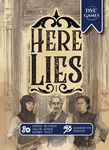
So, this was probably the most uh memorable play or series of plays over the weekend. Uh we were very lucky to play this with Rodney Smith who taught it to us actually, and he kind of like led uh the game. It's normally goes up to I think six players max. I think we had at certain times seven or maybe even up to eight uh total. So, us, we also had uh Dave was there, Dave from Victory Points, who I I don't think he we actually mentioned him earlier in the episode. He's the reason we got to go on the trip. Um and then we were playing with Tim as well from Dicey Business. Uh Chris George from Room and Board. This is where he joined us as well and got in the game. And uh we learned about his uh love of goblins. Um and so we played this game, yeah, which maybe we'll circle back to afterwards, but we uh So, this game Here Lies uh by design team Jasper Beatrix, and it's basically a game of sort of like you're all hidden Sorry, um uh investigators, and there's a lead investigator, so this was the role Rodney was taking on. And so the lead investigator has certain information that they're aware of, like a crime that was committed, someone who was murdered, and they're basically trying to uh communicate clues um to you and all the players have like cards that you're dealt out that have different abilities on them that you can use to get information from the lead investigator.
So, the lead investigator is working together with the rest of you, um but they're very limited on what they can actually say. So, there's I think what, 25 cases uh in the game, and so you just pick one of the cases, and you kind of like read out a story about some something that happens, how someone, you know, was their body was found or whatever. And then there's a variety of depending on the scenario, there could be like you have to figure out the motive or who was responsible for it or which events took place, um the location, etc. And yeah, you have a certain number of like time uh and number of rounds, and the cards will say like this card takes one time or two time or three time, depending what it does. It could make someone have to, you know, the lead investigator have to draw something for you or circle a word on something. It's I found it really clever, actually. Like I know this has been compared a bit to games like Mysterium and stuff like that, where you're trying to communicate, um and I haven't played like a ton of these, but this one definitely is like the best one I've played of this kind. I think it was really fun to play it with with you guys, having everyone kind of like it felt like a game where just the the inherently the design of the game made it so the quarterbacking wasn't really a thing because everyone had three cards in front of them. You're all kind of like looking at what you have and trying to suggest the group like, "Hey, I think this would be good to use at some point now. Like let's get some information and narrow this down."
And someone's like, "Yeah, that's good." And then we're kind of remembering someone else's card for later. Um yeah, what do you what do you guys was was there like a specific aspect about the design of the game that stood out or was it just kind of the memory of playing with with like Rodney and Chris and Tim and and Dave? I mean, like both for sure. But I I I'll the one that I'll add that like I the comparison I thought right away and I mentioned to you guys before is to Dark Stories. Um it's just like a it's a more gamified and in-depth uh version of Dark Stories. And I think I I like it better. It's it's just um it obviously is like the difference being like it requires a table and kind of a group to sit around it versus like Dark Stories, which you can kind of just do like at a campfire or whatever cuz you're just reading a card. But it's those kind of story stories and cases where it it's very clever what the answer is and it's it's kind of out there in some in some ways and you have to kind of figure it out.
So I really liked that. I love Dark Stories and when I found out that like I I loved Dark Stories before I realized it was a card game. I was just like finding them online and doing them when I was on cabin trips and things like that. And so now knowing that there's this like more in-depth uh not party game kind of where there's just it feels like made for a group that you're just kind of like want to play a game but you don't want to do anything really like strategy or tactical I should say on the on the board. And you want to be able to like work cooperatively together in that way. Like it just felt like uh the game that I was kind of looking for when I got into Dark Stories in the first place. Um and yeah, obviously super special to just play with a bunch people that we've known almost like parasocially online. Um but all meeting together for the first time and sort of having to work together in that way just felt awesome.
And I mean like who doesn't want to be taught a game by Rodney Smith in the first place uh live there in person? And I think it's the dynamic between the lead investigator and the other investigators where in games like Mysterium, you know, the way that you can communicate is very limited. Where in this game, as the investigators, you're given these powers and cards to enable that communication in a in different ways, right? So, for one of the things it might be you write down six words and then the lead investigator will circle the relevant words to what the case is, right? And if you're able to put out things like, you know, you're for one of them um one of the cases reef was like a big clue that we just put in there as one of the um words that we put down and like that was like an essential part to guessing what was happening and like seeing that unfold uh I can only imagine um being the lead investigator and being like, "Okay, yes, they're going down the wrong way." Or it's going down the right way. But also on the flip side, too, is when you start spiraling and then people just start guessing things all the time and theorizing and not making any progress. You're like, "Hey, can we can we keep it moving? You know, like keep it uh keep getting them focused and back on track, too, and like making sure that they're not assuming this clue meant this way." I think that there's a lot of creative ways for the lead investigator uh and
choosing what clue they give, but also at what time they give that clue to um the group to help steer them in the right direction. I think it's, you know, they're not just sitting there going, "Oh, okay, well, they didn't understand that card, so I guess I guess I got to give them another card, right?" Like getting that that dynamic, I think was was really really interesting. And it's like key to remember that I remember I I had first like big kudos also to Dave and Rodney for being the lead investigator cuz the they both did an awesome job even just keeping like a straight face to like really keep the spirit of the game intact and everything. Um but yeah, like I'm glad you called it the creativeness because I think that it's also key to call it the like it's very much a cooperative game even with the lead investigator. So the lead investigator are like they want us to get everything.
They're not trying to make it harder for us, but working within the rules of the game like you do have to find like creative ways to sort of convey the information you need and I feel like that the three of us never played that role, but I think we'd all have fun with it in different ways and it would just be interesting to like see how we each approach it because everyone kind of can put their own stamp on how they how they answer certain questions or how they respond to certain clues and I really like that aspect of it. Yeah, and it can create these like certain moments. Like I could tell I could literally say like right now, "Hey, remember the pose that Dave did when he was the lead investigator?" And yeah, like you guys are smiling and nodding, right? Like you immediately know. Like that's good that's what comes up on my phone now when Dave calls me. Like that's that's what it is.
Or the fact that we were all impressed by his little sketch little doodle of the person laying in a bed there and realized later like, "Oh right, yeah, he used to be an architect."
Probably should have given the guy a little more credit, but the last thing I wanted to highlight was about the task cards or whatever that we can that we used. One of the ones that I thought was great and made everyone kind of feel involved was the card where it's like I think it cost one time, but the lead investigator got to choose which person's theory is closest so far. And we all got to go around the table and be like, "I think it was this person with this item at this location or whatever." And then having him just like put the card down pointing to Dylan, we all went like, "Oh, it's Dylan. Dylan knows." Okay, so what is it? And we all try to narrow down from there like lots of lots of really fun moments just with how well designed the game was. So yeah, I think we played three of the scenarios in there and there was 25 and we spent like a good, you know, each one probably took 20-30 minutes. Like I think you get a decent money's worth here and like because there's different role cards that have different ability cards like you can even I think if you wait a little while between play play sessions you can go back and replay some some of the scenarios eventually as well. So Anyways, that was I think that's like probably all we're going to cover in terms of specifics of games we played.
We had lots of fun playing a lot of other games but and some of those will probably like actually review on our channel someday and whatnot. So I think we'll leave it at that. Is there anything else you guys wanted to add about Canada Place quick before we move on to our sponsor? Any other final like funny stories you want to share game experiences? I'll I'll share this very very quickly but when we landed at the airport we laughed pretty much the entire time because we went to Subway and obviously if you if you haven't been to Subway just to clarify like you you tell them what you want to build how you want to build your sandwich and so we or each ordered a sandwich all three of us and I was going to be paying for all of it like all of it together and so we all paid like built our subs like we all described how we wanted to build our subs and everything and we got to the front there was someone to my left like in front of me in line and I noticed that they grabbed what I thought was one of our subs but I was like okay I must just not I must be mistaken and then when we went to pay she said to just these two subs.
I said no no it's the three and then the guy beside us spoke up and said no no that's my meatball sub and so we realized there's only two and so in my head I'm like okay this guy obviously took my sub I'm I'm still confused about how that happened. He paid but like he that's not what he ordered he even ordered and so the people were very with the were working there like they were very confused and they didn't really understand what I was trying to say and so I I I had mentioned like this the guy over there took took my sub or and and she called over her manager or the other person who was working there and they were still asking questions about it. So I wasn't getting like mad but I was getting to the point where I'm like I just need you guys to understand what happened here. So I turned around and I pointed to the guy who took my sub and I said that guy is eating my sub and he right as I did he's taking a huge bite of the sub.
And so it turns out he just went up to the counter like they slid him the sub and said combo and he said yeah, he paid for anyway to name my sub didn't order anything just or ate the sub they slid towards him. So I don't know if that's how he thought that Subway works but we pretty much talked about that multiple [snorts] times over the the course of the week. It was just just very weird but very great. So glad it happened. I just love how casual you were dealing with Yeah, that guy right there. He's eating my sub.
What What are What are the chances of that happening too? Like that's just a legend and him enjoying the sub too. He He seemed to like it. I got complimented in line being like well at least you know you built a good sub.
Yeah, it's true. Yeah, I mean I I just wanted to say again thank you to Canada Plays and the the people who organized it for having us there. I think it was just again a great opportunity to to connect and one that's um put on here in in Canada which we appreciate. Yeah, it was a great time and it was our first time attending. It was Dave's I think third or fourth time and we'll see maybe we can tag along with him again next year hopefully. So I think we'll leave it at that for Canada Plays but let's take a quick break to hear from our sponsor before we jump back to our main course to talk about the Board Game Quest. All You Can Board is proudly sponsored by Victory Pints, our local game store of choice here in Winnipeg, Canada. We strongly believe that Victory Pints is the gold standard of board game stores not just here in Winnipeg. Their main priority is having a wide selection of games, many of which you won't find elsewhere.
They ship Canada-wide, $15 flat rate, or free shipping for orders over $200, and even take requests to try and order in specific games. They also have a used game section where you can trade in games for store credit, and maybe even find some hidden gems that others have traded in. Note that the used game section is only available for in-person purchases and trades. Again, located in Winnipeg at the corner of Henderson and Hespeler, check them out at victorypoint.ca. A massive thank you to Victory Points for all their support over the years. All right, we are back. So, what does the concept of a board game quest mean to each of us?
So, kind of want to ask not only that, but also how do like how different do we think that is for other people? Like, does everyone experience the same board game quest? Is it right to even look at it as a quest? Is it more of a journey? What do you guys think? I think you can definitely use journey more so. I think quest usually means probably there is a target goal, and maybe that is definitely relevant for some people, but journey also just implies it's very open-ended, and it's maybe it ends just, you know, unexpectedly or whatever it is, right? So, how do How I see this being is kind of a board game journey. So, like, where you start, and I think there's a lot of like commonalities between those stages, right? Like, early on, like, when you're first getting into board games, you've got that first game that goes like, "Blah, what's What is this? I can't believe uh board games did this. Um I don't know why that's almost like Arnold Schwarzenegger playing a board game."
"I can't believe they do this." Um and then uh everyone has that, I think, that would they just turn into Arnold Schwarzenegger when they get that board game. Um, and then like you start buying games. You like you're like, "Oh, I'm going to this one this one and this one." And there's all these different journey these different stages that potentially, you know, not all of us are going to go through, but you know, that you might find commonality. And so, to me like the journey or the quest is kind of like how you your tastes almost evolve over time and you start kind of curating and that reflects a little bit on maybe who you are as a person and who you're bringing around um, your board game table and then what kind of games and experiences you're trying to curate for yourself um, as you go forward and seeking out like those kind of different experiences and then maybe not so much some of the other ones, too.
Yeah, I um, I yeah, I definitely agree. The reaction kind of described it in my notes when I was thinking about it before was that it's like it's obviously going to be like very person-dependent. Everyone's going to have their own sort of either journey or their quest in terms of like where they want to get with board games and things like that. And so, it is kind of like person-dependent, but it almost feels like the regardless every person is going to have this sort of like spectrum that is like different stages as you as you go along it like there's different stages or you might sort of like flip-flop between them. Like right now, I'm into very like I don't mean this to me per se as an example like you might be at a point where you're like, "Okay, now I'm into very like heavy war games or whatever." I've gone through this phase and then all of a sudden that spectrum kind of might go back in the other direction and you're like, "Now lately I've been playing a lot of two-player like short shorter games."
Like it kind of bounces around. And so, I described it that way, but like also almost like to illustrate that it's not completely linear at all at all times. Like it can be and I've certainly had like a a linear path that goes through, but I feel like there's uh, for some people going to be this swing in different directions and you might kind of like it might in theory seem like you're taking steps back, but there's no like it's not like you have to reach the the end at a certain pace or or that there is an end for a lot of people. Um, and that I I agree with what you said that like uh, there's always there's often I should say like this epiphany moment that people have with board games, but they're all I I feel like you only really have the concept of a board game quest or a board game journey if you're if you get to the point is the way I described it is you get to the point where you you say that board games is one of your hobbies. I feel like for some people they it's not a hobby for them. They just sort of play board games here and there. They go to this person's house to play code names.
They go to this person's house to play wavelength. Sometimes they won't even host their own board game nights or if they do they only have Catan or things like that. And so to them it's like if they had like if they were asked like what are your hobbies they might not say board games, but as soon as you say board games is one of your hobbies I feel like then you you can relate to there being this idea of a quest or journey in the sense that like you start you have that gateway game moment or you had that moment where you got into heavier games or you started to buy a bunch of games, you started to host your own game nights, things like that. Um, I feel like that's like the cusp. It's like as soon as you're like, "Okay, I I I play board games in my spare time." Yeah, I think there's like there's definitely a few people that I know that have like a lot. I wouldn't say a lot I mean a lot of games. Let's say like 20 games, but I don't think that they would consider themselves on a journey or at least they don't actively know that they're on the journey. You know what I mean? Like Maybe you never know that you're on a board game journey until you realize like, "Oh, yeah, actually I went from this to this to this."
We're all on a board game journey.
Well, yeah, and I would now I want to ask you guys like was there a point I guess before I weigh in too on mine like was there a point where you like started thinking of this concept? Like do you feel like from early on in the in the hobby when you're playing your first games, you know, a year or two years in did you start thinking about like this trajectory of like where am I going to be in terms of board games in 5 years, in 10 years? Like were you thinking about the big picture already? I I I think the the thing that triggered it for me was when I bought a Kallax, like a shelf specifically for board games. And I was like, I know I'm going to be storing board games here. Um at some point. Like I've got like three right now, but and it's going to be full at some point. And I think that was like the moment where I was like, okay, I will get to probably this point at some point, but who knows when that is.
That that's that's a great one. Like that's if you turn board games into a hobby, I feel like everyone has the moment where you have to find a storage solution. Like that is a turning point for people where it's like, okay, I can no longer just put them in this cabinet or put them in this pullout shelf in my coffee table or whatever. Like it's getting to the point where my board games have to have a space. Am I going to build shelves? Am I going to buy shelves? Am I going to repurpose shelves I already have? Like that is like a turning point for for a lot of people. It's like you're committing. You're committing to this hobby now. Okay, interesting. You and a lot of what you guys are saying is going in a bit to the the stages that I've laid out for for something I want to bring up a little bit after, but I I'm I also want to go back to a second of what you were saying, Dylan, about like it not being linear. I think that's interesting cuz initially when I'd written out a couple notes and was thinking about it, I thought about it a little more linearly and then it took me a second to kind of realize like, yeah, you can either have moments where you pause on your journey or stop entirely or go back to uh like a previous like phase or stage of your of your journey or of your quest or whatever you want to call it. So, it's definitely not linear.
Um I think And I think what you said about like if someone's is not like into the hobby to a certain degree is also very on point. Like I think that's there has to be something very intentional about a quest, I think. It's like it's the It's before you get to the level of like obsession, but there's kind of like a this like burning desire to like see what's next, right? Like the pursuit of something bigger, like what lies ahead kind of feels like you're stumbling upon something and it's like there's this kind of like mystery that's like kind of stringing you along. And so I don't know I it's something that I don't think I thought of a whole lot in the first like couple of years, but it was I think every time I started to like discover a new mechanic or a new style of game. Like I remember like whether it was like discovering for sale and and modern art like auction games and or or discovering something like like a Tigris and Euphrates like an old kind of game that felt like what's this like dusty game that has been sitting here in the wings for like 20 30 years that I didn't know about that starts to I think make me feel so small compared to the bigger hobby and then start thinking in the grand scheme of things like how much bigger is this hobby, how small is my perspective. Like yeah, I've played 10 games like even first getting into it being like oh man, like wait till I my friends are going to love these games like thinking about, you know, like me knowing 10 games compared to my friends who had known like zero of these new games at the time. So where we are now is like it really puts in perspective how different you know, people can be in terms of where they are
on their on their board game quest or even like you said even if someone is on a board game quest or even wants to be. Yeah, totally. I But now I'm very curious and I know this is this would send us into the next sort of topic you had here, but like what what are like the stages in your opinion? Cuz I'm just like I feel like also with you picking this topic and too like I I just yeah, I'm curious like what you do how you define the stages. Okay, so I I I tried to break it down here. Um, I'm going to I put a couple keywords for each one, but I have it broken down and it's sort of five stages, but sort of eight, okay? Okay, so and some of them are very quick, sort of simple, but it's because the three at the end are kind of Well, whatever. We'll we'll see. We'll see. So, step stage one is entry.
Okay? I'm just going to actually read them all out first, okay? Entry, discovery, down the rabbit hole, expanding, all consuming, settling into comfort zone. That's number six. Number seven satisfied, and number eight at peace. So, I'm going to come back to these and I'll elaborate a little bit on them, okay? So, stage one, entry. This is just literally like your first play, your gateway into the hobby. This is where you're still kind of oblivious to like what modern games are, but it's like either you got pulled into a game at someone's house or you stumbled upon some digital app or whatever, but it's like your your initial dipping your toes in moment, okay? Stage two, discovery, is where you actively choose to do something to engage more in this hobby. So, whether that's you buy your first game, you show up at a game night intentionally, you start asking your friend, "Hey, can we play that game again?" That's where you're kind of sort of starting to discover that the hobby is bigger than you initially thought.
Okay? But, it's a distinct difference, I think, past the first like entry. Cuz this is you again choosing to get more involved. Step three, down the rabbit hole. This is where I have in brackets kind of like falling in love. This is where you start like, I think, researching games a bit, whether it's on BoardGameGeek or maybe you start dabbling in YouTube videos or whatever social media stuff. Um maybe you start hosting or organizing game nights. You start making a point to attend your local game nights at your local game store. You are now officially in the hobby, okay? But, this took till stage three. Stage four, expanding. This is where your collection gets bigger. You start to get thinking more about your shelves, whether that's Kallax, whatever. Um maybe you start getting into like crowdfunding games. You start getting into that whole thing, deluxifying components, buying expansions for your games. This is where you're having a bit better of a taste of like you're sort of still feeling out and figuring out what you like, but you're you know, you've played enough games that yeah, you're buying expansions and maybe deluxifying components. And this this isn't a lot this doesn't happen to everyone.
You know, I um I didn't do like a ton of crowdfunding, didn't get a ton of like I don't have a lot of games with deluxe components, don't have a ton of expansions, whatever. So, we can circle back like not all these steps are people ones that everyone go through. Stage five I have as the all-consuming one. So, this is kind of the next level like you're watching lots of YouTube videos, you're listening to podcasts, maybe you're starting to dabble in game design, maybe you're active on BoardGameGeek or a bunch of like Discords, maybe for other content creators or so or whatever. Um maybe you're checking used game listings. Like this is where you're past the point like where This is almost the point where I think a lot of people are almost ashamed to tell certain people that they're into the hobby this much, right? Like this is the where people maybe don't like yeah, tell like people they work with or like yeah, I've been been listening to board game podcasts all day while working or whatever.
Um so, then I think beyond here is like where it either gets to a point where most people don't reach or are more circumstantial to the where you get in life, whether it's age and stuff like that. So, the last three stages I had stage six is settling into comfort zone. So, this is where you might still be acquiring games once in a while and try wanting to try some new stuff, but you kind of feel a little bit jaded maybe and you're nostalgic for like the better days of gaming. And that, you know, maybe you're you just love the thrill of finding used games or you're kind of chasing those grail games or the hidden gems at this point. And then I have stage seven as being satisfied. So, this is where you're kind of just happy with your collection. It becomes easy to resist new games. You're almost FOMO proof. Um you'd kind of be If this If this was your collection for the rest of your life, you'd be okay with it.
And then stage eight as where things maybe get a little bit bleak. I just put at peace basically like further scaling back for various possible reasons so whether that's, you know, old age, cognitive decline, lack of a consistent gaming group, you know, people move away, lose interest, whatever. I don't know. What do you guys think? That too many stages? Do Do any of them resonate with you? I mean, yeah, like tons of the tons of them do, but I it's also like there's I mean like there might be like ones where I'm like I feel like I either didn't spend time in or I spend less time in, but I feel like most of those are ones that I can either resonate with or be like, "Oh, yeah, like I had I can I had that period. This is when I was into this." Like it all made sense, but it's also yeah, like you laid it out. I And I like that I like the the sort of like three I felt like the last three are almost like a an epilogue in a way. Like And that's the wrong term, but that's the best I can come up with where it's like the the first are the five stages that are more common.
The other three is like if you get to that fifth stage, these are the three sort of like stages that'll come after if you cuz you can't I feel like no one can stay in stage five or essentially the where you're like you're constantly all consumed by it forever because I I've never known any hobby that I've had to be like, you know, I've stayed all consumed. I I I was all consumed by World of Warcraft at one point. That like that is now in my past. I'm not going back to it, right? I'm not saying that I'm leaving board games. I just more so that like the way I'm approaching them is going to change at some point, right? I I will say we have seen some collections on our YouTube channel that felt like it is they are staying in the all consuming
uh stage, I would say. Yeah, that that's true. There I mean I I would I would I want to hear from the people that can stay in the all consuming stage cuz I don't feel like I have the mental fortitude to do it, but I wish I did I think in some ways, but Right. And I I should say too that like the way I've laid this out is pretty a pretty narrow view because I think neither one of us three considers ourselves like collectors. Like not, you know, we all like get rid of games occasionally. We're not looking to buy things to keep them in shrink specifically to resell them. Like like we're not not like again, there's nothing wrong with that either. I'm just saying that the way I've presented these like I haven't really accounted for someone who wants to keep acquiring games. But maybe they're maybe their quest looks different in terms of what those final phases are or maybe it doesn't have to be a final phase. Maybe they want to be collecting games their whole life or whatever. So Yeah, totally.
Um so the way that I laid mine out was I did I wanted to have one that was just like super simple and so I did a three stage one and then I did a five stage one.
guy doesn't need eight stages. This guy doesn't need eight stages.
Well, I did I did do a five stage one but the five stage one is more like specific to me and I did it a little bit differently. So the the three stage one is more like general board games and I kind of did it as the casual stage, the hobby stage and the connoisseur stage which is just like you're in the casual stage cuz everyone at some point in their life generally like has played a board game whether that's Monopoly, Trouble, Hungry Hungry Hippos, anything. And then there's like the hobby stage where you decide like this is something I want to do more regularly. Maybe I want to host my own. I need to have my own collection to be able to do that. Or I want to find the games that I like. But then when you start to stay I want to find the games I like, you get into the more connoisseur stage where now like you said you're like consuming YouTube videos, maybe a podcast, maybe you're just like looking things up on BGG more, maybe you're like talking to to people working at your local game store and getting suggestions or you're attending game groups and that's when you sort of like start getting into the stage where you might be curating a collection and and stuff like that. With the five stages was more of that like I found that I went through um specific genres in a in a kind of kind of order.
So like I have the first stage uh for me as being like the party games or party slash casual games. Like games that you more play in groups and and you kind of for a while at least for me that's what I would would come into my head when the when someone said board games, it would go towards those type of games. Whereas now when someone says board games, it goes to some of my like more favorite strategy games and stuff. Um so I had that and from party games that went into gateway games where it which is like pandemic, you showing me Agricola, me uh discovering Feast for Odin and things like that where it sort of like gets you over the cusp into being like, "Okay, there is a hobby here. There's more to board games than than I thought there was." The next stage for me was medium weight or to heavy games where I'm like really being like, "Okay, like what can this hobby do?" Like show me some of these more in-depth systems where I have to feel like I'm reading a 46-page rulebook, but somehow that's also great a great part of the experience. Mess mess me up a little bit, you know?
Yeah, exactly. Like you get you really start to see like what is behind the curtain of this hobby. And then for me, I have the final two steps is sort of like I don't know which order I would give them in, but this is sort of like the next stage, which is um regular campaign groups. I feel like I got when you I get to the point where I was like whether it be campaign games, whether it be like um legacy games, or anything that you have to play even arcs or like it's mini campaigns, you're being really intentional saying not only am I going to play board games, I'm going to play the same board game multiple times cuz it takes multiple sessions to complete and we're going to all commit to getting together for that specific game to play. Um was sort of like the the the last stage that I went through, but then I feel like the final final stage, the real final stage is just to saying, "Okay, I've kind of seen everything the hobby has to offer, but now what do I want to be playing for the next, you know, 2, 5, 10 years?" I can't play everything. I think you get to a point in the hobby where you realize you can never play every single game. Even with us who have like a YouTube channel, we have more incentives or getting sent games, it's still impossible to play everything.
You're always missing some of the big ones and the and the popular ones especially. Um and so you get to this point where it's okay, what what do I want to focus on playing? What do I want to focus on like uh which genres are resonate with the most? Which ones bring me the most most joy? Which ones that I want to share with my group and things like that. And so it's kind of like that connoisseur stage where it's more just like I'm curating even if it's not curating that your collection like like Carlos series, it's more like curating what do I want to spend my time doing because I can't play them all even if I wanted to. I just don't have that that time. And then the last little thing I'll do is I put this like bonus one where I feel like in my in my old age, I may anticipate in a specific um direction that we'll get into this more in like maybe with the one the last ones, but it it's like I see myself going to the place of being like a DM in D&D groups one day or like really sort of like having the bulk of my playing being if not campaign games just like even if it's not a campaign game like a it could be like Terraforming Mars, but but really being like every time we get together for we're going to be playing this game and I'm going to have games that I've played like 60, 70, 80 times in person one day which I'm not even really close to that for a lot of my games like it's if you especially if you take off like BGA, especially like I'm like Gloomhaven would be like the main one that I've played the most that and consistently. But it'd be nice to like take a game I like like Keyflower and say I'm playing that once a month every year. Like that would be amazing and I just I'm not there, but when I'm in a retirement home one day that'll be my that'll be how I spend my days. When we
are Yes, exactly.
Yeah, I I like I love all your stages. I think they're way more fleshed out than mine. I treated this more of just like almost like a chess um stages. Like you got the opening, right? The entry, the beginning, the early game, the middle game, late game, end game. So like early where you have a lot of pieces on the board, there's a lot of options in front of you and you maybe if you're new to this, you don't know which way to go, right? And then as the game progresses, your options kind of narrow, you learn a little bit more. You start to pick out, okay, uh I like these types of games. I like these types of games. And then when you get to the late game, then you really start to be you get to be a little bit more intentional with where you are spending your time. I really like the point and I think when Carlo mentioned it specifically about like organizing your game nights and you two, Dylan, I think that is like definitely it probably has to be a part of the criteria here because if you are saying, "Okay, everyone who's coming together, you we are going to play board games here." You are taking that onus on you and that initiative to put that together and put that out in the world, too. And then the next level of that is, you know, for your birthday, you're going to a board game cafe. Then it then you're you're in the all-consuming phase. Like you're it's all over for you at that point. So, and then yeah, the end game would just be kind of yeah, where you're ending up, you know, and for that who knows.
Yeah, that I feel like that stage is like very it probably exists for everyone in some way in their in their journey in their quest, but it's very person specific cuz everyone's going to have sort of a different end goal. And it like that they're if we're especially if we're using the the term quest here, like everyone has a different sort of like you know, jewel at the end of the at the end of the the dungeon or whatever to to get to grab or whatever better analogy you can think of in terms of like this is where I want my board game hobby to end up. This is what I imagine it's going to be like when I have more freedom or what what I want to be playing. And so, that's sort of like going to be different and it's more specific to each person, for sure. Yeah, I I like that you were speculating about uh you know, playing you know, whether it's campaign games or being like a DM for D&D when you're older and stuff, Dylan.
That's that's interesting. I I like I know where we'll get a little bit further into this about like you know, where what stages of the quest we're on and stuff, but this made me think like what other things could be like are there any steps beyond this that you think I haven't accounted for that either you think like we might reach or that other people would reach like things like painting minis like I know that's not anything something that any of us do but we we know some people who do is that like maybe not further along the quest just a different path content creation
kind of thing right yeah exactly like we went content creation someone else went painting minis like I guess the way to express yourself with it once you get to that all consuming phase it's like hey I'm so obsessed with this hobby I need to find some other way to occupy more of my time with this hobby of gaming so what can I do and I guess we chose to do this and other people yeah paint minis or like look what about even trying out like 18XX games finally or like trying out war games or coin games like I would put solo games in that category
right
solo games is now it's own genre that like because it's being supported a lot more that like I feel like it's more of an intentional choice like not only do I want to like continue play board games with people I want to spend my solo time also playing board games because it's not for everybody like it not having the feedback of people around you is sort of a deal breaker for some people I know that's we've talked about that with Dave where Dave says like he would like to try to get into solo games more but he he likes the like sharing the moments that are happening with people around the table and so I feel like that's a whole other like I think 18XX solo games I feel like that's all in the same thing with like painting minis being a D&D DM being someone who's playing campaign campaign games more regularly or a single game more regularly I feel like that's a stage maybe you get to when you feel like okay I have the time now and I've also gotten past feeling like well yeah I could play that game a sixth time but also what about these 17 games I haven't even played at all that I want to try out you know it's almost like an RPG like skill tree right like where you can just you branch out into war games and maybe you like you're like okay I've done some a a bit of that or like you like oh, I put, you know, two points into D&D and like whatever it is, right?
Like I think that could just be part of almost like a tier in and of itself, right? So, you start really exploring or I mean, maybe it's part of expanding, I don't know. We should we should design a board game journey tech tree, which essentially is like, you know, where the branches that go to like 18XX games and all that kind of stuff and if you don't take it, well, then you you went into painting minis, you don't have time to do 18XX games the proper justice and paint minis, so you decide to paint minis, right?
Yeah, you teched up in one direction. Come on, pick a lane here. Yeah.
It's interesting. Yeah, I So, let me Oh, sorry, go ahead. I was just going to say, Carlo, I do really like the way you had this structured and I think thinking like linearly, like it kind of it almost encompasses a little bit of like kind of Dylan's journey as well, too. Like you can kind of fit um some of the categories or stages that Dylan has into the slots that you have here, too. Yeah. Well, yeah, it was interesting to see the the smaller smaller scale that he had and I'm like and different progression with the the campaign games and stuff. It's just I I find this interesting to look at this through different people's perspectives and I wonder how many other perspectives we would see just talking to people in our Discord about this and whatnot. But um so, I want to I want to put something to you guys here. So, uh going back to the scale I used real quick and I'll just remind you about a couple of the numbers cuz I'm going to put forth um I'm going to propose that I think we're all probably in stage five of what I suggested, which is the all-consuming phase. Um I know we all
I mean, Carlo, we're called All You Can Board, so
Exactly. But what I But here's what I wanted to say is like, how long do you think we've each been in stage five? And when I talk about stage six being settling into a comfort zone. So again, the difference between these I say a stage five all consuming being like yeah, you're you know, watching stuff on YouTube podcasts whatever maybe dabbling in game design active on board game discords etc. Five plus I guess is where we're at when you like have a YouTube channel or whatever. You know, podcast um so step six being the comfort zone where like you're kind of thinking about like with the better days of gaming you're maybe past the most exciting moments you feel like you know, you're almost on the other side of the hill but you're still you're still really enjoying things. Maybe chasing those hidden gems like how much longer and is that the next step for you for either of you or and like and if so like is that like two years away is that five 10 15 years away is it not even feasible to think about how far that is?
I feel like there's aspects of that I'm I'm already in but it's more so on the side of like not being as drawn in by some of like the FOMO elements that I used to be a little bit more especially with crowdfunding stuff like that like there's parts of it that I'm calming on but not in a way where it's like I'm cooling on like I'm distinguishing them it's not like I'm cooling on board games I'm just I'm learning to be okay with like not playing all of them or like even really you know, in the past a game like Old King's Crown getting so much attention I'd be like way more chomping at the bit to be like not because I think it's going to be one of my favorite games but just because everyone's talking about it I'm like I need to play it. Whereas now I feel like every so often I it comes up and I'm like oh yeah, I still really want to play that but I'm also I also realize that like kind of like seven to eight times out of 10 when these really popular games and I finally play them I I still might like them but they never end up becoming my personal top favorite games like I think like a game like Ark Nova is the last time that a game I can remember getting as much buzz as like Old King's Crown did not that it's probably not the exact same but like that much buzz. Um and like I I didn't really it's not that I didn't like Arc Nova, but I was kind of very neutral on it and yet that's like the number two board game on BoardGameGeek and on their chart and like I I don't feel that way about it and like Tainted Grail is another one where it's like high up for some people and I was really excited for it and it didn't really land the same way. So, I think I've been not burned enough times, but I've learned that lesson enough times to sort of be more at peace with some of it. And so, some of that is from your later stages, but I don't
necessarily think for me it's going to be like I'm much more on like the the spectrum element and the non-linear way of existing in stage five where for every hobby that I'm into or everything that I'm into, I go through stages where I let it consume me like a ton where like I all I'm doing is really like look in my spare time is like looking things up or like shopping for new ones, playing solo games, things like that. And then I will always go through periods where I don't stop playing board games, but I play them less or maybe I don't have any campaign games on the go or things like that. So, I kind of keep fluctuating back and forth in in that little realm on the spectrum and I feel like I'm just going to be fluctuating there for a while and really the next time I like go to a new area, it's going to be because I'm going to be much more honed in on either like a couple specific games or I'm going to feel like the way I like to get my collection is just like there is like 10 slots that are changing constantly. Like they're on the go, but the other slots are like mainstays and I only part with them if it's like I really feel like I've now I I just am not going to go back to it.
But it's like there's like this rotation happening with the the remainder of this of the slots. So, it feels like I actually have like a manageable collection cuz the battle I'm always fighting now is I have games on the floor, I have games in the basement, I have games that you can't see cuz I can't display them. Do I buy new shelves? What do I do about this? And I just want to get that to a more manageable spot and one that I can kind of adhere to and it's not driving me crazy or bringing me anxiety. So, before before Brandon jumps in, I'm going to ask you something, Dylan, cuz I want Braden to answer this after as well. Where What percentage would you say your board game collection is to being complete in the sense of like Let's say that at whatever age like age 50, age 60, whatever, at some point your life you're like, I have pretty much all the games I want. I'm happy with my collection. Like if if money wasn't an issue right now or whatever, like what you know, is your collection like 50% complete, 80% complete? Where are you at?
It's It's probably more like 40 to 50%. Like I feel like there's lots more I want to do with it. A lot of it has to do with shaving it down, but I have to make tough decisions that I'm not going to be ready to make until I am Like there's games that I still might only play like once every 2 years that I still would rather keep and play once every 2 years, but it's going to get to a point where I'm going to say, "You know what? Like How often do I play El Dorado? Am I Am I I love it. It's a great gateway game, but am I introducing people to board games any longer? And if I'm not, how often am I going back to that versus by now has another deck builder come along that I just feel is more crunchy, more meaty, that I'm getting more enjoyment from it. I don't need the entry-level stuff." You know, like I feel like that's going to be a transitionary period where games like that, games like Rebirth, like ones that are in my collection to more be accessible, I'm not going to be looking for as many of those, and I'm going to be more like curating to be like, "What are the games that I specifically want to just dive into more of?" And that'll sort of be the what I get my collection to the next stage. I I feel like there's a ceiling right now of how much I can curate it because there's some games I'm keeping more so for others than myself, and that'll I think the percentage of that will just shift a little bit over time.
Yeah, I think I'll start with your last question first, Carlo. I think where my collection sits right now, I would say it's probably like 30 to 40% of the way there, and that mainly has to do with like right now where my collection is, I feel like I'm in the all consuming, not only from like my habits and what I'm consuming in terms of my spare time, but also I feel like my collection is is exploded. Like I talked about that Kallax that I bought that I had three games. Like I'm literally like dying. I don't have enough room. I'm like like it's just like it's all consuming right now and one of my goals is going to be to really hack and slash my way through those games. Um and making sure that I am almost curating and I think that almost puts me maybe slightly past the all consuming or maybe it's like a stage after where it's like the all consuming is like the the um uh it's the momentum. Okay, so the all consuming is the momentum that pushes you forward and you're going you're rushing you're rushing you're just headlong you're getting games you're you don't care.
Uh whatever the new hotness is and then all of a sudden you start realizing like oh I like slow down a little bit now. Like you're not going to get all the new games. I'm not going to be able to play them. Really focusing on okay, what are potentially these experiences that I'm really going to enjoy based on what I've enjoyed in the past and then really start to kind of get an idea of okay, I don't need this game like Dylan said right like why am I holding on to this? Um you know, why am I holding on to Captain Sonar? Am I ever going to play it? Yes, yes, you are. You absolutely are you beautiful. Uh sorry, that's a side tangent. Um Yes, so I think right now where I'm sitting is definitely in that all consuming space, but I'm starting to really kind of get off if the all consuming was a subway train, it's starting to pull into a new station and I'm maybe thinking about opening the doors to get off to the comfort zone if you will. And maybe maybe have maybe you a transfer and you're going to be using that transfer to get you somewhere. And then
I'll need a ticket to ride. Yes. Oh, there you go. What a great analogy.
So, it sounds like the comfort zone still like not not that close for either of you, but you're both you both sort of have it in mind. Yeah. I think that's almost like the goal, right? Like getting to somewhere where you're comfortable with your collection. Um but and maybe it's going to back you're going to you're going to backslide or go back into all consuming, right? It's going to you know, the train is going to ramp up speed again, and all of a sudden, hey, you're back in it, too. Like I got so rid of so many games. I got all this space. For both of you guys, it's going to be when like in 20 years' time, you know, when your kids are adults and and maybe they're starting to move out or whatever, all of a sudden, you're going to be like, I'm going right back into all consuming. Kids are out of the house. I'm going to be playing games every night. Yeah.
Well, actually I just funny you bring that up because that's what I was like I used to think of this years ago cuz I think I got into the all consuming phase probably around like somewhere between 2008 like 18 2019 like around when we were thinking about starting this channel. Um and I remember it was like yeah, a couple years before the pandemic hit where I started like really listening to podcasts and like going on to BoardGameGeek more often and stuff. And so, I remember thinking for a while like even before having kids about like what my collection would look like and all this kind of stuff. And I think having kids has sort of I think opened up that window of like I think settling into the comfort zone of what my collection my ideal collection would be or whatever has just been pushed back a little bit, and I feel like I'm going to be sort of yeah, I don't want to feel like I'm in the all consuming continuing to acquire more than I'm culling like as it is I wish I was getting rid of games more often than I am.
Um but I feel like there's parts of that stage six that I feel like I'm kind of at. Like I I'm starting to feel a little bit jaded about certain things in the industry, whether it's too many I've talked about this before, too many re-implementations and like um stuff about whether it's like AI art or companies like cutting corners in certain ways to you know, like pushing more games just to get more sales rather than pre-making games better. Like a lot of those things didn't used to bother me or really weigh on me to the in in the same way they do now. And it's like you know, I'm only 38 and I have that sort of like grumpy man yelling at the clouds feeling sometimes that I don't want to come across as like
[sighs]
yeah, sounding negative about something I love so much. Um and like in in this hobby. And the other thing is I feel like there's a bit of that you know, when you watch like a really good show and it's coming to an end and you're kind of it's that bittersweet feeling of like Dylan, you talked about this in one of our last episodes about not wanting things to end, right? Like unfinished games because you never you don't want to be out of that experience. And so part of me is like you know, this is such an exciting time in our hobby. Like when there are new game releases that are exciting and when we're at a point where we're still feel like there's so many games out there that are undiscovered to us and it's it's an exciting point to be at in our board game quest. And I almost don't want to be on the other side of that where where like I'm just like, "Ah, whatever. All these new games don't interest me." Like you know, I don't I almost don't want to be there. Do you guys feel that too?
Like the kind of like I want to sit in this like for whatever for lack of a better term, like honeymoon phase for a bit longer and just kind of like soak up this kind of all-consuming phase before I inevitably like am a bit more comfortable and and have kind of moved on to the to playing the games I love a bit more. I don't know. Yeah, like I I I I'm going to make a a bold prediction that we will forget about because we won't know for like like 30 years if it comes true. But I just feel like the the big um not secret, I don't know what the word I'm looking is, but like the big reveal at the end of all all of our quests is going to be that we don't we just don't we don't get to exactly the collection that we want. I think that at the speed that board games come out at the way that we're going to fluctuate in different points of our life in terms of how all-consuming it is or what we're buying or what we're what we're playing, I feel like we're never going to get to the like the perfect collection and it's going to maybe the at peace thing you described Carlos is going to be being at peace with always at some point returning to all-consuming where you're like, here's all these games that I missed. Here's I'm going to have to I want to buy them all again and then you start to get overwhelmed by how many games are ballooning in your collection and and then what you're going to do about it and then you call for a little bit and I feel like it's just going to be like it's just kind of a perpetual thing that but you need that aspiration to be the motivation to curate and to try to like find the balance to kind of like make your so that your collection doesn't explode out of control, but I I I have a feeling we're never going to quite be like, I did it. Like, I'm done.
Like, this is my perfect ideal collection because as we've seen, Reiner Knizia will just release 20 more games and screw screw the entire process up for us. I guess and that's the thing is there's so many things that are difficult to predict in terms of like if I looked at my collection even if I thought like the games that are on my unplayed shelf or the games that are out there that I haven't bought yet or had access to, you know, things might be different if I was able to get through all those within 2 years versus if it's still going to be 5 or 10 years before I get through all of those. Like, I think I'm further along than you guys in terms of where I think my completion percentage of my collection is. I think I'm probably over 50% now. I think my collection's probably around like 60% complete maybe just because when I look at it there's a good chunk of those games that I think I don't ever want to get rid of and I also have a lot more like this isn't a bragging thing. This is bad if anything, but I have a lot more unplayed games than you guys. I've done a lot more acquiring.
Uh almost almost stashing up for a a long winter of hibernation uh levels of of acquisition at times. Um So, yeah. I just look forward to having that time to get on the other side of trying all those games and then be able to kind of like pair things down a bit more, but what else what else is there anything else you guys foresee in in our in any of our futures? Anyone you you want to call me out for anything? Call each other out? Make any predictions about yourselves? I think it'd be I mean, for you and I, Carlo, for like the the kids thing, too, right? Like that's going to play I've already been thinking about okay, well, I'm I'm probably going to need to get some board games for my child. Um I already have. Uh but how is that going to look like in the future, right? Like what games am I going to buy for them? And then how is that going to fit into Is that a part of my collection? I don't I don't know. Is that part of the journey? Um And then Well, she's got to have her own BGG account. She can track her own games.
I mean, she already does.
Uh got to log those plays, baby.
Um you know, like I think that is definitely you going to be a consideration, too. And then just like Yeah, like I don't I don't think it's going to be where like Dylan said, there's going to be like, "Whoa, we you know, we're definitely going to be satisfied. Like this is like I'm done. Like I'm good. Whatever." You know, there's always going to be that curiosity of like, "Oh, is this new? Or like do they they mashed these two mechanics together? Like how does that play out? Or uh it's it's Kemet again." Um you know, like I think that's always going to be something there. There's always going to be that small, you know, circulating kind of past or whatever it is, right? That reminder of like what got you started into the hobby.
Um and that that driving force that led you to the all consuming phase, right? Or the all you can board phase, you know, um
Right? Like
also for for you two specifically, like you're saying, like it'll also probably matter if your kids start like going in their own board game journey. Like for like it it'll be it'll change for you guys if they become get to an all-consuming stage themselves because maybe by proxy you're just in an all-consuming stage because you're buying them games and you're helping them pick up games versus if they come to you one day and they're like, "You know what, Dad? I think I hate board games." And then I mean, that thing you got to go to therapy and all this kind of stuff. Yeah, that's going to cost a lot. But you know what I mean? Like I feel like that's going to dictate for you guys you might you might not want to be in the all-consuming stage, but if if all your kids want for Christmas and birthdays is board games and they just want to keep getting you ones, you're going to be by playing all these new games you maybe didn't think you would just because they want to play them, right?
That's true, yeah. Who How dare I make predictions about where my board game quest is going to take me? It's isn't up to me. I Yeah, I mean, I think the one thing I will say is like the last two that you had pointed out, Carlo, like satisfied and peace, like I I just don't I don't even know if those need to exist cuz I don't think that you would ever get there. Like comfort zone kind of in my opinion, like encapsulates those last two as well, right? Like if you're in your comfort zone, then maybe you are fairly satisfied, right? With where you are. Like I don't know if that like I don't know if anyone listening to this is ever going to be satisfied with their collection, you know what I mean? And if you are, kudos to you. And you're you're amazing. And I I want to be you.
No, I hear That's a good point. I made that delineation almost as like this is possible, but I I certainly don't think everyone or even most people are are going to reach that. And even even if I wanted to make predictions for myself, like I don't think I would get to that until at least like age 60 or 65 minimum. Like I think I'd have to be in that comfort like, you know, once my kids are have like moved out and are old enough like that's probably when I'll get into the comfort zone of my collection being where where I want it to probably in my 50s or something like that. And yeah, might just be like you said alternating between that and and all consuming for a while. Yeah, it would even there's a part of me that would love to get to a place where I like only have 10 games, but I play them all the time. Like you know, like if it's like bus and key flower and and feast for whatever like 10 games that I'd like love and I'm constantly playing them because like I'm older, I'm retired or I I just have people that are like also love these games. Like there's part of me that would love that and to be like, oh I like I don't have to worry about storing board games. I play other games at other people's houses. I still like buy new games every so often to see if they can replace one of my current games that I have for rotation, especially if I'm tired of one of them. But I always I'm just focused on getting the most plays out of a few games cuz I just feel like that's something I just don't get the luxury of doing really mostly because of like all you can board and and wanting to play a variety and new games and also just I love playing lots of new games right now. But I just feel like it would be kind of peaceful and and and nice to be able to be like, I'm just going to dig into these 10 games like 50 times
each and that's going to be my focus cuz I get to see them all in in a level that I don't have yeah, the luxury to do now pretty much. That's a good point. I I think I we're in danger though of like even though we have a decent amount of overlap when we do like our top 50s and stuff, our top like 10 and top 20, there's a lot of difference. I think as we get progressively more stubborn as we get older and we're less likely to play, you know, the games that aren't like our favorites, we might be in danger of not playing games as much together once we get to be you know, stubborn enough.
Yeah, we're going to have to [clears throat] like make decisions where it's like, okay, we all want to continue to play Modern Art, but only one of us can own it because we each have to have our minimal collections and everything like that. So, like who's going to be the Modern Art host? Or who's going to be the, you know, whatever. Like each one has their like if you go over to Carlos's we know we're going to play these specific games. Or we go to Braden's, okay, he's got Modern Art, that's in contention now. You know what I mean? I'll say it right now, I didn't have getting rid of Modern Art from your collection in any of these stages, so
You can get rid of your copy if you'd like, but it might mine isn't going anywhere. All right, guys. I think that's a good place to end it. This was a lot of fun. Braden, glad you could finally join us for an episode. Hopefully you can join us for many more. I'm looking forward. Yeah, so you can find all of our videos and the majority of our content on our YouTube channel, youtube.com/allyoucanboard. If you want to chat with us about this episode or anything else board game related, non-board game related, you want to come play games with us, anything along those lines, come join our Discord. You can find the link to that in the show notes for this episode. Otherwise, if you'd like to support the show, please consider either leaving a review on your podcast platform of choice. You can check out our Patreon page or just help spread the word by recommending us to someone you know. Otherwise, thank you so much for listening. As always, this has been episode nine, and we hope you'll join us again in two weeks for episode 10.
Cowabunga. Boy, I'm feeling full.