Beyond Solitaire Podcast 212: Rachel Billingsley on Marketing at GMT
Games in This Video
4 games are featured in this video — they unlock as you watch.



Transcript
It's ad break time. I am proud to announce that the Beyond Solitire podcast is sponsored by Central Michigan University's Center for Learning through Games and Simulations. Their new backer kit project, Art and System, is now live and it features updated editions of three fantastic tabletop RPGs. Liam Burke's Doggy Dog, Anna Anthropy's Princess with a Cursed Sword, and Timothy Kleinerts the Mountain Witch. You should absolutely check them out. Also, if you want to help me keep the lights on over here on the podcast, you can support me at patreon.com/beyond Solitire. For now, though, let's get on with the show. Hey gamers, this is Liz Davidson from Beyond Solitire. And this week on the pod, I have a very special guest. This is Rachel Billingsley. She is the director of marketing at G&T Games. How you doing, Rachel?
I'm doing great. How are you?
I'm doing great. I'm really looking forward to I don't know just playing some more war games this year.
Oh yeah, for sure. Got to get some more in.
It's never enough.
You have time. You know, you have a few more months. It'll be all right.
Indeed. Um but uh yeah, the summer the summer is waning, but we got got a good fall ahead, I think. Um so you are you work at GMT. Uh you are also you know it's sort of a family business, I guess, at this point. But my first question for you is just how did you end up working for the family business? Was this always planned or did you go into marketing and think you'd work somewhere else and then you just ended up working close to home? Uh well it it wasn't planned. I'll I'll go there. So I've had a few different jobs at GMT. I started out uh when I was like a teen because it is a family business or it started that way. uh working in the warehouse, working in the office, doing some different roles there. Um and then I went to university and wanted to study marketing uh eventually. I started off wanting to study web design, which was definitely a mistake. I'm not good at coding. I found that out. So, you know, it it helps me a little bit actually in in my marketing role. Now, I have like basic knowledge of HTML and things like that. So, it does help a little bit. But all that to say, I studied marketing. I went to school in Nashville and I wanted to get a job in Nashville and I was, you know, looking for jobs, looking for jobs and I just wasn't happy there. I think for me, maybe it was the weather, maybe it was just the vibes there. I just was not feeling it and I wanted to go back home. So, I did go back home and I started working
part-time at GMT doing marketing while I was looking for other jobs. And so eventually I got to the point where I was enjoying my work more at GMT than I was when I was going on these interviews and they were telling me what I would be doing. And a lot of it was like a bunch of clients that you answer to and it's I think I just prefer one client, you know, to work in one company doing many different marketing things. So I over time just picked up more jobs and more jobs and more jobs. And one day, uh, Jean, who is my my dad, he was like, "Hey, you're the director of marketing. Do you know this, right?" Like, he basically just told me, I was like, "Oh, okay. Sure." It's not like, you know, too official of a of a situation, but that I I am doing a lot more now than I used to. And so, yeah, there's just a lot of different things that we do, and that's how I got into it.
Yeah. Yeah. I mean, your bio said that you worked for GMT for like five years before actually taking on that role. So, it sounds like a natural transition.
Yeah. Just pick up more things over time and that's how it goes.
All right. So, before we circle back to this, I just kind of want to know like growing up in a gaming household, um, what does your gaming life look like as part of the Billingsley family early on? Like did y'all play a lot together
or?
Short answer, yes.
Playing
uh we played a lot of like family games. So we did play GMT games, too, but we, you know, obviously we're children and couldn't play, you know, I'm trying to think of like Paths of Glory, you know, but we could play Ivanho, we could play Battle Line, we could play um what was that game called? Like Formula Motor Racing, that kind of thing when we were younger. And so we played those a lot, but we also played um family game. I'm trying to think of like the ones that we really Well, we really like Settlers of Katon a long time ago. Um we really liked what was the name of that game? Oh, we tried to play Dominant Species at the time when we were kids and we just were like, I can't handle this. This is too stressful. Lots going on.
It's a great game, but at the time I was just not ready because I I have a an older sister and a younger brother who's Luke and so we all five of us would play together and it was just uh you know we finished the game but my dad did win anyway. Uh so we play things like that. I'm trying to think what else did we play and we just played like a lot of different games on the weekends I would say.
Yeah. And my dad would like buy games. He just be like, "Hey, let's try this out." You know, as you do when you're you're a real gamer, you just buy a bunch of games, try to play them all. Don't always,
but try.
Yeah, sounds about right.
Yeah.
I'm really happy to hear you mention Ivanho because that was actually my first GMT game that I actually
spent time playing because one of my high school teachers had it in his classroom.
Oh, that's cool.
And it was like if you finished all of your work, you could just play games. at Ivanho was like the game for some time.
That's so interesting.
In the classroom and then I ended up playing it with my students when I taught high school for a long time.
That's a great a great one to have in a high school classroom for sure.
Oh yeah. Like once they realize just how mean you can be while playing it.
Yes, that's the Ivanho. Great game. H we still play it every GMT weekend if we can cuz my grandma really likes it too.
Yeah. I mean it's a classic. I really it it makes me happy whenever people bring it up because I feel like it's a it's not a traditional like GMT game. It's kind of a beer and pretzels game, right?
Um but that's its charm.
That's exactly it's just like a good time and that's what I enjoy the most personally, games that are a good time. Um, the other one I was thinking was Down in Flames. We would play that at every GMT weekend also. Uh, what's the name of it now? Wild Bander. Yeah, this whole series.
That's like a card game.
So, when it comes to being the director of marketing for GMT, obviously you're at least have the blessing of marketing a product that you like.
Yeah, it's true.
Um, but what does that entail? um for you like exactly how large is like marketing arm at this point and how has that changed over the several years that you've been working there?
Okay, so when we when I started uh doing marketing which I would say was like 10 years ago uh it was a very different process in some ways. So we didn't have a blog at the time. Uh we didn't have video at the time. We had the P500 page and we had the newsletter and possibly other things I'm forgetting, but that's what I knew about at the time. So, at the beginning, what I started with was helping with newsletter items that go in. Um, and I don't know if I should go into like what our newsletter is about, but it's just like our biggest marketing item that we have every month. And I guess the most people read it of all of the things that we do. And so I started out helping with that. I started out helping with like we call them P500 banners that we use on the pages. So they're like little graphic pieces
that just kind of describe what the game's about. Little picture, little
little uh little something. Started out doing that. And then over time, well, let me let me say this. We started inside GMT because I told my dad he was basically missing out on all of the This was mid 2010 so like everyone had a blog.
Yeah.
And we're like well we need a blog. We need to put all this stuff somewhere that people are writing and you know wanting to share. So we started that and that's become a big marketing push also that we use um to promote games. Like today what did I post today? It was an Irmine article, I believe, from Pierre Bagner Jones and it was pretty interesting to read for me, but I I don't know how many people actually read it, but I enjoy it. Uh, but I I think it's I think it's effective. We have some numbers that uh would say that it's effective. I'm losing my train of thought. I'm sorry.
No, no, going with this
actually. Um, we'll go back to kind of this. This has led to many questions for me, which is perfect. Okay, great.
Um, what metrics do tell you that marketing is effective for GMT? So, it sounds like the newsletter is an obvious hit. Like, do you know when people open those?
We do. So, we use Mailchimp uh for our newsletter and it has an open rate and it has uh information that'll tell you who clicks what. Well, not I don't know about who, but how many people click certain links that we include and where they go. Now, I'm not 100% sure if we can trace that to actual purchases or not because the coding is a little bit weird on our website, but we can definitely trace it to like you went to this page, you went to this uh kind of link that we included. So, yeah, it's it's kind of interesting to see what people look at. Okay. And so, you have a blog and if you're publishing pier, like that's good. I like his stuff as well. Um but um you know you mentioned that video uh is also now part of your uh repertoire and I associate video from GMT with you and Luke. So um did are y'all like the originators of regular GMT video casting or is that just so and how to start?
Uh the person who started out our GMT YouTube channel like managing it was Joel Topet. He did a lot of videos that were like kind of playthroughs or overviews of different games. And he ran the excuse me, the YouTube for a very long time. And I would say maybe 18 months or so ago, we decided that we wanted to use the channel more because it was it wasn't really um to my knowledge like a planned thing. He just kind of had something and would post it and say, you know, here you go. People really like it. That's good. But we didn't really have a plan for it. And so after many months of being told, "Hey, you need to add video. Hey, you need to add video." Uh Luke and I finally started GMT Talk, which is our interview series. And who did we do for I think it was Harold Buchanan. That was interesting because he started interviewing us in the middle of the interview and I thought this is so Harold. But um that that was a fun interview and we've just done I want to say like 18 or 19 since then and it just just interesting talking to designers. It's helpful to promote whatever game they're working on if they are currently working on one because sometimes it's more about you know what they've done in the past their series things like that. But um so that's GMT talk and then we started GMTLDDR
which is kind of our overview of the newsletter the uh opportunity for Luke and I to show how chronically online we are basically by our references and you know memes and stuff but it is also technically an overview. Uh, I will confess to occasionally just go ahead watching GMTLDDR. So, good.
That's what it's for. You know, that's what it's for.
So, um, you know, you do these projects with Luke. Um, how was your sibling relationship growing up? Like, were y'all always close? Has this made y'all closer? I'm always just sort of curious. Like, my brother and I, you know, we've had periods of our lives where we're like tighter and then less tight. So,
uh, we've been pretty close, I would say, our whole lives. we get along pretty well. He's uh four years younger than me and he actually lives in Nashville now and so working together has helped me like keep in contact with him more because he doesn't live, you know, around here and it's been fun. We do well.
Yeah.
So, okay, GMT releases a lot of titles every year, like hundreds of titles. Um, and so as the marketing director, how do you decide how to give attention to titles that you think are really going to break out? How do you be fair to everybody? Like, how how do you make decisions about what to push um in a system where so many games are coming out all the time?
So, uh, the answer is not perfectly. We I I try to be fair to everyone in this way. If you contact me about it and say, "Hey, I want to do this or I have this or please post this for me or whatever," I'm going to do it. And from that standpoint, those who really want their things out there will get their things out there. Uh from another standpoint, some games we we view as more of a project than others. So, some games are going to make 500 no matter what because the people who are into it are like really into it and they always pre-order. I'm trying to think of a good example of this. Uh, well, let's say Combat Commander. Okay.
Yeah,
Combat Commander Vietnam pretty much immediately made 500 it within like a couple days because people just love the system and they're always going to order it. But some other games that are like a newer designer or a subject that's not necessarily, you know, Eastfront World War II or what people love East Front. Um, it it might need a little bit more push, more marketing. So, one example of this is when we started the Ancient Civilizations of the Inner Sea Middle East series.
Yeah,
it's a great game, but at the beginning, people were like, what is this? like why would I want this type of questions? Like why this isn't a war game? What do you mean? Maybe it is, maybe it's not. That's not up to me to decide. But um it it the what's it called? It's not the marketing team. The uh developer and designer, that's what I'm trying to think of, are very active with posting. They like articles. They like to have me post, you know, photos of them like play testing and things like that. and they just were constantly like, "Okay, we're going to keep going. We're going to keep going." And it did make the cut eventually. So, uh, to answer your question, I don't really plan specific things based on what I think is like going to go far versus what would I call this?
It's a little more chaotic than that at times. And so it's it's a dayby-day thing. It's a um yeah, I guess the answer is it depends on the month.
Mhm.
Every month is different as far as what we're adding to the P500 list, what's made the cut, what hasn't. And we do have a marketing meeting every month between me, my brother, and my dad kind of talking about games that, hey, this could use some extra this month or this game is doing really well, how can we keep it doing well? Or,
you know, on the other side of things, once a game has been printed and we have, let's say, like 3,000 copies of it, how can we promote this more to sell more of them because we have all this stock? Um, so that actually gets into some other stuff that we're probably going to talk about like review copies, convention games, things like that. But
indeed, indeed. I didn't want to go that direction.
So, yeah, actually, um, this is a very funny but true thing. So, the same teacher that I played Ivan Hoe with as a child. Uh, I'm still in touch with him. I'm actually part of a game with him in August. He's been on this podcast. It's Kirby Whitehead for those of you who want to look it up. Um, but you know, he um he's funny because you know, I got a PhD. He did not care. Does not matter to him. I got mentioned in the GMT newsletter once after I started my channel and he made a post about how proud he was of alums from his class and all the cool things that we were doing.
Wow. All this to get a PhD and then just the one
Oh, man. But um but uh um you know y'all do mention like you know media people who've done video tutorials, people have covered GMT games. So like in essence you know the start of my own relationship with GMT. It's very organic like you know I covered a game y'all talked about the coverage and it was just sort of like an you know and now I do receive some review copies from GMT and as I'm sure many people do. Uh but how do you start those relationships and like how do you manage all of us like from your perspective?
Okay. Um short answer also kind of chaotically. Uh the long answer is that a long time ago when I was a long time ago when I started in the marketing department we were looking for content for our blog and so we reached out to some different creators. I think we reached out to the players aid, um, the board games chronicle, maybe Cleo's board games, and a couple others, and we said, "Hey, you know, you post a lot of blog posts. Would you be interested in cross-osting on inside GMT?" Some of them we're interested, some of them weren't as much. But it started the relationship with them. So, some of them we send review copies, some we don't. And because of that, we started thinking, I say we, but I guess you could say I uh started thinking over time like, okay, we really want to promote organic content that people are making. We don't have to do the work to make this. It's people are excited. You know, why would we not share this with our 30,000 whoever, however many people open this newsletter? So if I see something Twitter or Facebook is emailed to me things like this, I try to post it on our website and if I think it's like very interesting and cool, I'll post it on the newsletter as a video. And then another way to get some eyes on content creators was to create the content creator section we have in our newsletter, which I think you're on
it like probably every month, but a lot of people are on it. And that is actually quite a bear to keep track of, but we try our best. I I whenever I forget people, I get an email and they're like, "Hey, like are you okay? Like what happened? You know, why am I not on this anymore?" And I I always feel bad, but sometimes it's like, "Well, you didn't post anything the last month, so I didn't put your stuff." It's not like I'm mad or anything. It's just it's a uh a space issue on the on the newsletter. Anyway, all this to say, some people we emailed the review copies list that I have started with Tony Curtis because he used to run all of that. So, some of the people that are on the list have been there since he was running it years and years and years and they create content or they review things or maybe they don't. You know, it just depends on the product. Trying to think of a good examp Well, I guess the players a you could say they receive quite a few review copies and they make quite a bit of content, but we don't say like you have to, you know, like
you're welcome to, but you don't have to. It's more of a getting our our games out there to different people thing. And so it's one way to get the word out, I guess you could say, that that we have new games. It's one way to uh get some stock out of our warehouse. It's Yeah. I don't know. It's like hard to talk about because I don't really think about all the time that it is a strategy, but it is a strategy if that makes sense. Sometimes when you're in the weeds, you're like, am I really doing anything here? Like I don't but you are. You clearly are. Um anyway, so a lot of times people will just send me things. So I'll get people saying, "Hey, my name is this. I want to review, let's say, Twilight Struggle." We're pretty much always send them a copy because I want to give them a chance. You know, if you want to check it out and you like it, great. If you don't like it, it was one copy of the game. You know, like it's not really for me a big loss if we do that. But if you don't like Twilight Struggle, what are you doing?
I'm just joking. But um anyway, I do like Twilight Struggle. I mean, come on. It was It was number one for a long time. it. I mean, it's a great game. I find it very stressful personally, but it is fun.
So, you know, you mentioned the newsletter being kind of one of your biggest marketing arms, although it's you don't necessarily, you know, know exact conversion numbers from like reading the newsletter to buying a game. Um, how important would you say that relationships with media are? And then, you know, am I correct in my assumption that most of the videos, like other than things like getting Rodney to do a rules video, um, most of it is does not seem to be paid content.
That's right. Uh, we have Rodney does one every once in a while and we also have a relationship with Candace Harris at BG. So, pretty much anything that she's posted
is like an infocus or how to play we have paid for.
Yeah. Um, but I think every once in a while we have something, but for the most part it's it's not paid by us. They'll always say if it is.
Yeah. Uh, I guess where I was going with that is it seems like trying to do it a little bit more organically seems to
work just fine as a strategy for GMT.
So far so good. I mean, if it stops working, then we'll have to rethink. But for now, I I like it that way. Personally, I think I want people to get the impression, and this is true, that, you know, we're not trying to lie to anyone, like if you don't like the game, you don't like it. If you like it, you like it. And we're not going to hide that, you know, like it's Yeah, it's I I like organic content. Um, so are there any challenges for marketing that come from the fact that GMT is very specifically about heavy games that are sometimes about heavy subjects? Like in some ways I think it might be easier, right, to sell games that are cuter or about something cuter than say like some wrangling in historical Europe or like armies of murder each other. I mean, that's what I wanted in my game time. But um you know what uh what kind of like extra care goes into the marketing end um when you are when that is your product?
So I think it starts with the designer having that care. So in you know the past designers who have had subjects like this have usually been very well researched. you know, they they are very like, how do I say uh careful, I I guess I would say and the subjects when they're tough, as long as you kind of talk about that being tough and you are correct in your research and you are um what's the name of it? Trying to think of the word like respectful of yeah the conflict. you know, if it starts with that, that makes my job a lot easier. And so, for me, if we're looking at the P500 page, we want to make sure the language you're using is very, again, respectful, but also truthful. You know, you don't want to have someone buy a product they think is one thing and then it's something else. I don't want that. So, you know, and then the graphics we use, we also want to be careful to not have anything like this is my opinion. I don't know what everyone likes to do, but I don't want like huge gore or like anything really like like kind of offensive, I guess you could say.
Yeah.
In in a photo on our on our P500 page because I don't want to look like we're glorifying, you know, any of this stuff. It's a historical thing, but it's not like it's not like a playground for you to I don't know what I'm trying to say here, but yeah, we're trying to be respectful.
Um, so one thing that's very interesting about this conversation, too, is, you know, I spend a lot of time talking to, you know, Jason Carr. I've interviewed him several times. I' I've interviewed Kai. Um, but a lot of times I get the impression that GMT is kind of an artist studio where a lot of what happens is about helping the designer achieve their vision. Um, but the game also has to be something that can be sold. So if there is ever a conflict over, you know, is this a good product versus is this the game I want to make see in the world, um, where does the buck stop and how do y'all negotiate that if if there's a mismatch? Uh well personally that is above my pay grade. I do not make that decision. If I have opinions I will share them but I am not the final decision maker on that.
For the most part we try to you know go with the designer's vision. But occasionally if the designer's vision doesn't get the orders we can't like you know we've had games in the past that haven't made it to 500 and that's not the designer's fault. It's just sometimes what they want is not what the customer also wants. And so there are some games that we have uh given back the rights to for that reason.
Yeah. And sometimes there have been games where the designer has been willing to like, let's say, add a solo mode or, you know, do various things to make the game more appealing to customers in a way that's not diminishing their vision. And so that can work out. Um, I'm not thinking of huge changes, but I'm also not really in the development side, so I'm not 100% on what they all do all the time. Jason Carr works hard and I don't know everything he does, but
that's that's kind of what I know.
Yeah.
From that perspective.
So, this also leads me to wonder. So, this is also I think about GMT as a company is always really interesting for me because I feel like you're a GMT person or you're not, if that makes sense. Like people who once people are kind of in the system like buying coin games or whatever, they're going to get another coin game. Or at least that's how it's been for me. So, how do you I'll also preface this with like I've noticed that in the last few years GMT has put a lot of effort into art direction, a lot of effort into making sure, for example, that quality solo modes are coming in the box, which I personally, as a solo player, appreciate. Um, you know, I've noticed a lot of attention to rulebook structure and language. um that not that the rule books were like bad before, but I feel like there have been a lot of improvements that are kind of appearing and like partially that's a development thing, but I also think it's partially like an attempt to kind of reach out to a fresh audience. So, what are y'all doing to bring in new people to become GMT people and how do you balance that with like satisfying the customers who know what they're coming back for?
Right. So, I think you hit the nail on the head with the types of things we've been doing. The art has been phenomenal in my opinion in the last few years. People are so talented. Um, but you know, just the ability to recruit these artists. That's not me obviously, but that's, you know, other people at GMT recruiting great artists, managing them, you know, helping them kind of figure out what they're working to do for this game. And the rulebook stuff I would say is probably Jason and Kai very involved in that and their whole team and Joe and you know all the all the people and they are so good and so meticulous and getting better with every game that they come out with I would say to make things more clear like uh what's the name of this game that we just came out with? Well, I mean, Adjust to Robin Hood, I guess, is a good example of this. Like the rule book, I read it with my mom. My dad didn't help us at all and we figured out how to play it within like 20 minutes. I am not a huge gamer in that perspective, and neither is my mom. And so, it was very cool to be able to just read it all and understand it almost immediately.
like that is very different from a 90page rule book with like you know 12 chapters about you know just the tiniest rule and some people love that and we still have games that do that okay like to be fair we have big rule books we have big games I want to please everybody if possible I know we can't but uh we are trying to reach out to kind of the more general audience with some of our games in that way. Better art. Uh, I guess I shouldn't say better, more updated art. Different style art,
different style
and clearer rule books components that are also beautiful on the page. Um, yeah, I mean development is a big part of it.
Yeah. As a marketer, are you trying to push into different venues to try to pair with what the development teams are doing? Can you clarify on
well I mean you've done you've you know you kind of started down the video path which I think is important um but uh you know like I I feel like a lot of marketing is Tik Tok it's Instagram like are we ever going to see like GMT social media in that way or is it something that y'all thought about and just decided it's not for you not right now anyway.
I think if we were to extend it would probably be more Instagram content. I think Tik Tok is not really the move for G&T. It's just not well, first of all, not that stable anymore. We don't know if it'll stay.
Um, but also it's kind of a younger crowd and there is some board game content on there, but I would say not enough to justify spending resources on it. And although I love it myself,
oh yeah,
Instagram is probably the move as far as uh more kind of short form video or more images,
but we usually do like more written stuff.
Yeah.
On our social media. So, you mentioned a younger crowd on TikTok and I feel like this also leads into another question. I really wanted to ask you because I kind of feel like Okay, but how old are you?
I'm 33.
Okay. Yeah, I'm 39. And I sort of feel like Okay. Yes, we are in our 30s and that's still considered young at a lot of wargaming events.
Oh, I Yeah, I just went to consumm world. I I understand. And and you know, people talk a lot about like the graying of the hobby and like what's going to happen as the hobby continues to gray with like of course the terrible implication that like our friends will leave us. Um but what does that mean for marketing and wanting to bring in a a new generation and what are you seeing like as a marketing person about whether that's happening?
I would say it is happening like that's not false or anything there. there is a graying of the hobby and we have seen you know giants of the hobby pass in the last few years and it's I guess it's just important to keep pushing like keep looking for younger people who can do like we've done this internally you know Kai is younger than previously Tony who was running we don't have to talk about this But yeah, it's um you know, Kai is younger, Jason is younger, I'm younger, Luke's younger.
Yeah,
a lot of our developers are younger. You know, it's it's kind of a trend younger. And that is helpful logistically just long term because, you know, some of these guys want to retire and that's fine. Like you should be able to retire. You shouldn't have to work till you're 80 because you're afraid the company is not going to keep going.
Yeah. you know, and I think that's great that we're trying to, you know, get some more young talent in there. And and designers wise, I would say it's still a good mix. We have some young designers, but we also still have some older designers. And I think that's okay because it's more of a publishing house situation where if you want something, come here. You have resources available to you. If you can't finish a project for whatever reason, you know, it's it's different than if you're an internal member and you're having a lot of, let's say, health issues, you know.
Right. Right. Right.
Yeah. I don't know how much of that to use, but I'll leave it up to you.
Yeah. Yeah. But as for um I guess as for sales, you know, if Tik Tok is a little too young, what's the right age to try to be bringing people into the hobby and where are they online
for you to find and bring in?
I I still I I am a believer in Instagram. I'm going to try more to get into that because I think I feel like that's like the millennial platform. Maybe I'm wrong, but I feel like it is because all my friends use it. Yeah, I think there's something to that. Instagram is a very millennial space.
If you're looking for millennial now, the Jinzy crowd and younger I I am not as versed in because I am not one to be fair. It's it's work I need to do to uh get into more what they like. But I think that's what we're going to work on next is doing more Instagram because YouTube we're kind of starting now. We're getting there. YouTube is a very popular platform as well with the younger crowd as you know.
But um
so yeah. Do you have future plans for the YouTube channel um beyond what you're already doing? I'm always just curious about my own channel gets like a makeover every couple years.
I think we will. It's right now kind of a time issue. So we do two videos per month because that's what we have time to do.
Yeah. But I think we could be posting more content for sure. I don't have a solid plan yet, but I would like to post more. That's right. And the other thing is sometimes we post things that designers send us on YouTube also. So we've had some,
let's see, we had Skies Above Britain. We've had some stuff for Cross Bronx Expressway. We've had some stuff for Solitary Tech Ops Ortona. some others I think uh Napoleon in Egypt maybe. So pretty much if someone sends me a video that they want me to post I'll post it if it's you know a good video.
Yeah,
makes sense.
I like I like managing from that perspective.
Okay. So um to pivot from marketing just a bit. I really have to ask. So you mentioned that um that Jess Robin Hood was kind of a relief for you because it was like something you could just pick and play. It was not a bajillion page rule book. So, you have a play test credit for Mr. President, and I need to know,
how was this for you, especially given that your dad designed it?
Oh, it I mean, it was interesting. I was an early play tester, you could say, on the game. Uh, helped make play test kits. Played it quite a few times in a lot of different versions. And I think honestly, I would not play the final version correctly because I've played so many different versions. I just don't remember. I'd have to go back and read like the rules to see what the final version was. But I think because the game is so segmented um and you could go through the sequence of play and I guess just because I had handholding at the beginning, I don't have trouble playing that. I think it's a great game. Very complicated at times, you know, lots of books to go through, but I'm hoping with the online version it'll be uh a bit easier from that standpoint. And so yeah, I mean it I kind of got into it by default, but I do enjoy it.
That's good. Uh during the testing and feedback phase, so like uh how so this is perhaps uh tainted by my own perspective on my own life. Like my grandmother attempted to teach me how to play the piano and it became very obvious very quickly that was not going to work and it was not an in-house job. So, how does giving feedback to your father work? Is he like chill about it? Do you is it pretty unvarnished or like are you nice?
Uh I'll tell him like, "Hey, this is fun." Or, "Hey, I don't know about this. This is kind of boring." And be like, "Well, I really want this in the game." Like, "Okay, can you do this?" And he's like, "No." Like, "Can you do this?" Oh, okay. Maybe. You know, I'm not afraid to like give him my feedback. That's good. Do you feel like your opinion within the company has come to matter more and be more respected over time? I mean, I'm assuming like if you're just doing, you know, the early gig work, I can see how maybe it wouldn't feel that way, but now as director of marketing, um, you know, do you feel like you are are are having more of a say as time goes by?
I think so. Yeah, I think people I think people think my opinion is important because it can't get in anyone else's head, but I do try to contribute more in our internal conversations to what I think about, oh, how many games should we order or you know what should we do with this? And I don't want to get into too many details, but I over time. Yes,
I actually was going to ask how do you decide how many games you should order?
Uh, the answer is it's actually not my decision. technically, but I do give my opinion a little bit.
Sometimes it's how much money do we have for this?
Yeah.
Sometimes it's how many pre-orders do we have? There is a um formula I believe that Kai uses that kind of gives us a general number and then
we'll discuss within 500 to a thousand of each each direction which one we think depending on interest and the designers like following stuff like that.
Got it. All right. So, um just given that we've been spending this time talking about games in general, what are um what are some games that you've been playing that you are really enjoying?
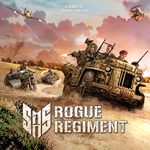
Okay, I have one. So, last week at um Consum World Expo, I played this game called SAS Rogue Regiment and it was really fun. Did not expect to like it because it's very tactical, but I might like tactical now. Like, I don't know. It reminded me a little bit of playing Assassin's Creed is a whole other thing, but um yeah, SAS Rogue Regiment. It was fun. You have like a team of four and you each have your own, I guess, capabilities and you have your uh objective that you're trying to reach out and you just kind of keep going until you've gotten the objective or you're all dead. And I actually enjoyed that. Not having really too much of a an end to the g. I don't know. Sometimes I feel like games aren't long enough. This is insane to say, but uh I I like the two endings being you are dead or you have done the objective and not like, oh, the turn's over and you just have to like decide based on victory points. It was kind of fun.
All right. I've just I've like actually looked this up and I'm like the list of things to find for stuff for later.
It It was funny because we played it once immediately after my dad ordered it on Amazon and Kai told me she was going to order it, too. It's like, "Oh, okay. We're we're doing it." That's awesome. Um, so what what do you think the proportion of war games to non-war games that you're playing at this point would be? Um, I would say like 70% non-war games, maybe 30% war games. And I I honestly don't play that many games just daytoday personally because I don't have the space and I'm not like in a gaming group, but I do enjoy it at conventions. I go to my parents house sometimes and play because they live pretty nearby. Um, but I I don't know. I really enjoy playing kind of those political games like well Mr. President and I've enjoyed playing Zar. That one's coming up from um Paul Helier. I played that a couple times at conventions and that was really fun.
Just kind of the devious type of games.
Yeah.
Where you get to scheme.
Beautiful. Um you know you learn something about someone when you ask instructor. Um, so, uh, that actually leads to one more marketing question though, which is, so conventions, how important are they to kind of GMT's announcements of games, movement of games, and like helping people see what's out there? What conventions do y'all try to participate in? Is that something that you want to expand or you go where you're at?
So, conventions are extremely important for a few different reasons. One being we get to see our customers. I love meeting customers. I think it's great to hear from them what they've been playing or like play a game with them or see them. That's really fun. And I like talking to designers who I may not have met in person. Same with developers. And GMT tends to use conventions that we've attended also kind of as a development or play testing opportunity. So, at least with um the GMT weekend that's here in in central California, we have a lot of designers come and demo their games. I mean, same thing at SD His Sorry.
Oh, yeah.
And uh what's the other one? Circle DC. Those are the ones I personally went to uh LA this year. Circle DC, I just forgot the name of it. SC has gone and then the two GMT weekends because we have two per year.
Now there are others that I would like to go to personally but sometimes money or time can be an issue.
Yeah. But we have a presence at WBC too also. I believe Tony goes and so does Kai. And oh there's another one on the east coast I can't think of the name of that um Andy Andy Lewis goes to. It's another one. Forgetting the name right now. So, we try to go to a lot of different ones and it's not always the same G&T people that go.
Yeah,
there are more I would like to go to that I don't, but we had designers go to sometimes. So, that's kind of cool to see.
Yeah. Uh, I will say that for me, SD His and Circle DC are probably my two most important conventions of the year because that's where I see prototypes and where I demo my own,
right?
So,
that's a good place for that. And this actually reminds me of something I want to do with some of our own conventions, which is,
excuse me,
try to get better about scheduling events.
Yeah,
I feel like SD has and circle DC and I'm sure lots of other conventions are very good about scheduling like, okay, this demo is going to be at this time this day, and if you want to join, you know, join. We just don't really do that at our conventions, and I think maybe we should start. It might be helpful. So, that's just something I'm going to think about personally in the future.
Nice. Uh, and then one of my sort of typical ending questions, but I'm going to make it more complicated for you because you do marketing. Uh, is um, no, I'm kidding. Uh, is where, first of all, just if you if people want to kind of follow you and what you're up to, where do you like to be found online?
Uh, okay. I have public accounts on uh, Blue Sky and and Twitter or whatever. X Blue Sky Guy is mainly where I I uh answer G&T related stuff. Uh so that would be What is my account name? Rachel Leno, I believe.
Yeah. And I'll put it in the show notes.
Okay, cool. And then yeah, I think that's Where is this? I lost the tab. Oh no. Okay, I'm back.
I'm here.
When you're on Streamyard and you can't find it again. Oh,
the struggle.
Yes. Anyway,
I actually always pop a second window. So, like stream window.
Uh, but the question I wanted to ask about it was, okay, so you've got like a public account of Blue Sky. Um, how does your role as a marketing person impact your social media presence, what you're willing to talk about, and you know, how much you post? Like, do you see your public account as like an extension of GMT marketing, or is it really just yours? And like, how do you balance all that? I think uh for me I kind of just split different ones to different places. So for example on Facebook I only have a Facebook because I post on our GMT group. I probably would not have a Facebook account otherwise but you know need it for work. Same thing with Twitter. Blue Sky I probably use that the most for work related posts. Yeah.
But it's still really kind of my account.
And then Instagram it's mostly just pictures of like national parks I've been to. So, I don't really put that on my public like G&T stuff. It's It's more for me, I would say. But it is fair enough.
Yeah, absolutely. Um, do you um do you feel like you need to be careful about things that you say in a bigger way because you do marketing for a family business? Uh, in some ways I would say it's important for me to not when I'm using a company account do anything that's like a little too personal. Uh, in you know there's a lot of ways you can make personal posts like political or personal, you know, whatever.
If it's a GMT account, I'm not doing it. If it's one of my own accounts, it's up to me. Sometimes I do, sometimes I don't. I don't feel like I can't. I guess I I would say
yeah that's fair enough. Uh and then uh I guess before I let you go, any last thoughts about, you know, if people are trying to either develop a better relationship with a publisher as a as a YouTuber or a designer who's trying to get more information about their game out there, do you have any tips?
Okay. Well, if you're trying to develop a relationship with a publisher, in my experience, just email them. I don't know what every publisher does, but with us, we do receive every email. It's forwarded to me from our office, and I try to answer them all. And so, if you are wanting to review something, you can email me. If you want to send me pictures of you playing the game at a convention, I love seeing that. Email me. Uh, I would say most publishers are very open to that sort of thing. I don't know about general, but you know, we're game publishers and a designer. I think also if you're looking to do it with a publisher, for us personally, if you bring it to a convention, it's the best way to get your game seen, but you can also email us.
Good to know.
Good to know.
All right, Rachel, thank you so much for your time. I really appreciate like getting to hear a little bit about more about what's going on inside GMT.
Yeah, thank you. You got a little picture into my my uh chaotic mind and uh lots of stuff going on. I'm excited about the projects we're working on. So, it's it's a fun day every day. Maybe not every day, but it feels that way.
More more good than bad is all a person can ask for.
Yeah. You know, I mean, you know, it's it's different every day. Uh but yes, I will see you uh at SD Hiscon. But uh until again, thank you so much. This is great.
Uh and everybody out there, please like, subscribe, comment, and most of all, happy gaming.