Beyond Solitaire Podcast 214: Hannah Fair on Playing with the Anthropocene
Games in This Video
3 games are featured in this video — they unlock as you watch.


Transcript
It's ad break time. I am proud to announce that the Beyond Solitire podcast is sponsored by Central Michigan University's Center for Learning through Games and Simulations. Their new backer kit project, Art and System, is now live and it features updated editions of three fantastic tabletop RPGs. Liam Burk's Doggy Dog, Anna Anthropy's Princess with a Cursed Sword, and Timothy Kleiner's The Mountain Witch. You should absolutely check them out. Also, if you want to help me keep the lights on over here on the podcast, you can support me at patreon.com/beyondolitire. For now, though, let's get on with the show. Hey gamers, this is Liz Davidson from Beyond Solitire. And this week, the pod, I have a very special guest. This is Dr. Hannah Far. Uh, she's a lecturer in human geography at the University of Southampton. How you doing today, Hannah?
I'm doing great. Yeah.
All right. It's awesome. So, I brought you on because you wrote an interesting article uh called Playing with the Anthroposine. What is an anthroposine for people who do not know?
It's a great question. So, the anthroposine, it was a a concept that came originally from geology, so from earth scientists and they were trying to find a way to talk about the way in which our planet is changing. So it's the idea of the anthroposine is it was proposed as being a new geological epoch. So a new um a new segment in the geological calendar. Um and it was and it's it's the idea that humans have become a sort of defining and destructive force that can impact all planetary systems. So this hasn't actually been added to the geological calendar. There's been a lot of debate within geology, so it's not an official unit of geological time.
However, it is still like quite a I would say a useful and quite provocative concept for thinking about the way in which humans and nature relate because the way that so the signs of the anthroposine would be things like um anthropogenic climate change be things like changes to the nitrogen cycle um the acceleration of species extinction. It would also be things like uh the enormous strata of chicken bones that we will leave on this earth for millennia into the future. It would also be things like um the sort of the residue of of nuclear testing that we are leaving this planet as well. And the reason the idea I think is is interesting to think with is it um it challenges the idea that like we can easily separate humans and nature or or separate nature and culture because we start to realize that actually there is human impact on everything that we might think of as being natural. And when we when we stop thinking of nature as being something over there that is separate, but we start to realize how it is bound up with human actions and human activities, it raises these really important questions about how we take responsibility for human actions in the world. But also just to say that some people don't like the term anthroposine.
Um and uh like they so the the term just to clarify what the word itself means is scene. The ending is how you denote an epoch of geological time. So like uh the holene is the one we're officially in. Um and anthropo it comes from uh it comes from the either Greek or Greek. Thank you. Yes. Uh comes from the Greek it comes from the Greek word for for man or human. Uh and you know which those words we choose is I think quite significant. Um, but some people don't like this term uh because they feel like it's a way of putting people back in the center and like it it like it sort of implies that humans almost are like gods in terms of their power over the planet. And some people think that sort of attitude is what got us into the problem in the first place.
And some people also don't like like the name because it can imply that um all humans are equally responsible for our current ecological crisis when in fact when we think about um we need to think about historical uh responsibility but also in our current times as well about the different responsibilities of different nations and different people. So like it sort of it can be quite like a a homogenizing term to bungle humans in together like we're all in the same boat when actually people are differentially responsible for climate change and differentially feel the impact of climate change. So like that's what some people don't like the term. So I use it but critically I think it's interesting to think with but it has its limits. So that's what it is if that makes sense.
That's fair enough. Oh absolutely. Everybody who's been listening to this podcast for any amount of time knows that just asking what is a war game is about to end up in trouble. you know, words are they're not the be all end all. They're just sort of like a something to think with. Um, and so the other thing is that your work does not actually center on board games. Typically, you're doing a lot of different projects. So, you know, as I was cruising your website, you're looking at things like the impact of um like pests and domestic pets, like infestations at like just all kinds of stuff. You also explore speculative fiction which maybe we'll get to. I don't know. We got a short period of time. Uh you know the orangutang um you know climate change nears the Pacific Islands. So like what would you say kind of like when you're telling some people what you do? What is it that you say? So yeah I I've worked on quite a few different projects and sometimes when you list out what they are it sounds like I'm all over the place but there is there is a there is an underlying logic. So um I'm a human geographer. So uh human geography is a discipline that is looking at how people relate to the to the world they live in and the places they live in. And so like typical human geography topics might be thinking about like migration, urbanization, globalization, like how people relate to the environment. So I might be thinking about things like climate change. And so I'm in that last category. I I think about human nature relations in the
broadest sense. And I'm interested in the fact that um what we understand as nature is in a state of transformation that is occasioned by humans but also impacts humans. And so I like I'm interested in looking that through quite a few different angles. So I started off by thinking about that in terms of climate change. And so so I'm oh I'm a social scientist. So I I don't like I don't study rocks. I don't I don't work in labs. uh I learned things through interviewing people mostly through talking to people and understanding how they view the world. Um and so I started Alphasa focusing on um thinking about how climate change which can feel like a really um abstract and like removed topic. It can feel like it's really far in the future or it can feel like it's uh it can become it can feel quite intangible. it can feel like you know what is the parts per million you know like what does it mean to feel there's more carbon in the atmosphere and so I was interested in what it means to look at when climate change becomes uh locally meaningful when when it what does it feel to experience climate change and what does it mean for for climate change to be like become like morally resonant what does it mean for it become a cause of concern um and so and like and what happens when you translate like abstract scientific ideas into sort of situated places. And so my research was originally focused um in the Pacific island region uh and because um many
Pacific island nations are on the forefront of climate change impacts. And so that's I kind of so I was I was thinking about that there. But my current research is indeed about domestic pests. Um, so I spend a lot of time thinking about uh rats and bed bugs and moths and that the kind of the thing that connects those things is I'm still looking at like how we are how how how different humans are impacting ecos systems and how that comes to shape the way the environments in which they encounter and this can be from you know coastal erosion to like having more wasps in summer. These are like these are all like ways in which we are encountering the the environment in everyday ways. So that's kind of what links my work.
That's super interesting. All right. So, how did you end up writing a cool article about board games?
Well, uh, independently of my research, um, I've been like an enthusiastic, uh, board game player for quite a long time. Uh, I think that I like caught the board game bug in like 2009, I'm gonna say. And my entry point, unsurprisingly, was Katan. I was like, "Oh, who knew games could be like this?" I thought it was all Monopoly, which I'm not a fan of. No offense to Monopoly, but um, I kind of got interested in strategy board games. I played a lot of them. Uh, I owned quite a few of them. U, my collection hasn't grown that much in recent years, but for a while I was like, you know, I had quite a few. And um and I started noticing there were quite a lot of island themed games and also friends as birthday gifts would often get me island themed games because I was someone who like researched islands, who went to islands and I played board games. It was always an ideal present. I would always be happy, you know. [snorts] Um and so that I was kind of and I was I was also um there was a uh there was a call for journal articles by a group of um island study scholars working across disciplines who interested in islands and there the call was to think about anthroposine in islands. So that that that concept I introduced earlier like thinking about what what is the significance of thinking about islands in the context of these changing human nature relations. And I'd noticed that there wasn't much academic literature about board games.
Like there's so much about video games. There's so much about digital games. Like people write and reams and reams about it. And like uh and I haven't quite figured out why there is so much less written about board games because board games are a hugely expanding industry, right? I like the the stats in my article which was like from four years ago or three years ago are so out of date now because board games just keeps growing and growing and growing as a market. Um, and but there's like not that much written about them and I actually think that like they do reflect ideas about the world and they do say something about how we're thinking about the world and so it's important to look at that and also they also potentially they potentially have the capacity to shape also how we think about the world like um board games can also be an interesting like intervention to how we think about the Um, and I'm not saying that like we can't just have fun or that we have to always put on our serious theory hats whenever we come to a game. Uh, but I was like I kind of felt like there was something to interrogate about how certain things are represented in board games. And so my piece was looking at uh it was thinking about katan a bit as a sort of like as like a really like kind of significant Euro game that set a certain standard for how games play and that a lot of games are kind of descended from in many ways. And then it was thinking through three like island themed ball games that were either explicitly or like implicitly situated in the Pacific
island region and then thinking about what were they saying about ideas of nature and like if we put on our anthroposine hats and we looked at these games what could we learn about them. So that's how I came to write this article.
Fantastic. So you're picking games like kind of in the Pacific. What games did you try and like reject? Like how did you choose the specific games that you did? Uh and like you know let's talk about like how those stood out to you in in in an ever growing pool of games that are about islands. I feel like it's a pretty common theme.
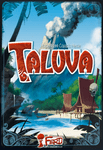
It is a common theme. So um it wasn't like a it wasn't a statistically rigorous uh sample. Uh it was like I was so I was so most of my research is normally like um more empirical. It's like going out and like collecting data in terms of like uh like surveys, interviews, uh observations. This was more like I was being a philosopher for the day. So I was like I'm going to see like what I think about these games, you know, like like a cultural theorist. I was like I want to try that. Um and so to be honest, it was it was uh these games are not comprehensive. They're not necessarily representative of all the games out there. And as I say, the games they keep expanding every year. There are so many new games in the market. Um, they were games that I had I had played or that I owned and that when I had encountered them like uh I had like thought about them in like the in the context of the Pacific and like maybe they had like rubbed me up the wrong way slightly or maybe I had been excited about something about them. So there was something about them which drew me to them. So like um of the the three games I talk about mainly there's Tuva uh there's Vanuatu and there's Spirit Island. I don't Do you want me to describe like the games?
Yeah. You know what I've I've play people who listen to this podcast have probably encountered Spirit Island a lot. I'm a big solo gamer and cooperative gamer. Uh but the others I've actually never played. So I know the basics but I want to hear it from your perspective.
Okay. So, um, to lose the one I'm least familiar with because I don't actually own it, but I have played it with friends who have it. And it's like, um, it's a tile it's it's a tile placement game. You're you're it's competitive and you're um you're putting down these tiles to build up your islands and you're trying to like put down villages and build up temples and so you're kind of racing to build this up, but then you can also put volcano tiles in other people's islands to destroy their villages and destroy their temples, right? And that's kind of the game, right? So it's like a is a is like a
So you're like a god almost like
you're a god. Yeah. You're like you are gods creating islands and destroying other entirely. That is your that is your point of view in the game, right? Um and it's like fine. Like the game is fine. Like I'm not I'm actually like not a big tile placement game person. Um because uh well actually I'm also I'm not a big competitive games person. Like I prefer cooperative games, but I do like some competitive ones. Um, but I also have quite weak spatial logic, which is ironic. I'm a geographer who study space and so like tile placement is like not my favorite format, right? But that some people love it. So like this is so just say my article is not about how good the games are as games. Um, they're all good games, right? Um, but the the thing that bothered me about TUVA when I played it, uh, the first thing was the name and I was like, what's this name mean? Uh, and like I Googled it and it's like a Hindi word. I think it's maybe also a Croatian word. I may have got that wrong. Um, but it's definitely not a Pacific Island word from what I could tell. But what the name appears to be is it appears to be the name Tuvallu when you switch some letters around slightly. Like it's like a it's like and um it's like it's not quite it's not an exact anagram, but it's a sort of semi anagram of it. Um and so Tuvalu for um people who don't know it is a it's a sovereign state. It's a Pacific island nation. Um it's not an island nation that I have been to personally. Um it's it's gained a lot of um greater uh prominence internationally because of
climate change because it is a it's an atal nation. And so an atal is a it's it means that the islands are coralbased. Um, and that sort of it means they're chains of islands and atoals because they're coral based, they they they tend to be very lowlying. So at based islands are those that are um they are most at risk of sea level rise if that makes sense because they are the lowest lying. So like the um the Maldives is an atal nation. Uh Kiraabas is an atal nation. Um Tokalo that's not an independent state. Um, so that's that's what that's what um, Tuvalu is, right? But just to go back to TUA for a moment, when you're throwing down volcanoes that destroy other people's temples and other people's uh, villages, it's not an atal.
It's a volcanic island, right? It's it's geologically very very distinct. Um, and obviously this is just games. We're just playing of ideas. But, um, the I the idea that you can sort of switch a few letters and switch a few land masses because everything's kind of the same and it's all kind of interchangeable and much of a muchness is often how the Pacific Islands are treated in the media. Um, they're often like uh often people like just know the names so they can be the person who can name all the countries like in that pub quiz style way. But there's often like um often they don't necessarily know much about uh their location and their and and their cultures and their languages and their and their ge and their geopolitics. And so they're often um they're often kind of like the way in which they're not um meaningfully distinguished is one of the issues I have about how people talk about the Pacific Islands and climate change. And so this game, which is a perfectly fun game, I felt like it was like using the Pacific Islands in this sort of generic way as a very light theming for a game, but it wasn't like taking seriously what these places are as places. So that's kind of why I was interested in that one. Um, and I also recognized that like um how how meaningful the theme is for a game can really vary. Like I I tend to like quite strongly themed games, but like um I love the game Hannabi. Is it about fireworks? Not really. You know,
it's just a card maker. It's it's it's a mathematical card game, right? The fireworks theme is like, you know, we could take it or leave it. It's a brilliant game. So, like I don't think games have to have really strong themes to be good games. But when they do use themes, it's interesting to think about what are their reference points and what ideas are they bringing into the games and what assumptions does that make.
Excellent. Yes. No, you're in you're in uh on firm territory here. Um I also prefer like very strongly themed games. Um especially if you are borrowing from somebody else's history or culture.
Um because otherwise that paste on can be less respectful.
Yes. Which is also a question just about the pacing on um this question about who makes who gets to design board games.
Yes. Um, and like I think I think the industry is changing, but um, which is great, but I think there are there are diversity issues in the industry. And that um, because like who who board game designers are isn't very visible unlike say who authors are or who film directors are or who musicians are. like that that lack of diversity isn't always apparent when you're like in a board game store or like looking at your collection. And I think at the point that I wrote this article, a point when I didn't own Wingspan, I like looked through my board games and I was like, "Everything I own is designed by a man."
Yeah.
And I was like, "Oh, how interesting." And I hadn't known that until I like did a little audit and I was I found that out, you know.
Absolutely. Okay. So, I think what this leads to though is when you talk about like whether games are strongly themed, I think that, you know, you're a human geographer. I'm um a historian. So everything that people create, right, says something about us, whether we realize it or not. So I guess what struck you about Tuva in terms of what it was saying about your field and about human geography without necessarily meaning to because clearly it's not like an in-depth theming.
Yeah,
it's not an inepth theme. I guess um well I guess it the things I also I guess the things I took away from it um one was it it was islands without islanders like there were villages and there were temples but there were no people um and I think that's um
and the divorcing of people and places I think is a problem and often how islands are talked about. So I like I like noticed that. Um I also noticed the sort of idea that it was like kind of generically invoking the Pacific. Um and I also noticed that we got to be like gods and that's interesting, right? They're thinking about like uh like it and I was like in my article I I sort of think through like what does that mean when we think about theories of the anthroposine and either it can be like this idea of like the anthroposine is evidence of our godlike mastery over the world or it could be actually like um it could be a non-anthroposine world in which we're like actually nature is still this thing that's powerful and all inspiring and over there and separate from humans and you could sort of take either way. Um, but I don't think it tells us that much about the Pacific Islands, and I don't think it's trying to either. Um, but I guess the second game I look at, Vanuatu, uh, I get the big contrast with it is that it's like a very themed game. Um, and I'm I don't want to rude about this game, but uh, it has too many mechanics and it is like quite uh, it's a slightly messy game to play. And part of the reason for that is that the designers have like committed to the theme so deeply that like the game is like maybe not is like not the most functional game. Uh but I I really appreci
Yes, exactly. Um and the the designers um the designers of Vanuatu, I don't know loads about them, but I I think they are I don't think they are I don't they're not neoatu. They're not um citizens of of Vanuati, but I think they are people who lived in Vanuati for quite a long time and came back and made a board game. That's what I So that so there's like a there is an experience of the place that they're bringing into the game. And so the game has um it's it's a worker placement game. I think it's a worker placement game, but it's like a worker placement game where you are using your your mele to do different roles that are part of the Vanuatu economy. And Vanuatu is an Pacific island nation. It's in between Fiji and Australia. Um, and it's a volcanic nation. Uh, and it's been an independent nation um, since 1980. Uh, it was previously a a joint colony of Britain and France and referred to as the New Hedes. So the fact the game is called Vanuatu means that like this is very much a game that's set like 1980 or later. Um and uh and you're kind of you're also [sighs] there's a sort of quite complicated bet betting mechanism when you're like trying to like you're like I want to be the person who makes sand drawings so I put one piece on there but then you've bet two pieces on that one and I should have put one piece on being the person who's the boat
driver because then I could have been the boat driver this turn. There's quite a lot of like um there's a there's a and that that is actually quite confusing and you're like oh I didn't get to maybe I'll get to go diving. Oh no I'll have to go to the market. There's like a it's like worker placement but you're competing for the places to place the workers. Um and that is the mechanism that uh I think is a bit it's sometimes a bit complicated. Um, but I have played it quite a few times and uh it like what I like about the game is and this also might not be a great design feature but the game assumes quite a lot of prior knowledge of Vanuati life um which is like I think confusing for most players but I was like I was here for it. So like um you know like you're exporting things that's another thing you can do the game is you can earn money for exporting uh products from vanati to the wider world. So you're exporting beef uh you're exporting copper and you're exporting carver copper and carva. Lots of people might not know what those items even are and so they're like what is this wooden block meant to be? And then you have to know that carver is a narcotic route of of the Pacific Island region. But many players would be like is it the fizzy wine? And you know, so there's like there's like uh some presumed knowledge about Vanoatu, which I like I enjoy. Um because they've really thought about this place and what it means to make it in a board game. Um there's like a sense that um you know there's a there's a sense that Vanuatu is historically situated. It's it's a it's a contemporary game and it's also geographically situated. It's like related to the wider world because you
are you're sending out exports uh and you're also receiving Australian tourists and there's like tourist images of of the tourists who come. So like you have a sense of like this this is like you know because and the reason that's significant is that um some of the way in which um island nations are often talked about is the idea that they're isolated that they're like cut off from the world that they're remote and far away or that they are like unchanging and whereas this game tells you about a contemporary island nation that is economically part of a global economically integrated into the world right and it tells you that and which is and that's so that's the thing I like about this game basically. even though the mechanics are quite clunky. [snorts] Um, yeah, and so I thought it was interesting to see like uh, yeah, how you would try and make a game about a certain place in this way.
Um, so I thought that was great. But then there's a sequel to this game and the sequel's really
rising waters.
Rising waters, right? And so and and and in the article I get a bit annoyed with the sequel because the the the base game is like it's thought so carefully about vanuati economic systems, value systems, cultural practices, and how to bring them into the game. Um and I'm not saying it's perfect. I'm sure we could critique it, but like I think for my mind it does a good job. Um but then with the with the rising waters uh like expansion rather which is about climate change in Vanoatu because it's a very important issue in Vanuatu and that's where I did my research around climate change. Um it's like they've lost all the specificity you had of the previous game and they've like taken um sea level rise as like a really important impact of climate change but not necessarily the most important one to Vanuatu. like Vanuatu is is like I said volcanic like it's it's high mountainous islands and they've made that the key thing when actually if we think about what is meaningful for climate change in Vanuatu it is questions around um changing season seasonality and how that impacts food security it's about um the frequency and and the severity of cyclones this this is actually what's like I would say impacting life more immediately there and said they've sort of made it um a generic climate change imaginary in which they assume assume that water will engulf all the islands and again these are high mountainous islands like they they are as high as the UK is high you know like it's it's you know and so they've kind of gone back to this generic imaginary of the
sensational image of rising waters rather than this more this question of like how does climate change make some lives unmanageable rather than like when does water you know engulf the whole island. Um, and it also they the the way they talk about um the solutions to climate change in the game is you have to build lots of like dikes. You have to build lots of seaw walls. And seaw walls are significant. They are important in climate change adaptation. But they don't really get to the heart of the issue when we're thinking about climate change. And actually when we think about climate change, we should be thinking about how is it actually about being part of a world system. How is it actually about thinking about um the responsibilities of industrial nations in terms of their historic and current emissions and like those other nations are there in the base game because we're thinking about exports and we're thinking about tourists. We're thinking about these movements of people, right? Um and then suddenly in the in the expansion pack, we're just we get cut off from the rest of the world and it's just on on on us as like these fictional islanders to sort out a problem that is not of the island's making. And so like for me the the expansion pack like it doesn't it doesn't have the nuance that the original base game has. But also the designers are like they're not climate scientists. So you know like there's only so much game designers can do. So like you know there there's also you know we bring different things to games and that is all right.
Sure. But I mean the contrast between expecting something from based on the specificity of the base versus I can see that being a bit jarring. And then you know the third game that you chose the article is Spirit Island which is not about any particular island at all. Um but is quite evocative. Um so what uh what struck you about Spirit Island? So firstly I do love playing Spirit Island. Like I I think it is I think it is a great game. Um although I do there's like a learning curve when you start playing it. like there's that point where you're like, I'm so sorry, you have to listen to rules for 40 minutes and now we can't just start playing. We all play simultaneously and you've got to make ruby decisions in your first go and it's, you know, it's a lot. But I do love this game. Um, I think what I liked about it was it it it is explicitly I would say responding to katan like it's it's building on katan as this like archetypal euro game but it's also reckoning with the way in which um there are certain narratives of settler colonialism that like that are perpetuated by katan. Um I I think and I'm I'm definitely not the lots of people have said this before. Um but like I guess it's the with katan it is a is a terror nullis. It is this it is this which so it's like this idea of the island as this blank space free of people ready um for economic like utilization by the uh by the players and
and this idea of teranullis has been used to justify the invasion and expropriation of indigenous lands um and like the only like there's like the figure of the robber in katan you're like who is the robber who lives in the desert the only unfertile part of this island and you're like, are they meant to be a a displaced indigenous person? Are they are they just a crook and a mercenary? Like what what what's this what's this figure doing? Right? Uh and it's ambiguous. Uh and and uh Spirit Island like it it seems it looks like it's thinking through those questions, right, critically. Um so it brands itself as a a set of destruction game in the sense that it is responding to people coming to the island. Um, and it's and it and I think the fact that it's not um explicitly situated in one place is also quite interesting. So there's like um there's if you get if you get into really into like all the complicated levels of it you can do which I have got into before. [snorts] Um you can like choose to play against particular empires. There's like the UK, there's Sweden, there's Brandenburg, Prussia. This in itself raises questions. you're like, "Did Sweden have an empire in the Pacific?" I don't I don't really know. Um but I didn't think they did. But um you know, so like so it's not that it's not it's not necessarily trying to align with a particular um historical narrative, but I know that the designer um he talked about the idea that you could imagine it
into different worlds. So you could imagine this as being uh you you can you kind of you kind of take it where you want in terms of thinking about colonial encounters and other ways of telling these stories. Um, the other thing I like about this game is that you so you don't so there are indigenous people in it. There's like the the fictional indigenous people of the Dhan, although I have a problem that they only appear as their huts. Uh, these sort of mushroom like huts, whereas the Europeans get to have bodies. Uh, and like that that visual discrepancy is quite jarring and I don't really understand why that is in the game. Um, but the you can't play as the dhan like they're not your workers to place. You can like use various spirit powers to encourage them this way or encourage them that way or encourage them to do some things or protect them, but they're not they're not yours to control. So, you're not you're not playing as indigenous people. You're not playing with indigenous people. Um, which I think is important in terms of thinking about like appropriated narratives. um you're playing as these spirits who kind of work with them and it's a so it's it's a the gameplay manic has has an idea of solidarity and allyship being kind of built into how the game play works. Um I like that about it. I also like the idea that the um that the the game presumes that there are like different like epistemologies, different ways of knowing and different ontologies, different ways of being between the the settler the settlers who
are play who the game plays as and the the dhan [snorts] um because the settlers can't attack the spirits because they don't believe in them like uh and you know which I think is interesting and this idea that like the spirits can only act through fear. largely uh because they make the setler's worldview become incomprehensible and therefore fearful and like that I think is a really interesting idea to have in the game. Um and so I yeah basically I think it's a great game and I think it's thinking about decolonial politics in like quite fun and expansive ways although not perfect ways. Yeah, certainly not perfect, but um we uh we try. But uh so um I guess kind of like now that you've like done this experiment in working with board games, which I think is super interesting. Um what kinds of data were you kind of collecting to draw your conclusions about these games? So there's the gameplay experience itself and the pieces. Um the rule books
who you're playing with like what uh what did you give the most weight to when you were deciding to kind of interpret what you thought the designers were saying?
So I think that with with so I would say that like in terms of data this is this is one of my least data heavy pieces of research. Yeah,
this is more like interpretive if that makes sense.
Um,
I would say that with Spirit Island in particular, I like read quite a lot of like uh like kind of blog posts by Eric Roose Ruse. I'm not sure how to say his name. Um, and I I so I like I I tried to like I did try and look for intentions that informed the game. And I also did send in my article uh when it was ready. Um, and so I I guess that was I I did I I did look into that. I did read the rule books. Um, I had played the games, but it's not it's not like a sort of sociological experiment. It's not like give five people this game and find out what they think about politics at the end of it, which some [snorts] people do do, right? But it it wasn't it wasn't that sort of um it that I think what it was actually trying to do was it was trying to like make a case for why board games might be worth thinking about. So it was sort of like that in itself was kind of what I was trying to um which I know for listeners and and viewers of this podcast is obvious but for many people in the world is not obvious right. it was like making that case. Um, and in terms of like but I guess another side of this another thing I'm really interested in is like um using board games within research and as as as part of as part of either collecting data or as part of like uh disseminating ideas. and I went to this
um session at a conference a couple years ago, a session on serious games, which is a term I was unfamiliar with before then. Um, and uh, we got to play and like we were all told to go into different tables and play games and there were like a game at each table for us to experience and I played this really interesting game um, [snorts] which sadly I have forgotten the name of the designers of um, but they were researchers I think in Switzerland and it was it was quite simple. It was a um, it was a retheing essentially of snakes and ladders. Um, it doesn't sound promising so far. I see the look of doubt, but
[snorts]
um, it was a retheing of snakes and ladders that was about abortion access in the US. And you at the start of the game, every player drew a card and each card was a state. And according to what state you got, you got a different sided dice. So that um, states that had more liberal abortion policies, you got more roles because you're just it's a very simple game. and and like snakes are more receptive ones. You got like like a tiny little triangle dice, you know, etc. And so and you were and so like it was about thinking about how the train is not even at the start of the game. And snakes and ladders has zero skill, right? You're just entirely at the whim of the board. And so the point and so like each snake or ladder were things that would enable or disenable uh access to abortion in different ways. And it was about thinking about what does it mean to not have control and what does it mean to lose agency in this system and like what what does it mean to be stuck at the whims of chance when you're trying to make a really life-defining decision.
And so like that that's what the game was designed to do. Uh and it was it was incredible and I was like this game has so much potential um in in the right hands to make people think critically about these issues. Um, so like I am interested in like how can we use games to think about the world. I would love to design a game. Haven't got there yet. Um,
come join us. Um, so okay, that's really interesting. So actually this is actually this is where I wanted to kind of go with this, which is I feel like um talking about board games seriously is still something that is iffy within academic circles. Um, and so are things like checking blog posts or designer diaries online. You know, I I came from a more traditional like, you know, I did ancient Christianity, so if it's not something in a dead language, you know, who are you?
Um, but um, you know, for you, I guess, how has the process of like having other sources taken seriously gone? I mean, you're already doing interviews with like normal people um for your work. So, how do things like board games start to fit into that in your field? Well, and I thought it was so exciting that I'd written this paper that was like genuinely novel. I was like, "Wow, no one really writes about board games. No one really writes about board games and islands. Ball games and islands. This is so original." And so I put my original paper out into the world and I think it has seven citations and some of them might be by me. So it's not done well in the world, right? People don't read my paper. This paper is is actually it's quite undecided. So um I'm not sure I've had much success with bringing board games to academia to be honest.
um and occasionally I meet other other academics who are interested in board games in this way but it is quite rare. So I I definitely like uh this is a question I'm still asking myself about how we integrate them and how we get them taken seriously and I I haven't I haven't yet found the answer. Um yeah,
we're working on it right now. By the way, everybody listening, uh, this article is free and readable online, and I'm putting it in the show notes, so go read it. All right, so your time is very tight this morning. U, but I want to ask you the two softy questions really quick. Um, so we could go forever, but time is is limited. Uh, but what is a what is a game you've been playing recently that you've really enjoyed? Okay. So, a game that I have loved recently is The Crew. Um
Oh, that's a good one.
So, I can't Is it the I've been playing the Atlantis version. Um or no, no, I've played but No, I'm No, I'm playing the space version. They're kind of the same game, right? There's the Iron Version. Um what I love about The Crew is um again, it's a lightly themed game, right? like I I appreciate the little space helmets on the on the bits of card. I appreciate the little like bits of narrative as you go up each level, but you could ignore that and it would just be a mathematical card game. Um but what I like about it is I like the way in which you as a group go through experience in which you like build knowledge and understanding of each other and of like how to play the game and like the way in which it has these these small short these short um rounds that enable you to grow together and like that's and it that's one of the things I really love about cooperative gaming.
is the group dynamic that can emerge because sometimes with cooperative games you can get like the unfortunate boss dynamic in which like it's essentially become a worker placement game which all the other players is being bossed around by the one person who knows how to win the game and everyone's like okay we'll move there and it's quite sad right um to have that dynamic and because the crew has like these limits on communication uh it a bit I guess a bit like Hannabi does like it enables you to work collectively in a way that I really enjoy, but I've not completed it yet. We're still not at Planet 9 or Atlantis.
That's all right. It's the journey, right?
And then if people want to follow your work online, uh, where do you like to be found?
So, um, one of the reasons I'm into board games rather than video games is I am actually like quite deeply offline. Um, which is that's why no one's read my article. Um, but I I have a I have a personal website, uh, which is my name, hannahfair.co.uk. And there I put all my I put all my articles. Um, they should all be open access. If they're not, email me and I will send you a copy because knowledge is there to be shared. Um, so yeah, I have a personal website. I have my articles. Um, I could be reached by via email. Like it's a bit retro, I realize. Um, but yeah. So, uh, I'm not very online, but please read stuff and if you're interested in talking more, just reach out.
Fantastic. Hannah, I've really enjoyed getting to talk to you this morning. I really appreciate your time. Thank you so so much for coming on.
This has been great fun. Thank you so much.
All right, everybody out there, please like, subscribe, comment, ask questions, and most of all, happy gaming.