Nova Roma, Newsboys, Railroad Ink, Bugs Buddy, 111 Ants - Ranked & Reviewed
Games in This Video
2 games are featured in this video — they unlock as you watch.

Transcript
Hey everybody and welcome to another Chairman of the Board ranking video. This is where I take a look at the last five new to me board games and I rank and review them in order of preference. Now before I get started on these five games today, I want to give a shout out to the show sponsor kiender.co.uk who are my go-to online retailer. And if you use the link in the show notes or the QR code, then you can get 5% off your first order. At number five, I have Bugs Buddy. So, this is a super light kind of first to finish style game as you are trying to shed your cubes quicker than the other players. And the way you do that is by playing these tiles down in the kind of central display. If you start a new column of tiles, which all depict a different bug, um then you'll put a cube down next to it. But then if another player wanted to say play that same bug type, they would play another um another tile of that type, they would kick your cube back to that player and then they'll place a new number of cubes down matching the new amount of tiles. So there's this constant escalation of kicking people off and you know placing more and more cubes down. A couple of little twists are that you cannot kick yourself off a particular lot. So, you know, if you know that your opponent has a particular amount of cubes left and they know they want to go to a certain spot, then you might want to just let it sit as it is, knowing that your opponents cannot make
a legal move. Um, and of course, you do need to shed the exact amount of cubes that you have left. You know, no more, no less. Um, well, you can do less, but you can't go over spill, meaning again, you can use that to your advantage, and you have to be careful about what tiles your opponents might have, and you don't leave them any opportunities to get rid of their last remaining cubes. So, you know, the decision space here is extremely low, very low barrier to entry, very few rules. Um, but it's enjoyable, and I do like the way that the interaction of the game is forced on you. Um because you know you cannot play this game without annoying somebody else by kicking them off there or kicking their cubes back to them. Um so there's a good again a good little um kind of wrestling for position here pushing people back and forth and so on. So again nothing really to write home about. Again super easy to play and explain but I think younger audiences could enjoy this one particularly if you like a little bit of you know toothless.
Take that. So that is Bugs Buddy at number five. At number four, I have 111 Ants. So, this is a hand management style game as you have a uh a range of cards in your hand that will stay in a fixed order. And the objective is to try and get those cards in numerical order, either ascending or descending, I believe. And you do that by simply drafting cards from the center of the table, which can be face up or face down depending on what's been given back and fitting it somewhere into your hand. But then you are forced to put a card in your hand that's either next to that newly placed card back into the center. So you're constantly reorganizing these cards in your hand trying to get that straight run. And of course there are 111 cards in the deck, but all of which come with um varying points values on them. So, I think each card is worth either one, two, or three points. And if somebody um wins the round, they'll obviously score their whole hand. But if everybody um everybody else will score points based on their longest uninterrupted run of cards in their hand. So, you know, it is pretty forgiving and being caught short isn't exactly going to cost you too dearly, but you are of course racing and trying to act as optimally and efficiently as possible with zero wastement of your actions. So again, very straightforward stuff. The game does almost play itself because the decisions are are fairly obvious. You know, you want to put them in numerical order. You know what's best
and what's not. Um, but if you like these styles of games where you are organizing things and tidying things up, um, you'll probably enjoy this one if you get a satis satisfaction out of that like I personally do. You know, I really like those games where, you know, you have to put things in order. Um, you know, they start off messy and you have to sort them out as the game goes on. This game does that and it does give you a little a little dopamine hit as you start to put things in order and sort them out as the game progresses. So again, nothing amazing here, but it's enjoyable enough for what it is. Comes in a very small box. Plays lightning fast. You can tailor the game length to how you want it. You know, do you want to play just one round? Do you want to play to a fixed amount of points or a fixed amount of rounds? You have the freedom to do that and it doesn't really skew things too badly at all. So you be prepared for the luck of the draw here.
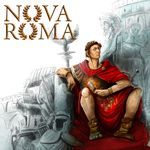
Um, but still you do have some autonomy about what card you're taking, what cards you're discarding into the middle, which can of course um fall at the feet of your opponents because they might want the card that you've just got rid of. So, it does have that little bit of kind of like lost cities, my discards are your are your prizes uh thing going on here, but still I I'm probably overegging it. It is very light, simple stuff, but I enjoyed it. That is 111 Ants at number four. At number three, I have Nova Roma. So, this is a medium mediumheavy Euro style game, and it's one of those Euros that comes with a bunch of mini games held together through a central mechanism. And I do tend to enjoy those styles of Euros, especially if all those mini games are well synergized with each other. This one actually does feel a little bit like a Stefenfeld design. you know, thinking of games like um like Trajan or this isn't a fail game, but games like Yoga Hammer. You know, there are games like this out there where you're competing on lots of different fronts at the same times, but it all boils down to that key mechanism. And in this game, that key mechanism is a pretty straightforward worker placement game, but with a twist as you have these four actions along the the vertical axis and the horizontal axis. And you basically have a a 4x4 grid of worker placement spots. And depending on where you put your worker, you'll activate the action in the column and in the row. So almost felt to me a little bit like tari or a little bit of calamala
where you have that kind of ve v v v v v v v v v v v v v v v v v v v v v v v v v v v v v v v v v v v v v v v varying p p p p p p p p p p p p p p p p p p p p p p p p p p p p p p p p p p p p p p p pairing of actions and of course they are variable so each game will be will be different. Um and again each one associates to a small part of the game. Most of it entails like track climbing, getting more points as you go, getting more resources, unlocking things and so on. But there's a little bit of area control going on as well through this little contract fulfillment as you're trading in resources in order to deploy these polyomino shapes onto the map. And whoever's got the most coverage uh will get more points. And you can use those shapes quite cleverly to try and block people from doing certain things. Um, you are buying character cards that will give you ongoing powers, uh, which are all quite well done actually. I thought those powers were really well balanced.
Um, and also endame scoring as well. So, you got different opportunities you can go for. Um, as well as a good degree of engine building as the the resource management part of this game is fairly interesting as on your playerboard, you have your own little grid and kind of as a bonus action, you can place um your workers on that grid and again activate the row column. But as the game goes on, you can actually booster and kind of um strengthen the different spots to get you more resources to increase your yield. Um so yeah, it's all there's quite a lot going on here, but it's actually pretty digestible and easy to understand. I think the synergy between the different mini games could have been increased a little bit more, but it's not it doesn't hamper the game at all. I think it's actually really well designed, very well um well realized and finally tuned. Um but again, I tend to like things a little bit more when this mini game might give me a little boost on this one over here and so on. But this game could have done that a little bit more in my opinion. But still, um everything else worked exactly as it should. Um something something I should definitely mention is during that worker placement um grid action as you place more workers down in the same rows and columns your strength of your actions is actually boosted. So you get access to you know more powerful abilities maybe better cards um and so on. So sometimes you want to spread yourself thinner to get the exact actions you want but sometimes you might take a couple of almost weaker or wasted actions to give
you access to those more powerful actions uh later. Um, from my understanding, each part of the game does seem pretty well balanced. I don't think there's a um a telltale um strongest part of the game that everyone needs to go for. Of course, I have limited experience. But as a fairly experienced Euro gamer, I didn't see anything alarming. I thought it seemed really well, again, well integrated and well harmonized. So this one again I think if you like your your dryer euros a good degree of engine building a good good degree of resource management um a good degree of turn ax as well as those worker placement spots or those pairings that you want do dry up quickly um and you might have to settle for plan B quite often um this game has that in spades. So again I don't think it's anything revolutionary. Um, I would probably rather play a couple of other miniame style Euros, but this one, um, I can't really criticize anything about it apart from, again, I would have liked to see a little bit more synergy between those mini games, but I've really and thoroughly enjoyed my play and I can certainly see why a lot of those old school Euro gamers would like and appreciate Nova Roma. So, that's Nova Roma at number three. At number two, I have Railroad Inc. Uh, in particular, I have the uh the yellow edition of the game, but I think the differences between the different colors are are fairly uh minuscule. And to be honest, I have only played the the base version of the game, which I think is the same as all the others. So, Railroad Inc., one
of the most popular and successful roll and right style games out there. And for some reason, this one never really crossed my table. I never had a chance to play it. And I thought, you know, I really wanted to give this one a go and finally see what it's like because this one seems to have run ahead of the pack of so many other roll and write route building style games. So, if you're not aware with what Railroad Inc. is, basically you are rolling a cluster of dice. On those dice, you'll have kind of train tracks or roads, as well as these stations, which are kind of like your your conversion trees that will let you convert one track into another. And then you are um placing those orientations of those dice rolls onto your playerboard to try and build a continuous track to connect all these kind of exterior routes together. The more roots you touch by the end of the game, the more points you'll get. But you are also encouraged to do different things based on these um variable goals that will come out. You know, perhaps you want to be the first person to build um a piece of train track that's six um six tiles long or, you know, six spaces long. If you're the first to do that, you'll get more points than everybody else. But at the same time, you are encouraged to venture into the center of the board because that's kind of a a bigger risk really rather than just creeping around the edges. Um but you can use that to your advantage by going right across the board and going to the other side of course. But at the same time on each of these, not each of them,
but on some of the different spaces on your playerboard, there are these bonus actions you can take. So some of them are simple like set collection. If you hit these squares, you'll get more points. But some of them will let you like say use a die face twice on a single turn. Or some of them I think they give you access to these really powerful crossroads that you can use as the game goes on to get you out of sticky situations. So again, it's very straightforward stuff, but I really do like all the uh all the different ways that those tracks can um come out on those dice. There's lots of different pairings, lots of different um ways they can fit together, which I think is really satisfying when you pull it off. Um I think it's just the right degree of being um flexible, but at the same time restrictive, as you know, certain things will not fit together no matter how you want them to. Um, and of course you are dependent on certain dice rolls to give you certain um certain routes you want to complete, but there's more than enough dice rolled to give you a plan B should you want it. And I really did appreciate this that this game didn't overdo it or overe it when it comes to having lots of different ways to score.
You know, the main thing you want to do is to try and link those exterior roots together to get those points. That's where the bulk of your points is going to come from, which I think was a a really nice touch. and it kept the game feeling um condensed and it didn't get too much for its own size. So, very pleasant experience. You can play it in around 20 minutes. Scales well. Um satisfying little puzzle and I'm quite looking forward to seeing what those extra little modules do um when it comes to the different colors. And please do, if you're experienced with um with Railroad Ink, please do let me know which colors you think are the best and how those mini games work because there's quite a few out there now. And um I just picked up yellow because yellow is my my favorite color. So uh that is railroad ink. Um I think it's this is a bit of an evergreen really and it's going to be a classic roll and write for many years to come. And finally at number one I have Newsboys which is another roll and write style game. At this one again you are rolling a big bunch of dice but there's also cards that will come out which can bolster certain colors. um you're choosing one of those colors of the uh that appear on the dice rolled and then you are populating your player sheet. Um you can only kind of spawn off where you already have presents on the map. And what you're trying to do is that you are trying to fill up different areas, but if you fill them up exactly right based on a single dice draft or cluster of dice draft, then you'll get bonus
actions that can let you kind of fill up other regions. And then each region has a different color assigned to it which will let you tick off boxes on your little score track. You know, score rows of the same color, you'll get more you'll get points, but also score, you know, one of each of the colors in terms of the columns, then you'll get additional points. At the same time, there is racing to try and populate the different sections of the board quicker than your opponents do. Um, and the main twist on this game is the actual scoring system itself. um because it has this almost Canitzian feel to it where um yes, you can score points in the traditional way. But in if you ignore another part of the game by um by using dice to tick off this other track, then you know only your worst score of the two is going to be the relevant one. So you can't just go all in and just keep on taking dice to populate your sheet because you're going to score next to nothing and because you're not working on the other facet of the game. It's all about striking the balance and also, you know, capitalizing on the dice drafts when the when the numbers rolled suit your own needs on your playerboard. So, it's pretty straightforward stuff, but I think the extra little twists um make it I don't know, take it that one step above and beyond a lot of other Roland rights. And I do like that tension of the other players also triggering the scoring um because it's all based on what the other players are doing as well. Um, and it's just a really wellrealized. Uh, fun, breezy, enjoyable, um, but satisfying little
roll and write game that's light and easy to jump into, but it doesn't feel like one of those rinse and repeat style roll and rights that, you know, of course been milked milked to death. But this one, you know, I tend to really enjoy Sashi and Sasha games and this is just another example of that. Um, this again, this um, this particular list was very tight between the top three games, but I enjoyed them all pretty much equally. But I'm trying to think of what games will hit the table more often than the others. And I can see News Boys doing that a lot because it's such an easy game just to pick up and play. And it's really nice when you can tick off a whole bunch of these hex's in one single turn. So that is News Boys, a welldeserved number one. So there we have it. That concludes another ranking video. Hopefully you have enjoyed it. If you have, please be sure to hit like and subscribe to the channel and check out my other content, too. But for everybody else, I'll see you next time on Chairman of the Board. Bye-bye.