Worst Kickstarter Board Game Disasters We Actually Played (they promised masterpieces...)
Games in This Video
3 games are featured in this video — they unlock as you watch.


Transcript
These six games that totally let us down. Like we're talking millions of dollars in funding, incredible hype, beloved IPs, gorgeous miniatures, renowned designers, the whole package here.
Yeah, these Kickstarter campaigns absolutely crushed their funding goals and then something went seriously wrong. That's what we're breaking down today based on everything we've actually played through extensively.
So, let's start with the big one, Dark Souls, the board game. This campaign raised $5.4 million back in 2016. 5 million. And we got our hands on a copy. And man, did we learn the hard way why so many backers were frustrated with it. The game comes with these gorgeous miniatures. I mean, the dancer of the Boreal Valley looks incredible. The rule book looks professional. You set up the board excited and then you realize you're going to spend the first three hours of your session grinding for souls in empty rooms just to afford basic equipment to progress further up the levels. Yes, that's exactly what frustrated me about it. In the actual Dark Souls video game, dying to a boss is thrilling because you learn the patterns, you practice, you improve your skills, and then you beat it through player skill and perseverance. But in the board game, you're not really practicing anything by replaying those hollow encounters. You're just moving your character in circles, killing the same three hit point enemies over and over because the mathematical system says you need exactly 2, four, or eight souls to upgrade a stat tier. Or you need to spend souls to draw from the treasure deck, which is completely random.
And let's talk about that treasure deck for a second, because that was the moment the game broke for me. We were playing a session where I was the knight, right? And I needed a decent weapon because the starting gear sucks. So, we grinded these rooms, cleared the tile, reset at the bonfire, did it again, which is boring as hell. And finally, I had enough souls to draw from the treasure deck, and what did I get? A sorcery spell. I can't use that. So, we had to grind again.
I remember that. And then you drew a shield that required 30 strength when you only had 20, so you couldn't even equip it yet. In the video game, exploration rewards you. You find the grass crest shield in a specific spot. Here, it's just a lottery. You're fighting the RNG of the deck more than you're fighting the actual monsters. It feels like the designers looked at difficulty and confused it with tedium.
Exactly. And we looked into it. There's this massive community house role called the hollow edition that everyone immediately adopted because the base game was practically unplayable. The community basically rewrote the loot system and the sole grinding rules to make the game respect your time. When players are actively rewriting your core mechanics before they'll play the game again, that's a massive red flag about the underlying design philosophy.
Huge red flag. Absolutely. But here's what we actually liked. And I know this is weird to say after complaining. The boss combat itself has this really clever tactical positioning element that feels genuinely satisfying when it works. Moving around the board strategically, managing your stamina bar, which doubles as your health bar. That's a really smart mechanic. You have to decide if you want to block a hit or save stamina to attack next turn,
right? And the boss AI decks are brilliant. Like when we fought Ornstein and Smau, they had specific behavior cards that dictated their moves. And once the deck cycled, we could actually predict what was coming next. Okay, SMAW is going to do his butts slam next, so we need to clear this node. That felt like Dark Souls. It's almost like watching a puzzle you need to figure out and solve through skill. But getting to that puzzle through 3 hours of repetitive grinding, it completely killed the momentum. So, if you want a boss battler game, there are legitimately better games out there right now. Bloodborne, the board game, learned from Dark Souls mistakes. It uses a cool card slot combat system and the chalice dungeon random generation that actually feels varied. It delivers fast, aggressive fights without the tedious farming loop dragging everything down. And if you want pure tactical positioning and resource management in a dungeon setting, Primal of the Awakening exists and does it way better than Dark Souls ever managed to deliver. Now, let's talk about Horizon Zero Dawn, another Steam Forged game that raised almost $2 million. We were genuinely excited because the hunting mechanics in the video game are absolutely incredible and tense, tactical, rewarding, genuinely tense moment to moment when you're stalking prey. So, the campaign promised this semi-ooperative hunting game where you'd track mechanical beasts, strip their parts for valuable components and loot, and compete in the hunter's lodge for glory points and
prestige. The thing is, semi-ooperative is basically code word for we made players sabotage and betray each other constantly, which we discovered very quickly in our actual game sessions. It completely ruins the theme. In our multiplayer sessions, the optimal strategy was literally to not help your teammates. If a watcher was about to kill someone, you had to calculate whether saving them was worth less than stealing the killing blow to get glory points instead. We had one game where I held back my attack on purpose because I knew my teammate could land the finishing blow and get way more reward for themselves, and I needed to be the one to cash in the points.
It makes you feel like a jerk playing the game, right? like you're supposed to be hunters from the lodge working together against machines, but the reward system is actively punishing you for being a team player. And the problem gets much worse because if you lose enough hunts or take too much damage, the entire campaign spirals downward fast. We actually restarted a couple times because the difficulty scaling assumed we'd be cooperating, but we were too busy playing competitive politics. The actual hunting mechanic though, that part's solid design fundamentally. You sneak through tall grass, you choose your weapons carefully, like using fire arrows versus tear arrows, and the machines have these behavior cards that are genuinely cool. They have patrol routes, and if you alert them, they switch to a more aggressive deck. It's tense, it's tactical, it works mechanically, but it only works at two players if you go fully cooperative. And at three or four players, it becomes awkward where everyone constantly betrays each other.
And remember our three-player game that somehow lasted five hours total because we were all being so cautious about alerting machines that we spent 45 minutes just moving one square at a time across the board. We were terrified of triggering an alert that would give someone else an advantage. That's when I realized the game had serious pacing issues beyond the competitive betrayal mess. Yeah, the solo mode exists but defeats the purpose of the hunting experience completely. You're buying a cooperative game. You want to feel cooperative playing it. Steam Forged fixed this exact problem later with Monster Hunter World: The Board Game, which uses the same hunting mechanics, the behavior decks, the weapon crafting, but without the semi-ooperative betrayal element, destroying teamwork. It's pure cooperation, and it's dramatically better. Moving on to Time of Legends Joan of Ark. This is a massive war game at 15 millimeter scale with millions of tiny miniatures on elaborate hex terrain systems. Mythic Games raised $2 million for this campaign, then immediately realized they'd made something maybe too ambitious for their production capabilities and scope.
In theory, this is absolutely incredible and epic. You've got huge battles with 50 plus units per side, flying units like angels and dragons, siege weapons, civilian recruitment mechanics, terrain that matters tactically. We read detailed reviews from people who played extensively for months, and the core concepts are genuinely solid. The idea of activating units based on cubes, managing your command limit, it's a real war game. But in practice, there are serious problems throughout. The 15 mm scale was supposed to let them include hundreds of miniatures at a lower price, which makes sense, except the hex tiles weren't sized properly for all those units. You'd have a unit of four archers that are supposed to fit in a specific hex area, but physically the bases barely fit. You end up with miniatures spilling over lines, getting confused about which area they're actually in.
And the detail scaling was weird. The huge miniatures like the dragon or the beast looked amazing, but the standard troops, they looked like 28 mm models blown up or shrunk down weirdly. Some of the details on the smaller faces were just mush. A sculptor's work doesn't translate well when you mess with the scale that drastically.
Setup was a nightmare. Some scenarios required identifying, basing, and organizing 50 plus units before playing. Reviews showed people spending 2 hours just setting up for 1-hour scenarios. You're digging through boxes looking for peasant archer B versus peasant archer A because the sculpts are slightly different and the scenario demands specific ones. It killed the desire to actually play. And the game required a massive 1.5 upgrade Kickstarter in 2019 just to fix original issues. And get this, for returning backers, the $35 upgrade pack was basically mandatory if you wanted the fixed cards and rules. You couldn't just get a free PDF update that fixed everything. You had to buy the physical pack to make the game you already bought playable, which is wild because when it works, there are genuinely epic moments. We had that one battle where my cavalry charge punched a hole right through your line and it came down to a single dice roll from Jon of Arc herself. It felt cinematic, but getting to that moment required 3 hours of setup and referencing a PDF FAQ every 10 minutes. War of the Ring does Epic Wargaming better with actual production polish. Bard song though, this one stings because Steam Forged clearly understood Dark Souls's problems, hired good designers, and pitched it as this hero quest killer, a return to classic dungeon crawling, then somehow made a
game more boring than the grinding simulator.
Bardung promised a branching narrative campaign, character progression, random dungeons with variety, meaningful decisions. We played through several scenarios and it became clear the random dungeons aren't actually random. Every chapter limits you to five specific monster types and for the first 10 hours you're fighting rats and spiders. And the combat puzzle is solved instantly. Most enemies have like two to four hit points. You roll to hit, you kill them. There's no complex AI deck like in Dark Souls or Gloom Haven. They just move towards you and attack. It's mindless dice rolling. The branching paths were mostly elucory and disappointing. The campaign map shows these cool splitting paths, but when we chose path A, we just fought the same enemies on the same tiles as if we'd chosen path B. The narrative flavor text changed, but the gameplay loop remained exactly the same.
Decisions that mattered were almost non-existent.
And the chapters take 60 to 90 minutes. So, you're doing this repetitive move, roll dice, kill rat loop for an hour and a half. Unlike Gloom Haven, where decisions cascade into emergent moments, or Zombicide, where the chaos of spawning zombies creates memorable stories, Bardong feels like executing the only sensible move repeatedly without real choices.
Also, can we talk about the components? The heroes came in this weird cheap looking colored plastic that made the details really hard to see unless you primed them immediately. And the board tiles were huge but had so much wasted space. You'd have a giant room tile that mechanically was just one or two zones. So you're filling your table with cardboard that doesn't add gameplay value.
But credit where due, the rules are streamlined and clean. After one chapter, you barely need the rule book. The progression system has meaningful character customization. Building your hero's deck of abilities is fun. It's just the game you use those abilities in is mediocre. For $1.5 million and that hype, mediocre is a massive letdown. Massive Darkness 2: Hellscape delivers that bombastic dice rolling fun way better. And Gloom Haven: Jaws of the Lion actually gives you tactical depth.
Exploding Kittens is aggressively simple. It raised $8.7 million from 219,000 backers. Most backed Kickstarter project ever at the time. The oatmeal designed it. Highly strategic kitty powered Russian roulette. Sounds fun on paper isn't actually fun in practice.
Here's how it works. Draw cards until someone draws an exploding kitten card. Have a diffuse card in hand. You live and put the kitten back. Don't have it? You're out, eliminated. Other cards let you peek, skip turns, shuffle the deck. That's the entire strategy space. Honestly,
the luck factor is absolutely enormous. You can play perfectly, use all your cards optimally, and still lose because the person before you shuffle the deck and put the kitten on top. And here's the killer. Once you're out, you're watching for 10 to 15 minutes while others play in a supposedly 15-minute game. That's unacceptable. You're forced into dead time where you can't affect anything.
And the humor has absolutely zero staying power whatsoever. The cards are funny the first three times you see them. Oh, look. The taco cat is a palendrome, but by game five, you've seen the hairy potato cat 50 times. The game relies entirely on the artwork being funny, which carries maybe two or three plays maximum before people get tired of seeing the same jokes. BGG rating is 6.1. For 219,000 backers backing this project, that's genuinely embarrassing. basically saying the entire community made a mistake. If you want a quick card game, Coup offers actual bluffing and social deduction. Sushi Go Party lets eight people stay engaged the entire game with actual draft decisions that matter. Exploding Kittens is just Uno with elimination.
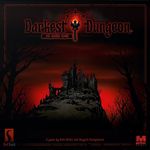
Finally, Darkest Dungeon. The game itself might be okay, but Mythic Games committed what might be the most blatant Kickstarter extortion ever recorded. July 2022, they said the game was ready to ship. Then they emailed, "Pay additional shipping costs or we hold everything in storage indefinitely."
They claimed 600% shipping increases due to COVID in Ukraine war. Refused to absorb those costs or offer refunds for anyone who couldn't pay extra. They held finished products hostage until backers paid ransom money on top of already paid pledges. That's extortion, plain and simple. People who refused lost their pledges entirely. No refunds, just stuck paying or losing money. Setting aside the criminal behavior for a moment, the game itself is also fiddly beyond belief. You've got multiple card decks, hero decks, monster decks, room decks, needing constant shuffling, and the tokens, stress tokens, damage tokens, status tokens, all piled on top of the cards, obscuring the beautiful artwork and crucial information. It's like playing a video game where the computer handles the math, but here you do all calculations manually. and the Hamlet phase, the town management felt tacked on. In the video game, upgrading the town is crucial. Here, it just felt like another layer of admin you had to do between the fiddly dungeon runs. The rule book wasn't great either, with unclear wording in key places, needing immediate house rules. In October 2024, Mythic Games officially dissolved, leaving everyone with incomplete products and no support. If you want that roglike deck building feel, Slay the Spire the board game proves you can adapt a digital game without the bloat or too many bones which does complex tactical combat with highquality components that don't need a spreadsheet to track.
Here's what we learned from all these. IP doesn't fix bad design flaws. Dark Souls and Horizon had massive fan bases, but couldn't overcome fundamentally flawed mechanics like grinding or semi co-op betrayal. Scale doesn't equal quality automatically. Jon of Arc proved that. And when a game needs immediate community house rules, that's a production failure, not a feature.
But the industry learned. Better games came from lessons learned from these disasters. Monster Hunter fixed the semi-cop mess. Bloodborne fixed the grinding. We're getting better adaptations now because designers realized you can't just copy paste video game mechanics to a board.
When considering your next Kickstarter pledge, remember these six games specifically. Check the designer's complete track record. Does the core mechanic feel original or done better elsewhere? Does the game need house rules before it's fun? And most importantly, check the publishers fulfillment history before pledging your money. Thanks for hanging with us while we geeked out about these games we've been absolutely obsessed with. Mostly obsessed with not playing them again, but still. We're Board Game Critique and we'll see you in the next