Hidden Gem Board Games
Games in This Video
8 games are featured in this video — they unlock as you watch.



Transcript
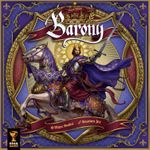
Baron Royal Edition is an abstract strategy game designed by Mark Andre and illustrated by Bastian Jez, Samuel Bouvant, and Ismail Pomaz. Released by Grail Games in 2025, it accommodates two to five players with gameplay typically lasting about 45 minutes. This game is suitable for ages 14 and older. This edition is a revamped version of the original Baron published by Metagot in 2015. Now expanding the player count from two to four players to two to five players. In Baron Royal Edition, players assume the roles of ambitious baronss competing to expand their realms and become the supreme ruler. Each turn, players can choose from six different actions to grow their territories and undermine their rivals. Players can recruit knights, move them strategically, construct villages or strongholds, establish new cities, embark on expeditions, or upgrade their noble titles. The game ends when a player ascends to the rank of Duke.
Concluding the round and leading to a tally of victory points. The player with the highest score wins. Notably, this edition includes previous expansion, Sorcery, and a new mini expansion, Heroes. Overall, I'm thrilled to see Baron make a comeback with a new addition, allowing even more players to experience this fantastic and elegant game. It's an excellent choice for those who love strategic gameplay, as it promotes thoughtful planning and offers plenty of opportunities for player interaction. For anyone who enjoys games that are easy to learn yet challenging to master, Baron is definitely worth exploring. Ever wanted to gather a pack of corgis while taking risks? Crazy corgi has you covered. Let's see how far you can push your luck. Crazy corgi is a card game with push your luck mechanics. The game is designed by Noah Vasali, illustrated by Wanjing Gil, and is published by Sinko Games in 2024. The game accommodates two to four players, takes around 15 minutes to play, and is recommended for ages eight and up. In this game, players aim to gather corgis in one of their three kennels to form sets of five cards and score points.
Each turn, players draw between two to four cards. The cards include corgi cards from five suits with values ranging from one to five, as well as wild cards and event cards. If a player draws two cards of the same value, they bust and must hand all drawn cards to another player of their choice. If they don't bust, they can add the cards to their kennels. However, if a player cannot legally place any of the quirky cards they just received, they must discard one of their kennels to start a new one. Players can form three different combinations of sets. One, all cards of different values, which is worth one point. Two, all cards of the same color, which is worth two points. Or three, all cards of the same value, which is worth two points. Additionally, players earn a bonus point for completing a set in the same corgi fur color. The game ends when any player scores five or more points, thereby winning the game. Just like the title suggests, this game is crazy. Crazy Corgi is wild, chaotic, and a lot of fun. It feels like a delightful mashup of circus flat and exploding kittens, all wrapped in the super adorable corgi artwork of Wanjen Gill. Overall, Crazy Corgi is a super fun game and I highly recommend it. If you're a fan of push your luck games and adorable doggos, this game might resonate with you as well.
A simple but tense baseball mind game. This title turns baseball into a fast two-player guessing duel with no balls or strikes, just hits and outs and mind games. Hits and Outs is a quick two-player light deduction game with a bit of bluffing inspired by baseball. In this game, players take on the role of ball players competing in a duel of hits and outs. Instead of tracking every pitch, the game focuses on the back and forth between the pitcher and the batter. There are no balls or strikes, just hits and outs. Each inning, one player hides the ball while the other tries to find it, creating a simple guessing game with a bit of strategy. When you're batting, you're trying to guess where the ball is hidden to get on base and score runs. When you're pitching, you're trying to trick your opponent into making wrong guesses and getting outs. After three innings, the player with the most runs wins. Hits and Outs was one of my favorite games of 2025. If I had initially reviewed it last year, it would have easily made my top games list for that year. It's a light fuller game, but it's backed with mind games, tension, and a surprising amount of excitement for its size. What I love most is how intense the simple guessing can feel. As the batter, trying to figure out where the hit token is hidden is genuinely stressful in the best way. As the pitcher, you get to be sneaky and unpredictable, which adds a fun layer of deception to every turn.
This constant back and forth is where the game really shines. That said, there is a noticeable luck element. Sometimes it feels like smart deduction and other times it comes down to guesswork. Because of this, players who don't enjoy guessing games or light randomness might not connect with it as much. However, if you enjoy light deduction games with quick mind games, tension and reading your opponent, hits out is an easy recommendation. Get ready to race through the ancient world of the Mayans and Yukata, where strategy, fun, and a bit of luck will lead you to victory. Can you outsmart your friends and collect the most light stones? Let's find out. Yukata is a fun strategy game where players manage their cards, race against each other, and collect stones. It was designed by Stefan Dora and illustrated by France Bowen, and it's published by Hansen Gluck in 1996.
You can play with two to four players and the game takes about 30 minutes. In Yukata, you play as priests in ancient Mayan culture. Your goal is to move your amulet along a path to gather blessings, light stones, while avoiding curses, blue stones. You use cards to decide how far to move your amulet, and the player with the most light stones at the end wins. Yukata is a great game that makes a strategy and fun. Every move counts and you have to think carefully about what to do next. You need to avoid blue stones because they can make you lose light stones at the end. But if you wait too long, you might miss out on collecting stones. The game is exciting because you have to keep an eye on what other players are doing. You need to decide if you want to move ahead quickly or play it safe. This makes it a lot of fun and keeps everyone on their toes. Yika is easy to learn, so even new players can jump right in. The rule that you can't play the same card as the last player makes it even more interesting.
You have to think of new ways to move your amulet. Even though Yukata is really fun, it doesn't always get the attention it deserves. The beautiful artwork by Fron Genle makes the game even more enjoyable, bringing the Mayan theme to life. For anyone who loves strategy games, Yukata is a hidden treasure. It's a game that friends and family can enjoy together and you always want to play again. Have you ever dreamt of exploring the cosmos while managing your own starship? Well, in Space Bureau, that dream becomes a reality. Space Bureau is a science fiction strategy board game featuring tile placement, tech trees, grid movement, and contracts mechanics. Designed by Andre Kolov and illustrated by Nick Girtz, Kolina Collagginina, and Evanji Zubov. It is published by Open Border Studio and Hobbyworld in 2024.
The game accommodates one to four players, takes around an hour to play, and is suitable for ages 10 and up. In Space Bureau, players assume the role of captains of alien starships exploring the final frontier, space. Each player manages their own starship, paying attention to fuel and storage capacity while collecting samples of alien products from various planets to earn precious credits. Players can also establish offices on different planets and manage their positions on the bureau track. After all, a good space captain knows the importance of public relations with headquarters. Each turn, players place a single trade agent tile on their spaceship board, ensuring it connects to an existing connector or previously placed tile. After placing a tile, the player executes the action listed on that space, then draws a new trade agent tile from the display to end their turn.
The game ends when there are no more trade agents left in the bag. After that, all players take one final turn. The player with the most credits at the end wins. Overall, I've had a great time playing Space Bureau. It's a fun, puzzly game that offers strategic depth and higher replay-ability. I can't wait for more players to discover this fantastic title. It's time to savor Taiwan's hot pot culture and hot pot holoc. Taiwan is renowned for its vibrant food culture, particularly its hot pot, which has become a national pastime enjoyed in every season. The country offers a diverse range of hot pot styles, and Taiwan streets are lined with hot pot restaurants, reflecting the deeprooted passion for this dish, making it a global hub for hot pot enthusiasts.
Hot PP Holoc is a trick-taking card game designed by David Chang and illustrated by Dodo, published by Taiwan Board Game Design and Clueless Games. It accommodates two to four players and revolves around the theme of sharing a hot pot meal while competing to collect favorite ingredients. In this game, players take turns either adding food cards to their plates or eating them for points with their actions limited by the turn order. Strategy is key as managing turn order can significantly impact the outcome. Enjoy a fun-filled experience with friends and family as you dive into the delicious world of Hot Pot Holic. Hot pot Holoc is an engaging trick- takingaking card game that beautifully captures the essence of Taiwan's vibrant food culture, particularly its beloved Hotpot. The gameplay is quite strategic, requiring players to think critically about how to score points based on the objective cards available. Players must carefully consider their actions as managing turn order and card play can significantly impact their success. The trick- aspect of the game feels like a cool and clever bidding mechanism which I really enjoyed. This adds an extra layer of depth to the game, making each round feel dynamic and engaging.
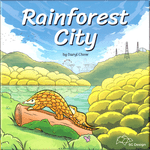
Overall, Hot Pot Holoc is a fun and captivating game that not only challenges players strategically, but also celebrates the communal joy of sharing a meal. Get ready for a game that educates, entertains, and inspires positive change. Welcome to Rainforest City. Rainforest City is a live strategy board game featuring tile placement, open drafting, and simultaneous action selection mechanics. The game is designed by Dr. Daryl Chow, illustrated by At Nitiu, and is published by Origame in partnership with Forest School Singapore and Animals and US Academy. The game accommodates one to four players, takes around 30 minutes to play, and is recommended for ages eight and up. In this game, the players embark on a mission to restore the beauty and biodiversity of Singapore's natural landscape. Players are tasked with strategically reconstructing rainforests, mangroves, and ocean terrain to facilitate the revival of plant and animal species, ultimately reestablishing vital food chains. The player with the most points at the end of the game will be the winner.
The gameplay in Rainforest City is fantastic. The game really gets you thinking about where to play your terrain cards and where to repopulate your fauna to score the most points while trying to avoid placing tokens adjacent to the houses on your landscape to avoid negative points. Overall, Rainforest City is a brilliant game. If you haven't played any title from or game, I can easily recommend starting out with this one. It's an excellent game for both casuals and hobbyists alike and is a perfect game for a classroom environment as well. What if you could shape the fate of an ancient civilization in just 45 minutes? Dive into the Palopony card game where every decision counts. Piloponius card game is a cityb building and civilization card game featuring mechanics such as bidding, open drafting, set collection, highest lowest scoring, and variable player powers. Designed by Burnt Eisenstein, illustrated by Matias Katrine and published by Iron Games in 2015. It accommodates one to five players, takes about 45 minutes to play and is suitable for ages 10 and up. The Palopines, a peninsula in southern Greece, had faced numerous challenges throughout history, including earthquakes, major conflicts like the Paloponyian War and economic decline following the fall of the Bzantine Empire. Despite these hardships, the Paloponyist remains a vital cultural and historical region. In Paloponist
card game, players assume the roles of various civilizations in the Paloponyist. They bid on power cards which include buildings and landscapes to construct their own tableau. Players will encounter challenges such as catastrophes and the necessity to supply their civilizations. The game concludes after eight rounds with the player achieving the highest lowest score from their population points or power points declared the winner. I've been playing a lot of games from Iron Games recently and I have to say that I've been having a blast with all of them. Palopony card game is no exception. What I really enjoy about Burnt Eisenstein's designs is how he consistently pushes the limits of game mechanics and I've loved every single minute of playing.
Overall, Palopony Card Game is another brilliant title that I've thoroughly enjoyed. The gameplay is sweet, strategic, and challenging. I've been so impressed by Aaron Games offerings that I've already picked up the original Palopony and its expansions. If you enjoy civilization games with citybuilding mechanics and a classical aesthetic, this game is a no-brainer, go for it. It's simply awesome. A small card game with big charm. A table full of colorful animals, simple rules, and a race to empty your hand. Big Five or Animal Connect offers a surprisingly engaging puzzle in a small package. Big Five is a card game featuring hand management and pattern building mechanics. Designed by the renowned game designer Ranicitia, it was originally published by Amigo in 2010. In 2022, Yaoish Games released their own version titled Animal Connect.
In this content, I'll be focusing on the Yaoish Games edition. At its core, Big Five is a race to shed your cards. Players are trying to be the first to empty both their hand and their personal deck. The game consists of 100 animal cards featuring five different animals across five different background colors with each combination appearing multiple times. At the start of the game, the cards are shuffled and distributed as evenly as possible among the players with one card placed face up on the table to begin play. Each player then draws five cards from their personal deck to form their starting hand. On a player's turn, they must either play cards to the table or exchange cards from their hand with their deck. To play cards, the active player must expand an existing group of animals already in play. Patterns can be formed in two ways, either by matching the same animal in different background colors, or by playing different animals that share the same background color. Each group can contain up to five cards. Adding the fourth card allows the players to discard one card from their hand or deck as a bonus, while completing a group with the fifth card allows them to discard two. At the end of their turn, players draw back up to five cards if possible. Alternatively, players may choose to exchange cards by swapping cards from their hand with new ones drawn from their personal deck, returning the exchanged cards to the bottom of their deck. The game continues until a player successfully plays all cards from their hand and deck, claiming
victory. For those who prefer multiple rounds, the game can also be played over several rounds with the players scoring negative points based on the number of cards remaining. The player with the lowest total score at the end wins. Overall, Animal Connect or Big Five is a charming card game that works wonderfully as an introduction to pattern building for younger players while still offering enough engagement for adults. Drinks are around the house and so are the mind games. Every so often, a small card game flies under the radar only to surprise you once it hits the table. Shady Lady is one of those games. Shady Lady is a fast-paced light deduction game that's all about reading your opponents. It features mechanics such as bluffing, set collection, and hand management. Set in a stylish cocktail bar, players quietly build sets in their hands while keeping a close eye on everyone else. The goal is to form either three of a kind or a straight, then decide the right moment to act.
Declare try to reveal a strong hand and score. though other players can jump in if they have something better. Alternatively, call Jack to catch an opponent before they score themselves, but if you're wrong, you hand them the point instead. Points are earned through successful try or jack halls or by benefiting from a fail accusation. And the first player to reach three points wins. Shady Lady was one of my favorite games of 2025. If I had reviewed it earlier, it would have easily earned a spot on my top games of the year list. In terms of player count, Shady Lady really shines with three to six players where the table talk, laughing, and second guessing are at their best. I also find myself enjoying it far more than Nana and Trio, which is high praise given how well regarded those games are.
Overall, Shady Lady is a fantastic filler that delivers far more tension and interaction than you might expect. I highly recommend it, and I'd love to see it receive a wider international release so more players can discover just how clever and exciting it is. Well, that's it for today. Thank you so much for watching, and I hope you've enjoyed it. Don't forget to like the video and subscribe to the channel for more hidden gems just like these.