Solo Round-Up - with Zee Garcia




Transcript
Hey everybody, Zee Garcia here and today I'm doing a review roundup taking a look at some games that have been reviewed already by other folks, but I'm going to be taking a look at them and giving you my thoughts briefly on them. This, however, is going to be a solo game review roundup. I'm taking a look at these games right here, all of which play solitaire. Uh and so that's the point of view I'm using to take a look at them. Some of them you might be able to play with more, though I don't think any of these you can play with more than one. Maybe I'm wrong. Um but I've played them solitaire only, so we're going to take a look at that uh from that point of view. I'm just going to be showing you very quickly up here. I'm not even cutting to the table uh briefly how the games work because, like I said, these have been reviewed already. This is really more for me to give my thoughts on these. And I'm going to be going through them from the one I like the least to the one I like the most. So, let's kick it off.
First up is Hercules and the 12 Labors. And I have to tell you, if I was looking only at artwork here, uh this might be top of the food chain. It is a stunningly gorgeous game, incredibly well produced, just a lovely, lovely package. In this game, you are trying to get through uh Hercules's 12 Labors. You're going to be doing that with a stack of cards here that you're going through, and you'll be completing challenges on these cards by rolling dice against those challenges looking for specific faces or specific combinations. You are going to, as you complete those challenges, earn rewards from them. So, it's that typical things get harder, but you have more tools available to you. The game's a little repetitive for what it is. It's a It's a little long. Going through all 12 Labors in one sitting can feel a little long.
Uh though to be fair, I have not won yet. I have not been able to get through all 12. Uh and I do find that sometimes before be because you are drawing a card from this deck before every challenge, you randomize this and you sort of pull one out randomly. And it might say, "Well, you get one fewer die this battle because you're you're battered." Or one more. Or every die gets minus one because you're feeling melancholic. Um This might have bad interactions with the things you're doing. For example, I went up against one character. Uh he was doing the boar, all right? Hercules was trying to get through the boar. And he hits on a one. I I need to roll ones to assign damage to the boar.
Well, I happened to pull the card that is uh that is enraged. Enraged here says that after you roll your dice, everything has plus one to a maximum of six. So, any natural ones I rolled immediately became twos and then I had to waste time manipulating them down to ones to be able to assign hits. And I just ran out of time, right? Uh because his his own dice will advance down this little track. And you know, I I I lost to the pig. And so, those things are going to happen. You're going to have those weird interactions. The game is interesting, but it's very very lucky. And it is a little long in the tooth, so to speak. But I enjoy it. It's one that I um I'm still going through. I'm still kind of like exploring. I'm not quite done with this one yet. Uh Hercules and the 12 Labors from me gets a six out of 10.
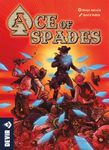
It's not spectacular. There are many other solo games, obviously, that I would recommend before I recommend this one. But if you love the setting and you are a sucker for the the look of this one, it's it's still neat. And you're going to have to put up with some bad sort of you know, RNG, so to speak. Like random things happen that don't go your way. But I'm forgiving a lot of that stuff because I like the writing in it. You're reading a lot in it, and that's kind of cool the first few times anyway. And I like the look and the setting in this one. So, again, uh Hercules and the 12 Labors gets a six out of 10 from me. Ace of Spades here has a theme that I tend to really, really enjoy, the weird west. The idea that the setting is the old west, but what's going on therein has to do with necromancers and the risen dead and demons and monsters and all of that stuff, right? Uh it also is a poker game at its heart, and it is a game in which you are going to be going up against baddies of increasing difficulty trying to get all the way up to Lord Overkill, the big bad in the game. You're going to be doing that by drawing cards. You get a hand of eight cards from a regular deck of cards, and you are going to attempt to make a poker hand. Those poker hands translate to damage on the bad you're going up against. Now, the first one you go up against, that's easy. They have like four health. And so, probably a single poker hand will do it.
And then you take that character, set them aside. They have a one-time ability. So, this is again one of those games in which things get harder, but every time you defeat somebody, you get a one-time ability or an ongoing ability. And so, you're building up as the game gets harder on you. And so, that's what you're doing. You're playing a hand of five poker cards, right? Uh playing a poker hand. If it's uh single pair, that's only one damage. If you play, you know, a full house, that's going to be four or six damage or whatever. And then also face cards and aces in there give you bonus damage on top of that. But, you have a limited number of hands you can play, and you have a limited number of times you can manipulate your hand before you commit a poker hand. If you really draw a garbage combination, you can spend one of the ticks on the board in front of you. Just discard some of them and draw some new things. And you still have not spent one of your poker hands on this fight.
It's interesting. I I like the look a lot. I like the the theme, like I said, the demonic western thing a lot. I do find what you're manipulating in front of you to be a little bit fiddly. There's these little cardboard wheels you're spinning up and down to track how much is the health of the bad guy. How many poker hands have I played? How many times have I manipulated my hand or reset the deck of cards? I find that to be fiddly. I wish there was another way to do that. The cardboard spinners they feel kind of chintzy to me. But I like the game. Um it's another one of those that feels like it ramps up really not quickly cuz the game's kind of slow. Um it's one of those that I just I I haven't made it all the way yet. It's it's punishing. Around encounter eight or nine, I just flame out. I can't can't do it.
And so, from that point of view, uh and there's a few solo games that do this. I wish there was a quick start mode. Cuz I want to just start there. Just give me a few abilities so I'm about right, you know, level. I'm I'm ramped up a bit. And then let me just fight against that guy. Start there. I don't want to go through the the weak thing first and then this guy who's easy yes and then this guy and then this guy and then I flame out anyway where I get to the same place. So, it can feel a little bit slow. You get you get tired of the beginning of this game is my point. But I enjoy the poker thing. You have to be a fan of poker. Um and I enjoy the setting here a lot. I think it's got uh it's a flamboyant game in many ways and it's uh the the western, the the the poker, all of those things I I like.
A little more footprint and and that board that goes in front of you, those two things pull it back a little bit for me, but I like it and if I have the time and the space to spread this out and and dive into it, maybe even put on a little western music, this is that kind of game, then I I enjoy this one. This is going to get a seven out of 10 from me. Uh good stuff, interesting, fun, and you you got to be a fan of poker to to play, but if you if you are, I think you're going to have a good time with it. All right, let's talk about uh Ravel, I'm guessing, or r a v e It's Ravel, right? But they they do stand for something. So, this one is a resettable, repeatable puzzle game. Uh it is one in which you're going to have this little board on the table in front of you, randomize and roll these dice into its spaces, and you're going to get a random combination of colors. You have two of each color, two red, two white, two uh blue, and then two black dice with random pips, of course, on this little guy on the table.
And then you shuffle up these cards and put stacks all the way around this guy, and then reveal the top one of each of those stacks. If you manage the condition across the top, you get the reward across the bottom, and then this card clears and you reveal the next one. And if you manage to clear all 16 cards, there's four stacks of four, then you win the game. If you run out of these little tokens that are letting you manipulate dice, then you lose the game. If you get stuck, basically, you lose the game. And so, that's what you're doing. So, a card like this one, for example, says you need both of the red dice on this side of this uh grid. And if you do that, then this card clears and you can take any die and flip it to its opposite side, and this goes away.
But of course, the dice are not going to end up where you want them to, so you spend these tokens, like I said, to manipulate dice. You can spend one token to have two adjacent dice switch positions, and so they can start sort of dancing around, or you can spend two of those tokens to just take a die and set it to any value you want to and put it back in the spot it was. With those tools in place, you can start doing some really interesting stuff. And so, I find it fascinating. I find the setup incredibly easy. It is It takes this much room, the whole thing, so that's wonderful. This is absolutely a game you can play on like a tray on an airplane, right? It's that kind of of small footprint-wise. And yet, the puzzle is great. It's fascinating. There is some really neat um There's some really neat give-and-take here. Sometimes, you have to like you feel like you're really burning through these tokens to get one of these cards to happen, and then you go, "Maybe I should have done something else first."
And then just hope things fall into place. Some of these abilities let you kind of scoop up all the cards and shuffle up and redistribute them, and then reveal face up the top of the piles and just see like, "Okay, forget it. I'm pulling the rip cord on this. Let's see what I get." Some of them let you take the whole grid and rotate the whole grid 90°, which is kind of mind-blowing. But, the whole thing feels small in a comforting way, and and approachable. You know, and and you can even If you are starting to get too good at it, they give you a secondary deck of these cards that take versions of the first deck and level them up, make the the the condition to trigger it a little harder, but the reward's a little bit better. And you can include as many of these as you want to replacing the other ones one to one.
So, there's a nice variety there, a nice way to to tweak the difficulty up to where you're comfortable with. So, I like that a lot. Couple of negatives though, I do find the iconography in this one is tricky. Um my my eyes are in the rule book a lot trying to figure out what is that symbol mean? Oh, okay, do this and pick this up and flip it and rotate it and whatever. So, I do wish the iconography was a little cleaner, a little just sort of clicked with me a little bit more. But with that out of the way, and if you play it a lot, it will be out of the way, I find Ravel to be a fascinating little puzzle. Very interesting, very minimalistic, but it just works great. So, this one's going to get a 7.5 out of 10 from me. Yes, I wish I had a little more pizzazz. I wish that the symbology was a little bit easier, but I like it a lot and it is one I definitely can see myself traveling with again, especially for those moments where I do not have a lot of room. And those are rare to come by, those kinds of solo games. So, Ravel, 7.5 out of out of 10 for me. I really recommend this one.
Fraygarth here is a very simple solitaire game. It comes with a rule book and 60 cards. That's all that's in here. And in some ways, it reminds me of one of my favorite solitaire games of all times, that is Onirim, which is actually from the same publisher as this game, In Patience. In that game, you are going through a dream, managing your hand of cards, trying to achieve this objective, open these these dream doors before your deck runs out. In this one, you're doing something very similar. You are trying to get enough points to overcome this monster destroying and ravaging your forest setting before your deck runs out. And if you do that three times, then you win the entire thing. And so, it is this game in which you only have a hand of three cards. You can commit that if it makes a valid combination, set those aside, draw three more, and see if you have a valid combination, or you discard a card and draw a card. And that's it, until you have a valid combination or one to commit that valid combination. Sometimes they're not worth committing. I don't want to burn these three cards for a single point. Maybe I'll discard this, hope I get the right thing, and now this hand of three cards is worth three points, four points. And then I can commit that. And [snorts] and get to that threshold in a more uh you know, in a in a better way. That threshold, you can play sort of the the basic way. And those thresholds are pretty manageable, but there are four difficulty levels in
this, and it's certainly you'll feel that difficulty ramp up, and I like that quite a bit. But the game is very straightforward. It's super simple. It is the the combinations of the different characters you're collecting in your hand are going to be clever. They're interesting. If you collect the ents, for example, the trees, then you just count total number of trees on the three cards you're holding. They all have to be tree cards. So, that's the combination, but if it's the golems, then the golems, you want all the same golem, or you want three different golems. Anything else is only worth a point. If they're all golems, but they don't match, or there's repeats, but they're not all the same. So, I like the combinatorial, you know, concepts in the game.
And yet, again, very simple, small footprint in this one, and it just it's breezy. That's the thing about this solo game is that it feels to me very breezy. Shuffle up your deck of cards, put it in front of you, draw three cards, start thinking about what you want to do with them. I'll commit these. I'll discard one and draw. Oof. I'll discard one and draw. Oh, I'll discard one and draw. And you start feeling that pressure as you're like, "Hey, you better commit something. You're falling behind. This deck is starting to vanish." I like that. That pressure. The subtle ramping pressure, but I enjoy it. So, Freygaard um speaks to me. I like the look. I like the the the size it takes up. I like the the the rising tension, but it's not too much. This is manageable.
Um This is a fun one. I really enjoy it. This is going to get an eight out of 10 from me. It's one I very much recommend for a casual solitaire gamer. You like dabbling in solitaire. You don't want to commit to much table space, too much mental energy, too much setup and teardown to a solo game. This is a solo game that's going to really work for you. That is Freyja's Guard, eight out of 10. This is the final solo game I'm talking about today. This is 20 Strong Tangled Woods Red. So, 20 Strong is a dice system which has had several games made in it. It is a game in which you're managing a pool of dice. You're managing your health. You are attempting to complete whatever the objective is in the game. In Tangled Woods Red, you are traveling through a path that alternates, hopefully it doesn't alternate, but it does alternate between day and night. And ultimately get all the way to Grandma's house, right, and fight the Big Bad Wolf. Take that down, you are good. You win the game.
Um This 20 Strong set, Tangled Woods Red here, has a lot of theme. It has a lot of fun, bombastic, enjoyable ideas in it. There is a market that you can go to and buy goodies. There is traveling. It feels very much like Slay the Spire as you are picking which way you want to go through the forest. There is exploration. When you roll some dice and explore, you can set those cards in front of your path on the day side. If you bomb that die roll, or if you don't explore ahead, then you get those same cards on the night side. The night sides are harder. So, you're going to have to contend with more things. There is rolling those dice to encounter creatures. There you can pay them off sometimes. If you have enough coins, you can be like, "Get out of here."
Um so, that's fun. The whole thing is rich. It's thematic. There's a ton of game packed in this little box. And obviously, this is not everything you need. You need the dice from Tangle Strong, which you get in one of the core sets for Tangle Strong. You can just buy that. But then again, this is kind of a plug-and-play system. Uh specifically, Tangle Woods right here is going to play a little bit differently than the other Tangle Woods than the other games in Tangle Strong. But this is a really thematic, well-put-together system. It gives you a sense of place with the traveling through the forest. It gives you a sense of um give and take with the buying equipment, leveling up that equipment, spending that equipment. It gives you a sense of uh of of real place and time and progression. I like all of that. Uh and then your character that you pick is also going to give you a nice touchstone, right? That's you trying to get here, trying to do this thing. I think this one is a wonderful set. I think these new Tangle Woods sets, though I'm only looking at this one now, have done a really nice job utilizing the Tangle Strong system and giving you something that um feels whimsical. And they managed to do that. Not necessarily easy. They're not always easy to get through, but they feel whimsical, they feel welcoming, they feel silly in many ways.
Uh it's a fantastic set, Tangle Woods right here. This one from me is going to get a an 8.5 out of 10. That is a seal of excellence for that one. Uh and I very much recommend it. If you have not played Tangle Strong at all, I think Tangle Woods Red, which is the one that comes packaged in the in the uh Tangle Strong core box or one of the core boxes, is a fantastic jumping-on point. You If you like fairy tales, if you like that idea of like that the fantastical setting of that, you can't go wrong with 20 Strong Tanglewood's Red here. I think you're going to have a good time with So there you go. That is an 8.5 from me and that's going to do it for this look, folks, at a bunch of solitaire games.
Again, these have all been reviewed before, so if you want to see a full overview, you can check out those reviews. But for now, that's it for me. These are my solo round-up games here. Thank you for tuning in and watching this. I appreciate it. My name is Zee Garcia. I'll see you on the next one.
Hey folks, I'm Tom Vasel. Thanks for watching this video. Check out our channel. We have a lot of videos on our channel. We have live videos that go up each week from live Q&A's to videos where we take a look at the newest stuff on Kickstarter crowd serving to top 10 lists and more. There's lots of stuff on this channel.
We encourage you to explore it. You can find out more at our website dicetower.com. I'm Tom Vasel. Thanks for watching another video on the Dice Tower.