Two New 2024 Card Games - Double Review
Games in This Video
2 games are featured in this video — they unlock as you watch.
Transcript
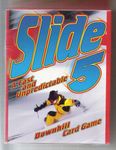
welcome to allies or enemies I'm Jess and I am Sean and today we are going to be doing a double feature of small boox games we'll be discussing both clink and slide and both games were given to us to review so let's get right to it so we're going to start with slide which is designed by Claude Clement and let's start with how it plays the game begins with everyone having a grid of 16 face down cards at the start of each round all players choose one card and place it face up in a row then players take turns drafting a card sliding their other cards to fill the Gap they left and adding the new card face up to the outer edge of their grid your goal is to create groups of numbers as any adjacent numbers won't count for points while any numbers that are alone will and you don't want points play continues like this until everyone has a full grid of flip numbers then you count up all the numbers that aren't in groups and whoever has the lowest score wins the game the first time we played this game was at Aon and we got dragged into the game with three other people and when we were told the premise all of us thought well that sounds a little simple but we all enjoyed it a lot lot more than we
thought we would yeah I think by like the second or third cuz I think everybody was like that sounds really simple but let's let's wait and by the third or fourth turn I think everybody was fully on board cuz this feels like those little slide puzzles that you play with as a kid but there's there is more to it than that it is really interesting that you always have to slide the number in you can't ever just add it to an empty spot so your puzzle is constantly shifting and you really want to try and keep those groups of numbers together but it can be tough as as things move around and there's also this thing where when you are drafting the numbers you instinctively want to take those low numbers cuz ones and twos aren't going to score as much at the end of the game but if you take the nines and tens other people aren't going to want those so they might leave those for you so there is like a little bit of strategy in this game yeah and I think that's one of the key things is part of the draft you're always going to try and pick the number that works best for you because you could try and hate draft you might see like ooh that person really wants that seven I'm going to take it but then if you commit to that you now have to deal with that seven some people are still going to do some people are still going to do it and and I do think that plays into a bit why this game is I think quite a bit better if you're playing it four players if you're playing it like three or four players it works at two you can play it a two we've played it a bunch of two it's fine but I think it really shines when you've got got three or four or even five players because the
drafting just gets a little bit more interesting yeah at more players it can be really tough when you are like the last one to draft particularly when your puzzle is almost full like if you're taking the very last card you could just be hooped I like using the word hooped in your most Canadian shirt but you could because you are just stuck with whatever you're stuck with and that can definitely feel bad but this is a quick enough game that you can just kind of play another game yeah and it is really satisfying when you can take two numbers that are like far apart and manage to make them come together and form a large group so it really is like a spatial puzzle that constantly evolving and shifting and can feel really rewarding and another real highlight of this game is this box I really like how this slides open oh but it's just it's it just looks really nice it's got this little pole thing I like this a lot I'm hoping that they use this for a bunch more of their games yeah I would say this is definitely a game for people who like a puzzle figuring things out as opposed to like a direct interaction game because you get the interaction by maybe like drafting a card that somebody wants but it's not like a mean card game it's very much a a puzzle that you are figuring out and it is also going to be more for people who are okay with that spatial awareness because it's weirdly difficult to picture how things are going to slide
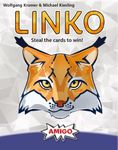
when you take that one card out you're only sliding two things but still that trips us up more often than you'd think yeah I haven't really played a lot of slide puzzles before so I have found that I've been improving with each of my games which has been like nice to develop this oddly specific skill set but we've played this with a bunch of new Gamers I think everyone we've played it with has liked it we liked it right from our very first place so this one is I think this is one that we're going to keep and then we're going to play quite a bit the next game is clink designed by Daryl Cannon so let's look at how it plays at the start of the game there will be a few available bonus cards face up on the table and a pile of number cards upside down and nothing in anybody's hand then the first player draws two cards from the deck and looks at one and only one without showing anyone else that player then has the choice to either keep both of those cards flipping them face up and placing them in front of them or passing those cards to another player that player can then choose to look at one of those cards or pass this continues until there's no one left to pass to at which point the final player has to keep those cards whoever decides to keep those cards then draws two new cards and does it again if two of your cards match you can flip them both face down if three cards are in consecutive order you can take one of those special ability cards and result resolve it the round ends once someone has 10 cards in front of
them at which point you count up the values of all of your face up cards and then add 10 for whoever had the least cards and subtract 10 for whoever had the most cards then you shuffle all those cards and do it again the game ends when any player reaches 77 points at the end of a round at which point Whoever has the lowest score wins the game so slide doesn't have a lot of direct player interaction whereas clink does I love how you only have half of the information when you see the cards and based on that you have to decide if you keep it or pass it but who you're going to pass it to is one of the really key components because if you see a 20 that is like the worst thing that you can get so you're really everyone's probably going to pass it and it's going to end up with the last person who if around has already happened it's going to be whoever is winning so you're all like coordinating to make sure that whoever ends up with it last is who you kind of all want it to be yeah it's interesting too because you can't really talk about that like you can't really you can't say what the card that you looked at is and if the next person looks at the other card they may just take it and then just get screwed over which is fun as well when you pass it to somebody and when you pass it to somebody I think there is a bit of kind of this silent like oh okay so he passed it to me first which means I can pass it to to this other person and this other
person is winning by a ton so does he want me to pass it to that other person because it's junk like is the other card junk but it it is interesting that you only have half that information so you're always kind of taking a risk when you flip over those cards yeah and it is interesting too that depending on how many cards you have dictates what bonus or negative you'll get too because if you end the round with having 10 cards you get to subtract 10 and that can be a lot but if somebody ends with zero cards they get zero points so you're all keeping an eye on that to try and make sure everybody is ending up with at least some cards yeah I really like that that whoever has the least cards at the end gets plus points and that hurts a lot cuz it's like plus 10 points is worth a lot of points in a game that goes to 77 points so you definitely want to try and make sure everybody gets those and that is part of that passing it around the table that you're thinking okay when I pass to you you're going to pass to them you're going to pass to them you're kind of like mind reading everybody else around the table you also just say it sometimes like hey please if we can all notice that John has no cards right now let's make sure that he gets two cards and because you only score what isn't in a pair you are constantly trying to pair your cards up but it's so tough when you only see half of them so so you take a risk if you're like o I definitely want that card but what is the other one and it the fact that there's negative cards in there too
might tempt you even more to keep the cards and it means that some of those cards are bad for you but good for other people but then it's like do I keep this card and then I take 10 points or do I give this card but then I know they get rid of their 10 points they're going to take no points there is also on top of making the pairs making those little mini runs and getting those special cards and I think I feel like those special cards feel maybe a little bit underused cuz there aren't as many of them as there might be and some of them you feel like do I even really want this like there's definitely a few in there that have just kind of sat there I think that's the key thing is there have been some that have come out that has made it seem worthwhile getting the run and other times the three just sit out there and don't seem worth it at all so I think there is a huge variability in those cards because they can provide strong bonuses but not necessarily and having a run with non-matching ones is a bit of a risk but even though it feels like maybe they don't have quite enough of those at the same time it doesn't come up that often because you are trying to get same cards and you're trying to flip those over and once they're flipped over they're not going to be part of a run so you only get kind of a few runs in a game at least that's what what we've seen so far this game because the only way you're getting cards is if you are the first player or someone gives them to you it is definitely feels like a mean game because you can certainly feel targeted that being said you're probably
only going to be targeted if you're winning or if you just tend to win games in your gaming group you might likely have a Target on your back as well and it is worth noting this does not play at two players it's recommended 3 to five and I would probably only want to play it at 4 to five yeah this is definitely four to five and it also does look a little bit Bland so you're going to have to be okay with like it looks like a traditional card game and I think for people who like a traditional card game and a traditional kind of mean card game if they like like Bridge or Ry or Canasta or uker that sort of thing I think this might be a good fit and that is it that is quick reviews of small box games thank you so much for watching we love small boox gam so please let us know in the comments what your favorite small boox game of 2024 has been so far and please like subscribe and hopefully we'll see you next time for another game