Beige Games Matter 2 - Quo Vadis?, El Caballero, First Class Reviews
Games in This Video
3 games are featured in this video — they unlock as you watch.


Transcript
hey everybody and welcome to another episode of beige games matter so in this series of videos I take a look at games that are mechanically sound however are overlooked because they might not be as glamorous as more modern games so the three games I'm taking a look at this episode are quo varis by Ronnie canitzia this is again going back to the early 1990s we have El Caballero by Wolfgang Kramer and Richard Ulrich going back to the late 90s and we also have first class which is much more modern going back to 2016. now before I take a look at these games that I want to give a shout out to the show sponsor keyienda dot Co dot UK who are my go to online retailer when it comes to purchasing board games here in the UK and if you use my link in the show notes all the QR code then you can get five percent off your first order okay so let's start with corvadis by Ryan's here this is a three to five player game that takes around 30 minutes to play on average the box does say 30 to 60 minutes and but from my experience it has usually been around that 30 minute Mark now this is actually a step away from a lot of other konitzia games because normally he's known for his very tight mathematical games because he's a mathematician this one has a lot more focus on that player interaction because of course it is a negotiation game and the concept of this game is to try and get your player pieces or at least one player piece all the way to the top of the track here to the Senate and and as soon as you're here you are going to be eligible for scoring so it doesn't matter how many points you get in other ways unless you are here you are not
going to have a chance of winning and in the process of moving your pieces if you skip across one of these tracks here where there will always be points on that I've been a bit lazy here and not set over all of them up but you can see if you ever jump from spot to spot and you go over one of these tokens and you'll collect them as end game points now this game is actually very simple from a mechanical standpoint because you only ever have I believe it's one of three choices to make the first of which is to put one of your player pieces on one of these bottom kind of lobbies I suppose and you can see here they come in different sizes either one five or three the second option is to try and push on to the next kind of lobby area and when you do that you need to try and canvas for votes from the other players at least if you don't have a majority so if you are in one of these single councils you can just go from Lobby to lobby with no issue if you are in a three Council then you need to have at least two votes and if you're in one of these five councils you need to have three votes and the way you do that you can either use your own boats here so you can see this player already has two seats and then they're going to need that third one in order to progress and what they can do is they can try and negotiate with the other players to get their votes because if they get their votes that other player granting the vote will get a point um but you can also Strike Up deals by saying you know what if you give me this vote now I'll vote for you later maybe in another part of the board or I'll give you x amount of points um Etc so yeah basically you're trying to push on and push on push on until you get to the top there now there is also another
choice you can make where you have this Empire um the emperor token which I don't have here actually at the moment where you can place them on top of these points tokens which will basically act as a an open Gateway for you to push through and without having to ask for other votes at all so you can really use that to your advantage and that's how the game plays out you just keep going and going going until those five seats are full regardless of which players they are so you could have multiple pieces there if you wanted to and actually look other players out of you know having the option to score in the first place and that's basically how the game goes you know once that's done the play with the most points uh will be the winner now I love how simple the turn structure of this game is you just pick one of those three actions and you are good to go so you know Lightning Fast turns there's good potential to strike deals here you can say you know what as I said you can build up trust and think you know if I vote for you here you vote for me here later I like the way that built the deals are not binding so you can actually betray people later in the game if even if you promise them something um earlier that balancing of trying to race to the top and being put under that immense pressure while at the same time focusing on getting points because you know you can race to the top all you like if you haven't got the most points then you're going to be screwed so yeah there's a lot of things to juggle here and it does put you under a lot of pressure at all times because the game does progress um so rapidly yeah I love the flow of this one and I like the decisions and potential to strike up deals now the only issue I have for this game is that it isn't terribly flexible because although the box does say three to five players the
three player count isn't optimal um four players does work well and five players Works fantastically however there is a reprint of this game coming out called zoovatis which is um certainly a lot more glitzy than this one is and not only did that game have a reskin and a you know a new artwork and stuff like that and but it also introduced a rule where you could add in neutral pieces to the game and what I do is I just use a a non-used um player token color and you can basically bribe neutral Pieces by trading in points tokens to get their votes and what that means is that the game scales much better even at that three player count you know it's still not as good but it does make the game more you know more playable I suppose if you do only have that three pay account and you can still have some good games playing with three players yeah I definitely um love the feel of this one because you know as I said most Community games feel a certain way you know I tend to love this game but this one does feel way different and whenever I finish the game with this one the players always think you know what that's something really different and I mean I can't directly compare that to anything else and I tend to love it when games do that and yeah I'm actually really enamored with this one at the moment I think it's um kind of increasing in my rankings for me I'm always in the mood to play it because it offers a lot of you know a lot of fun a lot of interaction some good decisions in a very short time frame and it actually adds some can put you on a lot of pressure at times by thinking you know what I do I need to end the game now um because I might have the most points I don't want to drag on much longer but I still need to get to the council um
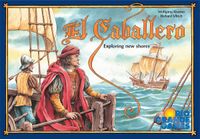
should I move the emperor should I try and stop somebody else yeah just tons of decisions here in such a neat little framework so yeah I think this one holds up remarkably well I think it's going to do well in the reprint as well and people are going to start enjoying it and kind of bring you life into this quotevado system so yeah High recommendation for me if you like those interactive negotiation style games that is quo vadis next up let's take a look at El Caballero so you might notice from the artwork here this has a lot of similarities to my favorite game of all time El Grande and this is because it is from the same designers and same publisher now this is a two to four player area control tile placement game the box says it takes 90 minutes to play but again from my experience it is faster than that so naturally because of my enjoyment of El Grande I really wanted to try this one and you know there is some similarities between the two but the main similarity is the card system so if you're familiar with El Grande you have This brilliant um deck of cards where you are trying to play um the higher numbers to get best initiative the initiative in this game is to place um to place new tiles on the board and to take your actions and they'll also give you an income of caviaris which are essentially your influenced cubes or your trackers to put things onto the map now in this case instead of having cubes or meeples to map your influence in the different regions you have these control tiles which are numbered from I believe it's
one to eight and that is going to show the influence in the different islands and the influence is the one pointing towards the particular block of islands that you are trying to control and once you have them on there you can spend more cab areas to increase the value of them or place new ones Etc and you can even do these cool tricks where you can place your Grande's down which is like a one opportunity in order to make sure that every single face of these um control tiles can influence in adjacent regions so you can actually use that to a real strong benefit and Venture and kind of um you know leak into several regions with a single tile placement and then I this game has quite a nice almost action points allowance system where you can keep doing things until you run out of options so again you keep increasing your inputs into different regions you can put these boat tokens down to try and control the sea areas and get points that way um you can try and secure your places or secure your influence by putting these um castles on these tokens which means that if somebody kicks you off or removes your piece from the board which you can do because you know the golden rule is you can only ever have one piece of influence going into a region unless you have your Grande down where you know normally they'll be returned to you and you'd lose all that initial investment but if you put those castles down then you'll get all those meeples back ready to deploy again um the actual initiative system shines through really strongly here and because you know you do want to be getting into those the best opportunities and get the best tiles um when they're available to you but at the same time you need to balance
the two by you know do I want to go fast this time maybe I can afford to go slower next time and restock my supply of um of influence and so on so it has that really cool push and pull mechanism which again was so familiar with El Grande now this game actually flows really nicely once you optimize the way you want to play it because now this is again going back to again to the 1990s where rulebooks weren't as comprehensive as they are now and what that mean is means is this game kind of gave you a framework of how to play the game and different options how to play the game but it didn't give you the optimal way to play the game in my opinion um so you do have to kind of pick and choose which you want to play with how many rounds you want to play um how after how many rounds you want to score um and so on there are a couple of suggest methods but I actually managed to help kind of figured out my own household and how I like to play it now I normally play for around eight rounds score after the four and score after the eighth but again there are variations on that depending on what you uh want to do there are also a couple of additional rules that you can add in which I don't think add much to the experience so I chose to ignore those again once you find your way you want to play this one I think you could have a great time with it get it it's a nice blend of those mechanisms of the entire placement and area control that flow of resources a bit of card play I mean use as good at player initiative to get a really nice hybrid and blending of different Euro mechanisms there now this game definitely does live in the shadow of El Grande you know that's one of the most popular games ever from the spiritual Jazz winner um this one definitely didn't live up to
that those expectations or that reached that level of success but I think this is a very solid um game one I've had a lot of fun with I've never really had a bad game of it it can be quite not confrontational but it can be there can be a lot of competition for these different regions the scoring of the islands is pretty simple you know you're just adding up the surface area adding on points for these symbols as well that can appear on them like these little gold symbols you know the first player will get those amount of points second player in terms of um you know controlling influence will get half the points and so on so very simple stuff you know stuff we've seen before again that blending of the different mechanisms is done to a very high standard as you'd probably expect with designer of the pedigree of Wolfgang Crema so yeah terribly overlooked and holds up so well and um yeah more people should be playing it because I know the guitar play some games are generally popular area control games are popular this one is a One-Stop shop for both of those mechanisms and I do recommend it a lot so that is El Caballero and finally let's take a look at first class all aboard the Orient Express so this is a two to four player game that takes around 20 minutes per player and again that's pretty accurate and in fact I've played two player games of this that have taken around 30 minutes it was a very Snappy game now this is essentially the card game version of a popular Euro game called Russian railroads which again just so happens to be one of my favorite games of all time now the difference between this one and Russian railroads is that
Russian railroads is a worker placement game this one is a card drafting game so what you're going to do is you're going to have three rows of six cards on display and turn by turn you're going to be drafting cards from those rows however there is a good amount of tension here because as soon as a certain number of cards from a specific row is drafted then the remaining cars on that row are going to be wiped and not going to be available to be taken anymore so you really do have to prioritize which actions and which cars you want to draft or risk losing them and much like the original Russian railroads you are trying to build track and kind of increase the quality of those tracks by getting more and more points and moving your conductor along to make those points available to be harnessed I suppose um the alternative way of scoring is by increasing this train track here and moving your locomotive along getting instant points and engine building benefits um as you go again lots of similarities there it's just a different means about getting there now one of my favorite things about this game is actually the money mechanism because on your player board whenever you gain coins you always fill them from bottom to the top and asset free actions on your turn you can freely just remove these coins and get a bonus action such as getting new train tracks and moving your conductor or train along further and other things but I love the way that you can you know the more you store up the stronger actions you get and I've never seen that used before and I'd love to see it being used
in other games now this is actually a modular game so you can pick and choose which different kind of aspects of the game you want to use or include each play now I think there's only about four of them in the game and they're not they're not massively different but I do think some of them are more interesting and better than others like for example there is a a contract module where if you have certain criteria completed then you'll get a bonus I actually think that one's not very interesting and I think I'd always kind of choose to ignore that one but there are other ones as well which will kind of double the point of your train tracks much like the original Russian railroads um and there's even like a little murder mystery game you can play as well if you want to include that but considering the amount of game here in comparison to the game length it is quite remarkable now the downside to that is that this game is a little bit fiddly in terms of the setup and because you are you know shuffling modular decks together and things like that um which is a bit of a downside considering the game can be so rapid but still it more than warrants it because there is a lot of interesting decisions here and it's probably one of my favorite drafting games actually now the downside to that is you know well the upside is that it is so similar to one of my favorite games but the downside is it's also it's so similar to one of my favorite games so do I need both of them in my collection now I think I've come to the conclusion that I don't need them both but that is not downplaying how much I like this game because it is remarkable and if you do want that faster experience that is probably what is more accessible you can definitely teach this to pretty much anybody it's not terribly complicated but I think that extra 30 of depth and
complexity from the Russian railroads is worth it to me personally considering where I am at at the moment because I do like that game so so much but so this is like a remarkable card game it's a great implementation of the original Russian railroads and I don't think it's widely available so you might have to search high and low to get a copy of this one but I do recommend it if you find one out there in the world it's a lot of fun and again at that depth to time ratio is off the charts and again if you can find a copy out there I would recommend picking it up so that is first class all aboard the Orient Express so there we have it that concludes the video three very interesting and definitely different games here I'm really enjoying my time with these ones now if you have enjoyed the video please be sure to hit like And subscribe to my channel and check out my other content too and for everybody else I'll see you next time on chairman of the board bye-bye