Top 100 FILLER games - Part 5 (60-51)
Games in This Video
9 games are featured in this video — they unlock as you watch.






Transcript
hello I'm Adam Porter and this is my top 100 all killer all filler board games and now we're at number 60 to 51. so what we're looking at in this list is games with short durations simple rule sets and portable packages the sort of games that you might not see in somebody else's top 100 and at number 60 we have a two-player trick taking game we've already seen a couple of these on the list with fox in the forest and claim but this one is Jekyll versus Hyde which is a more recent example and I think it's great okay this one you've got a small number of Suits I think maybe there's three suits in the game and you're try you've got different objectives depending on whether you're playing as Jekyll or whether you're playing as hide if you're Jekyll you want to achieve balance you want to win an even number of tricks you want to have the same number of Tricks as the hide player whereas if you're playing as hide you want to have wildly different amounts of Tricks so you either want to win them all or or lose them all and you that will allow the High character to move this Central marker more spaces towards their home space on the board which wins them the game there's also a potion or a number of potions in the deck of cards and when you play a potion it takes on the color of the the other card that's been played previously and generates an action based on that so that might change the order of the different Trump suits or you know manipulate the cards in players hands
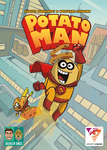
that sort of thing but essentially you play through a series of Tricks until we get to the end of the round and then we see how far hide moves towards his base and if you manage to get through three rounds without Hyde hitting their base then the Jekyll player wins and if you don't achieve that if Hyde does get to the base then the hide player wins it's beautifully produced lovely artwork really um engaging simple rules but but you know thinking it feels like there's some strategy to this one um I think it's a lovely little package it's been largely overlooked I think I'd like to see this get wider distribution this is Jekyll versus Hyde number 59 is another trick taking game this one from zoc verlag and this is potato man which is a trick taking game that's notable because you don't follow suit in fact you're not allowed to follow suit so if a player plays a color you've got to play a different color and and so you go around doing that assuming that you can um and then numbers obviously the higher numbers beat the lower numbers but if you play a card of the very highest number which is like the the villain potato then that can be beaten by the lowest numbers which have Potato Man himself the superhero on it and you score points then uh based on the colors that that were played into the trick and you take a the corresponding card different color uh tricks are worth different amounts of values and ultimately you end up with a pile of these scoring cards highest scoring wins so it it's a really nice little trick taking game it feels a bit different to
other trick take games because of that thing about not being able to follow suit or not yet not being allowed to follow suit uh which makes it feel distinct but it still works really really effectively and I think it's quite a nice one at two player as well so potato man great little card game from zoc verlag if you can get hold of it number 58 is another of the little tiny games from hell vertique and this one's from the designer Ryan ignitzia who's come up a lot on this list this is Kariba and Kariba reminds me a lot of the game that I've mentioned earlier in the list uh absucker but kariba's got a little bit more going on than AB sucker abstract is so simple all right but kariba's got a slightly more going on you've got a circular or a hexagonal or octagonal or something like that you've got this this Central area with the different numbers on it of the representing the different cards and when you play cards into a column you place them into the by the corresponding number and what happens when you play cards into a specific column is that they will scare off cards in the next the next column right the next lower column um unless you're playing the uh the mouse the mouse will only scare off the elephant so so again we've got a similar thing to Potato Man here where the lowest scoring card beats the highest scoring card and again you're trying to gather up these these sets of cards that you've scared away into a scoring pile and then you score points at the end of the game for the cards that you've gathered really simple system cute
artwork nicely produced as usual by helvetique in a lovely little package and Ryan kanitzia's name on The Box means you're always going to get something intelligent and if not deeply strategic it's certainly not it's very very light but there's enough there that that it feels you know enjoyable it's great for kids families but but it could make a really good pillar for adults as well number 57 is Hannah mikoji which is essentially a sort of tug of war mechanism where we have a bunch of different cards with beautiful images of geishas on them and you're trying to tug the token that sits on each of these geishas towards you by playing cards on your side of the Geisha which beat the cards that are played by your opponent on the other side this is a two-player only game and it's sort of becoming one of the classics in this genre of two-player only card games there's a few of these and we'll be touching on some of them later on in the list but this is a really good example of this this has got uh some unique little mechanisms in it where you've got you've got series of different action tiles that you can only use once per round so and both players have got the same the same action tiles in front of them so you know that on one turn you're going to be doing you know this specific action on another turn you're going to be doing that specific action but you're gonna get through all four actions that's the end of the the round and then we see who's winning on these different geishes and the sort of things that the actions do they let you reserve a card face down so the other player doesn't know which one this is gonna which Geisha this is gonna be played towards um they allow you to play two pairs of
cards which means then you the opponent gets first choice of which of those pairs they want to play and then you play the other pair there's another token which allows you to lay out three cards and the opponent plays one of them and then you play the other two for yourself and then there's a token which allows you to discard cards from your hands so they don't get played at all and the cards correspond to the different colored geishas we get to the end of the round we see who's got the higher total we've done token over to to our side and the aim is to get I think it's four uh geishas on your side I can't remember the exact total I'd have to look it up I think it's for um or alternatively to have a certain points total of geishes so we look at the numbers on them and we see who's got uh have you got beaten the sort of points total in order to win the game if you haven't you play another round until someone fulfills one of those objectives it's a really really beautiful looking game and it's got some nice mechanisms I think I've said previously when we were talking about maybe it was talking about the game kimono I think from uh from zoc verlag uh the I split you choose is not a widely used mechanism it's not used in as many games as a lot of these other mechanisms but it's a really fun engaging one and it's done really well in Hannah makoji number 56 is the game from Cosmos that did get an awful lot of Buzz this is the crew and there's a couple of different versions of the crew I've only played the first one uh the crew is another trick taking game the trick taking games and this section of the list as you can see the crew is a
fairly standard trick taking game you have to follow suit uh if you can't follow suit you can play any card and you know certain cards are going to be trumps the rocket cards are trumps um but the difference here is that it's a Cooperative game firstly so we're all playing together to try and Achieve certain objectives definitely it's got a sort of escalating uh difficulty almost like a campaign remember when we've talked previously about the game stick Meister so stick Meister in our previous list was a trick taking game where the rules change in every round by the players laying out different cards to change the rules what the crew does is takes those changing rules but it tells you them in in escalating difficulty order so you look into the book and it says right mission one you play with these rules in play right so we try and beat that mission collectively uh and that will mean something like you know this player needs to win the trick that has the number three in it this player needs to win the trick that has the number six in it and then they'll probably the second mission the third mission the fourth Mission and they start to put things into into um order so okay the player has to win the trick with a three in it before the next player has to win the trick with the six in it and then there's there's limitations on communication in this game you can't talk to each other um but there are ways that you can give Clues to each other about what's going on you can lay a card down on the table and put a token on it to say uh and where where you put the take where you place it indicates whether this is the highest card you have of that color the lowest card you have of that color or
the only card that you have of that color so there's some information going around the table people but essentially you're not allowed to discuss it you just work together to try and beat the missions and then try and work through the scaling difficulty levels it's an extremely popular game it's got an awful lot of Buzz I think these little box Cosmos experiences uh following on from the exit uh escape room games and the adventure game narrative games and now the crew they all come in these similar little boxes with similar coloring and all those sort of things I think that's really helped um but I think this has really brought trick taking into the sort of collective mind of of Gamers out there I mean it's always been around trick taking for hundreds thousands of years but maybe it's not been quite as prominent as it is now following the crew in one of my earlier mentions in this 10 I said that there are certain games which are absolute Classics of the two-player only genre and a lot of you will know what these are yeah they're the classic couples games will be coming on to some of them later but here's another one this is Jaipur now Jaipur is a game where you're essentially just you can either take a card from the central display you can swap cards from your hand with cards from the central display or you can take all the camels from the central display and place them in front of you or you can give up sets of cards in order to claim tokens which are worth points and the points from these tokens go down you know the longer you wait to take the tokens there's a bit of a race
between the two players to claim the various different tokens in the different colors the player at the end of the round who has the most camels in front of them uh scores extra points um and and you're playing over is is best still out of three so you want to win two rounds in order to win the overall game it's it's nicely produced my version is the older version which is lovely but there is a newer version which is equally lovely and it's just a it's just a classic simple game of swapping trading swapping with that Central that Central display you don't have a swap with the you don't ever trade with the other player and a bit of a race mechanism to get those tokens before the other player and number 54 is Enchanted
chanted peacocks and you know I like peacocks right I design my game pick Coco with that lovely peacock theme while Enchanted plumes is just as beautiful even if it's a little more two-dimensional Enchanted plumes you're similar to Jaipur really we're taking cards from a central display of different colors and we're trying to form sets uh on your turn you can play one or two cards and then you can draw cards back up face down from the deck or you can swap cards from your hand with the central display which means that your hand size keeps changing and perhaps even depleting which is a really interesting dynamic in the game when you take the cards you lay them into into rows and you're forming these sort of pyramids these upside down pyramids uh to create a peacock and the cards in the top row of your pyramid are worth negative points but the cards further down in the pyramid are worth positive points so you want to get all your low scoring cards in the upper levels and then the higher scoring cards in the lower levels you get a bonus per points if you complete an entire pyramid and when you're playing cards into the lower rungs of your pyramid they must have a color that's represented in the row above them right so that's really limiting and there's a lot of opportunities here for card counting um you can make multiple peacocks you can make loads of peacocks loads of tiny peacocks if you want on the table or you can make a couple of really big peacocks that's your choices you go along it's got really interesting decisions it's very very beautiful to look at
um I just think it's another nice one another nice one of these sort of open drafting games that's very accessible very simple rules but really really satisfying it is a bit lucky right as most of these games are yes so you can have a bad round of it and find that you're not doing particularly well through no fault of your own but there are certainly decisions here and I find it really engaging number 53 is another trick taking game this one is Chronicle from seiji Kanai who designed love letter and a number of other um this one is a straightforward trip taking game again in that you play a card you follow suit you've got Trump suits all that sort of stuff going on um there are certain wild cards in here there but the main thing in this one is that every card has a special ability on it so you play the card and then something crazy happens the other thing here is that there are changeable rules so we've talked about that in the crew we've talked about that in uh stickmeister but here there's a rule put into play at the start of each round from a deck of cards so you just place it into play every player plays according to that rule is usually some sort of win condition or something like that you're trying to gather up tokens but there are cards that allow you to steal cards off the other players and all this sort of stuff it's very very chaotic and it gets better and better as you start to know the cards so you haven't got to read through your entire hand and work out what each one does at the start of the round I don't know I just I just love the art style okay it's it's it it doesn't look like a a western game right this looks this looks like something um something that you wouldn't necessarily pick up in in the UK or in
America or anything like that and and as such it's very distinctive right I I really enjoy this one although it's chaotic it's a nice uh Twist on trick taking um if you're if you're up for something with a little bit less conventional number 52 is Bananagrams now this is a very mainstream sort of mass-market game certainly in the UK you can find this in supermarkets toy shops all this sort of thing mainly because it comes in a pencil case in the shape of a banana which has absolutely nothing to do with the game it just works quite well if you stick anagrams on the end of it because that's what this game is all about you've got a whole load of tiles face down initially and then all players turn over their tiles it's a real time game there's no turns you're just building a little crossword interconnecting all your different words trying to spell out words in front of you and use up all of your tiles and when you've used up all of your tiles then you call out peel I think it is you say and then every player has to take more tiles whether they finished or not so you're constantly Gathering more tiles you can also swap tiles from in front of you with cards from with tiles from the center you can rearrange your grid as much as you like but you're working towards the situation where you've completed your grid and there's a fewer you know there's there's a small number of tiles in front of you I can't remember what the number is but there's a small number of tiles on the table in front of you if at that point you've completed your grid you win the game so it's essentially a race um but there is that little bit of interaction it feels a bit like you know
those video games like Tetris and those puzzly type games where when I complete a row everybody else gets um gets extra stuff that drops down into their screen and blocks them it feels like that playing Bananagrams I'm racing to complete my grid when I complete it everybody gets stuff whether they want it or not that's just going to make their life more difficult that's what it feels like it's a lovely fast word game you know if you enjoy games like Scrabble but you don't want the the long thinky thing waiting for your turn while other people work out what they're gonna play you know all that stuff about memorizing small words and things now this is much more simple much more um just get in there and do it and raising anyone can play it I think it's great Bananagrams number 51 is an ultra simple set collection game from AEG this one is point salad which is all about collecting up groups of vegetables and then scoring them in different ways there's a central sort of marketplace where you can either take um vegetable cards from that market or you can take a scoring card which scores you for various different things on your turn and the scoring cards are printed on the back of the vegetable cards so as you take away vegetables from the display the scoring cards get drawn from the top of the deck and turned over and they become vegetables so they don't stick around for all that long so in in this game you really want to get in there and grab these cards the ones that are most valuable for you before the other players take them off you or even just take vegetables and then your card
disappears the one that you wanted and some of these scoring cards are going to give you negative points for certain sets so the sum of the scoring cards you're going to want there's other ones you're not it's very very simple very simple drafting but really satisfying uh and I I think this one will stick around I don't like the production all that much I think it all looks a little bit um clip art but aside from the production I think this I I think this is going to be an evergreen okay I think this one's going to stick around it's super accessible intuitive uh the rules take seconds to teach but there are enough interesting decisions um I think it's great Point salad so as we've done previously we're gonna sum up with a little bit of looking at patterns in terms of uh who's got the most games in this list in terms of designers in terms of Publishers in terms of theme and in terms of mechanisms and still in the lead with four games we've got Rhino canitzia Bruno katala following with three games so not much difference from what we've seen before looking at Publishers well Amigo Spiel is in the lead with eight games zoc verlag has seven and nsv and helvetique are tying with three games a piece with regards to themes well there are 12 abstract games which we won't worry too much about them I'm more interested in the themes anthropomorphic animals seven games with that setting five Fantasy games three farming games three about Japan and three about food and drink and in terms of mechanisms trick taking has taken the lead as you might expect because there
were loads of them in this ten we're now nine trick taking games six dice rolling games five climbing and five shedding games those often go hand in hand and so that takes us down to number 51 next time we'll be looking at numbers 50 to 50 T1 I hope you come and join me let me know what you think of these 10 in the comments and I'll see you next time until then all the best