Let's Talk Board Games #36 - Fromage, Stonespine Architects, Lone Wolves, & French Quarter!
Games in This Video
4 games are featured in this video — they unlock as you watch.
Transcript
Hi everyone, my name is Monique and I'm Naveen from Before You Play and welcome to another episode of Let's Talk Board Games where we talk about a few games that we've been playing recently. Yeah. Today we have uh four games that all came out technically last year, 2024. Um they are of varying weights, pretty fairly light. Uh nothing too heavy. Nothing too heavy. Um but we have a rolling right, we have a drafting game, uh a board spinning game also. So we'll talk about them shortly. Yeah. Yes. So, there's a nice wide variety and we are continuing our uh our sort of theme that we've started a few episodes ago where we are trying to play through as many of the games that we have in our collection from 2024 as possible so that we can eventually do a final uh top 10 games of 2024 list. But first, this episode is kindly sponsored by Chia Games for their upcoming release, Bascaria Challengers, which is releasing in Q3 this year. A black hole threatens the galaxy and the Confederation has summoned you, one of their fiercest pilots. This is Bascaria Challengers, a sci-fi and fantasy board game for two to four players that is published by Chia Games and launches on Kickstarter in Q3 of 2025. In this game, you'll explore dangerous zones, clash with rival challengers, and face hostile Varcanu in your quest for honor. With over 200 cards, four unique boards, and characters that can evolve in two different ways, every session is filled with intense tactical decisions and high replayability. The game also features a modular design, allowing you to adjust the game length and multiple paths to victory, which can make the game fiercely competitive. Now, Bescaria
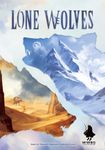
Challengers has been in development for over 5 years, shaped by a love for strategic storytelling, which is reflected in the game's vibrant art style. Now, please keep in mind that the game launches later this year, most likely in quarter 3. So, if you're interested in learning more about the game as well as the campaign, please follow the link in the description and subscribe to their pre-launch page so that you can be notified when the Kickstarter launches. And thank you so much to Tia Games for helping sponsor this segment. Thank you so much for that. Now, let's go ahead and start talking about the games. Now, we do have to mention that all four games we're going to talk about were sent to us by the respective publisher for review. So, let's talk about the smallest one that we have so far, which is right here. Uh, this game is a two-player only trick-taking game called Lone Wolves, designed by Yasuyuki Nakamura as well as Anthony Peroni and published by WWBG.
Also, it's been tiny writing Wonderful World board games based out of Taiwan. Right now, this is a two-player only trick-T game where you are trying to become the alpha wolf. Yes, it's actually a combination of trick taking and area control. But in my opinion, I think the main mechanic is trick, which is something that we're very interested in because not only do we really enjoy trick- taking games, but we're always on the search for two-player only ones that play well. Yep. It's hard to find those. So, this is two-player only. It plays very quickly in about 15 minutes. And like Nina was mentioning, the theme of the game is we are trying to become the alpha wolf. The deck of cards has five different suits and they're each numbered two through seven and they all have wolves on them. Y and on the back of each card is the single solitary lone wolf that doesn't really it's like an injured wolf belong to any of the clans which is a little bit sad. And in the middle of the table is a board that is also divided into those five different suits which are territories. Now at the start of the game each player will draw a hand of 13 cards. So it's not going to be the entire deck. And the way that the game works is we're pretty much going to be playing a standard trick-taking game.
So somebody will lead. It's a mustfollow game, but at the beginning of the game, there is no trump suit. So I understand that if you've never played a trick-taking game before, this might not make any sense. But for people who know trick, you know, that's that's the sort of the style of game that it is. The unique thing is when you play a wolf card, you're going to play it to one of the five territories on your side of the board. And then like I was mentioning, your opponent must follow, which means if you have the same suit that the person led with, then you have to play a wolf of that suit. So if Mon'nique played the blue five, I and I have a blue in my hand, I must play one of them. Yes. And he can play it to a different territory if he wants to. It doesn't have to be to the same one that I played to. Now, the higher valued number, just like in a standard trick- taking game, is the one who wins the trick. And whoever loses a trick must now flip over their wolf card because at the end of the game, we're basically going to add up the values of all of the wolf cards on our side of each territory in order to try to win the honor points of that territory. Yeah. At the beginning of the game, there are these honor point tokens that are shuffled up.
They're double-sided, and you just lay them out randomly so you know kind of what you're competing for when you're placing out certain wolf cards into each territory. Yes. Now, the thing is, if you are the person who lost the trick and you were forced to flip over your wolf card, which now becomes a value one, by the way, then there are these scar tokens, which are basically like bonuses. Some start the game face up and some start face down. And you can now take one of those scar tokens from the territory that you played to and assign it to any territory on your side. And these scar tokens are going to do things like at the end of the game, you're going to score additional uh strength depending on the number of cards that you play to your side or some of them just give you straight uh additional points, honor points if you were the one who won that territory. Yeah, these these scar tokens are basically consolations for losing that individual trick or that like little battle. I think it symbolizes like these two wolves went at it. The one that lost goes face down. There's even like graphic design of like a like a scratch on that lone wolf. So you kind of lick your wounds and pick up some uh scar token and then you can kind of modify different things or different areas or terrains or territories. Yeah. Um so losing in this game is not always bad.
Obviously you want to win so that you can have the higher values but you get something out of losing at least. Yes. And you know thematically scars make you stronger which kill you make you stronger. You're not going to stay down as the wolf who was defeated. And so some of these scar tokens even give you the ability to flip over an honor token that's in a different territory. So if there's like a really high scoring territory that might score 12 honor points to the player who wins it, then you can actually flip it over and now maybe it'll score seven or six or five even. Now as soon as the last scar token in a single territory has been taken, then you assign the moon token to that territory and now that suit becomes the Trump suit. So there is no trump until you get to that point in the game. Yeah. Like most trick taking games, it's like at the beginning of the game or the beginning of the round, a trump suit has been established. This one is as you get through the game and as those scar tokens get taken away, that first territory that is completely empty of scar tokens becomes the Trump suit. Yes.
And as the loser of the trick, you are the one who gets to basically control that. Which means if I have a lot of like the blue suit, I'm invested in removing the scar tokens from the blue territory because it'll just make me stronger when I'm able to sort of or it'll make it easier for me to gain control and then maintain control. Yeah. Because again, uh you only keep your card, the higher values face up if you win the trick. So, it's in your best interest to try to get control of what is going to be the Trump suit so that towards the endgame when things are kind of getting laid out, you can make an educated decision as to what kind of values you want in each given uh territory or terrain, right? And that Trump suit does not stay the Trump for the entire game potentially because as soon as that happens again, meaning the Lascar uh token has been taken from a second territory, then you place the blood moon on that territory and now that is the trump for the rest of the game. And these moon and blood moon tokens, they can also be won. So they do earn the player who wins that assigned territory. It wins them honor points depending on who wins that territory at the end of the game. Yeah. Uh the one other thing about this game is uh you can only play a maximum of six cards between the two players on each side of the territories. That's true. So if Mon'nique has like a seven and seven on one side and I haven't even started, it's going to be very difficult for me to get up there. So, I would probably just say like forget about that whole terrain and try to focus on other places. But the problem with that is now that those card limits are kind of piling up. You might find yourself in a
situation where you're just not able to actually outscore your opponent. So, it's very very clever in that way where you're trying to manage your hand. You're trying to card count, but also at the very beginning of the game, uh, all the cards are not distributed to the players. So, there's four cards that are out of the game unseen. So, you can't truly card count and know exactly what your opponent still has. Yeah. Yeah, and that's a really good point, the six card maximum because that is for both sides. So, as soon as the sixth card has been played two-way territory, then nobody can play cards there anymore. So, that really does add to the strategic elements of the game. Um, and the other thing is there are two values of cards that have powers. So, the value three, whenever somebody plays it, they get to flip over one of the face down scar tokens to that territory. And if they happen to lose the trick, they're not required to place that scar token. And the twos beat the sevens. So because the twos are the lowest valued card of each suit. Yeah. So I always like that in games where it's like yes, this is the lowest card, but it always beats the highest value card because now you're never safe. It keeps things kind of in check because in this game if you are dealt a very strong hand, a lots of sevens and sixes, then you know you can have like a complete like waterfall effect where it's just like you're just constantly winning winning. So to have those little elements of the scar tokens that can help you on your side, but also the twos are kind of the thing that keeps the sevens in check. So about timing uh when to play the two on a seven becomes very important. Yes. And that is sort of a characteristic of trick taking games I think in general.
The ability to just rock someone's world by m getting the upper hand and then just being able to play them out. And that is what I've seen at least is one of the biggest issues in two-player trick taking games that haven't really hit well for us. Yeah. Is the ability to just you just controlled my entire hand for the rest of the game. There was a game that we played when we went to Japan that I can't remember but there was very little. It was an animal game. It was an animal game. I cannot What was wild something? I do not remember but it was a two-player trick. We're s super excited. We're in a cafe. We picked it up from Essen. We picked it up at Essen. We're playing it and we're like there's just no control here. like you just like completely like like there's a little bit of sublance of control, but there are definitely elements to that game. And it's not the only game that does that, but there are elements of two-player trick takers that are it's like after a while there, there's nothing I could do because of the cards that I was dealt. Yeah, this one in all our plays, uh, we've played it several times and each time the game kind of flowed like this, like where it's like I had the upper hand and then Monnique had it, then it came back to me and then fighting over those moon tokens became like, oh, that was that was a 12. you flipped it over, you made it a seven, but that area became now a plus five on that seven cuz the moon showed up. So, it's like it was like important, then it was not important, and then all of a sudden it became important again. So, yeah, very clever. This game is so well done. I really, really, really enjoyed um I really enjoy this game, and it's probably one of my favorite two-player tricktakers, period. Definitely one of the best ones that we've played in the past year and a Yeah, there's definitely a recency bias in that, but um you know,
we've played it several times leading up to this episode and yeah, we really enjoyed it. It reputation superseded our plays of it. Like we we had heard that it was really good, but we didn't know where to get it for a long time and then we were finally sent one for review. So, um we when we played it, we already kind of knew that people enjoyed this game, but when we started playing it, like that the ability for you to not be completely out of it when you lose. The incentives to losing is just so strong. It's so it feels so balanced strategically in that way because there are there are scar tokens and I think the scar tokens is a really really big aspect of why that is. It's not just the twos beating the sevens but the scar tokens can be really strong for the player who loses tricks. There are scar tokens that are like for put this if you put it on a uh your side of the territory that you end up winning um and you have a lot of lone wolf cards which are the flipped over side of the cards.
The wounded wolf the wounded wolf because you lost a trick. It's literally like two honor points for each lone wolf card. So that's six points and some honor tokens are only worth five points. So just the amount of mind game and strategy in this one is is really really good. And there's actually an advanced variant as well where you can flip over the board and it has uh it it doesn't have three scar tokens per territory. Some have two, some have three. And then some territories you can actually assign the scar token to the in between and it's applicable to both territories both simultaneously. Yeah. The game is quick. Uh it doesn't take up too much table space. So, this is a very good travel one. Um 15 minutes in and out. Um and then, you know, the rule set is super simple. Um so, it's not like one of those games where it's like you put it on the shelf and you're like, "How do you play this thing again?" It's very simple to get back into. So, if you know trick- taking games, uh this is way easier to get into. Yes. Super interesting. Highly recommend if you enjoy trick taking, especially two-player ones, try out Lone Wolves.
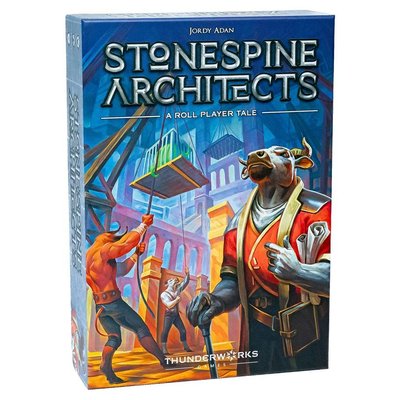
All right. Next up, we have a game from Thunderworks, which is one that I've been wanting to play for a long time, and we finally got to play it. This is a game called Stonespine Architects. So, it's a game for one to five players. Plays in about 45 to 60 minutes, and it's designed by Jordi Adan, and like I said, it's published by Thunderworks. Now, this is a game that is sort of in the roleplayer universe, I think. I think it's as a majority of their games are. It has like a very similar art style uh but a very different style of game from anything that we played from them. Especially in this game we are building out a dungeon and that's why it's called Stonespine Architects. There are very uh very he's doing the construction. They're doing construction bulls overseeing it with his blueprints. Yes. Look at the strong strong architect. There's a lot going on on the box cover here. There you go. But um yes, it's played over the course of four rounds and each round represents a year.
Now, at its heart, this is a card drafting game. And so, it's actually been a while since we play drafting. Yeah. And I don't know, not many people probably know this, but Naveen loves Yeah. I'm a big fan of of card drafting games. I don't know. I don't know what it is. I think from my fondness of Seven Wonders, it just never left. And I like that mechanism. And so this is kind of a card drafting and then the cards as you build out your um dungeon become technically like a card laying tile laying game where you where you're trying to optimize what you're doing because you have needs. So we'll go into the details on how to play. It's a puzzly uh card drafting game and there are specific rules for two-player which we'll get into as well. Now like I was mentioning it's four rounds and each round we're going to be drafting uh four cards. You basically just standard drafting. You take a card, put it in your tableau, pass it to, you know, clockwise or counterclockwise, depending on the round, and you keep on doing this until each player has four cards. And each round, you're building out one row of your dungeon. So, you're building it out row by row. During setup, each player is also given a blueprint, which is incentivizing you to place certain types of cards in certain areas of your eventual 4x4 grid. So, the dungeon cards are uh typically two different types.
There are stone dungeon rooms and caves. And then on those cards there, there can be up to four different elements. And elements are going to be stuff like different types of traps or different types of monsters. And so you're not required to place those specific cards with those elements on those spaces uh of your blueprint. But at the end of the game, you'll score a certain number of points depending on how many of those elements you are able to meet. It's in your best interest to try to meet the needs of your blueprints cuz you can score upwards of 20 points in the game, which can be a lot. It's could be about a third of your points. Then once everybody has uh finished building out their row uh on their dungeon, then we go into the market phase where you can actually purchase additional elements to add to those uh dungeon rooms. And that's the other thing about the cards. They each have a certain coin value or gold value at the bottom which is going to uh influence your decision too as to which card to take because you obviously want to have enough coins to purchase additional elements during this phase.
And there's this whole thing about priority as well that whoever has the most money basically has the most priority. So you want to not only be cognizant of how you're building out your dungeon. Uh there's also kind of a pathway that you're trying to build out, which we haven't really touched upon yet. Uh you're trying to focus on your blueprint, but also make sure that you have enough money so that you can have first dibs when you go into the market phase. Yes. And the elements that you can purchase will change from round to round. And it also depends on the player count um how many of them are actually available. elements are going to be stuff like additional types of traps. Like maybe I placed a card on a spot in my dungeon that that needed to have a cobalt, which is a type of enemy, but I didn't I wasn't able to pull that card during the draft, but there's there's an element there's a cobalt for sale in the market, so I can purchase that cobalt and place it onto one of the four available spaces. You cannot cover up preprinted spaces on those dungeon cards, but there are a total of four possible spaces. So, each card has a quadrant. It's basically broken down into a quadrant with a particular pathway that separates it. And so you can have up to four elements on each card. Yes. And some elements also include treasure chests. And treasure chest will just gain you more gold during the market phase. In addition, sometimes you'll have the ability to purchase secret passages. And the thing about these cards is they also have pathways. Now, in order for you to score your blueprints at the end of the game, they don't need to be connected via these pathways. But at the very end, there's a lot of different scoring criteria that you'll score for. One of which being how many cards actually connect to your entrance and your exit
via these pathways. So if you want to be able to score better, then you're going to have to place those secret passages in order to connect the different rooms and chambers. And it's like the picture of the pathways are a standard like L-shape uh from like so it goes from like the north to the east uh uh door. Um and so you want all the pathways to kind of link because for everyone that can link back, you score a point. Yes. So, if you technically build out a perfect perfect dungeon and you get all four by four, which is 16 times two, one entrance, one exit, you can get technically 32 points. Yes. For that scoring criteria, super hard to do that because of course it's a drafting game, so you have to have the cards when it comes to you to be able to put into play. And secret passages are actually kind of rare, by the way. They were a lot more rare than I thought they would be. So, very, very difficult to do. Now, the other thing is whenever you pass during this market phase, you also get to take a challenge card. And there's going to be a certain number of them available. So, it's first come, first serve. So, over the course of the game, you'll be taking three of these, which you're going to be scoring as your own personal uh private objective at the very end. Yeah. So, you take one at the end of round one, two, and three, and you do not take one at the very last round. And they're going to be stuff like two points per slime that's in a single cluster. And a cluster is orthogonally adjacent rooms of the same type or one point per trap that follows the same path. So they all have to do with the different elements in your dungeon and how you are able to sort of arrange these elements on your dungeon floor. Yeah. So when you go into like
year two or round two, you now have something not only is there a public objective that's out there that everybody's gunning for and competing over, but you have your own personal private objective that everybody is aware of. So, when they're passing you cards, they may say, "Monique needs a lot of slime. I could use this slime in my dungeon. I'm going to take this, use it, build it. You're not going to get access to this slime, which is going to be really good for your endgame scoring." Yes. But that's essentially it. After four rounds, you will have a 4x4 dungeon. You'll have an entrance and an exit, and then you'll basically score for all of the criteria that we mentioned. You'll score for your blueprint. There is a public goal that everybody will be competing for, which is going to be something like uh if you have the most Slime. Slime. Yeah, that was actually the our most recent play. Whoever has the most slime in their dimension gets like 15 points. The second most gets like nine, something like that. You'll score for your entrance and exits. You'll score for your private challenge cards. And some cards also have points that are preprinted on them. So, you'll also score for those at the end of the game as well. And some of them are negative.
They're not always positive. But that is it. That is the simplicity of the game. It's just a a card drafting game. You play over four rounds. It's like it can be very quick, especially at two players because uh actually in a two-player game, the draft works a little bit differently. And this is sort of new surprisingly from what I've seen. It's good. I like the way they did it. We usually just avoid drafting games at two players, right? Yeah. So, in this one, uh each player, so at the start of the year, you get five cards. Um of the five cards, you're going to choose one. Uh, and then you're going to reveal at the same time normally, but in this one, you're going to choose one, you're going to keep it, and then of the four that remain, you're going to discard one out of there. Uh, so then that means there's only three left, and then you'll pass the three, and then you draw a new card from the deck. Yes. So, it's kind of clever in that way that like not only are you selecting one, but you're also hate drafting one or kind of killing a card for your opponent so that they can't use it to score better. And you'll also see something new. So, you can't fully count. It sort of tries to simulate a higher player count game for two players. And keep in mind those rules are specific to a two-player game.
So, I thought that was interesting. I I definitely appreciated that variant or that that additional rule for two players because it would have been it probably would have been not as great otherwise would have been able because sometimes if you're if you have a good memory or a good photographic memory, you can be like, "Okay, these are the five cards. So, I'm taking this one. uh she can't technically I I could use both of these two so she can't really hurt me if I pass all these because one of these two will come back to me but in this way it might not come back to you and so you never know exactly what you're going to get and then you're kind of stuck with the luck of the draw on the next which is like luck of the draw is kind of like a negative connotation but not in this particular case cuz it simulates as if there's an extra player that's kind of throwing a wrench. Yes. Now, there are some aspects of the game that have a little bit more luck than I'd like, and that has to do with just finding the elements. You know, that the variant does help a lot in order to just find the card that you need. But if you just, you know, it's a drafting game, so you're not always going to pull what you need in order to satisfy maybe your blueprint or your challenge cards. And so, if you don't get the card, then you're relying on that element showing up in the market. But if that element doesn't show up in the market ever as well, then it's it's sort of too bad.
Yeah, that that part's a little too bad. But over the course of the game, it's like hopefully you'll get what what you're looking for, but it's possible that you might never find like the goblin at the right time or the goblin was just too expensive or the goblin was out there and you just didn't have enough money to actually go first and somebody else took it and wiped it away from you. So that that is possible obviously. So if you're looking for a game where you will be able to accomplish everything, that's not this game. And it might not be um it might not be your fault at some point, but I think that's also sort of the point. They don't I don't think they want to make it that easy for you to just connect all your paths and, you know, get everything that you need to maximize your points. You're doing what you can with what shows up in the game. Yeah, I like the I like uh I like the whole package of this game, honestly, because there's so many things to so many things to think about, but they're not like something that you're agonizing completely over the whole time during the draft because that can be a slow uh experience if everybody's agonizing and you're like just pass the cards. um you are thinking about how much money you're going to have at the end because of the four you're going to sum the total of the gold at the bottom to determine how much money you're going to have. Uh you're also thinking about the pathways.
You're thinking about your blueprint and you're also um just thinking about the scoring criteras that you've set up, the public goal and the challenge cards. So there's a lot to think about, but there's typically when you look down, you're like, of these five, these are the two that I really need to agonize over a little bit. Okay, I'm going to go with this and kind of and I think that's a really good point because it does minimize AP in a way. uh because of the sort of slow burn with the challenge cards. You don't get all of your private objectives at the beginning. You get them throughout the game. So, you're not considering them all at the start. You're sort of building what you have and then trying to, oh, this is going to work best for me and then now for the rest of the game, I'm going to try to continue hitting that challenge card, right? So, I really really enjoyed it. I like themes like this. There was another game that was a dungeon dungeon decorators. Dungeon decorators. I love silly themes like that. And I I thought they did this one really well. It's really cute, I guess. Yeah. What's the play time on it? 45. I I love that length of time in games. Like I would love to play more 2 and 1 half hour games, but sometimes you just want to get into a game that's like 45 to 60. Uh easy to get off the shelf. Um now, you know, I think we're going to keep this one in the collection. Yeah, I really like this. This is It plays up to five.
because it's a drafting game, it doesn't play, it doesn't really, it's just the market phase where players will be taking turns purchasing things, but other than that, everything else is simultaneous. One last thing that we didn't mention, um, when you draft and you're only building out in one particular row every single year, you do not have to build from left to right. You don't have to build from right to left. You can just like if this card works for your blueprint and your blueprint says in the top right corner, you need something, you can have it placed right there. You can place it there. Yeah. Yeah. Uh, also there's another um thing that you can do is uh to avoid like more AP is you can have the cards played face down. Yes. So that your opponents can't really see what you've been up to. So we do that. We do that. Yeah. Naveen. That's good. I hate draft. Has has lookie eyes and he'll look at what I chose first. So yeah, you you draft and you keep the cards face down until all four cards have been drafted and then you reveal you reveal.
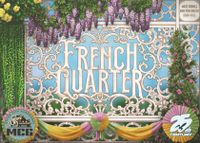
The only thing about that is because you have them face down, you're trying to keep in mind the pathway. So, you're going to constantly be doing like, okay, which way does that pathway go? So, that's the only thing about the face down aspect of it. The other thing is I do wish secret passages were a little bit easier to purchase. Like, maybe if you know, sometimes there are games that have a market that's like or you can buy this. It's really expensive. This is always this is always an option. Um, you just have to sort of wait for that that really valuable secret passageway to appear. Yeah, I really needed one and I think only like one showed up in our game the most recent last time that we played. not going to get it. But otherwise, it's honestly pretty minor. I really enjoyed this one. Highly recommend you checking it out, especially if you enjoy uh different sort of themes and drafting games. So, that is Stone Spine Architects. Okay, next we have a Roll and Wright game, which I don't think we featured one in in a while on the channel. Uh I think my Shelfie, the dice was the last one. Never mind. This is totally did one recently. Roll and flip and write. Roll and flip and right. This is a vacation in the Big Easy. You have French Quarter. Uh, our copy was sent to us by 25th Century Games, but it was originally published by Motor City Gameworks, uh, designed by Matt Riddle, Ben Pinchback, as well as Adam Hill.
Yes. And so, these three designers have worked on a couple of other uh, role rights, three sisters, which is one we don't have. Um, Motor City, which we do have, which we'll probably feature in the future. Yes, I think they're a trilogy of sorts. Now, the only one of the three that we played is this one, so we can't speak on the other two, but I know two of the three designers, Matt Matt Riddle and Ben Pinchback, they've also designed a ton of games, including Fleet the Dice game, which is one of my all-time favorite uh rolling rights. Heavy rolling dice. Is it one? It's probably in your top. I think it might have been in my top 50 last time. It's been a long time since we've looked at like rolling rights. Is that probably in your top five rolling rights? Yeah, I think it is. I might for heavy rolling rights. I really love Lead the Dice game. It's about fishing. You're rolling dice and you're doing a lot of It's a little bit It can be a little bit ridiculous at some points because there's a lot of like cross this and it moves here and then you cross that off and everybody's sort of doing that at the same time. So, you're like who's cheating? Somebody's cheating at all times. Someone's cheating at all times.
Now, this game has some similarities to that feel. It is also heavier than other uh you know rolling rights that that you typically play simple ones because rolling rights tend to be on the simpler side. And so just like ple the dice game, French Quarter has two sheets per player. Oh yeah. And the theme of the game like Naveen was mentioning is you are uh you are vacationing in the French Quarter and you are trying to see as many things and do as many things as possible including checking out the local music scene and seeing uh performers. um shopping, I think, socializing and you're taking various forms of transportation around the city to do this. And you're trying to visit certain buildings so that you can have a very nice view of a second line, which is like a musical parade line that's kind of traversing through the city. Ah, I don't think I knew that. I was wondering what the second line was.
That's what it is. So, the way that the game works is there are dice. So, you roll some dice and the dice all correspond to the different decks of cards, which are different modes of transportation. So there's like boat, trolley, taxi, trolley, stuff like that. On foot. Yes, on foot. And at the start of each round, one player rolls all the dice and then assigns them to the different corresponding decks of cards. And then each player will be taking turns drafting dice total until each player has drafted two for the round. Now, when you take a die, you are going to do a few things. The first of which being you're going to resolve the symbols on the card. Now, this game plays a lot on the different symbols that represent different things like shopping and stuff like that, different cultural things. Yeah. Yes. And the symbols are going to correspond to one of your sheets that have them sort of laid out in their different categories.
They're like tracks. So, you're just basically trying to mark off to go up as far as you can. Yes. So, they're literally tracks. Whenever you uh resolve a symbol, you just mark off that symbol on that symbol's track. And the track does two different things for you. uh at certain intervals along the track, it'll either unlock a new ability that is specific to that track. Yep. Or it'll give you the ability to cross off a multiplier so that at the end of the game, you're going to score a certain multiplier for a specific street that's on your map sheet because each of those different symbols also corresponds to a specific street on your map that you're going to want to mark off a lot of buildings on. Then each player starts the game with a marker that represents their actual player piece that's moving around the city. your tourist on on your map board. And after resolving your card, you're then going to move your your player piece to another building.
So, you're moving from building to building and you're I guess thematically enjoying something there or experiencing enjoying the sights and the scenes and everything, experiencing what's going on there. And these buildings also have symbols. So, wherever you land on, you cross off the symbols as well. And then you write the number of the die value on the building itself. And that's called marking a building. That's going to be very important for final scoring. But you can only do that there's a specific rule for marking buildings and it's that each uh orthogonally adjacent building surrounding it can only be of equal value or plus oneus one by one. Exactly. Higher or lower by one. So if you're if you're on a three space and you're just going to move one space over, you better have a two, a three, or a four when you go into that next spot. You can still go there if you don't. And that's the value of the die that you drafted, by the way.
Um, it's just that if you don't, then you don't get to mark it. And marking buildings by writing numbers on them is is one of the big ways in which you'll score points at the end of the game. One of the ways is at the end of the round, if anybody drafted specifically the social die, which is the pink die, then uh that player gets to decide the direction that your second line moves in. And each player has a different starting setup for their second line. And that second line is going to be moving around the city as well. And your goal is to try to get as many of the buildings that the second line is adjacent to marked because every single round that that second line uh moves, you're going to score a point for each of the buildings that are adjacent to that line. Yeah. So it it'll snowball. Uh so like in if in let's say after the first round you have two buildings touching it, you will always score for the rest of the game for the rest of the next seven or eight rounds. Yes. At least two points because it'll always score, right? And let me clarify, it will only happen if somebody actually drafts the die that has the second line moving. So if that's the one that gets left over, then nobody will score that.
Yes. Now, there's a lot more to the game than that because like I said, it is a heavier uh roll in, right? But that is the basic sort of structure of the game and that's what each round looks like and you play for a total of eight rounds. Now, the additional things are like, you know, sometimes you'll see symbols that represent performers, and performers are going to score you points depending on how many sets you were able to cross off at the end. Set collection aspect of that one. Yeah. Yeah. And then all the abilities for the different symbols. They are there's a lot of different kinds and they can be very strong. Like there's this umbrella uh track where whenever you cross off an umbrella, you mark one of the squares on the umbrella track and every third one gets you a wild symbol which allows you to now cross off one of the squares on a track of your choice. And there's an ability that's like every time you cross off an umbrella, you cross off an additional one. So then you're just like really crossing. There's a lot of accounting going on. It's like this cross that third one, that third one gave me this bonus. Oh, this bonus let me go up. That gave me the ability. that ability now lets me change what I'm doing on my turn. So, it's a lot of that. So, um that's what I was alluding to about the relation to flee the dice game. Flee the dice game is like that also, but it is a little bit simpler because it's you're only fishing and there's only certain types of fish in fleet the dice game. Yes. And then there only certain types of buildings on in this game. Your map has a ton of different buildings. Not all of them are special, but some of them are. Uh, in particular, there are like gift shops, I believe, or souvenir shops where y score at the end of the game, you'll score a certain number of points depending on how many of them you're able to visit.
Yeah. There's a large building in particular that scores you like eight points if you're able to visit it twice. Yeah. Yeah. So, if you visit only one time, you're not going to score it. So, you have to, if you know you did it early, you're like, I have to make it an effort to find my way back to this building somehow so that I can get that eight points by simply just going there a second time. Yeah. Uh, so another big thing about the game is um about halfway through the first game I realized that oh all the decks of cards have the exact same um method of transportation. So I it took me a little while to I think it was after three rounds I was like oh that's that's just straight up the walking like walking I will always move just one. This trolley will always send me to this particular location. Yes. Now granted, I think that is a rare issue because the decks are literally called like the taxi deck and like I think I was expecting like in the first play that like oh the this taxi this this round gets you to move one to three spaces. Oh, the next time it's two to four spaces. So it's always going to be the same method of transportation thematic in its mode of transportation.
Some of them direct let you choose any uh building that's on a specific street. So that happens quite a bit actually. But that's essentially it. You know, like I was mentioning, there's a lot going on in the game, and there is a little bit more, but that's probably all you need to know. Yeah. To sort of understand what the game is getting at now. Um, how how do you feel about French Quarter? Okay. Theme. I like the theme a lot. I really enjoy, um, I've been to New Orleans a couple times and I've really enjoyed my time there. Great food, great music. Um, it's just a fun town. Great ambiance. Great ambiance. Yeah, it's a it's like to go like on a on a shirts like a t-shirt and shorts and you're just walking around enjoying the sights and sounds. Really really fun. Um I've never been to New Orleans. It's like one of the place one of the top places in the US that I've always wanted to go to. I've played trombone for a very long time. The music scene just like the style of music that is played there just on the streets and like the the expertise of the musicians who are playing on the streets is just amazing to me. Yeah. So, um I I I really enjoy the theme of it. Uh in terms of accessibility for me, uh I had a little bit of trouble with this. Now, I I don't wear glasses or contacts or anything, but everything is very tiny. Uh so, just getting familiar with where everything is on your on your board or on your on your two sheets. That was a little bit of uh a challenge for me to start off.
You definitely want to play in good lighting conditions. Um because even for somebody like myself who does not have uh you know corrective lenses or anything um I I struggled with it. Yes. I think that is probably the biggest barrier to really enjoying the game because not only is a print very small, but uh some of the there's a lot of color and there's there are a lot of buildings and each building has a name and you're looking for a specific buildings because you want to make sure you're keeping, you know, take into consideration what the buildings actually do so you can score them properly. And a lot of the cards refer to specific streets and or intersection. Yes. Or intersections. and I'm constantly looking for this street and all of these s the uh the different symbol category tracks will score you points for their specific street. So you also want to make sure like if I'm getting a multiplier on this track a lot of this I want to make sure I'm marking as many buildings as possible on that street but I can never remember where the street is. Yeah, I don't know what it is. I Yeah, like it's I think it's laid out um accurately to the city. Uh but I just I just I'm not familiar with it from like a bird's eye view. And that's the that's the perspective you have. And so um because of Roland rights like I think it's like supposed to be like okay the mechanism is so easy draft a die write your thing down move. But just agonizing over like where is that like it took away from the enjoyment of the experience for me because it just like it's like I'm doing just that much work just to find what I'm doing. Um so
that's that's the part that kind of dragged for me a little bit. Yes. I I do agree with that a lot. like the gameplay itself is not it is a lot of just crossing off symbols and some people might not like that because it is just like I have a symbol I'm going to cross that symbol off on the track and it's a lot of that um which I'm okay with and I actually really like the aspect of the game where you're walking around the city and then uh you're sort of plotting your path based off of that and the second line and like which buildings do I want to go to in what order but I also have to take into consideration the value of the die which is difficult to mitigate by the way so sometimes you're just like why I took this die and I can't mark the building. Yeah, sometimes you'll have to take a die just because it's like I can't use the walk because no matter where I walk, it's illegal. So, I guess I'm going to take the trolley so I can just get the heck out of there cuz that is legal. I can put it there. So, that's the one thing that like the the die drafting to take actions was not as intriguing as I thought it would be when I first learned it. I like the movement aspect, but the biggest thing is really the difficulty in seeing uh the different streets and the different symbols sometimes because you want to make strategic decisions based off of that. And it's just I I feel like I'm holding up the game whenever I'm thinking like, oh my gosh, I have to I have a wild symbol. So, I get to choose which track, but it's this street. Which street is that again? And I'm just just that aspect of I'm not really playing the game at that point.
spending a lot of time figuring out what the street is that the track is corresponding to. That is the issue for me. And the colors they um they kind of just all like I don't know they like stretch almost. It feels like that when I look at it. So I really I really have trouble just like being like blue is this, pink is that, green is this like and just etching it in my brain. And so you know that that just kind of took away from the enjoyment for me unfortunately. Yeah. So if the mechanics were sort of built on a different uh format where it didn't require us to sort of refer to streets back and forth and probably would have enjoyed it a lot more. I think you also had an issue with the second line because the second line scoring can snowball quite a bit like if if I just placed which is something that has happened in one of our games where I just placed a lot of I marked a lot of buildings right away right away along that second line early. Well, I'm always going to score those buildings every time we score the second. no matter what, you're getting three every single round. I maybe didn't score anything on the first time and then now on the second time I'm trying to catch up. Um, and so yeah, it kind of snowballed like one I don't know. So you almost felt like especially in a two-player game, you almost felt forced to be the one to take this. I guess I'm taking this like Yeah. So you can control the direction.
Whoever drafts the the pink die controls the direction that the second line moves in. And to be clear, everybody has a second line on their map, but you start potentially in different places. And when you draft the socialized die, you you say a cardinal direction, like it's going to go east and everybody has to move their line in that direction. So, so that kind of justifies why you're going to start to try to build buildings in that direction so that you can score it when it does score. But if somebody gets ahead and you were not focused on that like right away, uh then you can find yourself behind just because people are just going to two, three, 4x their their score. But otherwise, that said, I really, really, really wanted to like this game because I love the theme and I, like I was mentioning, I really love Fleet the Dice game, but it does inspire me to play Motor City and Three Sisters cuz I heard a lot of good things about Three Sisters when Yeah, that's one that I want to play more so than Motor City.
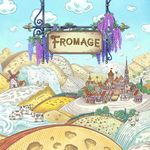
Um, but we do have Motor City. We don't have Three Sisters. We don't have Three Sisters. Maybe one day I'll be able to play the whole trilogy. But either way, that is French Quarter. All right, moving on to the last game of today's episode. You know, speaking about theme, they've all been fairly thematic. This is one of the rare episodes that they all have like really sort of interesting different themes. The games are thematic. I bet you meant the whole block of games. Okay. Yeah. Yeah. Yeah. Lone wolves. You're fighting uh what do we have? Stones. You're building. Okay. Yeah. Pretty thematic. This one might be probably one of my favorite themes. I guess I love cheese. Yes. And it's a game called Fromage. So, this is a game published by R2I Games. They also did uh canvas canvas and designed by two different designers, Ben Rosset and Matthew Ali. And we actually the first time we played this game was at Gen Con Gen Con last year by happens by we were hanging out in um a publishers's kind of a booth area and uh Ben Rosset, who is the one of the two designers, uh happened to just be there and we kind of crossed paths and he said, "Hey, I'm going to be teaching this game to to somebody else in about like an hour or two. You want to play it?" And we're like, "Sure, of course." Yeah. So, Dan at the Game Boy Geek, we we all sat down, the four of us, uh, he taught it to us and then we played a four-player game. It was very lovely. Um, Ben Rosset is so nice and it was kind of a really amazing moment because the the two of them have also designed our one of our favorite deduction games of all time called Super Planet X. This game is very
different, but uh, it was really really cool getting to play that with them. Now, this is the limited edition of the game. I don't quite know what the standard edition is, so just keep that in mind that these are the components that we're playing with. It's probably a bit upgraded. And so in this game, players are cheese makers. I'm sure there is a term for that that I can't fromagerie. Okay. Well, you have you're running a foragerie probably. Yes, you're running a probably. And the game is actually a simultaneous action game. It is because the game has a circular board in the middle that is sort of a a lazy Susan style mechanic because it rotates each turn and it's split into four different quadrants and on each quadrant we are going to be making cheese in order to score in different ways at the end of the game. one quadrant might be like area control.
Like it has a map and you want to to to make your cheese along uh the intersections of maybe two different I'm sure there's there's a little bit more theme, but like you're trying to put out the cheese into these different areas. I'm sure you can go deeper onto the theme, but basically you're trying to place your your your cheese in certain uh strategic locations so you can score the most points because they're they're kind of like four different mini games, the four quadrants of this board. like like I was mentioning, one of them is like area control on a map. Uh, another section is like you want to have uh cheese on different shelves because at the end of the game you'll score points be depending on how many shelves you made cheese on. Another one is you you want to just run a straight line of cheese that's just kind of like all in like a unison like just in one path, right? Uh, and then the last one is you want cheese to be on dining on the same table so that you can score a multiplier depending on how many tables you dominate. Yes. So, four different mini games like I was saying, but the way that the game is played is interesting because it is simultaneous worker placement, worker action selection. Each player has three different workers and you're making three different types of cheese. It's like hard cheese, soft cheese. There's like a bronze, a silver, and a gold basically. Yeah. Right. And each turn, you're going to be making cheese just on the quadrant of the main board that is facing you. And so you can make one cheese per turn. And you can also gain resources with another worker per turn. Those are the only two things
that you're doing. And everybody is making this decision at the same time. Yeah. And at the start of the game, uh, every player has three different workers or different types of cheese. One is going to be like a yellow, a blue, and a white. Yes. And when you make cheese, the cheese are positioned or the cheese spaces are positioned in certain ways that tell you how long your worker will have to stay on the board before you're able to remove the worker again. And it's going to be either one, two, or three turns. So the longer you age the cheese, basically, usually the more valuable that spot is. And also we're going to be fulfilling order cards. And usually those are the more valuable I guess cards as well. any like place that you're going to place out that's bronze is just one step away cuz when the lazy Susan turns anytime the cheese faces you at the start of the round that's when you get to remove that cheese and you can redeploy it for that next round. You don't remove the cheese you remove the worker. So when making cheese you actually place your own like worker cheese piece on the space and you place your worker on top and that worker will stay there until the the cheese has been properly aged which is either going to be one, two or three turns. So, it is a big efficiency game in it's a worker efficiency game. That's truly what it is because you're trying to figure out, well, I don't want to have a a turn where I have no workers. You want something. Yeah. You're in trouble. You won't be able to make any cheese. And the timer of the game is until somebody places out all of their cheese. That's when the game ends. But, you want to do as much as you can in that time by making cheese in uh strategic areas. And
you're only going to see certain quadrants of the board so many times during the game because every turn it rotates one step uh clockwise basically. Yeah. So you're only going to take like you're only going to make cheese in every action spot every fourth turn. Yes. So you should always be aware of what's on deck like what's going to swing towards you when you're making your decision in the current round because that's going to inform what decision you're going to make in the next round. So, if you're like neck and neck with somebody in the area control and that's coming up and you're like, I really need a yellow cheese, but all I have is my yellow cheese right now, so I'm I better put that in a position right now where I can score it now or put it in a spot so that when the board turns, that yellow cheese is coming right back to me so I can redeploy it for the next turn. Oh my gosh, I want cheese so bad right now. I will say do not read the rule book when you haven't eaten if you like cheese because wow, this game really makes me crave cheese.
Anyway, uh there are also four different types of resources in the game. There's like strawberries, there are cattle, there are order cards, which are exactly what they sound like. They want you to make certain cheese and then like wooden structures. Yes, structures. And so each uh player will have their own player board. And when you collect resources, because like I said, on your turn, you're making one cheese and you're you're gaining resources. You can you can potentially Yeah. But uh when you're making the decision as to how many of that specific type of resource you're getting, you also have to take into consideration if you want three of a specific resource that's facing you, that's also going to require you to leave that worker there for three turns. So not only are you considering that for making cheese, but also for getting resources. Now strawberries and cattle are kept on their spaces on your player board, but they operate differently.
There are certain cheese spaces that in order for you to make cheese there will require you to have strawberry and that or berries I guess and berries are either going to be for jam or for I forgot what the other thing is fruit infused cheese fruit infused cheese yeah maybe something like that and each time you actually make a cheese that requires maybe jam as an example then you'll move the strawberry to the jam section of your player board and at the end of the game that's going to be a multiplier for you so the number of cheese you made using jam multiplied by the number of cheese that was berry infused. Yeah. So that's one of the scoring criteria. That's one of the scoring criteria. Yeah. Cattle on the other end you can use to turn in to just make an additional piece of cheese, a special type of cheese. So it it helps you sort of make cheese faster than your opponents because like I said that is a timer for the game. So that is one way that you can actually put out two pieces of cheese in one turn rather than just the standard way. And then the pastures, they unlock these four different structures or sorry, the structure tokens unlock the four different structures on your player board. And they are they are they're different sort of abilities. Um they might give you the ability to collect order cards for a cheaper or each turn instead of having to wait for that resource part to get to you. There's like the first uh structure that you can build costs two of these uh resources and it's basically as long as you have a worker um you can always place it on there and get jam or get a like a berry, right? And that is the variable aspect of the game because yes, there are pre preprinted structures on
the player boards, but the game also comes with a ton of these tiles that you can use to make those variable. So that's pretty much it. As soon as uh a player has placed their last piece of cheese, that ends the game. and you'll score for all the different quadrants on the board. You'll score for your uh your berries and you'll also score for the number of orders that you were able to fulfill. And the thing that's interesting about orders is you can only fulfill orders after you've taken the card. So unlike in other games where it's like I have an order card that wants me to have an age two uh hard cheese or something and I've already made one, you cannot fulfill that order with one you've already made. you now have to go and purposely find find a spot that's also going to be valuable for you on that quadrant in that little miniame part uh that you can use to fulfill the order.
Yeah. Uh so it's a clever game. Um now we've played it both in person. Yes. Uh and on BGA because it is on board game arena and we played at at two two and four players. Yeah. So we played it um on both ends of the spectrum. I will say that right away the physical copy and playing it with a lazy Susan with people around the table uh was way better of an experience than playing it on BGA. That's usually the I feel like that's usually the how the case you know for games but some games play online better than others. Decent. Yeah. But because of the simultaneous and uh sort of immediate nature of this game or automatic nature of it, it becomes very robotic and like what is going on? And there really is like a physical aesthetic aspect to this game. It's beautiful. Okay, the art is the art style I think is gorgeous. And just, you know, taking the physical cheese, placing it on the board, placing your worker there, and then like waiting to see when it comes around, pulling it off, and really just sort of um interacting with the game. Yeah.
Everything that way just makes it so much more enjoyable. Yeah. Yeah. So, um I I think we both we spoke on this game when we did like our Gen Con wrap-up. We really enjoyed it, but that was the first time we That was the first time. That was like an initial impression and so now we played it several times after and I still really really enjoy it. Um but I think I would only want to play it in this form in the actual physical copy. You hated BGA? I just I Yeah, it just it was just so just like robotic on BGA versus like in person you're actually looking and looking. Okay, that's on the right. Oh, okay. Mon'nique is over there. So, she's leading. So, there's there's way more just like experience to be had uh in the the actual physical copy. Mhm. I mean, if you're trying to learn the game for the first time, I think uh online experiences is a nice way to do it because it's also very it's much faster. Yeah. And there is some setup to this, it's not, you know, over the top, but there is more setup than I think is usual. Um, and this game plays very quickly, too. It's like 40 minutes. 40 minutes is probably It's way faster online. It's because it's simultaneous.
Yeah, it's simultaneous. I think the reason why I'm saying it is because if you're interested in this game and you're like, "Well, it's on BGA. I'll go play it." you might find it like that was not as good as I thought it would be. That's a great point. And so that's kind of why I'm prefacing it like if you have the opportunity to play it in person, I do recommend that even though you may have played it on Board Gamer. Yes. Then form your opinion after playing the the physical copy. That is true. Um otherwise I found the design to be very unique. You know, it plays very quickly and it doesn't really play that much longer at higher player counts because it's everything is simultaneous. So I I really appreciate that about the game. And there's it's thinky. you're like really engaged during the game for such a short play time especially and it's just it's unique. It's very cute. I'm not very good at it because it is it is definitely a like worker efficiency engine at its heart. Yeah. You're really trying to think like am I going to be without workers if I want to do this? If I want to make this cheese, you really don't want to find yourself on a turn.
The wedge comes to you and you're like, yeah, no cheese is coming back to me. I'll just wait for my next turn. You always want to make sure you have at least one worker going. uh and you always want to be aware of what the next action that's coming into your uh into your view is going to be so that you can make an informed decision. So it is like an organization pre-planning sort of game. Yeah. Um this game does uh scale down for two players very well. So there are like blocked off spots and and like areas that you just There are actually different inserts that you put into the board itself for two, three or four player game so that certain spots are blocked off. But I think between the two and the four player game, I like the four-player game. Yeah. The fact that like it's a very social game. Like it's one of those like you can still be talking, hanging out, talking about life with your friends and then as soon as it comes around to you, you're like boom boom, ready to go. Everybody done? Okay, let's move it around. So, it's it's a fun like experience and it's kind of nice and satisfying the way the board moves and it actually moves pretty smoothly. Like I was a little nervous that it would like shift and kind of like wiggle. Oh, yeah. the the mechanism is really well done. But just in a higher player count game, the nature of the different quadrants and how they score, I think is just a lot more interesting. Well, there you have it.
That is Fromage. Well, there you go. Those are four of the most recent games that we've been playing a lot. Now, if you've played any of these games, please let us know what you think about them in the description down below. Um, if there's any games that we should be on the lookout for in the next coming weeks, please let us know as well. If we have it on our shelf, maybe we can prioritize it. Um, thank you all so much for watching the video. We hope you enjoyed it. Also, thank you to Chia Games for helping sponsor this video. And once again, thank you so much. We hope you enjoyed the video. If you'd like to see more videos like this in the future, please consider subscribing. Thank you. Thanks. Bye.