Top 3 Board Games you MUST PLAY more of | Whistle Mountain, Whistle Stop & Tiny Towns
Games in This Video
3 games are featured in this video — they unlock as you watch.


Transcript
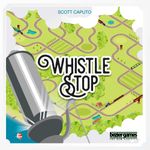
hi my name's annie and i'm from board game sanctuary and welcome to this month's top three board game vlog this month i'll be doing some heavy lifting to uncover some really cool and interesting board games to bring to you guys hey dude do you mind actually disrupting my train of thought i guess we'll take this show on the road so this month i thought i'd pick three games that i've played before but i'd like to play a little bit more often just because i'm so in love with them first game i'd like to introduce to you is whistle stop and i love train games i'm a huge euro fan um and this taps into both of those areas it evokes the nostalgia of building my own transport route networks as a kid using those wooden train sets as well as the euro and me trying to collect resources as you go planning connections and delivering those resources to get victory points and fame and fortune and basically how this game works is everyone starts with their train on the east side of the board they place a tile out which has these little different uh train or rail configurations and as they explore and plan the routes across this empty void as you can see by these empty spaces they're going to be picking up different types of resources
now white and brown resources are common and red blue and green resources are actually rare and you're ultimately trying to deliver a combination of those resources to these destination tiles on the west side of the board to earn victory points and then park your little train in the train yard to gain extra resources to fuel more actions for the remaining trains that you have out in front of you at the beginning of the game of whistle stop we're going to have the board set out as shown below you can see this is set up for a five player game where each player has three trains and here we've determined starting spots by uh basically going in turn order and you'll see that there's a big void in my beautiful table in the middle and that's where players are going to be placing out these little track uh hex tiles which are going to be placed out as the trains progressively move from the west side of the board all the way through to the east side of the board and on the east side of the board you can see these are all the little destination tiles where players will be able to trade in certain types of resources so this one here a blue brown and a green cube to get 20 points now if a train ever ends on one of those tiles but they cannot satisfy the order of that tile they actually lose victory points as well if a train ever makes it to its destination uh a player will get to choose one of
these little parking spots to put their train and they'll get the resources that are listed in those parking spots so the main resources that you'll need to fuel the actions on your turn are coal so for every action and movement that you take you spend one coal or you may spend a whistle the difference between coal and whistle is coal just basically moves your train forward whereas a whistle gives you the flexibility of moving your train backwards or back it also allows you to skip a station um stop at the end of the board so you don't have to take a victory point penalty if you don't have the right combo of resources now each player is going to have their own little player board where they're gonna place their coal and they're going to have up to maximum four actions per turn players can also purchase these little upgrade cogs basically they'll need to trade the required colored cubes at the top to gain the ability which can be attached to their player board and this ability or upgrade is not going to be there permanently because other players can actually steal these from you and then attach it to their particular playboard you can have a maximum of up to three upgrades um at a time and they do earn you victory points at the end of the game so you'll notice that there are some special hex tiles that have these little black borders on them basically they have train tracks coming in from each side whistle factories allow you to gain one whistle into your supply coal yards allow you to gain two coal
you've even got tiles like the gold mine that allows you to get some gold and on the back of the gold they've got hidden victory points that could swing the game in your favor at the end training post allows you to trade and convert your resource cubes into whistles coal and other cubes in order to satisfy the destination recipes that you have on the board we've even got freight company tiles so when you land on here and you trade in those cubes you'll get seven victory points but you also gain a freight tile so players will acquire the share tiles which are numbered the numbers are basically the order that people take them in they're not actually the victory points and whoever has the most of a particular share type will get 15 victory points in that particular color so let's have a look at the intricacies of this game so basically players are gonna be taking up to four actions on their turn they're gonna be either paying coal or whistle to move their train across the board players might pay one call to move one of their trains so for example if i am the yellow player here i can pay one and move it to this stop and this is the brown stop where i can pick up a brown cube and put it into my supply i can then pay another coal to move it forward and i'm gonna move it across this oh gosh there's a bit of an earthquake that just happened there so i can pay a call to move it forward again but because there is no space for that train to go into i can pick one of the three cards in my hand place it down
and connect it however i like i might connect it like this so it can go to the green station or i might connect it like this to make it go to the gray station but however you place it it's going to set up the routes and connections that flow on into the next area so if i connect it this way my yellow train is going to be forced to come up to this tile here so i've got to decide what is the best orientation for it that train will go to green and then i pick up a rare green resource and put it on my play board now sometimes you'll pick up a tile that has no stations on it whatsoever now if this is the case you place it down onto the board and your train basically follows that track and it doesn't stop until it reaches another stop or until you put down another tile and it reaches a destination in this case the pink player has reached the white stop and picked up a white resource so basically what players are going to be doing is as the game progresses you're going to be placing tiles out and they're going to be moving progressively across the board and filling up the spaces play's going to be looking at the combination of resource cubes that they have on their play board and as they do so they're going to be trying to plan their way across the other side so for example this green train he has a red green and blue cube combo in his supply he might be trying to go for the 25 points and he's going to try and build a route as efficiently
as possible to get there so i think that one tile down moving it now that train doesn't have to stop yet because it hasn't reached us train station then it might play something like that to get it to there and placing his final piece like that from his hand to get to that stop to trade in those three cubes and get 25 points once that player does that they can park their train to get the bonus listed underneath now the thing to note about parking your engine here and delivering your resources is that these engines become removed from the board meaning that you can't reuse them and restart them again what's really cool about this game is that players can create little mini engine loops for example this little orange train can move down on their turn to get a whistle and then move back up to get too cold and then again to move down to get a whistle and then up to get too cold players can keep doing that until they've deemed fit that they want to stop or they might be able to do something like this get a whistle then use their supply of whistles to go back to get this gray cube and then to follow the track get some coal go down and keep going back and using that whistle to power that loop what i really like about whistlestop is the pickup and delivery aspect the fact that you can gather these resources try and satisfy the combination and the puzzle aspect of trying to navigate your train
to the right destination is both mind-bending but incredibly interesting i also like the different combo engines that you can create in this game by using the whistle tokens you can actually make your trains go backwards to then create a little circuit so that when you move those trains you can trigger coal production or you can gather multiple versions of the same resource which you can then use on another train to get it to the destination trade them in to get the points that you need this game is incredibly thinky every time someone places a piece down and expands the map your brain is kind of mulling over how you're going to exploit the new route that's been placed down as well as the existing routes that are there whistle mountain is a worker placement game where players are going to be building a scaffold building machines and try to trigger actions and promote their workers by placing airships blimps and hot air balloons i love worker placement games it's probably one of my favorite board game mechanics and i'm always on the search for different board games that use that work and placement mechanic in a new and innovative way whistle mountain does so in spades and much like games like zulkin where they have little workers and little cog wheels and then the longer you leave your worker on there the better the resource that you'll get when you pull your worker off this takes worker placement and takes it literally to another level so players are gonna have a playboard that looks like this where the side of the playboard has the three ships that they control uh there's spaces for little
upgrades that look like this so when upgrades are purchased they slot in as so uh players will have a starting ability so this starting ability gives this player whenever they place a worker on the scaffold they get four points if there's adjacent workers nearby on adjacent scaffolding and then you've got your little area with all your actions and places to put all your resources water which can be acquired by placing your ship next to the flood zone you've got iron which helps you to build medium and large machines you've got whistles which act as a wild resource and then you've got coal which allows you to purchase small machines now when you look at the different parts of the game board you've got the main central area where the flooding is going to occur and where all players are going to be building their scaffold on this grid and placing ships to trigger the generation of the resources on the scaffold they're also going to be building machines onto the scaffold as well so for example a player has previously built a crane on this two by three space on the scaffold and the machines that are built on the scaffold need to completely cover the scaffold they can't kind of hang out on the edge and throughout the game what you're essentially trying to do is you're trying to deploy all these workers out onto your scaffold then you're going to try and build a machine on a spot where your worker is for example this yellow player might build there and this worker on this row
will then be promoted to this level of the scaffold so this yellow work will be worth one victory point at the end of the game just like this blue worker and whoever is first to this particular spot on this part of the tower is going to get this little extra bonus now players are going to be continuing like so until a player builds a machine above this danger line and when a player does build a machine above the danger line something like this if i build the secret lab up here this causes one of the rows of water and it causes the dam to rise and overflow and that has a little bit of a flow-on effect to all the scaffolding and spaces down below so any of the resources on the scaffold that are covered are no longer accessible and any machines that are covered or partially covered no longer activate a lot of the actions in the game are determined by how these airships are going to be placed out and used players can either deploy an airship and docker in a particular location on the board or they can recall all their airships and trigger a build action they can also rescue workers from the whirlpool or pay gold to move a worker up a scaffold or onto the scaffold one of the interesting aspects of the game is this resource gathering element where the scaffold itself has a lot of different resources by placing a ship next to them you can gain those
resources that completely surround the ship and little gaps like this where there's enough room for only a ship of a length of two allows you to fit those pieces in very neatly and gain the resources that you need to trigger other actions and other purchases now the other thing to note is that on the outside of the boards you've got these little nodules and these nodules are basically places for your ships to dock so if i wanted to buy a large machine and i had three iron and two coal i could dock my ship there and pay those resources to pick one of the three machines that are out there if you want to build a small machine you need to pay coal and basically the first player who comes here only has to pay to call and the second player has to pay three coal players can come to this zone to buy an upgrade and the cost of the upgrade is at the top and there are so many different combination of and effects that players can attach to their main player board to create cool engines and here players can acquire their little scaffold structures one for free and obviously by paying extra whistles you can get two or three scaffold pieces and down here players can rescue their players from the whirlpool because if there are any meeples down in the whirlpool at the end of the game they lose players five points per meeple down here now the other thing that you should note about this is if players place a ship adjacent to a machine that's on the scaffold or on the machine so i place this yellow blimp on this double pointer space it triggers the effects of all the
connecting machines in this case it would trigger the effect of the wielder so connecting the machines together is really important for creating some really great synergy by having a worker higher up on the scaffold when a player builds a machine on it that worker is going to end up really high on the tower so this work is going to be worth nine points at the end of the game now as the game goes on and players build machines above the danger line this whole area is going to be flooded and it's going to force players to build higher up on the scaffold but also move their workers out of the way and get them into the safety of the tower when a player has no more meeples in the barracks then everyone has one more turn and the game will end there are quite a few elements in whistle mountain that make it brilliant and don't confuse this game with whistle stop because the only thing that these two games have in common is the fact that they use whistle as a resource with the first thing that i really like is this polyamino tile scaffold building section of the game board where players are trying to fit the pieces together and any gaps that are left behind can be uh docked by using ships the length of the airships matters when it comes to trigging the amount of resources that you can produce the other thing that i really like about the game is the way you build machines onto the scaffolding now you don't want to build a machine until you have
workers at certain levels on the scaffold because every time you build a machine where you have a worker that's placed that worker gets promoted gives you more points allows you to gain these little awards if you're really quick and fast giving you an extra boost in the game i love how triggering one machine with your airship can actually trigger all of the other machines that are connected to it that synergy of actions and the multitude of different combinations of when you connect these all up and link them together just really opens the field for so many different ways to play and gather resources and convert them into the things you need there are so many different ways to win this game based on what sort of machines are built each and every time you play that tiny towns is a beautiful bingo style pattern building game with a very cute theme each round one play is going to take on the role of the master builder they're going to announce a particular resource that all players at the table are going to collect players are going to arrange their resource cubes on their 4x4 grid to create particular patterns that feature on these cards when those patterns are made players can trade those cubes in and place a building on their board plays who can place their buildings and build patterns most effectively as their board fills up across the game and score the most victory points will win so the
beginning of each game players are going to separate these building cards into their respective color piles and you'll notice that each pile of building cards matches up with what other type of wooden buildings that features in the game no matter which game you play each game will always feature this cottage card if we take a look at these commerce cards you'll see that there's four different types of commerce cards that can be built and you're only using one of these cards per game these are all the t-shaped structures players can build which should end up giving you a spread of building cards that look like this players can decide to play with monument cards if they like or they can choose not to use them at all but monument cards are dealt one per play at the beginning of the game and each player throughout the game can build their special monument by making the pattern depicted beneath it but they also get that special scoring ability as well so the beginning of the game play is going to begin with an empty town board let's pretend this game is for two players so we've got wood we've got glass we've got wheat we've got brick and we've got stone so player one might announce the first resource they might announce would so each player gets a wood cube and they decide how to place it on their board then the master builder passes on to the next play in turn order and the next player then might announce stone and so this player over here decides to put their stone like that and this player decides to put their stone over
here this player who has a wood and stone next to it can now build a well now when you convert your cubes into a structure it actually frees up some of the space around it so this play over here might announce glass this play over here is going to announce glass again so this play is now the master builder and they're going to save wood so they're going to put their wood there this place going to put their wood over here they're going to try and build a farm over here in the corner looks like that because if you build a cottage you need to be able to feed the people in the cottage so you need a building that looks like this that can feed each of the cottages that you have to get the victory points at the end of the game so then it goes back to this person this person is going to say wheat over here the three cubes then convert into a little house that's really important to build the house next to the world because you get a point for each cottage next to the well the further on the game might look like this this play then announces glass which both players will put them there and convert this into a little tavern now this continues to happen until players no longer have any space to build or place cubes and when all players have no space left the game ends and plays tally up the points and whoever has the most points wins if we have a look at some of the cards and
their abilities the red cards are primarily responsible for producing the agriculture and feeding the people in your town here you've got some community buildings so the feast hall the inn and the tavern so basically the tavern the more you build the more points you get the industry buildings are pretty cool because they provide a way for you to store resources so one of the aspects of the game is when a player announces a resource that you don't necessarily need or you don't have space to keep that resource on your board you can sometimes store them in your warehouse if you look on this particular warehouse i've stored two resource cubes on there so it's a way of placing the cubes other players give to you that you can't use right at this present point tiny towns is definitely a game that would absolutely like to play a lot more of its three-dimensional abstract and puzzling nature really lifts off the table i love the immense variability that the game has to offer because you play with a range of different combination of building cards each and every game makes for some very diverse game experiences added with the monument cards that provides each player with a special building that they get to build each game also adds further added replayability which is absolutely fantastic the thing i like about this game in terms of its gameplay is that the person who's the master build is going to decide what resource everyone's going to get for the turn and that can have some very important implications you might be waiting for that brown
resource cube to finish off that feast hall that you're trying to build whereas in play on the other side might say hmm i might just declare that everyone takes a glass cube so that that person who wants to build the feast hall isn't able to do so there's a huge social interaction that comes from this master builder effect denying people what they need giving them a resource that they don't know what to do with means that how they place the resources early on in the game is going to affect how many buildings they can fit on their board towards the late game it does this it does have this beautiful tetris-like effect as you position the combination of different colored cubes on your board and try and convert them into buildings and when you do convert them into buildings they free up space and the fact that the different buildings have different abilities different scoring effects different ways they synergize together adds a huge extra level of deep strategic thinking that goes into such a tiny game thank you once again for joining me for another board game sanctuary video what did you think of the three videos that i featured this month are you keen to try them out or have you already played them please write your comments and thoughts in the comments section below if you really want to support board game sanctuary don't forget to hit the like and subscribe button and if you want to see some behind the scenes footage as well as get behind the scenes content don't forget to check out my patreon and facebook page this is danny sonia can't wait to bring you another top three game video next month make sure your next game is an amazing one goodbye