Games in 100 Years - Drive Thru FM #41
Games in This Video
5 games are featured in this video — they unlock as you watch.



Transcript
Hey everybody, welcome to another episode of driveth through FM. Uh today we've got some reviews for you and then also a topic which you can see from the title of the podcast/v video which is gaming in 100 years. And I'll have some links and references to some other discussions and things that kind of uh dis stirred this discussion that I wanted to have uh by myself alone hopefully interacting with some of you uh which will kind of be the point of the topic uh in some ways but uh yeah so that that should be fun. Um just some good uh you know media content whatever you want to call it. I hate calling it those words, but just some real good thoughts put out by some of the folks and uh got me stirred up and got me talking to some of my other video podcast maker friends about things and I was like, I'll just get on here and uh vomit out some stuff. Um but first, let's get to some reviews. Uh and this will be kind of my traditional thing where I go from uh in my opinion, you know, weakest to strongest. Again, I don't like to be disparaging because even some of these ones that started at the beginning, um, yeah, there's merit to them. So, but let's just take a quick little coffee break. And as one of my favorite YouTubers like to say, everybody grab a snack and drink and then we'll come back.
Okay, welcome back everybody. Uh, let's just jump right into the reviews. The first thing I want to talk about is a game that come out a couple of years ago called Be Lives. And that's B as in be E. And it's a game about bees. And uh, this is the first game on the list because I think it in terms of game play, uh, I found it really, really, really lacking. But here's the thing with this game is I found it supremely fascinating as a like a B simulation game. And I actually had a chance to play this with a friend of mine and he was one of the players at the table and he raises bees with his family. Uh not like a lot but just kind of as a um sort of a side project and a good sort of activity to do with his kids and his family and everything like that. And he was actually thoroughly impressed by the simulation uh aspects of the game and I think equally as unimpressed as I was with the gameplay mechanics. So, it's not really going to be a recommend or not recommend for me because I kind of would like people to try the game. Um, some of the interesting things about the game from a conceptual point of view was there was a real kind of seessaw yin and yang back and forth balance of, you know, growing the actual size of your hive and the space for the honeycomb where you can put either like resources like pollen or you can put larvae to grow new bees. And there's a sort of a
balancing act there between that, the size of it, and everything that's going on in your hive, and then your hive hive triggering a swarm, which will effectively go and create a new hive a couple of spaces away from you that you can either sort of as the principal sort of, uh, descendant, uh, omniscience, whatever you want to call it, your personality, you can move with that hive or you can stay with your previous hive. And then the game sort of can generate also some NPC hives and they will act and then at some point I think after the first year if I recall the first season uh everybody kind of pushes their little tiles that represent their hives and the spaces around them together and then you can kind of interact with the other players as well as of course some of the NPC bees. But that real balance between you know where you jump like do you go with the hive? Do you create a new queen? do you change out your queen and stay with your hive and all that and how you expect all those other hives to react against you? And there's a real interesting sort of dynamic there um um with that and kind of trying to control the constraints of, you know, the environment that's around you because there's different sort of types of terrain that are different sort of pollen uh delivery, you know, mechanisms for the bees to take and and and use to grow their hive. and that kind of thing.
And then if you get like kind of too active, you can get these mites. That's mit, which are little tiny tiny tiny bugs that live on the bees and sort of eat the bees fat and kind of controlling that. But they they hurt the bees. It's like a disease in a way. Um, and you can have these different queens that'll like be more or less hygienic and all of these kind of different aspects and personalities that a beehive can take on. Uh now the unfortunate part about the game is it is somewhat kind of plays by itself and the amount of fiddliness and tinkering with components and moving stuff around especially as you control um the NPCBs and that kind of thing and uh you know that kind of really gets in the way and you just as you play it you kind of find you have a really limited uh set of choices to really make any kind of you know interesting decisions there. You're kind of along for the ride.
But I mean, I wouldn't say it was 100% scripted, but it gets close to it. But again, again, I would recommend like a pick up pick this up on the cheap or try it or something like that because it is kind of a really interesting sort of deep dive into the world of bees and and that kind of thing cuz sometimes you can have a swarm of bees out of your thing and then they will be gone forever and there's a whole bunch of other like little nuance and things like that. and that my friend even before my friend had said that a couple of us were like man this seems like it's really accurate and he's like oh it is this is great you know he's just like I wish I enjoyed the game more because this is he said he was quite impressed by you know the representation of that and you know there's different like things in environment the seasons will change up things uh the extra heat in the summer months will you know aggravate the bees more and that kind of thing um and there's a real kind of timing issue because you know as winter cools Then, you know, if you're trying to do things in in, you know, like everything on this planet, basically, if you're trying to do things too late in the year, uh you're not going to be good.
You got to set yourself up in the spring uh to to kind of reap the benefits later. And there's all that whole aspect as well. So, anyway, that's uh that's bead lives. Definitely interesting from a conceptual point of view, but not from a gameplay point of view. And next one is similar vein although for different reasons. And this is a Cosmo Lancer. This has come out from Hasbro. This is an a new old game. It's a writer kit game. Uh it was I believe called Kingdoms before and I think multiple people have published that. It's a kind of a tile placement game and you sort of it's like a sort of a bidding game and a tile placement game. Now, the theme with Cosmolancer is you are taking pictures of outer space. Um, and you're in like these sort of magical, hyper techchnical, technological ships that float around and try to take the best picture of aspects of space, which to me I find wholly uninteresting and just not really doesn't really serve the theme at all. And I'd much rather have kingdoms or something. I mean, I I know as boring as like Medieval Castles and Kingdoms is, I really feel like it would fit the theme better here. And so what you do is is you have you everybody draws one tile to start and then there's a communal sort of stack of tiles that you can draw from. And then you have those are all like sort of scenes in space. And you'll have just different
like, you know, meteor showers and black holes and different, you know, constellations and arrangements of nebula and stars and things like that. From a gameplay perspective, there are points or tiles that score points from one to six, and there's two sets of those. And then there's one set of minus one to minus 6, so negative points. And then the black hole is a special tile that will basically erase all of the tiles in its row and column because you place these on a grid. And that's going to erase all the positive scoring tiles. And then there's a meteor shower which sort of like severs a column in a row. So anything won't won't be scored beyond the meteor shower on either end. And then there's I forget what it's called, but there's like a doubler tile um that doubles the negative and the positive.
And so what players do is they either play the one tile from their hand. They get one every round. There's three rounds. Or they play a random tile out of the stack. And like I said, it could be one of those points tiles or a black hole or whatever. But they also have these little like camera tokens that are a multiplier. So a multiplier by 1, two, three, and four. And you just keep placing that out. And you put a tile out or you put a camera out. And as soon as the board is full with tokens or tiles, then you score it. And you score each sort of camera that's placed out relative to its row and column. So I've got if I've got a multiplier by two, let's say in one, you know, section of the grid, I'm going to see which row it's in. I'm going to look at all the tiles in that row, add and subtract all the points, and then multiply it by what's on the camera. So minus or time 2* 3* 1, whatever. And then I'm going to do the same for the column. And then I'm going to do that for each camera that's out there. And again, the black holes zero out all the positives and the negatives will bring you down. And if you're scoring negative points, you're going to get you're going to actually lose points. And the points in this is I don't know, space bucks. It's like money credits. And you do that three times.
And each time you get a random tile of your own that you have hidden. And when you do use your two multiplier, your three multiplier, and your four multiplier, you lose them for the whole game. you get your one multipliers back at the end of the round. And so then that that's an interesting part of the game because like you could score all the points you needed in that first round. If you get a really solid four times multiplier and score, you know, like I don't know, 50 points or something at once, that might be enough to put you over the hump. as long as nobody else when they do their times four gets as many points because they could put their times four out there and theoretically lose points or just not get that many because people have sort of sabotaged that row and column. So that's really what the game is is like, oh, do I put a tile out here? Do I put my camera out? How susceptible am I going to be to having that sort of, you know, aggressively attacked by the other players if I put out one of my juicy cameras? And so from a gameplay perspective, it's like mildly interesting. I've played it three times now and it just got less and less interesting each time I played it. Um, it's still kind of interesting vaguely, but the theme really ruins the game for me somehow. Um, I don't know. It just seems like a a strange thing because if you're taking pictures of space and people are like moving space around, I know it's, you know, people are going to say it's kit and it's abstract or whatever. I get it and I like that abstraction, but you could do better
with the theme and I just, you know, and it's just not even an interesting idea. Like pictures of outer space, it just it I I don't know what it is. It just really ruins the game for me. And the game as it is, it's kind of like just okay, you know? It's it's mildly interesting. Um, I played it at all the player counts and um, yeah, I was thought I thought I was going to kind of like it, but again, it just kind of fell off to the side. I think you can pick this up cheap at like a Target or something. So, it could be an interesting sort of family game. It's it it does have some merit in terms of a puzzle and kind of the math and the probabilities and all that kind of stuff. I think that's fair to say that it's it's well put together in that regard. Uh, I don't really have anything negative to say about it, but in terms of like the fun factor and how engaged it is, you know, at the end of the day, it just the theme absolutely kills it for me. And I know that's kind of well, it's a review, so it's subjective, but that's really subjective. And yeah, so anyway, so that's Cosmolancer.
Can't say I re really recommend it, but you know, it might be worth just to play just to kind of experience it. Okay. And the next game is going to be Pax Illuminat. And this come out from designer Oliver Kylie. And he did a game years ago, over 10 years ago that I really like called Hegemonic, which is not Hegemany, which came out a year or two ago. But Hegemonic, if you can find it, I think uh I think it's worth a worth a find. I think you can find it really cheap. It's kind of like a weird 4X space version of a very complicated Tigers and Euphades spin-off. It's a It's a very unique game and one that I really enjoyed back in the day and it's probably 50/50 shot if you enjoy it because it is there's a lot of overhead to it. And I have not really seen anything from Oliver Kylie come out uh ever since. I he might have had one other game published since then, but this one I was excited for because I really liked Hegemonic and I've been kind of 50/50 on the PAX games to be honest with you. But, you know, I was like, "Oh, Oliver plus PA packs and this is kind of an interesting idea of sort of a historical look at the Illuminati and you know, because they're always wrapped up in all of these like conspiracy theories and stuff. At least they used to be and I don't think people talk about that."
so much anymore. But it's interesting because it's like, oh, this was just like a it was a sort of secretive organization in a sense, but it was more like just a bunch of, you know, enlightenment thinkers that were trying to get people to sort of experience enlightenment and I think in some effects uh democracy as a possibility for the world and things like that. So that was interesting. Some of the reading in the game is interesting and I will say mechanically it's very interesting. This is kind of a theme here. So, it's like half and half. So, mechanically really cool. Thematically again, I like the theme here. I like what's going on. And I have to be a little bit honest with you. I have played a prototype several years ago, maybe five, six years ago of a game. I think this is ends up being based on there was a game um being shopped around. It was a Mars sort of 4X version of of colonizing Mars and things like that.
um by Oliver Kylie and that's I it feels very similar to this game and so I think that's coloring my perception of it honestly and I it's a problem because I can't get that out of my head because I feel like that theme and these mechanics worked way better. Uh and I I mean this is so I'm sorry for the language. This is so shitty of me to say this, but I feel like they should have made Pax Mars or something and used a lot of this and, you know, tweaked it a little bit here and there because what you do in this game is you lay out cards as space. So, the cards are sort of like in a pyramid sort of layout. you know, they're kind of slightly offset from each other and you place influence discs on them and and you sort of colonize or you know, take control of the card and that's the area you have and there's some sort of like symbol interaction where you know if you take an action you you start an action from a target card which is usually they have this big placard in front of you and that's where you can jump off from and then you can target the card right next to it and then you try to build a daisy chain of cards with with like symbols. And what what it is is these are people that you're sort of influencing. And when you build up sort of a set of them, it's called a lodge.
So you build a group of adjacent people with have sort of similar symbols and things like that. Then you will have a lodge and then depending on how some of the different scoring cards are dealt out, there'll be different ways to win the game. And all of that is really cool and interesting. Mechanically, it it's a it's pretty cool. Although I'll I'll get to some of this in a minute. And you have a lot of these very interesting sort of like paxy types of things where you're trying to get a good hand of cards and then there's a lot of swingingness and chaos and things like that and trying to sort of, you know, not totally telegraph your card play and set it up so that you might sort of happen into certain things. You've got secret victory cards and there's public victory cards and that kind of thing. and you're trying to get to the point where you can I think it's two uh you know first one to score two of them and then that will kind of instantly win the game. And then there's also some the cards are dual purpose so you can use them for a lot of these different types of actions that you can do uh whether it's like you know sort of effectively attacking a card or drawing cards out and things like that or they all have special abilities on them like the text ability and all that stuff. And so you're just kind of shuffling influence around and trying to control, you know, kind of a critical mass of kind of the thought, you know, ideas of this sort of space and this group of people, which is interesting.
It's kind of interesting, but a lot of the interesting stuff comes from sort of the the secondary reading and the background information, and that's cool. But it's so dry mechanically and which is fine from the like the core mechanics. I kind of get that. But then even the text abilities on the cards are still really really dry and it's just like they're just like, "Oh, move influence here and do this and then like swap influence and there's not a lot of variety in there and it feels like it's so very tugofwar, very it's almost like too abstract and there is not really a lot of flavor in the game. So very very very very quickly any sort of like you know scheming feeling or you know backroom dealings, secret conversations, you know sort of real conceptual ways of you know dealing with influence and in the way people think about things just really it disappears so quickly when you play the game and it just becomes an exercise in just shuffling stuff around like you know any sort of immersion is just completely lost. So again, um, similar to like bee lives and stuff like that and cosmolancer where it's like mechanically it's like h, you know, it's kind of cool and it all kind of works together, but it just doesn't like leave a lasting, you know, impression. Doesn't give me something to hook on to and get into the game. U, so again, this is another one I'd sort of say, yeah, maybe
check it out. you know, it's it's got some interesting sort of concepts, but as far as like the level of fun and immersion and interaction, it just doesn't really have it for me. Um, so that's Pax Illuminat. Although I will say there is I have not yet tried there is a second game which looks kind of interesting which like a this isn't really a spoiler but there's a secret game which is funny because it's an Illuminati thing but like under the uh insert there's a whole like other game under there and I haven't had a chance to play that and it uses some of the cards from the base game. It's kind of like an expansion like a secret expansion but it has like a map and all these other things. Um and that's kind of funny. Isn't that cool? But I haven't had a chance to try that yet just cuz you know it looks actually it looks interesting. I did read through the rules, but again, the base game didn't really get me going, so I didn't really have that much desire to look at the expansion. All right, so that's PAX Illuminat.
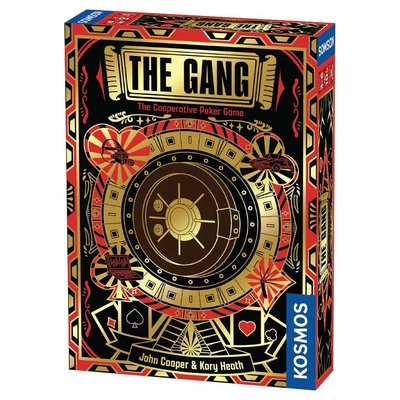
Now, we're going to get into some good ones here. And uh Okay, let's just go to the next one. This one's oldish. It's called The Gang. And the Gang is kind of like the mind if you played the mind where you can't really speak or tell anybody what's in your hand and you're trying to cooperatively win. But the gang is done with poker hands. And I know it's a few years old and I just never played it. And we played it and I was like, "Oh my god, I love this game. This is great." And a couple of my friends had played it already and they were like, "Yeah, right." I was like, "Exactly. This game is great. How come you're holding out on me?" But yeah, it's basically, you know, you play hold them and you deal each other cards and then so you say, "Okay, based on uh first off, you start with your pocket cards, you know, your two cards that you have in front of you." And then everybody has chips. So if you're playing with four players, there's a first, second, third, and fourth. And you have yellow, orange, and red of that chip. So four three sets of the four chips in a four- player game. So in the yellow one, you you take what you think your position is in the hierarchy. So you know, you who has the best, second best, third best, and fourth best poker hands. And so I'm like, I got, you know, two seven offuit.
So boom, I take the four because I think I've got the worst hand. And so on. So, the first set of chips you take doesn't really matter. And then you take um and then you have the flop. I think you do it after the flop. I can't remember. It's been two weeks since I played this. So, I think you take those the first chips after the flop. Then you have the river card. Then you take the orange chips. So, things maybe have changed since you had the uh uh the turn, not the river. I get the uh nomenclature confused. The fourth card. And then you flip the river, the last card, and then you take the red chips. And so the red chips have to be correct. So at that point, then you evaluate. So the the yellow and the orange chips don't really mean anything, but they provide information to how strong or how weak you feel like your hand is developed.
And so that should give you a sense of, you know, what they might have. So if you understand poker pots and probabilities and logic, which I have some understanding of. I've played enough poker in my time, that's what you do. And so then you're trying to win best out of five. And so if you win the first round, everybody gets it exactly right. So if I have the best poker hand, I get, you know, I grab the number one, then we that's good. And then two, three, and four, they all have to be in the right order. If three and four are reversed, like four is actually better than three, then we lose that hand. Everybody's got to be exactly the right order. So it's not just who wins, but who is, you know, next in the hierarchy. And then there is like a a modifier. So if you win it, you flip a card from like I don't remember the name of the deck, but it makes the next round a little harder and you have to like it's some little effect. There's a nice little stack of cards. And then if you lose that round, then you flip a card from the other deck and it makes the next round a little easier. So the first once you win or lose three rounds, so it's like I said, it's three out of five, then you win or lose the game. And uh and so one of the examples of the cards like we got was uh cuz we had won going into the last round, we had one, two, and lost two, and we had just won one.
So it made the last round harder. And it was basically said, okay, you you still have to get everything right, 1, two, three, and four, but collectively you have to decide in the number one player's hand a a card value that they have. In our case, it was like, I know he has had a 10 because we were sure he had a full house. So, we just said, "Okay, he's got a 10." And he did. And so, but if we guessed wrong, like maybe maybe he had two pair or something, you know, he was off and we were off, then we would we wouldn't have won the round even though we got everything right. So, that's just an example there, but this game's really cool. I mean, it's if you like poker, like even a little bit. Um, I think it was cool and I actually talked to a friend of mine who played with us and he's played with his family a little bit and some other folks who don't play poker at all and they really liked it because they kind of like learned poker and I'm like, "Yeah, you could totally like I mean, you can learn poker, but this game like really teaches you poker about like, oh, you've got this, so you probably got this and things like that."
And so then you can you can play around and then have a discussion about why you thought something and there's no money at stake, right? So, you know, there's no stress of betting in that case, which is cool. It was fun because you're still like playing poker. You're still betting, but you're betting together against the game. And that's just really cool. I mean, that's awesome. I mean, I would play poker like this all day long. Um, you know, as opposed to real poker and I have a story about that why I don't really like playing poker anymore. Um, I don't know. I It's not important, but it's uh, yeah, I just it's just not fun. Um, so, okay, that's the gang. Uh, and then the next two, let's see, the next one is I think this game's like a year or two years old, but they have a new edition that has just come out. We played the old edition. This is Rumble Nation. Um, that we played the all Japanese edition.
All the card text is Japanese and the rules are Japanese, but um you can print out the English rules and there's not really text in the game. Uh most of it is symbol driven, so it's very easy to play if you can find the older Japanese edition. There's no problem with that. Just, you know, download the PDF and print it out. And the game's pretty simple anyway. Or you can get the new edition, which also looks looks nice as well. They both look gorgeous and it's all English and stuff. And uh so it's called Rumble Nation and it's an area control type of game like an El Grande Blood Rage Rising Sun. Feels a lot like Rising Sun. Um designed by Eric Lang and published by I think Cool Mini or not. I don't remember if they still have the rights to Rising Sun. Anyway, Rumble Nation is neat because you lay out um bunch of tiles on a bunch of areas that are adjacent to each other and you shuffle up the tiles at the start of the game and they go from 2 to 12 and you put them out there and then each player has three dice. You roll the dice and you combine the three dice into different things. So, you will put out a number of your little like warriors to try to take control of the area. So, let's say I roll, I don't know, a two, three, and a four. Okay, great. So, I can combine those dice in different ways.
I choose two dice to combine, that will be the area that I'm putting my workers into. I will take one, the extra die, and based on the number on the die. If it's a one or a two, I'll put out one worker. If it's a three or four, I'll put out two workers. If it's a five or six, I'll put out three workers. I think that's right. And then so if I remember I rolled a two, three, and a four. So maybe I combine the three and a four. And so that's a seven. So that would be with my two I'd be putting out one worker and they would be going into area with the number seven tile because it's three and a four. But hey, maybe I want to combine the three and the two. That would go into area five. 2 plus three is five. And I would be using the number four, which let me put out two workers. So I put two workers in area five. And here's the thing. So that's your whole game. You keep playing that way until every the one player runs out of Oh, no, sorry. Everybody runs out of workers.
So, if you're out of workers or warriors or whatever, everybody keeps playing. Okay. And you know, the thing is with that is is they could sort of change the board state, but if you go out first, you grab this little tile, which is the number one tile. The second player to run out of workers grabs the number two tile. That's a tiebreaker. So if it's tied in an area when you resolve all these areas just so you has control of it, it goes to the tiebreaker of the person who basically passed out of the game first, which is which could be huge. And so then you go through and score all of the areas in order. So you go from the number two to the number three and so on. The winner of an area will then be able to put two workers. there's like a neutral white colored token or worker tile uh piece that will go into every adjacent area. So if that number two you win it, you know, say you're the red player and there's, you know, the the the seven and the 12 are adjacent to it, you will put two workers in each. So that will help you in those places and that could cascade if you know the seven wins, you know, and then the seven is also adjacent to the 12, you can take two and put in there. So that's an interesting sort of part of it. back part kind of reminds me of Rising Sun if you've played that. And then you just go through and score. And there are um little point tiles that go with each of the areas and it's basically half the number of the tile. So, you know, area eight will be worth four points and um or something like that. No, I think area
eight is I can't remember. This is like two weeks since I played. But you get point you get more points for the higher number. And then if you get second place, you get you get a little bit less points anyway. So, you go through that. The points doesn't matter. you get points. And the other thing to know is each player also gets dealt like a leader which has a once per game ability that you can use when they're all very different. And then you also deal out basically the number of players plus one of these special cards and um you can take and and do those cards as well. Now you can't use your special ability for your leader or use one of the special abilities that are dealt out for everybody to use. You can only do them once. So I can only do one of the cards dealt out. I can only do of course my leader ability once, but if somebody goes out, nobody can do any of that. Your all those abilities shut off. So, it's a little bit of an interesting, you know, cat and mouse game, little game of chicken with that cuz those abilities are quite powerful.
You don't want to use it too early because then it'll just negate whatever you were trying to achieve. Uh but yeah, that's the game. So, you you know, you roll the three dice, you figure out where you want to play stuff or you use an ability that's on the table and then and then you score everything up at the end. And again, the workers kind of cascade around the board. And it's really fun. This is a lot of fun. Really, really fun game. Um, you know, I might pick this up. There's a couple of copies of my group, so I'm kind of like, I don't really need to, you know, get a copy of this game. But it's a lot of fun. It plays really quickly. 30 minutes, 45 minutes tops, you know, with I think it caps out at four players. And it's just fun. It's one of those actually somebody in my group who really doesn't like area control really like this game. They just they're not that this is they don't like that type of game. They don't like area control and they don't like, you know, some some guy moving in like one piece and taking everything away and all that stuff. But this is like the randomness of the dice is neat because it kind of alleviates a little bit of that feel bad like backstabby kind of thing which this guy don't like. Um because you like you may not really have a choice, you know, based on the dice that you roll where to go, but you there's still some interesting decisions and planning and things like that and like, you know, when do I pull the trigger on my ability and it all plays quick, so it's not the end of the world if you know things go kind of sideways and it's a lot of fun.
I definitely recommend uh Rumble Nation. And the next game, the last game we're going to talk about is Hot Streak. And I have a copy of this coming to me. I will be doing a video review of it. So, I'll just kind of preview it here. But, uh, man, this is a lot of fun. And I'll say this in my review. This is kind of like a ready set bet or a camel cup type of game. It's a betting game. And you can kind of, you know, place bets throughout the course of the game. Although, once a race starts in this, you can't really change any bets like you can in race set bet or camel cup, but that you race three times. And the the sort of the the trick of it is is there's a deck of cards that move these four characters down this little track and you know some of the cards and they're in the deck.
You get some cards in your hand. You're able to seed a card from your hand into the deck every round and so you kind of know how you influence things, but then what you're really doing is watching what the other players are doing. And at the end of the day, it's all an illusion. It's massive chaos. The game does a really good job of making you think you have an idea of what's going to happen, but it's lots of fun. And there's just a lot of cool mechanics and things like that. And it does some things that sort of fix some problems that I guess not really problems but stuff I've seen this sort of like deflates ready set bet where because that's such like real time betting and you can just you know do everything on the fly where I've seen people just like you know bet a bunch of stuff all at once especially in the last round where just like they don't they're kind of they're way behind the eightball they're in last place and they just go boom boom boom and then they just bet and it just you know a little less fun that way. But um yeah, so but this this to me is sort of like in that vein and the whole card play mechanism which is hard to sort of just describe on audio.
Uh it's better to show on video is really cool and it's just a lot of fun and there's a lot of silliness and it has prop bets and stuff like that which was ready set bet and I think Camel Cup had some of that especially with the expansions. It's been a while since I played Camel Cup, but you know, you're betting on first, second, third, that kind of thing. And there's this thing where you can like flip the thing and you can make like a uh you can sort of like double down on a bet and then every round there's a prop bet. Like, you know, oh, will these guys fall down? Will these will this guy run off the field? You know, will they will they do some certain weird configuration of the order of the cards and that's what makes things kind of interesting as well, those kind of weird oddball sidebar bets. So, that's Hot Streak. I'll have a video coming soonish, probably next couple weeks. And uh lots of lots of fun with that. I will say we did play it with a lot of people. I think there was seven of us and that was perfect. That was a perfect amount just to add to the social part of it, the fun part of it.
Uh I do want to get a chance to try it with like three and see if it still kind of holds up. You know, I'm not really sure if it will or not, but uh yeah, so that's what I want to kind of check out there with uh Hot Streak. Okay, so that's all the reviews there. We'll take another quick little break, maybe get a little refill on your snack and drink and then uh we'll talk about gaming in a 100 years. Okay, welcome back everybody. Uh, let's just kind of dive into this topic a little bit. And I'll just start by jumping in and mentioning the first of three videos. Uh, there's basically three touch points. I think they all kind of orbit the same area, but at least they if not they triggered me to think about this in a certain way. And the first one is from People Make Games and that uh has some former board game uh you know media folks in there too.
And it talks basically about this giant elaborate kind of escape room simulation immersion type of thing where you're playing effectively like on the bridge of Star Trek and so on. And the main point of that it's a really good video in general. Very interesting to watch and I totally want to do that. I hope that company can stay in business. I don't know when I'm going to be in London or whatever wherever this was. I have no plans to go there anytime soon, but it looked awesome and I really would love to go sit on the bridge of the star starship, whatever they called it, and and get on there and play for like a day. Um, it's kind of like a combination of a mega game and an escape room and just awesome. This is so cool. But one of the takeaways uh that one of the hosts on there, Quinton Smith, he mentioned, he said, uh, this is like the gaming century. this century that we're in now. So, the 2000s are the like he was to put it in context, he was kind of saying like the art form of the century is gaming. And I I'm like, man, I could not agree with that more. I think he's 100% correct.
And it's very and that got me really thinking because if you look at the last century you might say the the art form of last century was you know uh film or TV or music even although music's been around forever. I mean there was a certain sort of you know how do you like electronic music and I don't mean like techno I mean like you know music accord recorded on electronic instruments. So rock and roll would go in there and punk rock and hip-hop and you know dance music, techno music would be part of that. And so I don't know what what the art form would been last century. There was a whole bunch of them, you know. I would say music, film, TV. Uh that was that was all interesting last century. And it got me really thinking. I was like, well, I got I think Quinton's right. Like what he said, it struck me into in my gut.
And I was like, yeah, I think that's correct. I think but people have been playing games forever but just not like they have in the last 40 years especially the last 20 years it's and probably even more so I would gather in the next 20 years it'll be even more u and I I think that includes video games I think it includes board games I think it includes you know tabletop role playing games and you know some of these kind of immersion simulator type of places like escape rooms things like that like just games in general as an art form is really shifting in the culture. It is it is expanding into the culture more and more prevalently. I think it's going to slow down. It's going to pick up speed. It's going to slow down again.
It's going to pick up speed again in the next over the next hundred years. I think it will do that just because things naturally do that. and it it got me really sort of thinking about a perspective of things of of of how human beings interact with each other and all that kind of stuff. So that's that first piece there. So that got me kind of going there and that that was a couple months ago he put that out. And then just recently uh staying in the UK uh Efa from No Pun included uh he put out a video on arcs. Um I wouldn't call it a review. It was more I don't like this term personally. It was a video essay on arcs and but it was really good. That's is my point. It was very in-depth. It was very um introspective on EA's part in terms of how he was looking at things and I think it there was a lot to sort of inform the way at least for me personally that I think about talking about games and I think I would suggest you know others should look at as well. And the in his video really got me stirred up because he asked a lot of questions uh not necessarily in the video did he ask the questions but he got me asking a lot of questions I think about everything going on. And so there was a real tension that from Africa's point of view, and I hate to paraphrase people like I'm doing, but I'm just kind of giving you my take on it, but where, you know, you had this sort of very uh clunky or innovative or interesting
mechanical structure uh of arcs of the whole trick taking part of it and how that worked. And then he really tried to apply it to, you know, how is how does it tell a story? and he did I thought he did an excellent job comparing it to sort of the concepts of storytelling that were presented in Foundation in the Foundation books um which were are very interesting books to read. I read them in high school and I tried actually picking up the first one again. I don't know, a year or so ago when the new TV show came out cuz I hate the TV show, but it's but I also don't know how else they would do it. And I guess people say it's good now, but it's not really like the books. So, I may go back and rewatch it anyway. And I tried to read the first book again. I couldn't really get through it because it's just kind of I don't know antiquated, I guess, is the right word. Like I think I think it's still pretty good, but it laid out a framework for storytelling and it's clunky. The way Foundation lays out the story is clunky because it keeps jumping like a thousand years every chapter or something like that. And arcs is EFA tried to make the argument here that arcs is kind of similar where it sort of jumps in time and you see kind of like the you kind of get a bird's eye view of sort of the evolution of what your sort of investment sort of pays out into later on and which you don't necessarily have control over in
arcs in the same way that you sort of do when you play something like Twilight Imperium. And so it's sort of general context of like how that narrative shift it works when you compare like say Twilight Imperium to arcs. They're both in kind of the space exploration fighting genre, but they're doing totally different things from a story perspective. And Arcs does it in such a way in terms of story through this weird gameplay. like you're telling these these really kind of sometimes cool interesting stories about shifting civilizations through cards with numbers on them, right? Whereas Foundation kind of did it with this sort of cut up um almost uh William Burroughses. He did Naked Lunch and stuff like that. I don't know. This is a little out in the weeds there, but where you just take slices of story and then kind of string them together and then you get kind of a larger hole. Arcs is kind of like that. like you have these slices of that and then you have this larger hole. But the way that the game responds to you in your actions in ways that you sometimes want, sometimes don't want. I thought that was very interesting. And so it starts I think Eco was kind of arguing Arc is kind of starting to sort of scratch the surface about how we can be different about the stories that we're telling. And one game that I've been enjoying lately is the um Tales of Arththeran Knights, which is some similarity to that because you're kind of jumping around the game, sort of procedurally generating, you know,
events and quests and missions and stuff that will happen, different encounters with different all kinds of different characters. But it is like just, you know, reading a lineary lineary linear linear story that just happens to be procedurally generated. So, it's not quite like arcs where things are kind of being punched and poked from all different angles with the other players. It's just like, oh, I did this and then this happens and I did this and this happens and it's totally different than what happened last time. But it's also different than like just reading a book or watching a movie or something like that. So, okay, that's the second part. And the last one, which I'll just talk touch on briefly, um there's a sometimes I watch, you know, just different podcasts and things on YouTube. I'll put a link to this video here. And this was about um uh a lady who had been diagnosed with cancer and then she had started up this dance troop and this sort of like involved um sort of interactive dancing type of thing. It it gets very involved.
The whole like me mechanics of it aren't really important here, but it was more about how the artist in this case was engaging with the audience. And it kind of goes back to some earlier forms of theater. Um there's a guy Anton Arto from last well two centuries ago now about the theater of cruelty that he come up with and how he sort of would engage the audience into his theater and his plays and things like that and breaking the fourth wall basically is the point of that. And I think that's kind of where I want to circle back to is this whole idea of breaking the fourth wall in terms of the the art and the creator. And they do talk about in that in that dance video, which which I would recommend. It's not a dance video, but it's about somebody that's created this dance because in a lot of times, you know, if you want to go like look at a Van Go or something, you go into a museum and sometimes you pay, sometimes you don't. It's behind glass. you go and sit there and then sometimes you have artists and art critics and things like that that give you they say they they say how you should kind of experience it and what you should think about it and all that kind of stuff and you get some of that too in you know in the gaming media space and you know that's okay to a certain extent cuz there's some there's some level of like evangelism that you want to have for people to sort of communicate greatness and you know great experiences to people so they can also participate in that kind of thing and also like filter out stuff that's not worth your time. Blah blah blah.
That's all good stuff. I'm all for that. Obviously, I would be hypocritical having a YouTube channel and not thinking that way. But there's an interesting thing about games and games being the new art form and games being this new way of storytelling and and games being like in the dance video uh interactive with the audience back and forth and there is no like there is no gaming where you make the game and the designer if they're worth anything is not going to say you experienced my game incorrectly most of the time right 99% of the time because you're going to come at the game and you're gonna either let's say you're playing a co-op or competitive game or whatever. The other players are going to have an effect on that or you're going to play a role playing game. You're going to make up things off the top of your head. You're going to you're going to have imagination. You're going to explore. You're going to riff. You're going to you're going to procedurally generate stuff out of your own brain.
And that sort of style of art where you don't just go and sit there. You don't just go and get pulverized by a movie and or or a rock concert or whatever is very important. And we just see the whole democratization of art in social media. Like you can just go make a YouTube channel, you know, you can you can just go make a podcast. You can just go play games online. You can just go do this and that. I'm not saying anything, you know, revolutionary here or it's all totally obvious. This is everything that I'm saying. But my point with this is is that I have seen, you know, the I've watched these three videos now and I've just been so like moved in a lot of ways and triggered in a lot of ways to want to express these next thoughts that um and that that's all that's all I'm really doing here because I'll just give you start into a personal and kind of get more broad. You know, a lot of times as somebody that is participating in this, like I am making YouTube videos. I am playing games relatively often with my friends and playing stuff online with people and playing video games here and there, that kind of stuff. participating in kind of the larger I think social artistic conversation which I feel like I am doing and I feel like a lot of you are doing and I feel like these folks that I mentioned are doing and trying to do something in doing it in a positive way. I would say largely my experience doing all of this doing the gaming the youtubery
and stuff like that has been very very positive. But I will say this, I would say over the last probably year or so, it there are moments when it gets rough. And the moments that it gets rough, frankly, has nothing to do with the board game space at all. Frank, like 99% of the board game space, I'm happy with everybody in it. Whether you know you make videos or podcasts or don't or just watch them or don't even care, I'm happy with what's going on. But because you I step out and I'm putting stuff on YouTube. I'm on YouTube, right? And so I see a lot of this like AI content. I see a lot of this like clickbait content. I see a lot of this rage baiting content. I see a lot of this everything ends up being a political discussion comment content. You know, that [ __ ] brings me the [ __ ] down. I'm just going to say sorry for language, but I'm just trying to express it just does not regulate and compute in my brain. It it is it's horrific. And I just want to say I've been doing this thing since 20 the end of 2010 is when I started putting things together to put the channel. I put my first video was in early 2011 and the world is totally different now. I mean that was if we're saying 2011 that was 14 years ago almost 15 years ago when I started really thinking about doing this and it's a completely different world. The word influencer was not a word back then. There was no idea
that you could monetize your videos and make money off it back then. There was no um I mean Twitter had like just come out. There was Twitter was barely a thing. Facebook had been on a couple of years. There was no Instagram I don't think. There was no Tik Tok. There was no nothing, right? And um there was definitely no AI generated horseshit on the internet. And so my point with this whole stewing part of it is like man sometimes when I'm out there like I'm upset in a way that I my video goes up. I do a video on you know Tales of Arththerian Knights. I put it out there and I'm on the same platform adjacent to AI garbage to some guy that's trying to do clickbait about some video game that's coming out or trying to stoke like, you know, racial tensions or anti-LGBT tensions or anti-democrat tensions or anti-Republican tensions or anti- whatever tensions, you know, and my [ __ ] has to live on the same platform. form is that stuff that's upsetting. You know what I'm saying? So again, I'm just trying to give you the point here. So that being said, the opposite is true. When I look at a video from Rodney Smith, I look at the EFA video. I look at the video from People Make Games. I look at the video, the Simon SK video with uh the dancing
instructor, and I get that positive blowback from that stuff. And I'm like, "Oh man, I should be so lucky to put out my stuff with their and it's on the same as their stuff." I'm like, "Oh, wow. I'm even allowed to be in the room." You know what I mean? And uh that's an interesting part of it. And so my point with this is the gaming being the new art form, so to speak, the new storytelling, you know, the interactive art that goes on with games because you're going to get creative with your games, right? that I think that it's it's going to be such an important part of the world moving forward is getting as many people to feel like they can participate, be involved with the group, whether it's the big principal capital G or their small little G local groups.
That's going to be very important in terms of fighting against or providing an alternative at least to this homogenic AI driven, clickbait driven, ragebait driven, divisive slop that gets put out there. It it's going to require interaction from people. It's going to require quote unquote the viewer and the participator to get in get engaged with it. I think that's where things are really going to be interesting. They're really gonna it's really gonna shine where the art is not just like going and you know watching your idol sing or watching somebody that you know whatever or or give a political speech or go and you know watching your favorite team. I love sports. I'm a big NBA person. You know, for me going and just watching the Lakers and being like, "Oh, I watched the Lakers, so now let me go comment on LeBron James and Michael Jordan for the millionth time, you know, like and the basketball dialogue on the internet is just garbage." But it's getting better, though. There's there's actually some some real good YouTubers out there. I don't want to sidetrack on that, but that's my kind of general point is like I think this next century, like Quinton said, is going to be about participation and getting people involved in it and
not necessarily involved in like a big way. You know, you don't have to be involved in something that is like 80,000 people big. You can be involved something that's eight people big. And the board game side of it is, I think, is a big part of that because there's something special about, you know, letting people squirrel away off in their local table and enjoy that social time together and again be creative together. You know, I talked about hot streak earlier in the reviews. We had a freaking blast playing that. We were laughing, teasing each other, having a good time, all that fun stuff, you know, and even with bee lives, the first game we talked about, which none of us liked, we still had a good time talking about bees and how bees work and all that kind of thing. And this is really where I think the gaming comes in because you can be so creative with these games after the fact. You know, like Talisman, I did a video on that and that's being produced by Hasbro. But I've had more fun, you know, printing out stuff, designing stuff on my own, like house rule cards, ending cards, and stuff. I'll put a video I'll put a link to that video. I'll self-s serve myself a little bit here. But, you know, that's that's a lot of fun. And that's what gaming invites. It invites that interactive creativity, that space for people to get in together and design things as as a whole, like as it's happening, as the game's happening. And this is totally true of RPGs, but it can be true of board games, too, where you
and your group get together and just you change how things are going to be in your creative space. And it it it triggers your creativity. The games can do that. And anything can do this. I mean, you can you can get this way with music and and in and movies and stuff, you know? You can you can watch a movie and go write down a different ending if you didn't like it or whatever. and but the games is where it's really encouraged and helpful and um uh you know all that good stuff. And so that's that's just kind of what I wanted to leave with because I'm just you know I get the like I get sometimes I honestly I get down a little bit and I'm like man YouTube is sucks ass. It just blows and it's just it's just it's no better than any of these other social medias out there and it's just a bunch of junk and it's not though. It's not. There's a lot of good people putting out good stuff and and there's a lot of you out there and there's a lot of people that are not necessarily putting out YouTube videos that are giving feedback to the good creators. And also, not even that, not even I don't care if you even watch YouTube, but you're going out there and you have a game group or you you know, even if you're playing alone, you're still being creative in your own space with a solo game or something like that.
And I think, you know, back to Quinton's point, I think this is like kind of the gaming century. And I think it's more than just that. It's more like it should be the creative century, right? Like this is this is, you know, YouTube come out 2006 for example. And so, yeah, you can create you can make a YouTube channel, you can do this and that. That's fine. But you can also just create something that you just never post online. But you can go learn about anything, you know. You can you can now you can you don't have to even go to the library. You can just turn on YouTube and and learn how to weld. You know, I don't know if I you know, take a class, you know, that's dangerous, but you know what I'm saying? Like um you you can do a lot of stuff. And I think that's what that's what's going to be key here is is allowing people to be creative outside the scope of AI. And you know, I know harping on AI, but it's not just AI.
It's the algorithm. It's it's the rage click, do nothing but let the internet destroy your brain. That's all AI. That's all algorithm. That's all the same [ __ ] All the AI stuff is is nothing really new. It's just like a more efficient rage mechanism, a more efficient slop mechanism that we already see with a lot of some creators frankly and you know mostly with the algorithms of social media. So being able to cut off from that and be creative in your own space that's that to me is the secret to the next century because shit's going to get worse. AI is just going to get worse. And I'm not against AI like in principle as because it's not even AI, it's a large language model or whatever the heck. If you want to do that to like, you know, crunch through DNA and find a cure for cancer, I'll give you 100 bucks. Get on it. You know what I mean? Or whatever.
If you want to like crunch through, you know, power grid data and look at how the best way to scale up um, you know, power stations is, okay, use AI for that. But get it off of making memes. Like, who cares? Like of course the first thing we do is like the first thing the AI is doing is making memes. You to fight against that you've got to be creative outside on and unplugged and all that stuff. And that doesn't mean no video games that it doesn't mean none of them no YouTube no technology but you've got to be creative outside of that space and take the initiative and be creative. It could be putting out your own YouTube channel. It could be just sewing um or quilting or something like that. It could be fly fishing. It could be something like that. You know, something that engages you creatively. I know this is a little bit preachy, but um you know, I don't know. It just struck me and I just see games as a way to do that and participating in games and being creative with games and not being too locked into, you know, not doing house rules and stuff like that. Like it's it's got to be about that because you know right now the way stuff's going with just the conversation that's being had without without my approval and without your approval. The conversation that's being happening it there's this whole conversation going on between people and algorithms and the way news and AI and everything is put out. I'm like, nobody asked me if we
could have this if we if nobody asked me if we could start speaking to each other this way. You know what I mean? And like, you know, there's I can get into a whole political angle here, but like and just, you know, not denying the reality of things and also speaking to each other in a respectful professional manner. Um, you know, there's all all that part of it, too. But anyway, I just wanted to leave that there because I felt like creativity is the key and being a part a participant is the key and also being a participant for yourself, creative for yourself and giving yourself the space to just create junk and create masterpieces and create all that stuff. That's that's got to be what we're here for. So, okay. Thanks everybody. Went off the rails there, but uh also had some games to review. So anyway, thank you. Have a good uh rest of your day. Thanks.