Impressions - Café, Floor Plan, Red Cathedral, & Walnut Grove
Games in This Video
4 games are featured in this video — they unlock as you watch.



Transcript
welcome to the jungkook's games impressions vlog today i'll be discussing four games that i was able to play for the first time recently and i do want to mention that if you'd prefer to listen to this vlog instead of watch it then you could do so by searching for the john gets games podcast wherever you normally listen to podcasts i'd also like to ask that if you end up enjoying this video that you please click the like button for it down below as well as the subscribe button for the channel in addition to that if you'd like to directly support the channel in the creation of future videos just like this one then please go to jungitsgames.com there you'll find a bunch of ways that you can really help things out and some of them have pretty cool bonuses like voting on a few of the videos that i film each month alright let's now start talking about games and the first of these is cafe now this is a recent publication from pythagoras games and i saw some images of this one on twitter and i think i saw a video for it too and i thought it looked pretty cool i reached out to the publisher and i was able to get a discounted press copy and i now actually played the game a couple of times so we played it uh twice two players in a row in an evening now thematically this game is all about growing coffee beans and then processing them all the way until you have a cup of coffee and i'll tell you that my wife and i we both really really just like coffee so thematically we're not really aligned with what you're doing here but that's fine the art style is great and we still really enjoyed the theming of the game even though we don't like coffee now mechanically in this game you're going to go through a series of rounds and in each round you're going to be taking a single card from the center of the table and you're going to add it into your tableau of cards and when you place it
down you have to cover up certain segments of the other cards that you have placed now i'm not going to go into all the details of the card placement rules we have to cover up at least something and you are not allowed to tuck a new card underneath you have to put it on top now after you've placed your card you can then take actions and you get a number of actions equal to the number of coffee cup icons that are showing up in your overall tableau now each action lets you do some part of the overall coffee process it's essentially a four-step process you can activate a single field of coffee beans which is going to be a bunch of coffee bean icons that are orthogonally adjacent to each other so that means if you place your cards so that lots of beans are next to each other you can be efficient spend one action and put a bean down onto each one of those spots that don't already have a bean the next step is you can activate your drying icons and you can once again activate an orthogonal chunk of them so if there's just one drying icon by itself then one action will activate that but if you have three of them all kind of next to each other then one action will activate all three of them so you're gonna try to put those drying icons next to each other and each drying icon will take all beans of a specific color from the fields and put it down onto that drying spot so you're trying to get lots of the same color bean obviously you're trying to dry them and then you're trying to put the roasters down which are an icon as well and you activate a cluster of roasters just like the drying fields in each roaster can take all of the beans of a specific color and you put that onto that roaster and finally the fourth
step of the process you can spend an action to remove all of the beans from your roasters and put them down either into your own warehouse or onto coffee shops which are also part of your overall tableau those coffee shops tell you which type of coffee they need and when you put the coffee onto the spots then they will give you a certain number of endgame victory points as long as you have not covered up any part of that coffee shop by the time the game ends now the coffee that you have in your warehouse is going to be potentially worth victory points to you you are incentivized to try and be even with those you don't want to have a lot of one thing and a little of another and i'm not going to go into the victory point details of it but um you definitely want a wide variety of coffee colored beans in this game so you're going to play through a series of rounds and then the person with the most victory points from their coffee shops that are filled up as well as from their warehouse is going to be the winner and you know the main interaction point in this game is uh taking the cards from the middle of the table now uh when you are taking these you're always going to have three available and then you draw a new one and then the next person can take from those and then you draw a new one so everyone always has three cards that they can choose from and i've only played this game at two players but as far as i can tell it's not going to be hugely different from one player count to the next because uh realistically you only interact with somebody else at that card draw spot in the middle of the table uh after that you're kind of just working on your own little puzzle in front of you trying to be as efficient with your actions as you can and obviously you have this impossible puzzle where you want the beans to be next to each other the drying spots to be next to each other and the roasting spots to be next
to each other you also are trying not to cover up your cafes and you're trying to get new coffee icons because every coffee icon in your tableau is going to be in action now when you take a card that has a coffee icon on it you do have to spend a coffee from your warehouse which means you are potentially spending victory points which is something to keep in mind but you can't do all of these things so you have to be as balanced as you can now we ended up playing back-to-back games of this we played it once and we really enjoyed it so we set it up and we played it again right afterwards each play took probably less than 30 minutes between 20 and 30 minutes something like that and it has a lot of really thinky crunchy puzzly decisions to be made when you take a tile you have to cover up at least something so that means it's kind of like a tableau engine building game where you have to break your engine every single turn and you're hoping that the net result of you breaking your engine is actually going to make your engine a little bit better in the long run so you have real decisions to make like do you cover up this cafe and then not even bother sending beans to it because that's gonna or i guess roasted coffee to it because that'll make you stronger for getting other points for the end of the game or do you not do that because you're not sure if you're going to get another one of these cafes because those are a really important thing to keep in mind and i found myself i can't remember how the scores worked out i think i won one game and i think jessica won the other one and i remember in the second game i was really imbalanced i had i think far too many roasters and i got them all next to each other but i didn't have enough of the drying fields to fully utilize all of those roasters
so you are also trying to keep in mind that you don't want to over specialize you want to kind of do everything well but not go crazy on one thing i also remember in that game i did not make a certain type of coffee very well i was great at green and i was great at red but i think yellow had almost none out or something like that and that really impacted my ability to get lots of points from the warehouse because i had lots of excess coffee and i was not being even with those now that does mean that i could spend the coffee that i felt like would be a nexus to take more cards that would give me more actions so i'm pretty sure in the second play i got up to the maximum of i believe is eight actions so that was certainly good but it's just a lot of things that you have to consider in a really small box uh overall i'm quite impressed i actually scanned this one in and built a tabletop simulator mod i'm hoping to play this one with other players at some point soon because i think it's a really cool system it's a lot to think about in a relatively short playing game and i have been impressed jessica quite liked it as well so i'm looking forward to more plays of this one again i don't think it's going to be drastically different at different player counts i've only seen the two-player game right now and um maybe it would be slightly longer um because at a higher player count because people are you know thinking about what card to put down um but uh what we actually did is um there's always gonna be three cards available so uh when one person was deciding on these three cards the next person drew the top card and just started considering it because by definition the person before them is going to take a card and that will go out there so that kind of sped things up and i think in a larger player count game you could
also do that to try and speed things up if that card's really great for you then that makes the decision relatively easy so yeah that's cafe i am impressed i'm hoping to play this one more it's a relatively small box with a great art aesthetic and some pretty streamlined rules and i think it's gonna be sticking around next up we have game number two which is floor plan now i think this one came out this year it's a relatively recent release and it is a roll and write style game that can play up to infinite people it's one of those games where um dice are ruled and then everyone will make a decision on their own based off of those dice that has no impact on anybody else so we actually played a 10 player game of this on tabletop simulator which was a bit crazy my computer had trouble dealing with that amount of stuff going on but we made it work we had a bit of a mini board game geek con day a couple of weeks ago because obviously board game geek con did not happen and we played games from 8 a.m until i think about 11 p.m or so we played just a bunch of games and in the middle we played floor plan now this is a game all about being an architect drawing up the plans for a house essentially and the way it works is you are going to have these dice be rolled and then on every turn you are going to either add a room to your overall floor plan or you're going to add features now the dice are important here because the dice numbers are going to tell you how big your room is if you go for a room let's say a 2 and a 4 are rolled that means you have to put a 2 by 4 size room down
and then you label that room with either one of the two options based off those dice a two is associated with one type of room i can't remember specifically maybe it's a closet and then a four is associated with a number type of room can't remember specifically but maybe it's a bedroom and that means you can choose one of those two and label that room as a closet or bedroom so you are constrained by the size from the dice but also what type of room it is the other thing that you can do is instead you can put down furnishings and that could be like couches but it could also be a deck it could be stones in the backyard that if you make a full circle of you will put water down to make a pool you could also plant a tree and very importantly you can add doors and windows to your house now in the middle of the table there are a series of um uh goal cards i can't remember specifically what they're called i think they're different people who have different desires for your overall plan and each person has a couple of different conditions on them so what you're trying to do is design your house so that it matches up with the goals in the middle of the table and every time you meet one of those goals in the middle of the table you score it you write those points down on your pad and then you get a one-shot bonus that you can use to help yourself out in the future and you keep playing the game until uh at least one player has completely filled out all of their goals or until one player has no legal plays to make but in our 10-player game it went until one person filled their goals in fact two people filled their goals out at the same time so um there are obviously more details
and minutia that i could go into but that's the kind of vibe of the game so the dice are rolled and you're trying to do good things based off of that trying to build a house that looks right and also put good stuff in it and those goals can be really varied we had a goal to have fountains which essentially were pools that were next to each other we also had a goal to have a certain number of windows facing out from a living room and there were a few other ones and ultimately this game lends itself towards making some really ridiculous houses when the game ended i had a house that had no doors to the outside i had a couple of trees and some nice decks and i made a fountain and all that i had a whole bunch of rooms inside but you couldn't leave also you couldn't get in there's a bunch of windows so i guess you had to enter this house through the window and i will say somewhat embarrassingly that i came dead last out of 10 people it wasn't even close i was like many points behind the next person so definitely don't build the house that i made but i still really enjoyed it it was fun to play with that many people and it was fun to see uh what everybody did having a data set that large was kind of interesting because it seemed like there were a couple of people who are there's somebody who won obviously and there was one or two people who are close to that score and then there were like four or five people all within a couple of points from each other kind of in the middle and then there were a couple of stragglers and then there was me all the way down to the bottom and um i will say that you know it's a dice game um if a specific rule i remember if a
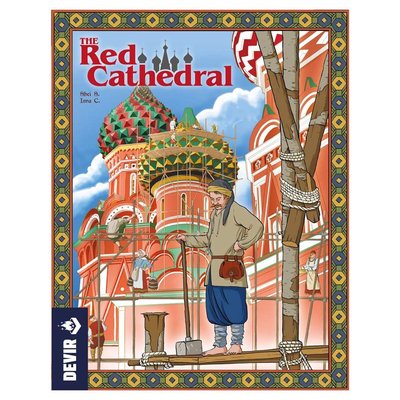
two and a one had been rolled in that last round i would have made like 11 victory points and would have shot up to like a second place or something like that but obviously that did not happen and it did not work out very well for me with my strange house that you couldn't leave a couple of people had houses that looked like you would potentially live in them uh some other houses were strange i remember there's one house with a long uh closet hallway that was full of couches that split the house up so you had to like walk across couches in order to get from one side to the other and i remember in my house i had a bathroom that was almost as large as the living room next to a bedroom that was the size of like your standard closet so there's just some ridiculous stuff that happens but it was fun i enjoyed the challenge it was a lot thinkier than i expected there's obviously all of these goals to consider and um you know with two main things you can do with your dice a lot of things to consider as you're building this out and you will definitely find yourself regretting some of your previous decisions you have to plan things out to make sure that you are open to as many of these goals as you can you can score goals multiple times and that's certainly something that many of us did in order to get to the end of the game now ultimately uh i think everyone enjoyed it i don't think everyone loved it overall but jessica and i really enjoyed it i actually bought a copy so it arrived uh we have it here because i think it'd be fun even at just two players it was a really cool experience overall and i'm looking forward to playing it more okay let's move on to game number three which is the red cathedral now i actually made a sponsored tutorial for this game so i'll start right off and say that i am biased i was paid to make content for the game
but i subsequently decided i was quite interested in playing the game because i liked what i saw in the tutorial and there is a official table tabletop simulator mod for it so we got to play a three-player game of this uh during that board and game geekcon mini convention day thing that we had now this is a pretty neat little game where you are doing uh resource management trying to get various resources uh trying to build up uh collectively a cathedral the red cathedral and now mechanically the way it works is on your turn you choose one of three different options the first option is that you can reserve a spot on the cathedral that you would like to build later out that's going to give you a bonus token which you can put down onto a workshop tile a workshop spot in front of you and that's important because another option that you can do on your turn is you can gather resources now in the middle of the table there's a board and it has dice that kind of go around the outside of it and eight different areas and when you gather resources you're going to select one of those dice and move it clockwise around the board an exact number of times equal to the pips on that die and then you will get resources based off where the die lands equal to the number of dice that are in that overall area so you have a decent number of options and you're trying to essentially put these dice into spots where other dice are to get lots of resources which is good but then also if you have a workshop tile on a spot that matches the dye color that you just moved you get the bonus of that tile which again you got from reserving a spot out on the red cathedral so there's a nice little synergy going on there now the third
thing that you could do on your turn as your entire turn is deliver up to uh three things to the cathedral itself which means you are putting your resources down onto spots that you have reserved or you can spend resources to add decorations and ornamentations to parts of the cathedral that are already done now once a spot that you have reserved has all the resources it needs you flip it over you get the associated resources and if you did this quicker than other people below you on the cathedral they actually take penalties which is kind of interesting and it definitely came into play in our one play of it now when you get points there's actually two types of points in this game there is the prestige and then there is i believe recognition or something like that now every certain amount of recognition is going to give you one prestige and as you get farther along the track that amount is going to change so that means early in the game if you get a bunch of recognition that might give you like one or two prestige but late in the game if you get a bunch of recognition that might give you like four or five prestige and what this means is as you're playing through the game there are many different things that you can do but it all kind of comes to a head once the game comes to an end the game ends as soon as any one player has completed six of their reserve spots out there on the cathedral and in our one play event i ended the game and i have to admit that i thought i had it in the bag i didn't crunch all the numbers but it seemed like i was in a really good spot to win the game um jessica was playing as well she had five of the six done and another friend anastasia had uh just four out of the six done so i felt like i was in a good position but
the thing is whenever you complete those cards in the cathedral they give you recognition and i pushed that really hard which meant a lot of the recognition i got especially early on the game did not give me that many prestige points instead what my opponents did is they finished less pieces of the cathedral but what they did is they added ornamentation specifically ornamentation down which is like doors and a cross on the top with jewels now if you spend jewels alongside the ornamentation you get prestige which is not recognition which means you jump to the next prestige spot on the board so while i was just going crazy on recognition all game long and never put a single gem into the cathedral my opponents built less of the cathedral but they put ornamentation down that was really shiny with these gems and they essentially were able to stay even with me until we got near the end of the game and once we calculated everything up i actually lost i think i came in third place it was close it was the the spread between all of us was like four or so points but jessica was able to win this one i'm pretty sure now in the cathedral once the game is over you actually score each of the towers of the cathedral the number of completed spots on it is going to dictate how much uh prestige that is worth and the ornamentation adds to that and then you see who did the best who added the most ornamentation and also who just built the most spots in that that tower and then you divide the points to the players i'm not trying not to go into the specifics of it but it's very important to try and have a majority of stuff in these various towers and in particular you want to have a majority of your stuff in the biggest towers because those pay
out the best and i think the reason that i lost is because i made an assumption that there was a big scoring tower that i would be able to score i didn't think there was any way my opponents could catch up to me and they did in fact they didn't just catch up and tie they actually caught up and took the lead away from me and that was the difference of the game so i think if i'd played differently i would have focused more of my ornamentation on that big tower to lock it in but then i would have gotten less points for the other spots so it's definitely something to keep in mind now when the dust settle on this game and i'm there's some significant things i haven't talked about but you get the general idea um we all enjoyed it it was it was a neat experience i think it took probably approaching two hours maybe like a little over 90 minutes something like that and it was a first play for all of us and i think that we all enjoyed the play but i don't think it really blew any of us away um it's definitely a game i would not mind playing again in the future because i like resource management i like the kind of engine building this that you're going on and i liked the competition that you had in the middle of the table with the different towers but again nothing really screamed to me like this is new this is fresh this is something i've never seen before it's a bunch of things that i have seen before i guess the most innovative part of the game is that dice market uh mechanic which is pretty cool i guess i'm underselling the game that did feel somewhat fresh the idea that you could move these dice around it's a bit puzzly to try to get the resources that you need and also specific dice namely the white die and a die that matches your player color you can actually spend money
to move that die farther so you have a little bit more control so working those out to get nice little comboy engines and then activate guilds in the corners of the board uh that was pretty cool so yeah i'm underselling it that was a pretty neat part of the game but yeah overall we walked away from it having enjoyed the experience i'm looking forward to playing this one more i don't think it's at the top of my must play again soon list i do hope that i get it played again soon at some point um but uh yeah it just came together really well i think it's an oppressive production um the components are great the art is great overall and i think that um there's a lot of good stuff going on in this game it's not the most exciting game that i've played recently but it was fun and i think that's really all that's important really all right we've reached the fourth and final game i'll be discussing today and that one is walnut grove now this is not a new game i think it was published in about 2011 and it's the same designer as eclipse which is a very well-known uh large expansive like you know five to six hour uh 4x space drama battle game but walnut grove looked like this cute little euro game that only has a four-page rulebook and i kind of heard about it over the years like kind of popped up into my consciousness and then uh kind of went away i never really knew anything about it but then uh one of the people in our gaming group owns a copy and they've been really wanting to play and we found a tabletop simulator mod for it so we ended up playing this one as our first game of that mini board game geek convention day we played a four player game of it and it seemed like it made sense it was uh just a four page rulebook so it should be a quick teach overall and
it should be a pretty quick game overall at least that's what we thought and what we didn't realize is it's actually a very thinking game for only having a four-page rule book now the way this game works is you're not actually making a grove of walnuts apparently it's based off of a town called walnut grove which was kind of a a western town in the united states i think not quite wild west but you know kind of that kind of theme now mechanically what you're doing is you're going to go through a series of phases in each one of the game's rounds and it's going to start by you drawing some tiles the number that you draw is different round around and the number of that you get to keep is different round around and you're going to place that down into a tile laying area in front of you where you have different types of areas there might be a lake there might be a rock quarry or maybe a field where you could have your sheep grazing now the placement restrictions here are really loose if i remember i think you can put them really anywhere oriented in any different direction but you want to make large fields of the same type and there are also fences that show up on some of these tiles and if you make completely fenced in areas then that will be worth extra points at the end of the game so you want to keep that in mind now after you've chosen your tile and you put it down there is a worker placement movement type of phase where in the middle of the table there's a board and every player has a single worker now based off of a certain order that i'm not going to go into each player is going to take a single action and you can go as far around the board as you want to you have to go clockwise but when you cross a certain spot on either side you actually have to pay a coin penalty and coins can potentially
be worth victory points to you at the end of the game so you're gonna go to an action spot and then do whatever that says and that might let you recruit new farmhands that will join in for you in the next round uh you also might be able to get improvements which will give you ways to score bonus victory points at the end of the game based off of different conditions uh you can also go to a spot to just get some resources and another location lets you uh trade in your resources for coins now i mentioned that coins are potentially worth points and that's the first strange part of this game now the coins are face down you can take them from a face down stack and they have a zero a one or a two on the back of them and you take them randomly so that means i might sell three things and i take three coins and i look at them and i might have two zeros and a two now the number on the back is the number of victory points that coin is worth at the end of the game so that might seem awful like that sucks i got a couple of zeros like you obviously want lots of numbers but the thing is you put those coins into your warehouse where you have to store them and you can upgrade and get more warehouses as well and remember when i said when you go around certain spots on the board you have to give up a coin well you can give up a zero cost coin when you cross those spots so to a certain extent if you got all of the all twos you might be a little bit bummed because that means crossing over threshold means you're actually giving up victory points so there is definitely a way to deal with the coin draw luck now after you've done the work replacement you then send all of your farmers out into your fields and every farmer will activate an entire contiguous field of a color and they'll make one resource for you for each tile in that field and then there are storage spots you can
put down on the field or if there aren't enough spots you can put those down into your warehouse if you have room now at the end of the round you actually have to feed your people and this is where the game gets really uh tight now every single one of the people that you have in front of you is going to need certain amounts of food if i remember correctly and almost all of your people are going to need wood to light a campfire so that they don't get super cold during the night now one of the things you can do is actually build out little houses for your people so that they don't have to spend wood every single round but i'll tell you right now in this one play of it i was never able to get any of those and actually got a pretty big crew of people so i had a huge debt of wood essentially every single turn i needed to get um at least i think four would just to have enough heat going towards my farmer so that i didn't take these uh negative penalty cards which could be pretty significant you definitely don't want to take those penalties but then also each one of the farmers that you have needs to be fed and if you don't feed them you take more penalties so what this means is you have this system where you are expanding your fields and you're getting various things and you're spending your resources in order to get those things but those resources are potentially food that you could feed your people for the most part i guess you don't feed them stone or wood although they burn the wood but what it means is you do a whole bunch of things and at the end of each round you were hoping to just eek out a little bit of an advantage it definitely felt like um times were tough in a wild west type town like you're being a farmer and you're making all the
stuff and then you're getting rid of it and then you hope to be just a little bit better than you were at the start it's definitely not the kind of game where you do uh you end with a large profit you're just eeking out tiny little profits as you're trying to build everything out obviously getting more uh people means you can make more stuff but that's another person that's gonna be cold at night so you have to give them wood and it's another person that might have to eat and each round you flip over a random tile and that dictates not only the number of field tiles that you take and put out but it also dictates an extra production type so a certain type of field produces better and another type of thing will sell better so that's all good things but it will also tell you how much extra wood you have to spend just as a flat fee because i guess it was colder in general and certain farmers are going to be hungrier than normal and this is even more impactful so in our play i had a couple of the blue farmers and they eat fish because blue water anyway and there were two rounds in a row where the blue farmers needed to eat two fish each and i had two of these farmers and it was really impactful it was really punishing and i was just trying to eke out tiny little advantages and at the end of the day i think the game took over 90 minutes like it was definitely a longer play experience than we were expecting in a much crunchier thinkier play experience than we were expecting and i think all of us enjoyed it i quite enjoyed it and the person a friend anastasia who owns it um she quite enjoyed it as well in fact the mod was a bit lacking so uh she's made a new mod that we can play for ourselves and we haven't played it again but we are definitely planning on it um now the biggest i guess potential
issue with the game i guess is the coin draw variance uh in this play i did not win but i had a solid shot to win on my last turn i did a massive trade and i got a whole bunch of coins and in fact i had invested in a bunch of warehouses so i could store a whole bunch of resources and a whole bunch of coins i had a lot of coins at the end of the game and in that last turn because of decisions that i made in risks that i took i ended up losing one point overall instead of gaining points i took i believe it was three coins and there were um a couple of zeros and a one and then because i took a risk i did not actually have enough stuff to have enough wood which meant i took a penalty token which dropped me down i think lost me two points which means i lost i lost one point in the last round whereas if i had drawn a bunch of twos then i would have made a significant number of points and then i think i likely would have won i think i was close enough so it is possible that you could win or lose this game based off of how you draw those coins but also you know in uh the game's defense that was the strategy i decided to push for near the end of the game i decided to say okay i'm going to go hard on getting these coins versus trying to get improvements which just give you static a number of points and there's lots of other ways you can get points so in the long run i'm not sure if after multiple plays that coin draw variance is going to bug me or if it will kind of balance out with kind of everything else that i'm seeing but in general i'm really impressed with this game again it just has four pages of rules which are quite straightforward to to learn and to teach and then it's a tough punishing
quite thinky game the worker placement can be quite punitive like if somebody goes to a spot right before you that might be the only spot to get you a thing that you really needed you have to try to do something else and there are definitely lots of like ah moments when somebody took a spot that you really wanted to go to and lots of moments where you're looking down and you're like i'm just one wood shy or one fish shy if only the double fish worker payment hadn't happened that one round um then maybe i'd be in a better position so it's a euro game with definitely some luck variance and uh some people probably won't like that but uh overall it doesn't bug me too much even though that luck variance likely lost me the game and i'm looking forward to exploring this one more i think it's got some really cool ideas even though it's uh certainly not new it's like a nine-year-old game or so but this one is relatively high on my list of games that i want to get back to well that's going to wrap up this vlog i've now at this point talked about all of the new games that i played and i have lots more new games that are on my list that i really want to play some of which i've learned the rules to but i haven't actually gotten to so it's likely there's going to be more of these impressions vlogs coming out in the future uh hopefully i can actually get a lot of these played even though there are other games that i i still continue to want to play more obviously i want to play walnut grove again i thought that was really great i want to play cafe again oh that's relatively high on my list and then uh no 800 keeps getting played over and over again and uh you know what uh lost words of arnac is a game i really like to come back to so there's a lot of good games that i've played over the last couple months and a lot of potentially good games that i haven't gotten to yet uh and just lots of good times ahead so uh yeah i think that's going to wrap up
this vlog as always i'd like to thank everyone who's been supporting this channel including these producer-level patreon supporters if you too would like to directly support the channel in the creation of future videos just like this one then please go to jungitgames.comsupport also if you enjoyed this video then please click the like button for it down below as well as the subscribe button for the channel thanks for watching