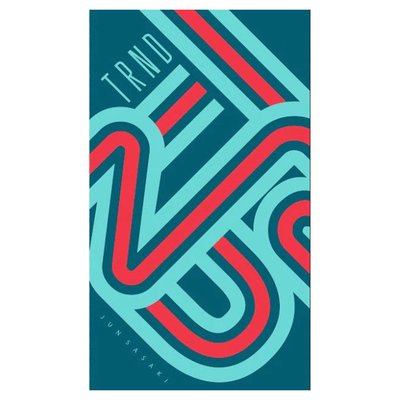
Tend VS Stardew Valley VS Three Sisters - BUY THIS, NOT THAT (board game review)
We've been playing Tend Stardew Valley and Three Sisters backtoback for the past few weeks now. And honestly, I have some strong opinions about which one you should actually buy. >> Oh, here we go. Look, all three are solid games, but I think the comparison is more complicated than you're making it.
Let's break down what we actually learned from playing all three of these head-to-head because our experience with each one was pretty different from what people might expect. >> Fair enough. So, here's the context. Tend just came out from IV Games on Kickstarter in 2024. It's a fliin right that's absolutely massive.
We're talking giant box serious component commitment production that feels premium. Stardew Raleigh is a cooperative worker placement game from 2021 that's trying to translate the beloved video game into tabletop form, which immediately sets it apart because it's working against strong IP expectations and nostalgia.
Three Sisters is this elegant rollandrite from 2021 that honestly flies under the radar compared to the other two. It came out years ago, but doesn't get the attention it deserves. We tested all three at two to four players, and the differences are genuinely fascinating once you sit down and play them back to back like we did.
Player counts [music] matter a lot here because that's actually one of the biggest differentiators between them. Like, these games are fundamentally designed for different player experiences. Okay, so mechanically, here's what became clear after playing both Tend and Stardew Valley side by side for multiple sessions.
Tend is all about simultaneous action selection from a shared deck of cards each round. You're choosing actions like fishing, mining, or tending your crops, and then you're immediately converting those resources into upgrades or stamping them into this cargo manifest, which is basically a polyomino puzzle where you're fitting shapes into a grid.
It's complex but fluid once you get it. The rules click after one round and then you're just executing. Stardew Valley, meanwhile, is cooperative worker placement where you're all sharing one pulled supply of money and resources and rolling dice for almost everything. Fishing has its own die system.
Mining is packed with dice and random tiles. Even producing animal goods can depend on luck. When we played both on the same night, the difference hit immediately and hard. Tend gives you actual agency and lets you plan around certainty. Stardew kept punishing our strategic planning with bad luck roles at the worst moments.
>> That's not fair, though. Remember when we played that one Stardew Valley session where everything clicked and we actually felt like we earned the win? The cooperative puzzle of coordinating different roles. One person focused on mining and getting the pickaxe upgrades, another on fishing to complete the fish bundles.
That felt really satisfying when it worked out. The synergy felt good. But yeah, you're right that the randomness is brutal and frustrating. We spent 45 minutes on one mind descent trying to reach floor 12 for the final bundle requirement, and we just got destroyed by dice rolls. Floor after floor of bad rolls.
That wouldn't happen in Tend because 10's uncertainty is positional, not outcomebased. You scratch off a card space and you either get the resource or you don't. There's no hidden die roll screwing you, which feels fairer when you're trying to execute a strategy. >> Exactly. And that's where the strategic depth comparison gets really interesting.
Intend, you're planning out these cascading combos where one action triggers a bonus that enables another action. We had this one session where I took a mining action which revealed a level up bonus that gave me extra resources to work with. I immediately spent those resources to build up my animal infrastructure which completed a badge row and triggered another bonus, letting me stamp again into my cargo grid entirely.
It was like this beautiful chain reaction that happened because we planned it out three turns earlier. The game rewarded foresight. Try doing that in Stardew. You plan to build a barn for animals, but then the dice don't cooperate on your farming runs, and you never hit the resources you need. Your strategy falls apart.
>> Okay, that's a fair point, but I want to defend Stardew's complexity for a second because the sheer number of mechanical systems is genuinely overwhelming if you're trying to optimize everything. You've got fishing with its own subsystem and target fish lists. Mining with mine floors and monster encounters and geode finds.
Foraging decks that change every season. Animal production that needs specific buildings and resources. Bundles with very specific requirements. Tendy, sure, but Stardew's complexity was genuinely steeper for us. Our first game took four hours because we kept stopping to verify which scaling applied to what, especially at two players versus the baseline difficulty.
Our goals scaled per person or flat. Do upgrades apply across the board or per player? With Tend, we figured out the flow by turn three, and the complexity felt earned rather than frustrating. It's heavy but clean. >> That's because Star's complexity is often decorative. Honestly, it's not that the systems are deep.
It's that there are a lot of them and they interact messily without clear purpose. Three Sisters, though, that's a game that understands elegant complexity. Eight rounds, super simple turn structure. You roll dice based on player count. You take turns picking dice groups and performing a garden action in a rondelle action.
That's it. Clean and simple. But the combos cascade beautifully because your garden choices directly affect what you can access on the shed track, which opens up perennial tracks, which multiply your future harvests exponentially. We saw someone go from scattered progress in round four to absolutely exploding with a chain of bonuses in round six because they built the right infrastructure over those first few rounds.
The engine was humming, >> right? And three sisters costs 30 bucks compared to 10's 80 to 140. That's genuinely remarkable value. And I'm not arguing against that. But here's where I'm team 10. And I don't think it's even close for the right person. Our recessions with both showed that three sisters caps out pretty hard after a couple of plays if you're an optimization focused gamer.
The eight rounds are tight. The strategies diverge less than 10's offerings. And once you see the combo paths available to you, you've basically solved the puzzle. [music] Like you know what your targets are. Tend though we've played five times and every session has opened up new strategic angles because the seasonal objectives change each game.
The cargo manifests are variable with different resource valuations. And the scratchoff cards randomize where resources appear on your mining and fishing tracks. We actually said one more game after every single 10 session. With three sisters, people were willing to pack it up after two games maximum.
>> Okay, but that's not fair to three sisters because it's actually designed for that specific play pattern intentionally. It's not trying to be a 20play mega game that demands your full collection rotation. It's an elegant 30 to 60 minute experience that you can bring to casual game nights with people who don't want cognitive overload.
And honestly, the stamp markers intend are cool, genuinely fun to use, but they're also a commitment. That's a massive box. We needed our entire gaming table just for component organization. And setting up those scratch off card areas took real time before each session. Three sisters. You open it, you've got two pads of sheets, some dice, a pumpkin token.
Done in 3 minutes. Zero friction. Stardew Valley falls somewhere awkwardly in the middle. Setup is fiddly with all the season decks and forage tokens needing sorting and mine tile organization, but it's nothing like 10's footprint or complexity. The production value of Tend is genuinely justified, though.
I'm not going to argue that it's unnecessary. The stamp markers are dualsided for actual drawing and stamping shapes into your Polyomino puzzle. There's this tactile satisfaction that pure pencil and paper games just don't deliver. Stamping feels rewarding in a way writing doesn't. And the components aren't bloat.
They're integral to the experience, not padding. Our friend, who usually hates pencil and write games, came over and was actively requesting to play Tend multiple times because the stamping and scratchoffs felt like mini games within the main game. Stardew Valley has nice components, don't get me wrong, but they're functional.
Three Sisters components are also functional, but tiny. The pads [music] are dense and small, and our players with vision concerns genuinely struggled a bit reading the grid. >> Fair points. Let's talk about player count because this is absolutely huge and makes or breaks these games. When we played 10 to two players, it was snappy, about 90 minutes including setup.
At three players, it went to 2 hours and still felt good with no downtime issues. At four players in our one group session, it dragged significantly and we started getting analysis paralysis because the simultaneous actions still need individual combo resolution time. Everyone's still resolving their chains while others wait.
One reviewer basically said they'd never play it above four again. And after trying four players, we agree. Stardew Valley, interestingly, is the opposite problem. Two players felt optimal for us. It was cooperative without being overwhelming, and we both stayed engaged the whole time. At four players, resource scarcity became suffocating and the game felt grindy because a lot of the big requirements scaled up per player, which just made things feel like more grind rather than more interesting.
Exactly. And three sisters actually performs reasonably at all counts, which is impressive. But it's genuinely best at two players, where [music] you get interactive die drafting without endless downtime. The RDL system means you're never waiting long. One player takes their turn with their selected die and boom, you're up next.
We had players say three sisters was their favorite at two players, decent at three, and fine at four. For Stardew Valley, two players is clearly the designer's intended sweet spot because higher counts just multiply the resource requirements without adding strategic depth. Tend works at two best, but three players is actually where it shines because you get meaningful neighbor interactions.
The gifting mechanic where you give adjacent players resources and both benefit creates positive player interaction that scales well. It's collaborative without being cooperative. >> That's a good observation about player interaction. Player interaction is fundamentally different across all three games and it matters.
Tend is simultaneously peaceful and isolating. You're all playing your own thing, not directly blocking each other or competing for resources, but you're gifting resources for mutual benefit. There's no conflict, which some people love for relaxation, and others find a bit solitary. Stardew Valley is communal resource management, where one person can inadvertently screw another by using shared resources they were planning to use.
That created tension in an uncomfortable way in our four-player game. like the vibe genuinely shifted when someone needed coins for a building upgrade and someone else had just spent them on something else. It felt bad. Three Sisters has the most competitive interaction through die drafting. When you grab the die you want, you're actively denying it to the next player in the rotation.
It's direct but not mean or personal. If we're being honest, our group had the most fun with three sisters interaction style because it felt balanced, competitive without being hostile or generating actual table tension or resentment. But here's the thing. If you care about strategic depth and you're not bothered by longer play sessions, Tend absolutely crushes the other two on mechanics alone.
Yeah, it's isolating, but that's intentional design. The strategic planning space is genuinely enormous. Remember that 10 game where you had the ribbon conversion chain planned out seven rounds in advance and it paid off perfectly? You were like, "I told you so." When those resources converted into the infrastructure bonus exactly like you calculated, we saw like five completely different winning strategies across our plays.
Fishing focused builds, animal husbandry chains, mining heavy approaches with badge focus. In Stardew Valley, there are maybe two viable strategies depending on which difficulty you pick. And half the time, luck override strategy anyway. Three Sisters has maybe four or five viable strategies, but they're all pursuing the same goal of filling your garden efficiently and hitting those perennial track bonuses.
Tend gives you multiple valid victory paths. Fishing chains, animal chains, crop chains, badge chains for the shipping company, and they interact differently with the seasonal bonuses you see each round. That's real strategic variance. >> Okay, I'm going to push back on the replayability angle because 10's variable setups help, but after enough plays, you optimize the obviously best paths once you figure out which seasonal bonuses synergize perfectly.
Stardew Valley, for all its randomness issues, actually encourages different approaches because the grandpa's goals and community center bundles change each playthrough, and the seasonal deck shuffles provide variety that's not entirely deterministic. Three Sisters Rondell randomness prevents you from ever completely solving it.
The die distribution each round forces real adaptation rather than following a predetermined path. That's actually why I felt more motivated to play it again compared to Tend, honestly. Theme-wise, Tend is about alien colonists farming a distant planet for an off-world agriculture corporation. Stardew Valley translates the cozy farming game with its familiar NPCs and settings, and three sisters is the three sisters companion planting method from indigenous agriculture.
Stardew Valley's theme is by far the strongest because it's true to the source material and the artwork is gorgeous, which is probably why fans of the video game loved it despite the mechanical flaws. theme resonates emotionally, but it doesn't fix poor game design. >> That's actually fair. The theme integration in Stardew is genuinely strong if you care about that experience.
But if we're deciding which game to buy, theme usually ranks lower than mechanics for most people, and that's where Tend wins decisively. [music] Our sessions confirmed that preference split. Now, let's talk cost because this matters for actual purchasing decisions. 10's deluxe edition is $140 to$165 retail, which is literally three times the price of Stardew Valley at $55 to $70.
Three Sisters is a shock at 22 to30. It costs about 40% of Stardew Valley's price, but delivers similar hour enjoyment for the first handful of plays. Here's my case. If you buy Tend expecting to play it 20 plus times and you enjoy thinky Euro style games, the cost per play is identical to Stardew Valley, but Stardew Valley requires you to enjoy cooperative puzzle solving despite significant luck factors.
And Three Sisters demands you accept a more limited strategic sandbox, >> right? But value isn't just cost per play. It's also accessibility. Three Sisters is the easiest to teach to new gamers, the fastest to set up, and requires the smallest mental overhead to understand. Our friends who don't game regularly enjoyed Three Sisters immediately and wanted to play again.
Stardew Valley intimidated people with its 12 different systems and card organization nightmare. Tend terrified people with the scratch off cards and cargo manifest complexity until they played one actual turn and realized it flows smoothly. So, if you're buying for a group that plays casual games, Three Sisters is the slam dunk.
If you're buying for yourself and you want a deep, replayable experience that rewards mastery, Tend is the slam dunk. Stardew Valley is awkwardly in the middle. It's harder to teach than three sisters, less rewarding mechanically than Tend, and it bets everything on luck elements that sabotage your agency.
>> Okay, so here's our verdict. Buy Tend if you want a genuinely deep flip and write that rivals complex Euro dames like Feast for Odin. Buy it if you love tactile components and combo chaining satisfaction. Buy it if you're planning 15 plus plays and you don't mind 60 to 90minute sessions. Don't buy Tend if you get analysis paralysis.
Our one friend who does spiraled at four players. Don't buy it if you want fast, breezy game nights because setup and combo resolution need focus. Buy Stardew Valley if you're a devoted fan of the video game and you're willing to overlook mechanical flaws for theme. Buy it if you enjoy cooperative games where role specialization matters and you can frame luck as difficulty variance.
Don't buy Stardew Valley if you care about strategic agency. Luck undermines it consistently. Don't buy it because you value your time because 4-hour sessions with mediocre experiences aren't worthwhile. Buy Three Sisters if you want exceptional value and elegant design in 30 to 60 minutes. Buy it if you primarily play two players or if you want a gateway game before investing in 10.
Buy it if you enjoy combo chaining but find pure luck-based games unsatisfying. Don't buy Three Sisters if you're an optimization gamer looking for deep replay-ability. It caps out faster than the other two. Don't buy it if you need flagship production value and ambitious components. Now, if you're forcing us to pick one overall, here's the honest truth.
Tend is the better game mechanically and strategically, and it justifies its price through sheer replayability and strategic depth, but Tend requires real commitment from you. Three Sisters is the best value proposition and the most universally enjoyable for casual groups. Stardew Valley is the most thematic, but the most frustrating mechanically.
And after our sessions with all three, we're keeping Tend and Three Sisters in our collections and honestly considering whether Stardew Valley earned permanent shelf space. We actually had a moment during our last tend game where you were planning out a combo chain four turns in advance, calculating exact resource flows.
And meanwhile, in our Stardew Valley session the week before, we got destroyed by mine RNG despite planning everything correctly on paper. You were so frustrated after that mind collapse. That contrast really stuck with us. The games represent fundamentally different philosophies. Tend respects your planning and rewards long-term strategy.
Stardew Valley respects theme and charm, but outsources design to luck and randomness. Three Sisters respects your time and elegance without sacrificing strategic depth. All valid approaches, but very different players are attracted to different experiences. For us personally, tend is staying on the table because every play feels fresh and different and our brains stay engaged the entire time.
We've already scheduled our next 10 session. Three Sisters is the one we're bringing to casual game nights with people who want quick, satisfying experiences. As for Stardew Valley, it's honestly fighting for shelf space against lighter games. >> Yeah, and honestly, you can't go wrong with any of them if you're buying into their specific promises and understanding your own player personas.
Just know what you're actually getting into with each one. Read the actual reviews. Watch the gameplay footage. Know your group's preferences. It's your money and your game night. Thanks for hanging with us while we geeked out about these three games way longer than necessary. We're board game critique and we'll see you in the next