Beyond Solitaire Podcast 220: Adam Blinkinsop on Echo from the Dark
Games in This Video
2 games are featured in this video — they unlock as you watch.

Transcript
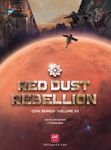
It's ad break time. First, I'm going to be a little selfish and remind you all that Queen of Spies, a solo game I designed with David Thompson, is currently live on Gamefound. It is about running a spy ring in World War I, Belgium, and I am very proud of it. I am also proud to announce the Beyond Solitire podcast is sponsored by Central Michigan University's Center for Learning through games and simulations. Right now, they have a fun new project on the way. The Cracked Mirror, a downloadable expansion for 500-year-old vampire, turns the game into an episttolary game for one to two players. The expansion will be available for free in 2026, but you can get it now for a small donation. And trust me, every donation helps CLGs as they continue their mission of producing peer-reviewed games in the academic space. It is pioneering work that no one else is doing yet. For now though, let's get on with the show. Hey gamers, this is Liz Davis for Beyond Solitire and I'm here for this finale of season 11 of the podcast um with a recent friend that I have now made Adam Blinkinst. He's a developer at GMT uh and he's notably the developer of Red Dust Rebellion and the nonGMT game Shinjjuku. Uh we will also discuss his own design work uh later in this episode. uh especially Echo from the Dark. How you doing today, Adam?
Uh pretty good. It's uh it's nice and early where I am, but I've had coffee and I've done some done some work already, so feeling feeling ready to go.
An early morning, man. I appreciate that. Um uh so you and I met at SD His and I never met you before and I just really thought playing games with you was fun. Um but, uh are you at a lot of of gaming conventions just to more more and more these days. I I go to a lot of small conventions up in the Pacific Northwest where I am. Uh I actually started going to role playing game conventions pre- pandemic. Uh and that's where I met a lot of gaming people and got had a good time out here. But um these days I'm going because I want to demo to people who haven't seen the game yet. And so it's like finding finding groups where it's it's a reasonable place to go is is tricky. Um, but yeah, travel is travel is just a whole situation sometimes. So, but I mean I also saw you at Circle DC, but we didn't get to actually meet out there because I was busy. Um,
yeah, you know. Yeah, trying to trying to go to more conventions because it's a fun time.
Well, definitely go to Circle DC again because that's that's my favorite actually.
Yeah, it's amazing.
Um, so what I want to talk about this episode is first your life as a developer and then I want to connect that to your life as a designer. I always think it's very interesting like I feel like I kind of do both now too and it feels really different to me to do one kind of work over the other um even though it's still tinkering with games. Uh so your your life as a developer how did that begin? So, uh, about 15 years ago, um, I started working on games at in kind of a kind of a a small group that we that we formed at work. And so at lunchtime or after work, we would be playing stuff and making stuff. um and getting a lot of practice seeing what plays and seeing what our tastes are and seeing how you can make things work and that kind of stuff. And I said, you know, we we should start publishing stuff. We should start doing some things. Uh and I I know this company GMT that's really fun and I want to make some war games at some point. So maybe I'll try and find my way to to getting people at GMT to pay attention to me and then eventually I'll be able to make a game with them. Uh, and so in I think 2017 or 18, Jason Carr and I actually went to the to the Jason Carr like lead dev at at GMT. Uh, we went to the our weekend at the warehouse. Our first one was the same year in like 2017 or 18. Um, and at
around that time, uh, Bruce Mansfield was working on Gandhi and trying to figure out how to make his his solo bot work because we changed the bots from this big flowchart system to Bruce has a genius kind of card system that's a little bit less predictable, which is great. Um, and so I weasled my way into those discussions. uh and then worked with them to to help build a bit of software to kind of automate um tracking how you went through the bot so that we could say, "Oh yeah, this particular part of the card never got hit or these decisions never never were true or never were false." Um so we could optimize the card layout. I think there were a couple cards that got significantly changed because of that. So So I was like, "Oh, cool." You know, I've got my way in. Uh people are I know some people I know a person who's designed a thing. I know somebody who's developing things. Um, and then Voco put out a call for, hey, we're looking for developers for Red Dust Rebellion. And I was like, hey, that sounds that sounds cool. Uh, I've got some time. It's 2019. I've got a little bit of room in my in my work schedule. There's nothing else going on.
Uh, and I'd love to do some dev work because if I do some dev work, then Gene will know I do I actually finish things and then we can we can talk about stuff. I was like, that sounds great. uh how much time do you think this is going to take Voco? And he said, 'Oh, you know, couple months, maybe it'll be fine. Uh, no big deal. I have that saved in my in my design groups Discord as a as a kind of a mento mory or reminder that uh that it's hard to predict things, especially the future. Um, and then immediately after the pandemic hit, immediately after the designer who's in who was in New Zealand, uh, had some had some I mean, everybody had some life troubles and so things were really tricky. Um, and so it took a little longer than than we thought it might take. Um, which was a which was a fun time. But at the end of that process, I was like, well, in the middle of that process, I was like, "Hey, I also have some games that I want to make." And they're like, "Well, why don't you just bring those games?" I was like, "Oh, I could have just done that at the first." And they're like, "Yeah, you could have just didn't have to do any of this other stuff. Like, just bring a game to play. We we'll check it out."
So, I I I think I spent uh about seven years longer than I had to waiting to get something printed. Uh but you know, you live and you learn, right?
That's fantastic. So, okay. I do want to I do want to press you about something based on our conversations though. So you mentioned that like you kind of got started looking at like the Gandhi solo bot. Uh I did not get the impression that you loved solo design. No, but I like I like thinking about systems. And one of the things that Bruce did with that system, like while we were at the thing at the warehouse, um I was also talk like he was talking to Jerry White about the graphic design of the system and how do you simplify and how how do we work the ergonomics so that if somebody's sitting here holding the cards, can they reasonably play and hold the cards? Like what are we doing with both hands? you know, all this kind of discussion which is so interesting. Um, and so I love thinking about how do all of these systems interact in a fun way. And from that angle, Solo is very interesting.
Like I've written I've written all sorts of pieces of software to run other games. Written, of course, a chessbot because everybody's got to write a chessbot. Uh, but I've also written like uh I I learned one language by by writing a solver for like mastermind. Um, and then now mastermind's no fun anymore. I mean, at the time it wasn't great fun, but now it's just completely no fun. So, I'm like, "Oh, you know, I know how to I know how to pro prove prove the solution for this at this point." Um, [snorts] but yeah, it's it's kind of a tricky spot. the uh my my therapist in like 2021 when I was in the middle of of fighting with the RDR solar system before Joe fortunately grabbed it from me and and made it actually good. Uh my therapist was like, you know, maybe you should think about why you don't like solo as a sitting with yourself kind of a thing. Uh because a lot of my a lot of my time with games, a lot of the fun part about games is just hanging out with other people and talking and and hosting, which is my favorite part of game time. So
that's that's pretty funny. So, you know, the alone together aspect, it just it it holds throughout all of solo gaming and design as well, I think.
Yeah. I mean, the the solo that I really tend to like um are are ones that are kind of generating interesting narratives, generating a story. Um I had a really good time with uh oh gosh, that that one uh square card map, seventh continent, eighth continent, somewhere.
Yeah. Yeah. Yeah. Seventh continent.
Um that's really cool. I I think uh uh oh gosh, there's there's a couple of things like that where just understanding the amount of stuff that somebody's poured into this idea is so interesting and understanding the system. But then even with Seventh Continent, I'm like, okay, I get the system. This thing is so massive. I don't want to play the game to see the massive thing. It's like it's like going into Elder Scrolls and turning on god mode. It's like I just want to see the content that somebody's put in here. I don't want to see the the card that says I die 50 times. Like that's not the part that's interesting to me. So
that's very fair.
Yeah, it gets it gets into a weird spot, but every so often I'll play, you know, like patience type card solitaire and uh I've got a way of playing a combat commander solitaire that I think is a good time. Um but yeah, things like that that that make it kind of tricky. Interesting. So, as a developer, what you know, you've been at it for a while now. What do you think makes for a good game developer versus a designer, which we'll talk about later.
Yeah, I feel like development's very much an editor kind of role. Um, and so at the end, it's not your material, you know?
Yeah. And so if if we get to the end of the development process and the designer goes, "Oh yeah, this is what I meant to make um then I think that that's that's the best kind of outcome." Um I am not making very much money on development work and so my incentives are very much aligned with the artist. I just want the art to be good at the end. Um there's certainly a piece here that is can we publish this thing at all? like it, you know, if somebody comes and they're like, I've got this piece of of uh this mechanic and it requires this custommade piece uh that's a huge tower that lights up uh or something, right? It's like, well, let's talk about let's talk about whether we could do this in a way that could actually be publishable. But in general with the uh is the audience going to like it? The nice thing about working with GMT is that P500 kind of covers a lot of that boat in in many cases, although the audience doesn't always doesn't always appear in the right place. So, I don't have to think about it too hard. But the I think the really tricky thing with development in that in that uh mindset is understanding what the designer actually wants. Uh because sometimes the designer is not totally sure, you know. Um and so there's a lot of fun conversations around, hey, it looks like you're doing this and it feels this way. Is that the experience that you're looking for? You know, when we were playing uh register rebellion, a lot of the conversation
that I was having with Jay was about how does the church work and how do we want the church to work? How should they feel? And uh Jay's big push was he wanted them to feel scary. He wanted them to feel like they could come out of nowhere. He wanted them to just feel like a big randomizer on the board. And I was like, well, you know, it didn't at that time in 2019, 2020. And so, uh, I kept pushing him until he came up with a card-based the hand of card system. Um, and then we were like, oh yeah, that's now it feels like that. Now all the play testers think it feels like that. So now we're in a reasonably good spot. But I had similar conversations with Gary about Shinjuku. um Shinjuku kind of a a route building uh pick up and deliver manala e game. It's really cool, much faster than RDR, which makes it much more fun to play test sometimes. Uh but with Gary, his play testers would often say that it was frustrating to not know where the customers were going to show up. Kind of a this game feels like I should be able to do a bit of planning.
Um, the experience is one where I'm playing off of somebody else's investments and they're playing off of mine and and we're all in a shared space. Um, and so the conversations that we would have is, well, do you want this to be a lighter game or a heavier game? Do you want people to be planning ahead five or six turns or do you want people to kind of play more tactically? Um, and that led to very different solutions because we wanted a bit more of a a thinky game. And if he had wanted it to be a lighter game, then we could have pushed it in that way.
Right.
Interesting. You know, this actually reminds me a lot of, you know, it is like editing of talking to people about their research in grad school because it was like, okay, I feel like you're trying to make this point, but like is that the point? And then how do we make the point shine?
Oh, yeah. I mean, the the great thing about war game development, too, is that you not only have the the author's idea, the designer's ideas, but we also have the historical ideas. And it's like, okay, I know a bit about Napoleonics. If somebody gave me a Napoleonics game to dev, which I saw a couple at Circle DC, um it's like, well, I don't think this is this is how this battle why this battle went this way. Can you tell me why you think it went this way or are you just throwing some dice on the map? Right. Um, with Red List Rebellion, we were I went through and I read a bunch of the of Mars related sci-fi. Jay is much more of a he was inspired a lot by um Babylon 5 and that kind of stuff. And so he had his sci-fi base and I wanted to make sure we were covered on Kim Stanley Robinson and that kind of thing.
Uh,
I just started Red Mars, so I'm very good. It's a great
But like the the thing that comes out of those books that hits you immediately is how dangerous things are.
And Jay already had that in his background, but I was like, how can we really emphasize some of this stuff? Um, which is super helpful from a war game design standpoint because especially for the games that GMT is trying to publish, uh, the designer is saying something and whether they're intending to say the thing they're saying or not hardly matters. They are definitely saying something. The this is why the the Russian, you know, advance failed or this is why this campaign went the way that it did. Um, and if the designer hasn't thought about that in a way that that makes it detailed enough to worry about, then then what are we even doing here, you know? Like, come on.
If I'm gonna sit here and play a game for four hours, then I I wanted to say something intentional.
So, um, here's a question. if you I mean obviously early on you knew that you wanted to talk to GMT and so you're going to do something that GMT pulled an all call out for but when you are now I'm assuming you're choosing your projects more now as a developer um what
I mean certainly choosing which ones I I'm not going to do
yes exactly
yeah that leads to the question of how do you decide if something is a match for you as a dev or not? I mean that's for GMT it's tricky because we have a couple of full-time devs like Joe who's astounding Joe Ders um and for the full-time devs uh the question for them is are you free for one and for two is this in your wheelhouse right um but for me who's not a full-time dev
the question is first are you free at all like that's that's that cuts a lot of projects out because I'm right now I'm working on stuff. So, uh, whether I have room or not is tricky. But even when I was a little bit more free, um, Jason and the team, they know what I'm interested in. And so, you know, they're not going to bring me a solitire only game about World War II. Like, that's not my space.
What? But whenever Napoleonic you
whenever Napoleonic designs show up, they they pull me into the conversation to at least look at, hey, did this does this work the way that it's supposed to work? Um, they think that they're going to do this campaign and they're going to apply it to this campaign. Does that make any sense? You know, did things change too much? That kind of stuff. Um, I'm also one of the bigger uh players of like here I stand in that system. And so when things that come up in that system show up for GMT, they tend to pull me in. Uh as you have experience here, does this still feel like it's in this system? Uh is it too far of a much of a stretch? That kind of thing. Um but like I'm not a Twilight Struggle person. I know enough about Twilight Struggle to be able to play it, but I'm not great at it. Jason's the Twilight Struggle person, so he tends to just take those.
Um, but yeah, it's it's kind of an interesting spot because there are certainly designers I've met where any project they'd work on, I' I'd love to be involved in any way I like if John Butterfield is working on a project, I would love to help in any way I can, right? Or Jeremy White, if he's he's working on a thing, I definitely want to see it. I don't know if I can help because Jerry's kind of got it all covered in many cases, but uh but yeah, there's there's certainly designers where it wouldn't matter what topic it was. Um but in general, it's if I don't have a lot of experience with a subject, uh it's a lot trickier to say, "This person's saying this, do I need to go read for two years to really understand their thesis statement or not?" Um, yeah, that's that gets that it's complicated.
Yeah, the reading part is fun for games that I'm actively designing myself. But yeah, um, so you also, you know, one of the things that we emphasized, right, is that you worked on Shinjjuku, the non GMT game, like you know, you contain multitudes. You you like a variety of games and topics. So, um, when it comes, you know, you mentioned, you know, you prefer like a Napoleonics game among historical games, but when something is not historical, how do you anchor to feel like you have something to say about what the designer is trying to say?
Yeah, I think I think a big piece here is that you don't always have to be modeling a thing necessarily. Um, I've got a trick-taking game that I have been working on forever. Uh, that is really looking into how do we make a partnership trick- taking game really care about the partnerships uh, and make it so that you feel like the team is is the number one thing and that's the primary experience, right? Um, I'm a musician as we talked about before the cast and a lot of the music that I make is what is the emotion that I want to to grab? And sometimes the emotion is just make you want to dance like that's the only emotion, but sometimes it's chill and sometimes it's sad and all that kind of stuff. Um, and so I don't think you you necessarily have to be modeling a a real thing to have something that you're trying to say or have an experience that you're trying to build. Um, there's also just the the kind of more common hobby game uh goal of I have a really interesting puzzle and I want to present that to the players in a way that's going to be fun to interact with. Um, the the terrible word fun, right? uh and and looking at games through that kind of lens of can people interact with this for a long enough time that it's that it feels like it's worth it uh is always a useful lens as a designer developer.
Yeah. But fun, nobody has fun anymore. No, I'm kidding. Uh why did you say it's a dreaded word? I'm I'm actually I love talking about this whenever it comes up, but this sounds like a different angle than usual. So, I have a I have a podcast that uh Sage Lator uh one of the designers of Dungeon World and I did for for a year or two before he had kids and everybody got busy. Um and we used to talk about role playing games and role playing game design and into war game design because war games are in my opinion a huge old section of of role playing games in a way. Um, but something that came up a lot was people that make role playing games always have an intro that's what is a role playing game? And it just annoyed us so much because it's like in a war game or or a or a Euro game. Nobody starts the the thing by saying, "Oh, what is a game?
Let's define our subjects before before we dis
Yeah. Although, if you want to talk about what is a war game, get ready for an explosion."
Oh, it's a nightmare. But like the over over that time, I think one of the things that came out of it that that we could generally agree with is that you can look at all sorts of things in terms of in the through the lens of this is a if we look at this as a game, what does that say about this thing? If we look at this as a story, if we look at this as a piece of art, we look at this as a model of history, you know, and and the same kind of thing could be looked at in through all of these different lenses and you can get interesting different things about out of them. So, when you talk about when we talk about fun, well, if we look at it as, oh, is this a fun thing? Well, there's lots of games that aren't fun. I mean, you know, uh, Dan, uh, Space Biff talks about this much better than I do about types of fun.
Um, and so definitely go check that kind of stuff out, right? looking at something through that lens is not often helpful in wargaming in particular and often in in role playing games either especially modern indie role playing games because the experience that somebody's trying to get out of it like fun tends to mean that you're making a comedy I guess uh where everything turns out okay at the end and we're all happy about it and a lot of good war games that I like are tragedies and and sometimes a tragedy is amazing amazing, but it's not happy, right? It's not fun in a normal fun way.
Yeah, it's kind of a complicated thing to talk about because it doesn't it just doesn't mean very much. It's like saying, "Oh, yeah, this this is nice." Well, you know, that's the least actionable comment you can make. But if I'm playing here I Stand as the Habsburgs for six hours and I'm just slowly melting into the earth, uh, that's fine. It's It's not a great time. It's kind of a tragedy, but it's it's a fun time. Yeah. It's just kind of a weird a weird way to look at games.
All right. So, speaking of, you know, nice as a uh kind of a a useless comment, how do you give comments on games or how do you like to deliver them? Have you developed some sort of tricks or patterns that make the information clearer but also easier for someone whose baby that is to digest? I think the one of the biggest things especially you know designer developer combo right um as designers when you play with people especially like so many people have some kind of game design background that you're going to play with or they want to design or they feel like they know what they can do to design. A lot of the comments that are easy to get are, "Oh, you know, you should do this. You should change this deck to do this thing or you should add this die mechanic or something like that." And those I find are the least useful comments. And so I try not to give them as much as possible.
Sometimes it's just so tempting to be like, "Oh, I know what would solve this right here. I've only seen your game for five minutes, but I'm sure that this would be a great, you know, it's it's gota you got to just hold your tongue and it's so difficult. Um, but so I find that the more helpful comments tend to be um this is the feeling that I'm getting. Is that what you're intending? Um, this is spend this is using up all of my brain space. Is this the thing that you want to focus on? uh or this thing is so huge I don't know how to even get started. Is that okay? Is that the experience that you want? Because sometimes sometimes you want to just make everybody like Mr. President is make somebody understand how complicated the system is. That's almost the whole point of of that kind of thing. So it's it's not a bad thing.
You know, a lot of game design advice I see um is, oh, you should always make it simpler. you should always reduce and it's like well it really kind of depends. So the the comments that I like to give are much more on the what kinds of things are you really looking for? Um, Gary has a joke because he goes to way more conventions and talks to designers than I do. And he has a joke that he's written down my list of comments that I tend to give our designs in our local group and he'll just read them to the designers that he talks to, which is like, is this one game or should it really be two games, right? Are you're you're revealing new information right at the beginning of somebody's decision. Do you want to do that or could it wait until after somebody's decision? Where is this randomness really going to be? Why are you using dice this way? Those kinds of things, right? Um because it depends on really how experienced a designer is.
But if you're working with a new designer,
sometimes they just don't understand all of the tools that are available, right? Um, yeah, if if you've grown up and you've only seen a certain type of game, then knowing that you could use cards for this instead of dice or for that matter, dice instead of cards or drawing from a bag or whatever, like there's a lot of tools that are available and if I do give mechanical comments, it tends to be, hey, here's a tool and I think you should consider how this might be useful. Um, but uh, experienced designers don't even need that kind of thing. It's just, oh yeah, I played this for three hours and and these two spots felt weird. Is that the intent or is or is that not the intent? That's the best kind of comment. And when a designer is great, like when I was working with with uh Gary in particular, we had been working for 15 years together and so I can just be like, "Oh, you know, this part here, it's kind of funky. You should think about that." And then the next day he'd come up with something that'd be great. So that's the best kind of development work. It's like super light touch.
That's awesome.
All right. So, kind of talking about your own design work. So, obviously I looked up you on board game key before.
I have a bunch of things on BG. Yeah.
Yeah. Well, you know, you you like went have gone through this like kind of cool phase of doing a lot of like little print and play kind of self-published, web published games. And I would like you to talk about those like you know what what drives that urge to create and to post and you know how how do you think that your your early designs have like kind of show some development in you up to now?
Sure. I mean so one of the things that we did in our group is uh we had like a every every week or every two weeks there was a design challenge. So, I wrote like a random challenge uh roller or whatever and then we sent it out by email and it's like okay at the next meetup bring a prototype that does this and we're going to play them. Um and so it's like rapid iteration on I think that this is going to work. Let's give it a shot. And you learn humility very quickly as none of the ideas that you're like oh yeah this is going to be amazing. uh a bunch of them don't work and it's like oh I I understand the limits of my imagination much better and so you know a ton of those ideas ended up the designs ended up on uh G+ which is gone now or uh on Blogger and I think I deleted my blogger at one point so I had like hundreds because we you know we were doing this for a decade and every two weeks.
Yeah. Um, so just loads of designs. But then I started working on and and a lot of those are uh how do we do this in a way that it's easy to prototype was those ideas and how do we do this in a way that you could play in a half an hour to an hour so that we could play it at lunch or in a little break at the end of the workday. So I have loads of experience building those kinds of games. Uh, and I feel pretty good about my ability to like throw down a 45 minute light card game with a couple of cubes. Um, and so one of the fun things about that kind of design is that there's lots of tools that people have made that are just here's a system, play around in this system. Right? Um, so I love to play with normal cards. Uh most of the decks of cards, playing cards that I have at home have some kind of writing around the outside as I've used them for prototyping. Uh and I always am looking for new decks of cards to do that with. Um and then the deck tet also came up as a this is a really cool thing that is not exactly a deck of cards and it's not exactly a deck of tarot cards.
Um and uh the the guy behind it also printed out like chips that you can get. So, there's additional components on top and I've got cubes and I've got poker chips lying around. So, if you want to make a game in in a few seconds, it's like, oh, throw all this stuff on the table, we can make a game. So, I've got a bunch of That's when I started uh putting things on BG as a well, the deck games, they're all on BG. And so if I want to make one of those and allow other people to play it because that's my favorite thing is making something and seeing people enjoy hopefully enjoy uh then you know let's let's play around with these challenges and upload things that that worked when we brought them to the prototype night. Um one of the rules in the game design group is that if you haven't played it then it doesn't exist.
So you're you're not allowed to talk about it until there's a prototype until you played it. It's so easy to sit there in uh oh, I have this amazing idea and we're just gonna sit here building it forever, right?
Yeah.
So, I have a couple of dect tech games. There was a uh for a while there was like Hanamakoji came out and then there was a bunch of eyesplit you choose thinking and so I was like, "Oh, I bet you you could do a really cool eyesplit you choose with Dectet." And that's really the game is that wouldn't that work? Uh and so we built that. Um, and then I love investment games and so how do you build an investment game with just a deck of cards is a fun little challenge. Um, there's a couple of other things that I built in there. And then, uh, there's, you know, the interesting thing about rolling rights being that, well, it's just a piece of paper and a couple of dice. So, that's really easy to prototype. So, super fun. So, I made a bunch of those and a couple of them ended up showing up on BG because I was like, "Oh, you know, I want a place to put them." And that's great. Um, and then there's one on there that is the the forerunner to what became Echo, uh, which is I think it's called Rise and Fall of of Galactic Empires or something on BG. Um,
yes.
Yeah. that the the joke in the local group is that I've made 15 versions of that game and all of them are fun and then I throw them away. Uh so uh getting getting Echo on P500 is very much a forcing function to make one of them get printed. So uh we'll see how that goes and maybe someday I'll I'll Martin Wallace it and come back out and print out some old version of it at some point.
All right, so that brings us to Echo from the Dark, which is what I kind of want to spend the back half of this conversation talking about. So, um, yeah. So, now I'm just curious, how did you choose which version of this game would become Echo from the Dark? Like, how do you choose a favorite among lots of odd little children?
I mean, the the problem with this is a problem with art, I find, uh, not to get into games or art question, um, but I'm a musician and I do some other pieces of art as well. Um, and so I I I think about it through that lens a lot. And there is there is just no perfect piece of art, right? Um, and one of the problems with creation is that as you are climbing up that hill towards the point where you're like, "Oh, yeah. This is this is the best thing." You're moving away from other places that are also great things. And as I'm climbing up the hill, one of the things that I love about games is learning new systems, is understanding new ideas, is seeing people see new things. And so the more climbing you're doing, uh, the more that you're like, "Oh, I understand this at this point." And so the less of that kind of fun I get to have playing in the system. And so as I'm working on uh Red Dead Rebellion, there are a lot of things that Reddist Rebellion made me think about old versions of this game. Uh one of the big ones is that I had light ideas about what Insurgency would look like in in these things, but my first versions of this were in 2010, which is even before uh before Andy and Abyss came out. And so I didn't have any good tools for
working on it and I'm not Vulco so I'm not even thinking about it uh as a as a way of talking about history. Um and so working on register rebellion I go well if I applied these tools to that idea where would that go? Um register rebellion does a thing with population that most coin games don't. Uh, I think uh Brian Tra's Colonial Twilight about Algeria has population that moves, but Red Dust does crazy amounts of population manipulation. And I was like, well, if this is something that you could reasonably do in this system, maybe maybe that's a thing I could yank in. Uh, because that kind of a growth idea is necessary for an epic story. And so I'd always been done it been doing it by uh placing cards and laying cubes out and that kind of thing. uh in prior versions, but one of the bigger reasons is this is a big game about sci-fi that I love and it's in an established series. And like I said, I was going to I want to work on something for GMT, but all of my games are new games. And so when I talk to people there, they're like, "Well, it's it's easier to print something if it's an established series because, you know, nobody knows who I am. Uh, nobody cares about what I say about Napoleonics at that point. But if I make a coin game about sci-fi, then that's already gonna get people who are interested in coin. And that's a that's a pretty large audience. So I was like,
well, I'll throw Ozimandius, which is my internal working title for that game. I'll throw Ozimandius into the coin system and we'll see what comes out. See if see if it works at all. Um, so we messed around with it for about a year at the tail end of the RDR development and we were like, "Yeah, this this could work. This could work really well actually." Um, and because it's in an established series, I was like, "Oh, we'll start we'll start here." And they're like, "Okay, we can do that. It's reasonable." So whether it's my favorite version of the system, I don't know if it's my favorite version. Uh, but I think it's the most printable version.
Fair enough. All right. We're gonna come back to the system in a second, but what are you trying to say with Echo for the Dark? So, somebody's gonna have to develop you and try to get your voice out.
Oh, yeah. Joe's developing me. He's great. Um, that's the the conversations that I tend to have with Joe are this thing is inspired by classic sci-fi, mostly classic sci-fi. And then, you know, there's uh uh what is it? Arcadi Martin has has printed some stuff recently and uh oh who's the ancillary sword author I can't remember um but there's some really modern statements on empire in sci-fi that are cool in this space too but the idea of the 4x sci-fi game has is is just a fun kind of space to play in in general but all of those games tend to use the precoin concept of area control and and and movement and that kind of stuff.
And so it started to bother me after I played Andy and Abyss and Cuba Libre and and the Distant Plane. It was like we'd go back and play uh Eclipse or Twilight Imperium and it's like, well, I I took your planet, but and now all now everything's gone. Now you can't do anything. There aren't any rebels here. There's nobody fighting back. There's no complaints. It's this is a six resource planet and now they're just all my resources. Like that's just sort of started to become really annoying and kind of wild to think about that this does not affect anything, you know.
No, it was just only resources there. That's the
Yeah, it's it's weird, right? Um and I mean the even even in 2010, the goal of this game was to show to do rise and fall. uh there needed to be a way for you to be an empire at one point and then not be an empire. Uh and so just having the words to say that in a game, that was what all of these different versions were is like where is the right words to be able to say that you were nothing and now you're something and now you're nothing again. Um and so that's a huge piece of this. Uh, another huge piece of this, all of the player powers are are humans because from my perspective, there's enough difference in humanity that you don't need to have an alien to do some of the sci-fi stuff that I think is interesting. Um, and so how do we show coming off of something like a distant plane where you understand or I I feel like I understand the goals so well. Uh, and even just a small change in objective dramatically changes how you approach the game and the play and the and turn by turn. Um, and you can create such conflict by just slightly misaligning two people's goals.
Um, and that's something that the system does really well and leaning into that kind of thing with this and saying you could take any groups of people and if their goals are slightly misaligned, you're going to have conflict. And that's why I wanted to have a bunch of different factions. It's like, well, we're not talking about a specific piece of sci-fi. We're talking about let's talk about humanity in general and just grab a little slice. There's going to be a problem. And it doesn't matter what slice you have. So that's the thing I hope I hope I hope I'm saying in in this system. So
excellent. Um I'm sure you talked about it some elsewhere, but we will talk about it. So this is going to be in a regular conflict series.
Yes.
So you know Reddest Rebellion is coin technically. Um, did uh Echo from the Dark Start coin and then just slide into regular conflicts or did you always want to go ICS?
No, Echo Echo from the Dark started before we had we had conceived of IC.
Yeah. No, that's true. Yeah. Yeah. you know, uh, the one of the things about series names. So, this is this is me and not GMT because I'm not the person who makes the GMT decisions in this space, but this is my understanding of series names is that a huge piece of what you put on the box and in the marketing material is to make sure that the audience that wants the game finds it and the audience that's not interested stays out, right? you don't want everybody to buy the thing because that just means you're going to have a bunch of people who aren't going to like it and that's that's not a place you want to be, you know. Um, and so with with Red Dist Rebellion, we had a bunch of folks find it and say, "Oh, this is sci-fi, therefore it's going to be simpler because it's not tethered to history, so it doesn't have to be complicated." It's like, well, Jay wanted to make a complicated game.
that's that we did what we wanted to do, but we didn't we didn't tell people well enough in my opinion that this is what this thing is going to be. And so one of the things that we thought was that the coin branding is this is about the idea of insurgency and counterinsurgency. And that's that's how I always thought about it. But we certainly have a large customer base who doesn't think about it that way. who thinks about if you're doing a coin game, it should be modern. It should be historical. It should be it should look like the kind of counterinsurgency that Andy and Abyss is or the kind of counterinsurgency that Distant Plane is. Um, and so when we go into like Falling Sky or Pen Dragon, like the ancient Roman stuff or if we go into the the sci-fi stuff, suddenly that especially to this market segment doesn't feel like coin. And so putting those that label on the box confuses that group of people especially. It also makes it really hard to talk about. Um, when when we talk about coin to game designers, it's like, oh, that means this kind of system. But the further and further you move from that system, the less that coin even really means, right? So then Fred's like, "Hey, I've got this Robin Hood game." And we're like, "Oh, I mean, inspired by coin, I guess." To game designers, it's like, "This is totally coin." But to normal people,
you know, from a distance, maybe. Um, it it's like it's using coin like like saying it's a deck builder, right?
Yeah.
Yeah. All of these deck builders have something in common, but that's not a it's not always the most useful way to talk about them, and you certainly aren't going to make it a brand on the box. It's just too generic. So for ICS, we have a a a few goals I think around can we widen things a little bit more for one and for two can we do a bit more with the other parts of the marketing material to get people to understand where these things are positioned. Right? So we have Vigara which is simpler about an interesting topic and with a really interesting three-player dynamic. And then we go into Robin Hood which is obviously fictional. Well partially fictional. We'll you know that's that's a Fred designer note question I guess. we go into Cross Bronx Expressway, which is I think when when we talk about MBSP's work, trying to model stuff that is not a his is not a um traditionally war game topic.
Yeah.
Trying to model that kind of stuff with war game dynamics is such an interesting way to go. But I think it those things kind of show everybody hopefully what the series is intended to to say. it's still a very wide range of stuff. Um, which makes it really tricky for me. I was thinking immediately as as coin and I think if we were still in 2019 2020, it might have been a coin. Um, but as soon as we decided, oh yeah, we can do ICS and IC means we can go further from the formula, a lot of the bigger changes to the system came around then.
Interesting. Um, so actually one thing I do want to talk about is, you know, you mentioned for for looking at writers rebellion that you were interested in making sure that certain sci-fi narratives were, you know, kind of bled into that design. You talked about um, this one, Echo for the Dark, as like being based on like a classic sci-fi. I'm not a sci-fi expert. Uh, I actually used to think I hated sci-fi until Cole made me read Aurora and I was like,
Nice. Yeah. Yeah. So, when you're talking about these kind of different strains of sci-fi and kind of like underpinnings, it sounds kind of like almost like doing a lit review, right, for a historical game. So, how does that look to you and like literarily like what do you understand as like the foundation for your game?
Well, I mean, let's start there then. Isaac Aszimov's foundation [clears throat] you know mid 20th century uh he was inspired by the rise the decline and fall of the Roman Empire like that that series um right full historical topic and he goes can we tell a story about that and then how do we pull that further into what other weird things could they have done could they have preserved anything could they have solved this problem. Um, and and [sighs and gasps] I have I have a bunch of lip review that I could go send you on about kind of the history and development of science fiction as a genre down to, you know, stuff like Frankenstein and whatever.
I might actually make you do that after this, but
I've got a whole doc. I'll send it to you. Um but like the the genre kind of there's a piece of it that is a little postc colonial where um we say oh well in the middle of colonial I guess where we say that there is something just over that hill and what crazy thing could it possibly be is almost the beginning of of sci-fi as a classic genre is just what's around the corner. you know, we found these people and they are completely different to anything we've ever seen before, right? Um, which is looking back horrendous, but the the the foundation of the genre is this idea of how might things be different and how can we explore that space? And as you go forward through World War II and and and post World War II era, sci-fi switches from this idea of what new thing might be around the corner as a kind of the primary motivator of the genre into what is empire and what is colonialism and what does this mean uh both forwards and backwards. like you have uh even H Wells's War of the Worlds is kind of a a reverse colonialism story as what does this look like from the people that are being taken, right? Um so we get to Foundation which is the empire story in
my opinion. Uh and Azimov tells like it doesn't it doesn't read very well now like Azimov writes like a like a 50s news reporter. Um, and so it's got that kind of a a feel to it. I still like it as a story, but it I wouldn't recommend it necessarily. Um, but the kind of ideas in there are these groups of people and how do they react to each other and how do they how do they pull the levers on all of these interactions from kind of a distant thing. And everything really a ton of modern empire sci-fi is either a reaction to Foundation or uh a Foundation seen through a slightly different lens or Foundation just taken and serial numbers filed off type stuff, right?
So it was foundational.
Yeah. Yeah. In a very in a in a legitimate way. Um so so I read I read through those books every so often. Um, Dune is is from the 50s and I read through those books all the time. I'm reading through them right now. Um, and Dune is Frank Herbert thinking about modern conflicts, especially for uh resources for important resources. and then being inspired by some ecological work in Oregon uh in the Pacific Northwest around some some beaches that they were going to try and lock down uh because the the sand was taking over uh per an area in the Pacific Northwest and he just thought that was so cool. Um so those those concepts stretched out into well who's going to inhabit this world? Why are they fighting over this thing? What are they you know what is this gonna turn into?
So, you've got a lot of sci-fi that's looking at really historically motivated topics, if not current world topics, and then how do we talk about this thing in a way that doesn't make people immediately frustrated or upset because we're, you know, saying the Catholics are bad or something, right? If you put all of that stuff into a slightly different dressing, you can talk about it, or at least sci-fi authors can talk about it reasonably well
a little bit more pointedly, I guess, than you can
in in a paper that you want more people to read. Like, yeah,
certainly more people have have read Dune than have thought seriously about the oil war in the Middle East and how does that affect all of the people living there, you know? Um, and so I feel find that that my favorite sci-fi is in that kind of space. That's certainly not all sci-fi. There's a lot of sci-fi that's just let's shoot things with lasers and it's kind of a cool little uh, you know, cool little adventure story, but the stuff that I t like tends to be a historic history with the serial numbers filed off and expanded.
Yeah. No, that makes a lot of sense actually. Um, it's it's funny that you say like sci-fi is a kind of a way to talk about issues because I think that if you're distant from it, history does it too. Like it's easier to talk about, oh wow, what happens to a republic when people break the rules and they don't respect the constitution anymore. Like what could happen?
Yeah. I mean 100%. Like for we can you can absolutely today you could write a fall of Rome story. Yeah.
And color it heavily, right? Um, and so there's there's a world where Ekko is just a Rome story. Um, but one of the problems with with using history for that kind of thing is I can only talk about I really should only be talking about that historical period and I can color it and say, what does this mean for today? But I can't be like, oh, and there's also this island of these people who are doing these things. It's like, well, you know, now now we're moving into into strange places. Um but and so the thing about having any groups of people are going to cause conflict that's that's much harder to do from a historical basis for sure.
Yeah. So in addition sort of to any any groups can have conflict between themselves. What are you like putting down that you want people who play your game to pick up?
It feels like cheating um to just tell people. That's that's that's terrible.
See that's a good answer in itself. That's interesting. I mean, there's there's stuff that I really appreciate about playing this with War Gamers and with non-war gamers about how they role play the given factions. Um,
I I hope that I can make like there's there's a there's a common thing in storytelling recently where everybody's the bad guy and it's like we're all gray areas and nobody's really in the right and isn't everything just terrible, right? Um, and there's a common thing in really classic sci-fi where everybody's basically the good guy except for one obviously bad guy. Um, and that's that doesn't feel right either. So, I'm hoping to to get people into a situation where you could understand why this faction might want these things
and why they might be willing to do these things in order to get there. like the the ideal world of of playing a distant plane to me is not that you say, "Oh, yeah, the Taliban are great people." But you can understand why they might be pushed in this direction.
Um, and it's like, "Oh, I understand, but I disagree is fine." Or, "I understand, but it sucks is also fine." Um, and so trying to figure out how to do that with especially I have a a faction that's kind of uh accelerationist apocalyptic, like let's just burn it all down and then we'll rebuild something better afterwards.
And tuning that faction so the role playing feels like that and doesn't just feel like, hey, we're the evil cultists or whatever is really tricky. So hopefully I'll get there, but we'll see. It's fun. It's it's a good time either way. Um, but but if it just says we're the we're the bad guys, then that's uh it will be sad for me, I guess.
Yeah. I mean, some people just want to be bad, but you know, we like we like a little bad nuance in this culture, right?
Yeah. I I hope to give people room to to play either way, for sure. Like the there's there's an Empire faction that starts in control of like everything and it's so fun watching people play that thing. I've had people play the empire in a way that they're like, "Oh, you know, we're just trying to make sure that everything's okay and oh yeah, absolutely. You can bring your people in here and don't worry, you know, I don't mind if you have alignment. I'm just trying to tax." And those kind of nice empire players, right? And I've also had Empire players, the the Empire always goes last on the first turn for faction specific stuff and the first round ends and the Empire's about to go and they go, "So, why don't I just shoot everybody?" And it's like, "Well, you can you can do that. That's it's not against the rules. You know, talk to your fellow players about what that will do for the rest of your game." Uh, but it's up to you.
Yeah. All right. So, I've had you just about an hour, so even though we could keep going, I'm just going to give you some softy questions, but you're getting extra softy question because you're also a reader. So, um, you know, you mentioned that you wouldn't necessarily recommend foundation. What is a sci-fi book that you would recommend that people should go read if sort of like a just like a starter one?
I mean, the there's a couple of automatics and so we'll skip those. um you know, Dune Foundation, Left Hand of Darkness, that kind of stuff. Um if you're g if you want to read a modern piece of sci-fi, uh Ancillary Sword, I think is the one I would start with as a this is what sci-fi can be these days. Um there's uh I've had Memory of Empire recommended to me a couple of times and I need to go I need to go read it like really soon. Um, I can't directly recommend it because I haven't read it yet, but yeah, Ancillary Swords, the big one for me.
Nice. And then, what games have you been playing recently that you have enjoyed?
That's a great question. Um, I mean, I just played a bunch of Taylor Shu's games at uh at SD Histcon, but none of them were published, so I don't know if that's fair to talk about. Uh,
I think fair enough. I think he'd appreciate that. Yeah. I mean,
did you play the dexterity flicking game?
Oh my gosh. He's got a dexterity game that is magnets dexterity worker placement game because you got magnets in your workers.
And it is such a genius idea because I I love game designs where you can give just kind of a one-s sentence pitch and the players understand the whole game. It's so beautiful and it's really annoying. It's like we I've been playing a lot of the gang recently, which is poker cooperative.
And as soon as you see the components, it's like, "Oh, oh yeah, this is I I get it." You know, um it's just really painful as a designer to go, "Yeah, yeah, that that makes sense. I could have thought of that if I was only a little bit smarter." Um really painful. It's the holiday season, so we're playing lighter things these days. So, I I play a lot of cockroach poker uh when we go to families family nights because it's a similar kind of thing
and everybody can play it.
Um gosh, I feel like I should have a heavier game that I can talk about. I just got Armageddon War um which is not a new game, but uh it has a a revolving chip pull activation system and I I love the idea of chip pull as a way of of throwing in some fog of war and like communication randomness. Um, a Victory Lost is one of my favorite games of all time. And so I'm I'm gonna try and steal some things from that for a couple of designs that I have. But those are some of the the more recent stuff that I've been playing around.
Nice. And then, um, if people want to follow your work online and kind of see what you're up to, uh, where do you like to be found?
Where do I like to be found? Uh, in person.
I'm I'm not online very much. I'm on uh Blue Sky technically. I think it's blinks.io on Blue Sky. Um and that's also where I publish some of the simpler things that I make. Uh but I don't I'm not I'm not very public about things. So, uh probably if you if you want to follow me on there and then bother me, then then I'll respond to whatever. I'm also on the coin players club as blinks um so that I could a follow the redist rebellion uh development and post-development work but also talk about echko when somebody asks uh because I'm just not good at doing the marketing.
Well, I'm looking forward to Echo. Um so we'll I'll make sure to post when it's out. Uh so [gasps]
I um if uh if people listening don't know, I am everywhere as Beyond Solitire. So you can find me, although you won't find the podcast for about a month and a half because it's this is the end of the season. I'm gonna go on break for a little bit uh as I always do between podcast seasons. Uh but Adam, thank you so much for coming on and talking to me for a bit and just making this like a nice chill end to season 11.
Yeah, thanks for having me. It was a good time.
All right, everybody out there, please like, subscribe, comment, ask questions, and most of all, happy gaming.