5 Very Different Board Games Ranked & Reviewed

Transcript
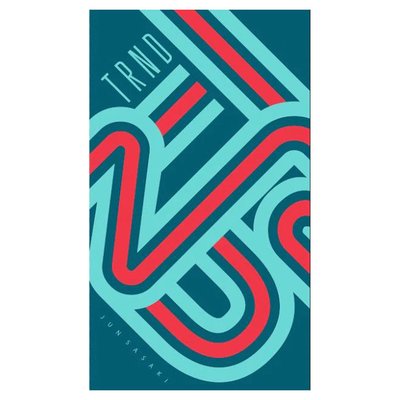
Hey everybody. Today we are doing a five game ranking video. This is where I rank and review five board games that I have played recently in order of preference. And um you know, as per usual, we have a huge variety of games here uh to talk about. Despite there only being five, they could not be uh more different. So let's start at number five with a game I've been wanting to play for quite some time. Uh this is Botnik. So, this is a a two-player only tile placement game where you are building your own little kind of series of pipes, and you're going to do that through this super cool drafting system. Um, which I think is um a really novel idea. I'd love to see the system used in future games. And in fact, I thought it was a a super cool idea, but the rest of the game I wasn't so infatuated with. So, let's talk about that drafting system first. So whenever you take a new tile uh you can either place it in the center of these um one of these five columns on the se separate board or you can place it on your side of those columns. Now when you place it on your side at least one of the features on those tiles need to match the one in the center. However, when you place one in the center and neither of those features match the one on your side or your opponent's side on that particular column, then those tiles will be released ready to be applied to your personal player area. Now, this creates some really cool timing issues where, you know, you might have the exact tile that you want, but you're not ready for
it yet. You want to do a few things first. You can hope that it will just sit there and then when you're ready for it, you can release that tile. But, of course, your opponent is playing on the same board. They might want to release it, not only for their benefit to get their tile on their side, but they might know you don't quite want that tile yet and force you to take it and place it immediately. Love that part of the game. If the rest of the game was that interesting, then this would be, you know, one or two um on this particular list. Now, unfortunately, the tile placement part of the game was pretty boring. It didn't have anything interesting or unique going on about it. you're simply trying to um um put a bunch of the same colored tiles in groups and score points accordingly. You know, the bigger the groups, the more points, but also you have flowers on some of these tiles. And if you manage to connect them to, I think, a tile of the same color, then you'll get a point for each flower on that particular tile as well. Now, for me, that's that's all you that's the only two scoring um conditions. I would have loved to have seen something more intricate, something more, you know, interesting based on how you are building your network of these tiles and these pipes and tubes. You know, it looks great and you think there's something cool going on here, but when you actually know how it scores, it's just not that. You know, there's just not enough going on. And you know what? I'm sure even with these components in the box, there could be some tweak to make this game really fantastic. I don't know what that is, but I know I just know there's a game there to do that. This was too muted. it was too simplistic to the point where it
was boring. Um, but again, that drafting mechanism itself was so fascinating and I don't think another game has done that before. So, sadly for those reasons, I can't recommend it, but by god was this so close. Um, so that is Botnik at number five. At number four, I have Tend. Now, Tend seems to be a bit of a critical darling, so I might be in the minority with my take on the game here. And that being said, most of this is not actually a critique on the game itself. I think it does what it does very well. It's just more of a personal preference. This is one of those highly involved, highly expansive roll and right style games or or flipping right style games in this example. As each round, you're going to be selecting actions based on this card display. Um, and you are going to collect resources, convert those resources into upgrades, or you know, planting things and generating points in different ways. Lots of knock-on effects, combos and the like, which what you what you would expect with a game like this. But this one does take it, you know, one or two steps beyond my not comfort level, but my preference level.
You know, I have a history of these more involved broad and right games. You know, the more advanced ones not jelling with my personal tastes. But if you do like games like say Hrien's Wall, um you like games like you know Twilight Inscription like that, then this is going to be right up your alley because it's certainly um certainly has a lot to dip into and a lot you have to cover in quite a short amount of time. You know, maybe 90-minute game here, 60 to 90 minutes, but you only get like 12 rounds in this game to achieve. Achieving a lot is quite difficult, and you might want to turn your vision in one or two of these moving parts on the game. But I'll go through how the game actually works. So each round you're going to select two of these actions that are available. Um these actions will be very simple things such as like fertilizing the soil, planting new vegetables, um you mining, um you know, cutting down wood to get resources. I think this really cool scratch card system I should say. And whenever you get a resource, you need to decide what you want to do with that immediately. Um, you can either of course put it towards one of these contracts to get upgrades or you know get better better fishing or better a better axe and so on to make you more efficient in the future or you could even give them to your opponent which will give you a benefit at the end of the game in terms of points but could give your opponent a short-term boost.
Um, or you can attribute that resource into a certain shape which will go into your like satchel. I can't quite remember the the terminology which you are trying to kind of build patterns and things based on these end of round objectives. So you you got a lot you need to do here not only tactically but certainly strategically based on these short and medium and even long-term goals based on these again objective cards. Now if you're not a big fan of these I call them like Excel sheet style games um this one is probably the purest example of a game like that. There's tons of icons that are very small and cross referencing things is not always the easiest or the most um intuitive I should say because sometimes these symbols only appear once or twice on the entire you know couple of sheets that you have and you might think well I've unlocked this but I'm not even sure why I want this because I'm not sure what it goes towards. Maybe it goes towards this over here but you've completely ignored the rest of it. So you just end up converting them into points by putting them into your little satchel as I mentioned. So, it feels like you need to be quite deliberate from the get-go in what you want to do. Meaning that the more you play this, the probably more you're going to get from it and the more you can start to again hone your focus from the get-go rather than just meandering, which is kind of my style of gameplay. I tend to just meander and do what works at the time, which doesn't really gel with a game like this so well because you end up just coming ac across resources. Well, I don't know what to do with it. You can add it. Why not? Let's hope it works out. That's how I feel with games like I just feel like a
little bit not intimidated but a little bit overwhelmed with my um amount of options that I could um could go for. And by the time I I've honed in, it's already around 9 or 10 and I've only got a little bit of the game to go and I've not left myself enough time to achieve anything meaningful. Yeah, that's on me. And as I said, you know, my brother's a big fan of games like this and he really enjoyed this. So, I think if you do like these styles of games and you like you know that going into it, I think you're going to get a lot from it. As I said, I know I'm in the minority. This is really highly reviewed. Again, it's although it's um it's busy, it's pretty clear what you know what you can do once you wrap your head around how that um you know, how the user interface is laid out. Um but I still found it quite daunting. I also thought a couple of the mechanisms were a little bit tacked on to add almost to bolt-on player interaction. As I mentioned, when you get resources, you can share them with your opponents. um you get points at the end of the game if you have done that more times than your neighbors. Um for me, I could have done without that. I don't think it really helped much at all. It just made another mechanism to something that didn't really need uh to be there. There's already enough uh to do. Um but all in all, I thought it was fine. Again, from an objective standpoint, it was it was decent. From a personal perspective, it's not something I really want to play much more. or I just feel like it's it's just not my jam. I think when I've I kind of pick on my rolling rights around that fleet the dice game level. Uh anything more than
that, I I seem to just want to play something a bit more maybe eurified, a more traditional style board game. But hey, it does what it does well. It stays in its lane. It certainly offers you what you want with those combos and things. Again, if you like games like this, I know you're going to uh to get on with Tend. Um, game length. I think the more you play this, the faster you're going to um you're going to go through it. We certainly started off slower and as the rounds progress, we were starting to smash through rounds a bit quicker as you start to again wrap your head around those moving parts. But all in all, again, objectively fine, um, decent even, just not quite my personal taste. Just too much going on. Too many pieces, components, boxes, grids, um, you know, charts and so on and all different places. just just quite daunting and quite overwhelming. Um on to number three then which is um completely different. This is Viking Seesaw. Um a lovely dexterity game as you can imagine from the from the name. It is based on the seessaw mechanism. In this one you are picking up these different weighted pieces um from your personal selection putting them on the seesaw obviously based on the the side that's been outweighed the side in the air. um getting them in there is difficult because there's not much space, but also you need to factor in the weight because if you tip those scales, make it go to the other side, then um I can't remember what the punishment is, but you have to like take one of these crates, I think, which is another piece you need to get
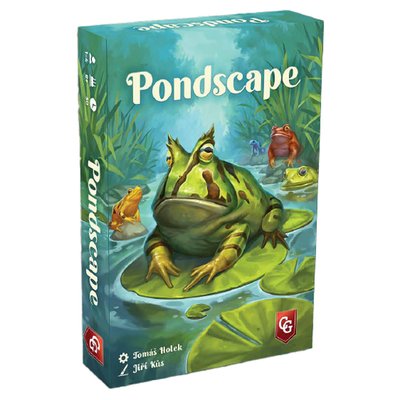
rid of. And of course, if you knock anything off the seesaw, then that's more pieces you're taking in, more penalties that you're taking into your fold. But uh really lovely um production, high quality piece of craftsmanship here. Um love all the weights of the different pieces and this is one of those games where you can sit around with your family, have a great time, turn your brain off and just have a laugh. So um as far as dexterity games go, for me this is top tier amongst the best of them. So um moving on then to a pure card game called Punscape. So, Pawnscape, um, designed by, I think it's Thomas Holl who did this one, massive success a couple of years ago with games like Seti, a game that I I like quite a lot. This one more of a a tableau builder as you are building up, I believe it's a a 5x3 grid of these frog cards. Um, and you're going to do that through this um pretty cool drafting system where you'll take a card from one of three. the card you take will move this other like little frog along. Um, which will relate to another moving part of the game. [snorts] And then of course you can add cards to your tableau. Each of these frogs will have its own scoring category. So one type of frog wants to be next to say three different types of frogs or this type of frog wants to be surrounded by water or this one wants to be touching these habitat cards or any kind of combo of that. Um, but the
scoring itself is unique to a lot of these other combo card tablet builder style games because unlike a normal select a set collection game where you're collecting more of the same type of cards again and again to get more points, this works like that but not entirely like that because you need to unlock the scoring criteria before you get those points. But the bigger the groups you have, the easier that is to do because they're probably touching more features. So again, you're trying to unlock the scoring category on that card, but that counts for the whole group of that type of frog. So it's not it's not the easiest game to explain, but in practice, it's not it's not difficult at all. Um but yeah, doing everything is quite difficult because not only are you working with what's available um you are getting confounded and getting squeezed within the confines of that 5x3 grid. Um you know all these scoring conditions are going to conflict with each other and maybe this one wants to be touching three different types of frogs, but this card over here says well I don't want any more than three types of frogs in my entire grid. So those two of course are going to um they're going to cancel each other out. But if you don't want to play a frog face up, you can play them face down, which is the water feature, which um synergizes with some other the cards, but it might give you a quick quick boost of points. Or it will give you these bugs um these bug icons, which is this kind of little caching mechanism where some cards when
you play them will let you stash cards beneath these um icons and they'll multiply with each other based on what you've stashed and what's on display. So, for example, if I have five butterflies on display on my 3x5 grid, but I have um you know, three three um stashed behind my butterfly card, that'll be 3* 5 for 15 points at the end of the game. So, lots of different things you can do here. OB, of course, working with what's available to you. You can't go into this game with a set of strategy because you do have to react tactically, but it's a nice take on that set collection mixed with the tableau building. Um, I I kind of like the way that they butt heads with each other because they have the bigger groups um, of course more points, but it means you've got less opportunity to do other strategies or other tactics. So, do you want to go with a bunch of small groups?
Do you want to go with a big dominating group? And hopefully you can get more of those types of cards. Just things you need to consider. So, a very pleasant game. I don't think it's there with the best of the tableau builders. I still think a game like um Castle Combo has the edge on it in terms of it of being a little bit more refined, a little bit more streamlined and and pure, but as a side step to that, something that feels a little bit different, maybe a slight bit more going on, then Pawnscape is a good option. And it is a quality design that I've had a lot of fun with. And to be honest, each time I've played this one, I've liked it a little bit more than the previous time. So, that is Pawnscape at number two. And finally, at number one, I have a game that I knew nothing about going into this one. Again, a game that my girlfriend picked up just on a on a whim, really. Uh, this is a game called Ken or Khan. I'm not quite sure how you pronounce it. This is a another two-player only abstract strategy game.
Um, think of something like Onitama. It's probably the closest comparison I can think of, but I like this way more than I like On Tama. So this is a game where you are trying to basically trigger the scoring condition three times in order to in order to win. Uh you can do that in uh three sorry I believe two different ways. Uh number one is to kind of trap one of your opponent's piece into this certain configuration or another one is to get one of your pieces across the board onto your opponent's side. Now the way you select actions in this game is so sophisticated. It's so like elegant in the way that it works where I think there's only like four options available to you. Number one is to move and one is to like jump over either your piece or an opponent's piece. Another one is to spawn a new troop onto the board. And I think the final one is to actually capture your opponent. But the trick to this game is that once you've done one of those actions, it will flip over to the reverse side, meaning that your opponent can't do the exact same thing.
They have to do the opposite of that. Um so for example if I move orthogonally this turn and my opponent wants to move he'll have to move diagonally and when he moved diagonally then I can go back orthogonal and then I can move orthogonal then he can move diagonal. So you are kind of thinking ahead of what your opponent can potentially do or possibly do and of course trying to plan accordingly to overcome their options. And despite there only being a few um again a few options you can take, you will be surprised about how often you will fall into pretty obvious traps um in this game because you know you are forced to take one of those actions and um you're going to be eventually um putting yourself or your opponent into a situation where there's going to be a scoring opportunity. Now, the cool thing about this game, you know, as if that wasn't cool enough, which I I know I really like these stripped back um head-to-head sophisticated, smooth um abstract strategy games, this one adds a pinch of flavor, some kind of dynamism into the game through the use of these like monoliths. So, basically, whenever you trigger one of those scoring conditions, um, not only will you remove your kind of either opponent's piece or your piece from the board based on if you've got a cross or captured your opponent, you will replace it with one of these monoliths. Now, these monoliths completely give you like gamebreaking powers. So, it might say, well, you can teleport from this monolith to this monolith, or it will say, um, maybe you can swap one with another one, or you
can move, um, you can move one of your pieces next to this monolith to to an adjacent space. And as you can imagine, you can start stringing these move together, and more and more opportunities come up, they arise, and there's different things you can do. Um, you know, the board is always in a state of flux because, um, you know, more and more monoliths are popping up. based on more pieces being removed from board. Yeah, you can spawn them back on, but it's it's a kind of a great way of drip feeding the suspense, drip feeding the options into the game and not frontloading everything, which is a feature in board game that I love. I I'll always talk about it in videos like this because I think it's I think one of the biggest obstacles with people enjoying board games is frontloading. I like it when games drip free drip feed the complexity of the drip feed the opportunities into games as you play them. It just makes it so much more um palatable and easy to digest. So, uh you know, I've played a lot of abstract strategy games. Uh this one I think is a fantastic one. It's one that's certainly overlooked and underrated. Um obviously the production as well is is quite spectacular. You you've got these lovely um plastic um pieces that really pop on the table. It's just a very pleasant looking game as well as being a more traditional abstract style, you know, almost chesslike game with those more modern elements, those kind of little bit of spice, little bit of seasoning onto the game through the use of those monoliths which take it above and beyond. And all
those factors together make a wonderful game that I wasn't really expecting much from. I wasn't that excited to play if I'm honest. But um I think this game is delightful and I would highly recommend it if you want a good two-player abstract game in your collection. If you like games like War Chest, if you like games like Onetama as I mentioned or leaders, this is another game that will complement those very well indeed. So that is Ken a welldeserved and underrated number one. So there we have it. That concludes the video. Hopefully you have enjoyed it. If you have, please be sure to hit like and subscribe to the channel and check my other content, too. But for everybody else, I'll see you next time on Chairman of the Board. Bye-bye.