Kulami & Last One Lost
Games in This Video
2 games are featured in this video — they unlock as you watch.

Transcript
this episode of brains on games is all about a strategy game with a modular board welcome to brains on games i'm dr brian mcdonald in this episode we're going to talk about a game that was sent to me not too long ago i received a great big package from foxmind which is a canadian game publisher so i'm always happy to talk about canadian games but foxmind sent me this strategy game with the board that can be put together in lots of different ways it's a two-player game called kulami so it can be played by two players it's appropriate for kids age 10 and older and you can play a game in about 20 minutes let's take a look at kulami so here you can see the board i've already set it up now it can be put together in all kinds of different ways you see that there's individual pieces here uh they're all made of wood but there's individual pieces the rule is that your board can be a maximum of 10 by 10. so these little divots count as spots on the board so 10 across and 10 up and down and then you'll be good to go you can see there are some marbles that come with the game i didn't put them all in here my my little containers weren't quite big enough the idea here is that you're going to be putting marbles in the divots on these different pieces of the board you're going to earn points at the end according to which pieces have more of your marbles
than your opponent's marbles so even if i only have one black marble in this little block over here one marble is in the majority i'm going to get six points for that piece at the end of the game the way the game works is this and this is one of the things i like about this game is that it's super simple to explain it's easy to learn you can start playing very quickly once you get the board set up even with a brand new player but as you play you figure out some strategies and some different ways to approach the game so i think it's great because your skills grow and you figure out new tricks as you go so like i said you'll place a marble in the divot on the board after that you put your little pawn on top that pawn dictates where the next player can play the next marble the red marble in this case has to go into one of these little divots that's orthogonal to the piece that was just played so it can be on a horizontal axis or on a vertical axis but it has to be lined up with this last pawn the only other rule is that i can't play a marble on a piece that has a pawn on it so i couldn't put my marble here or on any either of these two spaces but i could put it here and then it goes like that now the black player goes so he can't put his marble on these two spaces but he could put one here very quickly you see that the
spaces here will start to get filled up you might find that you've got a majority and then you're just trying to make one of the strategies i found that was fun to try and do is to force the opposing player to put a marble on a space like this where he can't win the piece this winds up being just a a wasted turn for him so you're you're slowly building up these marbles and gradually this board is going to fill up the game ends when you run out of marbles or a player can't make a move because everything is too filled up now i filled in the spaces on this board so that you can see that the black player here cannot make a play he's stuck now because every space horizontally and vertically is full except for these two but his pawn is already here because he played a marble there last turn and that means that he can't make a move that's going to end the game right away then you start counting up who has the majority of marbles on these different pieces and that's super easy to do usually what we did was we take the board apart and we divide up the pieces and then start counting up points that way very very easy game to learn like i said lots of little tricks like forcing the player to play in various areas as these parts fill up or forcing the game to end when you think you've got enough points to win you are really juggling a lot of information here and we've talked about working memory before
that's working with lots of information in your mind working memory is the white board in your memory where you're working with information and you're trying to keep a running total of the pieces of the board where you've got the majority this is a working memory exercise for sure but it's also about planning ahead and being focused on those details like where's this player going to move what's going to happen next so that you can make the best play possible that means we're not just talking about working memory we're also talking about executive functions the skills that you need to work towards a goal whether that's planning or organization or focusing on the things that you need to pay attention to you've got the working memory you've got the executive skills sort of overall working memory is one of the executive functioning skills but you've also well obviously you can see this is an abstract visual spatial game everything is spatial you're moving your pieces in space you're trying to figure out the horizontal and the vertical axis where you can play your marbles it is just a really that's what i like about these abstract games they're really pure it's just sort of logical thinking and planning and the executive functioning exercises are so good for kids in terms of attention to detail and planning i think that these kinds of games sort
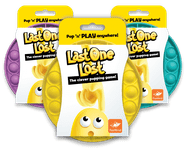
of give your kids a habit of mind where you're kind of training yourself to think in a certain way about these different kinds of problems you're solving a puzzle every time somebody puts a new marble on that board and you've got to get into the habit of thinking ahead planning ahead and paying attention to all of those details juggling all that information in your mind is good practice too and that is kulami in a nutshell an abstract visual spatial game that requires executive functioning skills and working memory but that's not all we have another game too that we're going to talk about today give me just one second to set that up i wasn't kidding when i said foxmind sent me a great big package of stuff one of the other games that they sent along is a good another visual spatial game for younger kids called last one lost this is a game again for two players it can be played with kids five and older and you play a game of last one lost in about 10 minutes let's take a look you've got this well you can see i was holding it up you've got this round board with bubbles in it now even if you're not going to play a game actually this is a game that lots of teachers have in their elementary school classrooms and i've heard kids say oh well i don't even play the game i just fidget and pop those bubbles it is kind of satisfying to pop the bubbles in this last one last game the idea here is that you've
got rows of these bubbles i'll put it down here again so you can see you've got rows of these bubbles and you can pop as many as you want in a single row what you're trying to do is force the other player to be the one who pops the last one you can pop just one in a row you can pop three you can pop all of them if you want to clear a whole row and like i said it is satisfying to push in these little bubbles after you're done the game you can just flip it over and start a new game it's a game where you're counting and planning so again just like kulami this is a simpler game you're just working with rows you don't have to worry about where you're placing your pieces or the majority of parts you're planning ahead though because you're constantly counting one of the kids i was playing this game with was was saying exactly that i feel like i'm counting this whole game i'm counting and planning ahead and and his mom too was trying to encourage him like don't just press don't just press those bubbles think ahead count how many are going to be left so you can force the other guy to make a mistake to be the one who has to push that last one in so last one lost is another spatial game a simpler spatial game appropriate for younger kids and it also involves those executive functioning skills that planning ahead and counting ahead there you have it two abstract visual spatial games from fox mind thanks so much foxmind for sending me those games
and as usual if you have any questions or suggestions you can find me at brian brainsongames.ca brainsongames.ca is the website that's where you'll find past episodes and future episodes will be posted there too brains on games is the twitter handle and the instagram feed and the facebook page and if you enjoyed this video and you'd like to be notified of future ones you can head on over to youtube and click that subscribe button thanks for joining me and hopefully i'll see you next time you