2 HITS & 1 MISS Part 1 | 25th Century Games Bundle Review
Games in This Video
3 games are featured in this video — they unlock as you watch.


Transcript
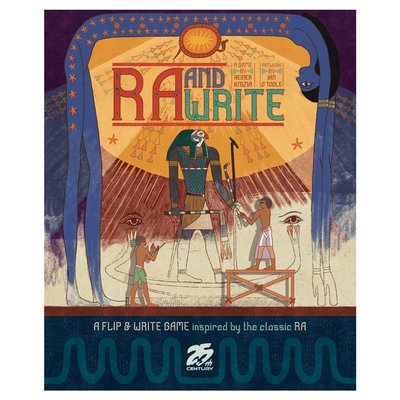
All right, everybody. Kimberly here, and I'm really excited to bring to you part one of a two-part series where I have bundled three 25th Century Games releases in a two hits and a miss for you. So, I will let you know if these games are reimplementations or essentially, you know, reskins or re-releases, but I want to get to my very first grouping. So, let's take a look at it. I am sitting here looking at the yellow house. I've got Raw and Wright, which is a flip and right game based on or inspired by um the game Raw. And then I've got Ratzia again by Riner Canitzia, which is a rescan or rethe. So, let's take a look at these. The very first one I want to talk about is a hit of the three. Now, I want to take a look at it. Let's start with Raw and Wright.
So, Ryan Wright, I think, is a pretty good version of RAW that has the lightness to it. I think it says right here, it's a 20 minute game. Pretty easy to read. You've got this rule book. This is it right here. Tells you what all the different spaces are. It's got the same iconography, the same, you know, raw cards. Um, very similar scoring when it comes to if you're the highest or the lowest of something. So, this is it. Pretty easy to look at. pretty easy to take a gander at. Now, here's the thick. You'll see this right here. It's pretty thick of the score sheet. So, you've got front back score sheets. Tons of them, which is really nice. Um, let's take a look at one of these guys up close. So, here it is. You got the score sheet.
You've got all the different sections. Uh, and you are essentially going to be scoring. Now, if you ever see this symbol, that's the first round. There are three rounds in this game. That's going to be the second round and that's going to be the third round symbols. And so they've just got really easy places for you to write down all of your different numbers and spaces for your different, you know, eye of Horus, you've got the pharaoh, you've got the water. Um down here you've got your cards. You're essentially trying to get at least three uh gives you five points. If you get four out of the five, you get 10 points. If you get five out of the five again for each of the rounds, that's where you really hit big. You definitely don't want none, but that that kind of like, you know, cruddy spot is getting one or two. So, you're avoiding the five point penalty, but you also may not get the big bonus. And down here, you've got all the wonders. And so, if you get all the wonders across, you're going to get a bonus. If you get all the wonders down, you're going to get a bonus. So, this is cool. That's your sheet. Pretty easy to figure out.
And the fun thing about this is you've got all these cards. I'm going to take them out and you will shuffle them all up. There's literally a ton of cards in here. Um, and you will draw three cards. You'll flip them face up. And the person who essentially is the start player, um, let's just kind of cut the deck right here and I'll flip over these three cards. Let's do that. So, I got these three cards and you've got essentially Whoa, we got a Ross. So, we're going to put this to the side. We're going to draw a new one. There we go. So, we got a one. We've got an 18 and then we have one of those tokens for the middle um section right here which is the symbol right here. This up here you essentially want high values and the numbers uh you put into this space um will get you points if you are highest to get uh the score. So a one not so great an 18 pretty good. So maybe I take this as the start player and then I leave my opponents uh the choice of getting one of these or one of those and everyone will just pick one. They can pick the same one. They can pick different ones.
Their choice does not interfere with each other's choices. But the start player or the active player takes one of the cards out and they're the only ones that gets it. That's it. That's the cool rub. The raw cards are just going to stay to the side until you trigger the end of the round by revealing the third raw card. There are only nine raw cards in the entire deck. This deck is massive. It's massive. Right, there's one of them right there. So, this deck is going to you're just going to keep drawing cards from it, doing the three cards, passing essentially that player token so that you will know who's uh the start this active player. Um, and then uh once that happens, it triggers immediately interrupts the round and then play will continue. So, that's what you get here. You're just going to have all these different ways of scoring. Uh, it's pretty solid. I did enjoy it. Um, it was pretty easy to teach, especially if you've played RAW before, and there are tons of these cards in here, uh, to play with. They come with pencils as well. So, a nice, [clears throat] uh, a nice version of RAW. I would definitely play this over playing RAW. I think you might know my feelings about RAW. Not necessarily my favorite game. I just retried it again um with the uh reprint of Raw, the base game. And I'm probably going to play Raw and Write. Um but I will be honest, I will play Raw the Dice game over any version of Raw any day of the week. So this is my old version of Raw the Dice game.
Um it's massive and it's just so empty. I mean, look at this. This is like I love old school games, right? So, I yeah, this this needs a smaller box, but I would play I would play this um any raw version is the dice game for me. Um but I do know that since they're doing all the raws and um you know, making a flip and right, they're going to revisit and reprint the uh dice game. And so, I'm going to be getting that newer version and I'm going to be super happy. Okay, so moving on to my second game. I'm going to go with my miss at this point. So, it's either Ratzia or Yellow House or the Yellow House. And it is the Yellow House for me. So, this game is wholly a two-player game. And the the issue or the problem I have with this game is that it's overly complex and it is themed to be some kind of debate between Van Go and Goan. Um, and the theme for me just totally misses it. It actually doesn't really have much of a theme at all. There's this nice cloth uh marker that keeps track of all your stuff. There's this nice little component box inside of here, but this is pretty much all you get are the markers. And you get this small deck of cards. And you are essentially going to be playing these cards that have one of these four symbols. You've got the green, the red, the yellow, and purple.
And uh you are essentially going to try to get rid of your hand before your opponent. and if you can um you are going to gain victory points. There are these interesting cards you can use to kind of boost your action on your turn. Um but it's just overly complicated and it was a really hard access um getting into. I read the rules, my husband read the rules and then we both still didn't really know exactly how to play going into it. We had to essentially stumble our way through the first game and we are very well read when it comes to rules and so I don't think the rule book necessarily helped us gain access. I will say though that there's a variant reference um card here. That's the variant. Once you learn the base game, you should only play with the variants. I think that's the only way it makes this game interesting. Otherwise, um it just feels a little, you know, monotonous and uh not as dynamic as I think the uh designer wants it to be.
So, for me, this game is going to be a miss. It's going to be one that I'm probably not going to be pulling out anytime soon. Which leaves Ratzia. This is a um reskin uh of RAW and it just by the way my copy didn't come with the rule book. So that's a little bit of a ding, but at the same time I just went to BGG and I just printed black and white versions of the rule book. Uh fortunately it did have the cards that tell you what the end of scoring is and also what the references for the images and the icons. So fortunately that was in here. But this is it. You got a little score track. You've got this cheese in the middle. You've got police up here. And you've got cards down here. So, what you're doing is you've got a ton of these cards. You're going to be shuffling these cards up. And on your turn, you either take cards from this row down here or essentially hold an auction. You don't just get to take them. Uh you hold an auction for them, but you do get last bid. Um and only seven cards can go here before an auction is forced. Uh if you ever get a police and it gives the seventh police, it's an automatic end of round. It's a it's an immediate, you know, sudden death. Um but those are like the raw cards and you'll just be flipping over cards. Ah, gangsters. Gangsters are good. A police. Oh no. You put the police up there in the police and they're just cutie little police. Look at those little mice. I guess they're rats. They're not mice. They're rats.
More gangsters. You got some trinkets like pocket watches. You got getaway cars. You got locations like laundromat and and train station and casino and uh more casinos, pizzeras. So, you can see when you know what RAW is that these are going to be those wonders in the seven wonders location that I just described with Ron, right? Um and you've got these other uh cards here. They're going to score um either at the end of the round or at the end of the game. And so you've got all your points here and you are going to be comparing them and making sure you earn some. These are going to be the middle ones. If you have none, it's minus five. If you've got one or two, um, it's going to be zero, three, five, u, four and five or the 5, 10, 15. Same thing as I just described below with again raw and right. But for me, it's just like way more fun. I really like it. And what you're actually bidding with um, all raw is you are bidding with the cards. These are the cheese cards. So, you've got a 1 2 3 4 5 6 7 8 9 10 11 12 13 14 15 16.
You deal out the cards to players um according to um the rule set so that players start off with a balance of cards because when you bid a one, someone has to bid higher. If you bid with a four, someone has to bid higher or you essentially get to take it and you exchange it with the card that's in the center and you put it face down and that becomes a big card for you in the next round. It's a really clever system. you can only bid and win as many cards in this seven uh card row down here as you have face up cards and then you're out. So then you essentially are done for the round, but you're trying to like leave, you know, leave before the police show up. If the police show up, then you have big cards face up. You never got to actually get cards with them. You lost those actions. You lost those opportunities. So it's a really clever system. I like it. Again, I would rather play this version of raw. um as Ratzia any day of the week. So those are going to be my two hits. Oddly enough, the Raws when I'm telling you the base game not necessarily my favorite game and the yellow house was that miss for me. So please stay tuned and check out in my next video my other round part two of a 25th century bundle of two hits and one miss. All right everybody, I'll see you later. Bye.