Jessica's Solo RPG Oracle Guide
Games in This Video
3 games are featured in this video — they unlock as you watch.

Transcript
Hey everyone, I'm Jessica and today I want to talk about solo RPG oracles. And what this is is the tool that basically turns a solo RPG into a game rather than a writing exercise. This is something that introduces plot twists and surprises and what you sort of react to as your character or group in order to make it interesting. That's a whole other subject about solo RPGs and playing versus just writing a story. But really, this oracle and this tool is going to create those situations that move your story forward, give you choices, and let you build the narrative around things that you did not necessarily predict or you didn't think were going to show up. Surprises, if you will. So the most interesting part about an oracle is that this is something that you are going to interpret. So I love this part of solo RPGs. You sometimes will see something like this in a multiplayer RPG, but really it's the group that's creating these situations.
There's some elements of surprise, but for the most part, it's sort of a a group exercise, whereas a solo RPG, it is just you. And interpreting what you see is sort of the appeal, at least for me. That's what I really enjoy about solo RPGs in terms of something else beyond just what you expect from roleplaying. So, I sort of group these into two main categories. You kind of have textbased and then you have visuals and then there's a third where it's kind of a combination. And you can find these in many different there's a lot of different sources of these. An oracle can work in you could it's pretty much anything. But I wanted to show some different examples of what I use and the reasons why I use some sometimes and others other times or when I combine them just to go through and give you an idea of what you can use. So to start with, textbased oracles can really be just a word generator. You can go to a website, you can get a dictionary and just open up to a random page. And when you are faced with a situation in a solo RPG where you need to determine was I successful, often you will come up with yes or no. But the better ones come up with yes and or yes but and a situation arises that moves the story forward rather than just a I succeeded okay or I
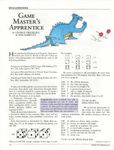
failed okay. It's you're really building that narrative. So simple word generators sometimes work when you just want to get a word and that may be all that you need to understand what's going on in a situation. So the one that I like though is the game master's apprentice. This is there's multiple decks of these out there. There's a second edition of I think a couple of different ones. So, I have the basic one that has been updated. And this is just an example of what one of these cards looks like. And this is more than just a simple word, but you can see that it's very much textbased. There are some icons that you could interpret as you will, but there's a lot of things on here that will describe what you're seeing or hearing or a situation or traits or something that would apply to the situation that's happening in your game at that moment, which can be really great where you might come across a character in a game, a non-player character, and you need to understand, well, how are they going to react to me?
Or what do they look like? How am I picturing what that looks like? And a card like this can give you a lot of different options. And these are nice because they are double-sided. So each side has all different things. And I believe there are 120 different cards, which means I think 60 double-sided cards. But you can shuffle those up and you get a lot of different options. And you don't know what's going to be coming up. And that can help you just create a story line. I bring up non-player characters. Sometimes when those show up, you have not a preconceived notion necessarily, but you might have an idea of, okay, this is the shopkeeper. I picture them acting like this. However, adding in something like this to throw in a bit of a plot twist, then you're not making those decisions. Then you're reacting and sort of interpreting, oh wait, the shopkeeper, I thought they were going to be really nice, but they're they're really aggressive and kind of mean, but then that sometimes introduces a storyline. Rather than having just a nice standard shopkeeper, okay, I bought stuff from them. They were really mean and really aggressive, you might then find that there is a side story there.
Well, why why is that the case? And you might go further with using an oracle to come up with some sort of plot or side plot or a quest that your character can then go on that you didn't just create. You're sort of coming up with it on the fly based on input that you did not necessarily choose. So that's again, this is why I like solo RPGs so much. It's that interpretation and creating a story that you didn't necessarily think was going to come out of this. So, there's also tables that you might roll dice against. There's lots of tables out there um for everything that you could imagine. What color flower was it? Um how many buildings are on this street?
How many windows are on a house? What is the architecture style? There's so many different things. what was in this treasure chest? There's tables that you can roll a a dice against. And then again, that is still giving you a random result that you didn't choose, but it can be a little bit more tailored than having like I showed with the game master's apprentice or a word generator, something that is tailored to that situation. And you can find these tables everywhere. I think a lot of them are going to be found in like mythic, the game emulator that you'll find with a lot of people use for solo. I actually don't use it, but that's a great tool if you want to use tables and have a more textbased sort of experience. Going on the opposite side, you may prefer visuals. And what I mean by visuals here are different oracles or tools that are going to give you a picture that you're then going to interpret. So, one of the ones that I use actually are Rory's story cubes. So, these come in a different set of uh there different sets of these. I think nine. And each die has these different pictures on them. So, what I'll usually do is I will roll three of them and find a way to interpret that in the current situation. So, if I draw a couple of these and let's see if we just I'm not even Let's do Oh. Oh, I'm trying to I'm trying to get this just to show you.
I would end up with something like this, which looks like a baby basket, uh, some food, and a keyhole. And depending on what I'm doing in my RPG, I would then interpret that result and figure out how that applies to the storyline. So, let's go back to that shopkeeper example and maybe I drew something that said they were very aggressive and very mean. And then I explored that with them a little bit more and sort of question them what what's going on. I would then roll my dice and let's say that I got this with my Rory story cubes. Um, there's an open. I would say the keyhole represents something is locked away that they can't get to anymore. That food looks like it is that looks like it's hot food. So, I feel like that that is fresh food. Is that locked away? And then there's a an empty baby's basket.
Um, you know, you could interpret this as saying they are not able to get a hot meal because they just had a baby and it's taking up all their time in taking care of it and it is it could be something as simple as that. Or this could be like the there's a lost child type situation and we that we were having our breakfast and then they disappeared and their breakfast was still hot on the table and I don't know where they went and it's I don't know exactly how the lock plays in there but I could go with that. The other nice thing with oracles is that if you're if this really did not work and I was like I can't come up with anything I could roll. You can always reroll or redraw or do whatever. I like the limitations and I like that challenge of figuring out should I create a story based on this even though I'm not really coming up with anything good? Should I go with it? You can and that can work really well. So, I like Rory's story cubes. I don't have all of the sets and some of them are really hard to find. So, I don't know what happened. I would have collected them all, but I think I have four different sets of I think there's 36 dice I have.
So, drawing three out of those with random sides, there's plenty of variety there. Another visual that sometimes you'll use in conjunction with tables are actually there's different types of uh what do we want to call these? Like visual playing cards. There's actually some interesting ones called the storyteller cards. There's also a fantasy deck. these ones. Let's just pick out one of these. These are a little bit like The Game Master's Apprentice, um, but a little different. And the art style is a little more cartoony, but you'll see that there's a lot going on in this picture. There's no words aside from there's there's a letter down there, but you'll see that it's very visually based. So there's a character, there's something they're holding, and then there's something that they are doing along with where they are. So you could use part of this. I could combine a few of these together.
That's an interesting way to sort of again focus on visuals. If you are using just tables though, a standard deck of cards can sometimes work. And I enjoy these for different RPGs that I play with. There's cat cards and of course dog cards, which might obviously if you're not playing an RPG that focuses on that, those probably might not be the right option, but the idea here is you can find a thematic deck that may work for you. Uh, another one that I have is from Thunderworks Games. They make role player and cgraphers among other things, but they have a deck of cards which is all they are all illustrated. Uh, so you'll have different characters on different cards and sometimes having this type of deck can give you an idea again of interpreting what you're seeing possibly in conjunction with a word, but hopefully with whatever you are doing in your adventure. And another one that I will show off here are these nice river and stone playing cards, which I use a lot for my RPGs.
They are really pretty, but they basically have different scenes and characters and animals. All right, hold on. I got to switch off switch hands just to show you what some of these look like. But all of these are illustrated and they kind of give you, you know, you might interpret what a who a character is or what that scene is. I'm just trying to go through. There's there's a lot of there's a lot of people in this this deck, which I like because you kind of get to sometimes see the same character pop up as you're drawing random cards. But this one is beautiful and really really fun to use. At least for me, it's just it's a nice kind of calm compliment to a lot of RPGs that I play.
And there we go. What is another one that is I think also in the visual category sometimes. Sometimes it's also combined with text, but you may get tarot cards and some RPGs use these. Uh this one is the Victorian Fairy Tarot that I I love this one. Just the art style is really really pretty and really detailed. Like look at that. So many details. And I love this one. I've had this deck forever and it's it's just it's nice to be able to look at what I'm seeing in a scene and then sometimes have a couple of different cards and sort of just interpret how does this apply to my story in this moment where I ask a question and kind of come up with that and sort of go with it. So that's those are sort of examples of text and then visuals. And then there's a couple of examples that I also use that I kind of consider as combinations, if you will.
So there is my Let's grab this cuz I store this in a delightful. This is a charter stone box, but it's really nice. It fits all of these in here. And this is actually once upon a time the storytelling card game, which the art style I love. And let's just grab a couple of these. Just trying to find a few. So, these ones are all split up into five different categories, but you have an aspect, you have characters, locations, events, and things. So, there's a moat, and these ones I find work really nicely for me. I can use these with anything because although they have this sort of fantasy theme to them, a lot of the the terms and the words are very not fantasy, like sad uh could apply anywhere. So, I usually will draw a couple of cards like that, but just from what I'm seeing here, a sad meeting at the moat that that feels like it could be a catalyst for an adventure. Why are we sad at the moat? And then I could keep drawing and figure that out. I love this one though because there's also actually, let me try to find some. This one is almost entirely visual. Most of these cards have a visual and a name. And why am I not drawing it? But there are a bunch that actually don't have them in here. And
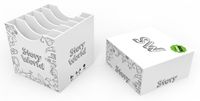
one wonders where I put them. Did I I must have separated them out. Or wait, here we go. You'll sometimes get ones like this, which if you play the game, interrupt cards are played differently, but then these just have a word on them and don't have an illustration. But I still find that that adds to it and I can kind of picture what that word would look like in this art style. And finally, the one that I actually am surprised I don't use, but I I love it is something that I think is out of print now or hard to find, but there's there's a whole series of these gigantic cards called Story World. And I think there were 10 different packs released of these. They have different um cards in different styles and they're huge. Like these are I don't know if it's this is the size of my hand and this is the size of my face but they're very large and they're in different styles but there's so much detail in them to you know it has a name to it but if you look closely you know there there's there's details that I feel like you could write a story literally from one card and if you look through these I'm trying to find one that's really obvious But like look at the talking bird. And the art styles are very different. There's a there's one
that's like there there there's some that stand out as being very unique. But the other neat thing is in each of these packs, which I know this doesn't have to do with solo RPGs, but it could. Uh each card actually has a connection to another card in the deck for the most part. If you look closely at the keeper of dreams, right over here is a parrot, which ties into that talking bird card that I just showed. So, these ones are really, really neat in terms of I find I have not used these that much, but one card sort of offers like a whole catalyst for an adventure or something where it's interpreting just one card. There's a lot to look at.
Like I keep looking at this and like if if you look closely there's so many details. There's an owl. There's a scarecrow in the field. Um why are there masks around here? You know, like and and why is this little jester guy what's he doing looking at there? All right, I'll I get really into it though with with interpreting it, which I think to to close out this video. That is what is really enjoyable for me with solo RPGs and solo journaling RPGs is this whole thing of I'm not just writing. I don't just sit down and I get, you know, a writing prompt and then I go and I come up with all this stuff and then I do that. It's almost like you get many writing prompts all along the way where yes, I do need to come up with my own story most of the time, but I still get to create it, but I don't know what's going to happen. I have my character. I have the setting. I know how the mechanics work. But what is actually going to befall my character? I don't know. And it's fun to see how things change based on how I am interpreting those oracles. My adventure may take, you know, we might be going along fine and everything and then suddenly there's a major problem that pops up and I find myself often going, "Oh, wow. That happened." It's It's just fun. And I know I'm just making it up, but the other part of solo RPGs is this is yours. You do not need to share this
with anyone else. This is for you to have fun with. And if your stories seem silly, you know, if you're like, "No one would ever publish this. No one would ever care." That's not the point. The point is that you are having fun interpreting what these surprises and plot twists and random encounters and what those are throwing at you. How you incorporate that into your story is a really fun element of roleplaying. So that is a whole bunch about these different oracles. Hopefully, there's some interesting and helpful information here so that you can get something to your table and start interpreting those for fun. As always, thanks so much for watching and I hope you get some great solo RPGs to your table soon. Thanks again and take care. Bye.