Halflings: Best Chef, Small World, Xylotar, Tekton Dash, Birdy Call - Ranked & Reviewed



Transcript
Hey everybody and welcome to another Chairman of the Board ranking video. This is where I take a look at the last five new to me board games that I've played and I rank and review them in order of preference. And it's a pretty random array of board games that I'm talking about today. But that's what makes these videos so interesting. But before I get started, I want to give a shout out to the show sponsor kienda.co.uk who are my go-to online retailer. And if you use the link in the show notes or the QR code, then you can get 5% off your first order. At number five, I have Xyotar, which is a trick taking game with a degree of deduction injected into the game play. In this one, you are spreading a wide range of cards out in front of you going from low to high. Um, but you do not know the exact numbers on those cards. you only kind of know a range of what they could be, but they are placed in numerical order by an adjacent player. And like most trick taking games, all you're going to do is you're going to have a player who's playing a card out to lead the trick. If you've got a card of the matching color, then you'll be forced to play one of those. And then whoever's played the highest number will win the trick, take those cards into their scoring pile, which will be one point essentially, and then start a new trick.
In this one, you do have a trump suit as well, which are these, I think they're red cards. And what you're trying to do is that as you are playing more and more tricks, um, as you might have an idea of how many tricks you could win, um, you can use two of those cards in front of you or choose two of them that are next to each other, secretly look at them, and then choose one of those as a number to be how many tricks you think you're going to win by the end of the game as a kind of a a wager. So, as more information is becoming apparent, um, you might have a better degree of, you know, knowledge of how many tricks you could win. Um, but of course, the more tricks you play, the bigger the degree of separation those cards might be. So, it does come with a bit of a a push and pull and you want to strike when the time is just right to gamble on how many tricks you can get. And the game is, you know, pretty, although it's a cool twist on trick taking, it does just feel like another trick ticking game to me, which automatically does kind of handicap it really because I'm not a big fan of trick ticking games in general. You know, most of them don't work for me.
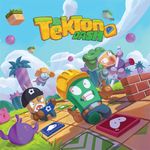
Um, this one I didn't think it really did enough to separate itself from the others to make me think, you know, this one I do like. Um, although I do appreciate some of the twists, especially that deduction part kind of reminded me of a game like Bomb Busters. Um, maybe the games I've had of this one did fall a bit flat or leave a bit of a sour taste in my mouth because I had such a a poor hand of cards that I didn't really win any tricks in the first place. So, I was solely dependent on how many or how well I could guess how many tricks I would win. Um, I think even that I got wrong. So, I think maybe the luck factor plays too much of a of a part in this one. Um, you know, nice bright colors. I I think it's nicely displayed and the the design is all good. Um, you know, quite a cute little cover and stuff, but if the game play again, it just felt like another trick for me taker for me, which just isn't going to be my cup of tea. So, I can't really recommend this one, but I'm sure if you want a a kind of a quirky take on the trick taking genre, then this one might be one to look at. So, that is Xyotar at number five. At number four, I have Tecton Dash. So, this is an upcoming familyfriendly race game. I think it's coming on Kickstarter, you know, relatively soon. And the idea of this game is that you are going to be racing around this grid, picking up certain tiles, and then populating your playerboard, trying to replicate a pattern that you were allocated at the start of the game. Now, once you've built that pattern, you're going to go to the halfway finish point. you're
going to flip that tile over and you have a slightly more advanced pattern to complete before you return to the starting point and hopefully win the game. Um, general gameplay, you know, mechanism wise, you just have an action point where you're going to be moving around, you know, picking up tiles, dropping tiles, or even sliding existing tiles you've have placed on the board into another space in a orthogonal direction as long as you have that, you know, wiggle room to do so. But when you do get to that halfway point, you are given twice the amount of action. you're given two actions instead. So, I suppose it does have a a degree of um escalation in the game. And there's of course, you know, the game is a race game, so you do want to be getting to those spaces or the tiles that you want before the other players do. Um but there are little twists on the game where you can spawn new tiles in certain locations. There are conveyor belts that will give you a little push, little barricades that will block you getting through and so on. So, very simple stuff, certainly linear in how the game play is um is displayed, you know. pick up tiles, populate your playerboard, and make that pattern. So, um I do feel like this game is maybe a little bit too paint by numbers for me.
Um and even for a family game, I I completely understand that you'd want these games to be approachable and, you know, uh easily taken on by younger gamers. Um but I still do think this one needs uh a certain injection of something a bit more interesting and unique to keep people hooked. And I think that could have been easily done because the framework here is is pretty nice and simple, but with a few inversions, I think the game could have been definitely taken above and beyond and even become like a kind of a hallmark of the family genre of a board game. So, for example, just off the top of my head, I think instead of running around and picking up tiles and placing them on the board and having the option to slide them around as a free as a bonus action, what if your tiles already started on the board and then you'd run around picking up or landing on directions where you could slide the tile? So, therefore, the two um the two separate parts of the game are synergized and harmonized in a lot cleaner way than how the game actually is. So, I do feel like the the puzzle part and the race part are slightly disjointed because it's too easy uh to complete. And also, the the puzzle can become a little bit too rigid because you can get tiles blocked in um and then you you're not really incentivized to slide it around anymore. You may as well just drop it off and then pick it up and put it where you want. So, it felt like it could have done a little bit more a bit more of a rework, a bit more smoothing over some of the um the cracks in the game, but I do think it's nearly there. I think the game has a nice aesthetic. I definitely think this has that kind of pick up off the shelf and
you know my children will like this visual appeal to it. Definitely very charming, nice pieces, nice, bright and colorful. But I do think again less is more a lot of the time here. And I think the streamlining could have been implemented in terms of doing away with the halfway point. You don't need that at all. It doesn't add anything to the game. Um, and as I said, instead of picking up the tiles and populating your board, have them on the board and then move them around by landing on certain locations on the main map. Um, so again, very grateful I got a chance to play this one. Um, there are other family games I'd choose over this one, but again, with a few tweaks, I think it could have been something quite special. So, I'm hopefully that's something that the designers will take on board, but maybe, maybe not. Obviously, I'm a more seasoned Eurogamer and I'm looking for more gamified mechanisms than maybe what the designers were going for here. But maybe if you're again looking for a family-friendly game, this one would be for you, especially if you like that race aspect. So that is Tecton Dash at number four. At number three, I have a bit of a wild game with Birdie Call. And this is a bit of a a silly entry really, mainly based on the fact we had such a great time playing it. Yes, mechanisms wise, uh this is pretty terrible. Um but in practice, the game is a lot of fun.
So, a birdie call is a real time game where you're given a hand of cards and each of these cards has a different kind of bird call on it, a bird song, and you are going to be reading out these different very silly noises. I'm hoping that someone else on the table has a matching card. If they do, they will replicate or kind of echo the noise you're making. You'll touch your cards together. If you both got the same bird call, then you'll get a point essentially. Um there are some further little um special cards in the game where you can have these parrot cards where you can mimic other bird calls and trap other people into touching cards with you. And they got these peacock cards where you're trying to wave them above your head. So you know we've seen these kind of games before, these real time loud, crazy boisterous games that admittedly do have a very short shelf life. And you know, make no doubt about it. This game does have um does have a very short shelf life. But we were in, you know, chronic laughter playing this one. It was so silly, so bad, but in a good way. Um, and yeah, I would play this one a few more times before doing away with it. So, again, if you want a kind of bring out uh a silly game to a party, get everyone involved, be a bit of an icebreaker, raise the atmosphere, this is going to be a good one. So, out of all the kind of mass production games out there, you know, your your throwthrow burritos and all these kind of silly games, this one I think is actually quite a funny one. So that is a birdie call at number three. At number two, I have Small World. So, believe it
or not, after all these years being in the hobby, this is the first time that I've played the the famous uh Small World, one of the OG area control games. And funnily enough, after all these years, I didn't really do any research on Small World. It just never really appealed to me. But, you know, a friend of mine picked up a copy and I was expecting more of a traditional dudes on a map, you know, roll to resolve style game here, when in actuality, this game is a bit more of an abstracted, more euroide game than I was expecting. So, in this one, you have a bunch of these fantasy races, all with their unique abilities, which are pretty subtle, but can have a drastic impact on the game. Um, and all of those different races will be assigned a randomized kind of trait which will give them another bonus power. So, for example, one of one of them might be flying. So, therefore, you can go anywhere on the map, but then you could mix that with the, you know, the the sorcerers. You could have like flying sorcerers or flying, you know, trolls and so on. Um, and what you're trying to do here is that you are trying to increase your presence on this really nice looking fantasy map by placing tokens into different regions and then expanding from those tokens into adjacent regions. Um, costing more tokens as you do so. Of course, if an opponent is in a region already, it's going to cost you more tokens to kick them out and take their spot. Now, eventually you're going to run out of tiles to play with, and you're going to have to almost like retire those um or
that last race you played and draft a new one. And based on this kind of incentive building mechanism where, you know, the longer a race is neglected, um a buildup of coins will build up on them. And then you might be incentivized to pick that one up and use it rather than jumping and skipping over to the really juicy ones that you want. But again, some of these powers are are really interesting and I tend to like it when games have a simple framework like this game does, but injects a few little tweaks in the actual cards here. And that's what this game does really well. So, for example, you know, the sorcerers, which I mentioned earlier, they can convert an opponent troop into your troop or the I think it was the trolls can um when they put on the board, they come with like a cave, so they're harder to kick off, which is like another defense point. or certain races might get more points based on specific terrains that they control and so on. And basically after you've done your turn, you're going to count up how many pieces you have on the board.
You're going to get a point for each of them or of course some bonus points if you got special powers and that's going to be your your point and your score. And then it's going to follow that process until you've gone through a certain amount of turns and then whoever's got the most points will win. So again, very streamlined here. And this definitely did bring me back to um games of yesterday. you know, those simplified almost kinitian philosophy style games like Ethnos. This actually did remind me quite a lot of Ethnos in the terms of being a simple area control game, but with some injected player powers. And again, this one kind of has that really nice blueprint or framework to add tons of content in to keep the the core game the same, but just add a few bits of spice here and there to make it more interesting. So, this definitely did have that perfect DNA to have constant um expansion material coming out for it. And I believe this, you know, this game is an older game now. I think there's quite a few expansions and I can see how a game like this would really support that. So, I enjoyed it quite a bit. Um maybe a little bit too rinse and repeats, a bit too repetitive for me to really um love it. And I thought the the decision space were were fairly obvious. I didn't find it terribly exciting, but as a piece of design, I appreciate what it's trying to do. And I always appreciate it simplicity and elegance, and I think this game does that well, and I can see why people would hold this one in high esteem, which, you know, I definitely respect it as a piece of design. Um, but I think I would rather lean towards something a bit more, I don't know, a
bit more in your face, a bit more exciting, and with a bit more interesting player action. You think of your classic El Grandes, your Wallenstein. I'd rather play that as an area control game than Small World. But Small World does a great job of again having interesting things going on in a relatively short time frame. Good degree of replayability because of the again that that randomness of the races and the powers. Um, and a small or maybe not a small but a medium nitpick with the game is I think there's quite a strong degree of king making in this game. uh because if all the players can spy with each other to remove a certain players pieces from the board, then that that player's got no chance in hell. So, for example, the most recent game we played of this um one of my opponents was doing exceptionally well um to the point where everybody ganged up on them and then the person in the second just overtook just by default really. So, um yes, you can say that about a lot of games, but I thought that was quite apparent in Small World. But still, overall, I enjoyed it.
Um, would again, would I choose it over a lot more kind of more involved area control games? Probably not. But I still did think it was a really well-designed game. So that is Small World at number two. And finally, at number one, I have Halflings Best Chef. So this is another upcoming crowdfunding project that I've been very fortunate enough to have an early copy of. And this is a diced driven worker placement game where we are trying to collect ingredients and complete recipes to score victory points. Now the setting of this game is you know clearly heavily inspired by Tolken and you know Lord of the Rings Hobbits and so on. And I have to say this is one of the most gorgeous games that I've ever played. You know the visual appeal is off the charts here from the cover to the board to these recipe cards. The artwork is as good as it gets. you know, truly wonderful um visual appeal. Um, but we're here to talk about the the mechanisms. And again, I tend to really like dice driven games. And this game is a really nice stepping on point to introduce players to dice driven mechanisms they might not have seen before. So, at the start of each round, you're going to roll three dice and you're going to be using those dice to allocate to different worker placement spots. And all these spots are pretty straightforward in what they do.
So, for example, you've got the market where you'll have a random assortment of ingredients. If you're there first and you have the higher pit values, then you'll get first choice of those ingredients. Uh you've got these spices that will be like kind of wild card ingredients that you can use to fill in the space of an ingredient you're missing. You've got, you know, the money spot. You've got uh these wines you can go and collect where, you know, the more different wines you get, the more points you can get, but also each recipe card that you're completing will have a a complimentary wine. And if you have both of those, you'll get some victory points. Uh you've got these decorations you can collect which will give you kind of ongoing in-game abilities or also endgame scoring opportunities. They will cost money and money in this game is pretty tight. Uh and you've also got some kind of mitigation spots where you can get these soups which will let you roll these pips around in kind of act like your workers in Castles of Burgundy where you can convert like a one into a six or a two into a a one or a three and so on. And you also have the actual spots to complete the recipes. And kind of a twist on this game which really does up the tension is that when it comes to the the recipes you're trying to complete, they're not actually in your personal supply. They are on the main board, meaning that they are up for grabs by the other players at any time.
So if you're collecting towards something, you need to be very paranoid that that that particular recipe could be gone by the time you have those ingredients. There are further twists in this game where it kind of reminded me of Kais where all the different actions are resolved in a particular order or you know a track meaning that the order in which they're resolved is very important because you could actually reserve your ability to complete a recipe before you have the ingredients meaning that you're kind of wagering in yourself to get what you need by the time it gets to that worker activation if that makes sense. So, for example, if I'm really missing a a vegetable, but I've already reserved my spot here, I might put my thing on the market after, hoping that there's still a vegetable there. Um, and then I would have everything I need by the time it comes to completing that recipe. Um, when you complete recipes, you're going to get some bonus money, which of course is very useful for buying organic ingredients, which are much higher quality and will give you more victory points. Um, but will also let you buy those very valuable decorations I mentioned earlier. You're also incentivized to um collect kind of um starter main and dessert meals cuz for each set you collect or complete these recipes and you'll get some additional points. Again, also collecting all the different wines is going to be giving you points based on set collections um and so on. So, it's all very straightforward stuff, but as I mentioned earlier, it does a great job of introducing or yeah, kind of like drip feeding you mechanisms you're going to
see in more advanced games. Of course, that thought process of what am I going to prioritize? When do I need to manipulate my my dice? Um, you know, am I going to take a gamble and go here? If I don't have everything I need by the time I get here, I'm going to take a um a dissatisfied customer token, which is going to be negative points. um and so on. So there's again there's lots of autonomy here on a very simple and introductory almost gateway plus level game. And for me this game does a good job of being kind of in a vacuum and being that stepping stone. So you're not jumping straight into those more advanced games. This is going to be a good halfway point I think. So think of something like Lords of Water Deep. What that does for standard worker placement games. this game does that well or does something comparatively um but with dice driven worker placement games I I'd say if anything um if I had to criticize I'd say maybe maybe the game is a little bit repetitive maybe it's a few rounds too long um and also despite again me praising the fact that it's a good um introductory game I think this one isn't going to have that evergreen quality to it I think once you've played this a few times you then of swiftly move on to it and step onto something more advanced. But I'd say if you are regularly introducing games to new players, this is a fantastic option to have in your collection. And not only because it's so gorgeous looking and people are going to get very invested in
the way this one looks and feels and the high quality of the production, but because people are going to understand and grock this one quite quickly, but it still has enough interest in going on to um, you know, to keep them hooked and not get bored. So, pleasantly surprised by this one. I wasn't sure what to expect because normally I find these recipe fulfillment style games a bit rinse and repeat and I find them a bit plotting and a bit monotonous. This one I really did like that up tension of not having your cards in reserve and you know really having to invest heavily to guarantee yourself to get the recipe that you want. So again that turn angst is turned up to 11 uh with this game which is definitely what you need for a worker placement game. So, be sure to check this one out when it comes up on um on crowdfunding. I'm not sure exactly what platform is coming on. I believe it's Kickstarter, but I will um correct that if I'm wrong. Um and yeah, check it out if it doesn't interest you. So, that is Halflings Best Chef at number one.
So, there we have it. That concludes another review video. Um definitely some random games on here this episode, but that's what make these videos so interesting. But if you have enjoyed the video, please be sure to hit like and subscribe to the channel and check out my other content, too. But for everybody else, I'll see you next time on Chairman of the Board. Bye-bye.