Imperium: Classics & Legends | Solo Review | An Innovative Deck-Builder That Should've Been Digital
Games in This Video
2 games are featured in this video — they unlock as you watch.

Transcript
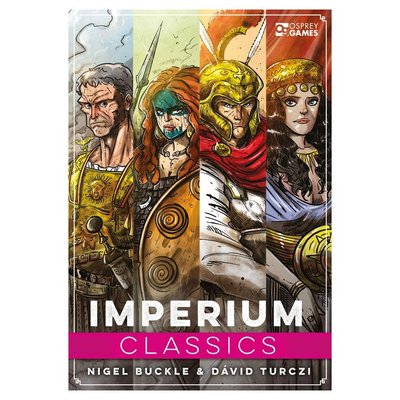
foreign hello and welcome to all you can board I'm Carlo and today I'm going to be reviewing a pair of games here that are under the same kind of game system and that is of course Imperium Classics and Imperium Legends so these are co-designed by Nigel buckle and David tertsey with artwork from the Miko and they are published by Osprey games so these games play one to four players and they are basically deck building uh civilization themed games these are both Standalone boxes so you can buy either one on its own or you can buy them both and then kind of mix and match them together to use some of the nation decks from one and the other as well as some of the common cards so again they work just fine as Standalone products but you can also buy them and kind of mix them together in a fairly easy way so I'm going to cover that a little bit more later but I just want to say a couple notes before I get into the overview and how this actually plays is that this is a very ambitious game this is something that was clearly worked on for years and there aren't many games that take that have this level of ambition and this level of scope to them in terms of how much care and sort of time has clearly gone into this so that's one of the reasons why I decided to do a standalone review for this game and also just because I have a lot of sort of conflicting thoughts both positive and negative about this game there's just a lot to talk about and I do want to just preface this by saying that I've only played this game solo so far so this is pretty much a review of the solo game although I will be touching on player count and just kind of what the added player counter expanded player count does to the game as well even though I don't have direct experience with it myself so the final thing before going
over the overview here is um just that this it doesn't take into account that there's going to be Imperium Horizons which is the third one in the series coming out later this year so there are eight nations in each of these boxes already Horizons I believe is going to have four teams they'll have a total of 30 and it's going to have some updated rules and some updated Errata to replace some of the cards that have been updated from these sets so I'm not you know this this review is coming out before Imperium Horizons is out so if you're seeing this later in the future once Horizons is out my thoughts on the entire system as a whole might be slightly different once I potentially try that but otherwise you can use the timestamps below to get through different sections if you already know kind of how the game is played and you just want to see how I break down the actual review feel free to use the timestamps uh otherwise let's talk about how you actually play the game so basically each player starts by choosing a faction deck which is a civilization or a nation your opponent's gonna pick one as well or if you're playing solo you're going to assign one to your solo opponent most of these are real world Nations such as the Greeks Vikings Egyptians Etc and some of which are fictitious such as the utopians or the atlanteans there are eight nations in each box as I mentioned were the ones in the Legends box are generally more High complexity than the ones in the classics box and the rulebooks each have a complexity rating ranging from one to five for each the nation so you know kind of how complex they are most Nations will start in a barbarian States as shown on this card here and throughout the game we'll be advancing towards becoming an Empire some cards can only be played while your
nation is in a barbarian State some only while in an Empire State and others can be played in either case this applies both to cards in the starting decks for each Nation as well as the common cards that can be acquired by both players throughout your nation deck in this game tends to be a lot more intricate than most decks in most deck building games of the sword it's going to have to be split up based on certain icons on them as part of the setup so not only will you have your main starting deck but you'll also have a nation deck made up of cards that you'll be adding to your main deck throughout the game whenever you deplete your deck and you need to reshuffle you first take the top card of your nation deck and you add it in before shuffling up that new deck so as you're playing your civilization is progressing both thematically and mechanically because you're gonna have access to new cards and your deck composition will just change throughout depending which nation you're playing you're going to have a different number of cards in this nation deck so you're going to have to run through it a different number of times depending on who you're playing in order to actually become an Empire but basically once you take that last card from your nation deck and you've depleted your deck and you put that in and Shuffle it and you Reveal Your what's called your accession card which is kind of your starting card for your faction you are now going to flip over your Barbarian State card into the Empire side and what that means is now you're an Empire and you're going to be able to going forward for the rest of the game anytime you deplete your deck you're going to be able to add these development cards now to your deck but instead of adding them face down like you did with the Nations you look through them and you have to pick out which one you want but they have cost to actually build these cards so these often provide very strong abilities or ways to get a lot of points you can also buy Fame cards latest as a game which is
a common stack of these high Victory Point cards that all players have access to from the sort of Market row up here some cards have a flat point value others have a question mark or an asterisk because their values are based on the cards in your deck then you also have pinned cards which are cards that have this little infinity symbol most cards in the game that you play will go straight to your discard pile and are one-time use however if you play a pinned card it stays on your board face up and has an ongoing effect for the rest of the game so there are all kinds of different types of cards I mentioned the fame cards I mentioned your own your nation cards your accession cards uh then even on the board from the common cards that we get from the market you've got um you know regions and uncivilized cards and civilized cards and I can't even remember what these blue ones are called right now tributary cards uh you've got yeah the locations um I won't get into all those because they have their own little intricacies but one that I do really want to cover is the unrest cards so most Nations start with at least one or two of these in their deck but players can also gain or shed them throughout the game they're bad cards because they're just negative two points at the end of the game and they have no actual ability aside from offering you ways to remove them from your deck by spending resources there's still a few other intricacies about the game but the last thing I really want to focus on here and tell you about is especially because this really stands out in terms of the deck building genre is uh the history aspect of the game so what happens here normally in a deck building game when you trash a card remove a card from your deck it just gets removed and you never see it again and once the game is done you kind of just put it back in the box and it gets put back for next time in this game you have a way of putting card in your history which is very not only is it
interesting and thematically it makes sense but from a mechanical standpoint it sort of unclutters things a little bit if you put something in your history you're basically putting it in a pile where it's removed from your deck you're not going to see it anymore throughout the game but at the end of the game when you go to count points everything that's in your history you count the point values on those but also let's say you have like three blue card three tributaries in there and you had some other card that says you score for every tributary card you have in your deck well your history counts as part of your deck it just wasn't your main deck that you're drawing from so putting cards in your history is a way to still get that you know whether it's a point value or some type of condition met for some other card to still have it but not having it cluttering up or you're drawing it and perhaps not wanting to play it anymore throughout the game or sometimes it's a card that just gives you points and doesn't have an effect so maybe you want to get it into your history right away so that you know you have the points on lockdown but you don't have to draw this card that's not going to do anything for you throughout the game so now that I've covered a lot of the aspects of the game itself I'll just quickly tell you the flow of the game is basically on your turn your true using one of three options which is either to activate innovate or Revolt activate is where probably 80 to 90 percent of your turns at least are going to be or at least with most Nations it's going to depend but activate is where you actually get to play cards from your hand activate stuff that's on the board you know buy cards from the market row uh just as long as you have cards that can do it basically this is kind of the biggest phase you get three actions by default there's some ways you can get other actions but that's pretty much it the second option is to innovate which means you just immediately discard your whole hand but then you get to take any card from this Market in front of you and add it to your deck and you do what's called breaking through which means that if there's an unrest card
attached to that card you don't have to take the unrest card with it you just take the good card whereas normally if you weren't breaking through and you were just gaming the card you would have to take the bad unrest card with it and the third option you take on your turn is to call the Revolt which is just that it allows you to remove all the unrest cards from your hand and basically remove them from your deck and put them back into this common pile so let's say your hand to five cards you're three or four on rest it might not feel like you're getting much done on your turn but to clean out those many youth that many useless cards can make a big difference so that is it basically for the overview of the game basically at the end of the game you're just going to once you know there's various different end conditions whether it's you've run through a certain number of these cards here you can run through some players development deck you can get through all these Fame cards and the king of King cards gets flipped over etc etc there's multiple different or end game conditions a couple of them depend on uh which factions or nations are actually involved in the game then you're just going to go through their big stacks of cards and the different aspects of your deck and wherever they all are and count up all the points and see who has the most points and that player wins so now let's get into the actual review and I'm going to break this down into a few sections so we're going to break this down uh starting with sort of I like to start off with sort of a context and potential biases section this is just where I give you some context as to uh my sort of involvement with this and what I sort of came into this with so I like a decent amount of deck builders I think when I first got into the hobby they really stood out to me and I was loving deck builders and card games in general in the past few years I've cooled a bit in general over deck on deck building games and they haven't appealed to me as much but the fact that this was a deck building civilization game and that you had you know your own
faction deck and I saw the beautiful artwork from the Miko and all this stuff so it kind of Drew Me In I came in with you know knowing that I had heard a lot of things about it not being great with more than two players that it was primarily a solo or two player game and I knew that I was probably going to be playing this I bought it to play solo primarily I didn't think I was going to be playing it much as a two-player game um but I did expect to enjoy it quite a bit and that's that's sort of what I came at it from no no inherent biases in terms of designers companies uh past experience with games that kind of thing now let's talk first impressions so after my first game or two actually let's rewind before the game or two because it took a while to even get into that first game and actually playing it um so each of these games comes they're pretty much identical Rule books they each come with a standard rule book and the solo rule book and there's also an appendix section at the back um and you can read more about this online there's threads on Board Game Geek about this as well but and some people would agree or disagree but I personally had a lot of trouble with the rules just the way they were laid out it felt like even though I read the rules and felt like I kind of understood them I didn't know exactly what was the goal what was I trying to do or maybe this one situation isn't explained or it's in a different spot in the rule book so you know maybe you had to jump around a lot while playing the game or whatnot so my first impression was that I kept feeling like I was discouraged because it was feeling hard to get that first game actually played I kept thinking I can start playing but I don't understand quite how that works or you know so I kept going online and looking at FAQs and all this stuff and I ended up watching a couple playthroughs so it took a while to get into it and after the first game I think I was extra conflicted because it felt like a lot in
a way I felt like okay finally I got that first game under my belt now I understand the rules now I finally got through this okay and I thought that was awesome like I've never seen you know the thing I mentioned before in the overview section about the history cards just the way that you have the game Arc is kind of built into the game and I'm going to talk about this stuff more detail later but I had all these things I really liked but I remember telling myself this could end up being like a 9 out of 10 game for me like amazing amazing game I play all the time or I could see it being like a maybe six out of ten like it's kind of hampered by like certain things are holding it back and I kept thinking okay I'm gonna play a bunch more and see how much quicker can I get at this system because there's a lot of stuff to manage in this game especially if you're playing it solo um so yeah that was kind of my first impression so now I want to talk about the player count in the play time again I've only played it solo this is the type of game where even like my very first play probably took about you know including setup teardown checking up on rules throughout whatever for sure over two hours to play solo probably around two and a half hours definitely less than three I haven't had a game go anywhere near three hours but definitely two to two and a half I say is the most common I play this I believe six times and I think once or twice I got it in under two hours but it felt like it was an early game end condition or maybe I I was specifically trying to play it quickly to see if I could get it under two hours so playing it at a comfortable Pace even after my fifth sixth game it was still taking for sure over an hour and a half hour 45 to two hours is kind of the average I'd say so it's pretty long when you play the game solo uh to operate the opponent's bot like
you basically have these five cards in front and You're Gonna Roll a die and the die is gonna go on one of the cards that card is not going to take effect and you're going to resolve these cards in order left to right flipping them over but when you flip a card you're gonna look at a chart so in the back of the rule book there's a chart for every uh faction that you're playing against solo and it'll tell you if these symbols are on the card then you do this and it'll give a little sentence or to a little paragraph of what to do so it's sort of self-automated but you have to every new you know faction these cards might work differently and you have to flip a card and then okay what does this do again and kind of read okay yeah it's gonna do this okay and then you kind of resolve it you're going through these cards so depending how familiar you are with the game how many times you've played it how many times you've played against that Nation as uh with the AI uh solo opponent he might start to get used to knowing what these cards do right away you might remember oh yeah when I see a symbol I'm already I already know where they gain a location card or you do these things but the first game or two there's a lot of stopping what does this do again okay I'm looking here and then it's got one chart for a thrift Barbarian state or one chart of their empire state so it's a lot to manage um but you know it's it's not it's not an excessive amount to be able to actually get through the game necessarily with two players obviously you're not in charge of operating a bot but the game has fairly low player interaction it's very heads down there are certain things obviously you know the more you learn the game and you're playing against different people I don't want to downplay like experienced players playing against each other you will want to keep track of where your opponent's doing if you just look down in front of you you're not going to be very good at the game necessarily but still in terms of the actual interactions that happen
throughout the game other than kind of keeping an eye and adjusting your strategy based on your opponent there isn't a ton of interaction throughout the game so adding a second player and this is part of the reason why I never added you know a sec or try to two three four players I thought I was gonna play it as a two player game but the more I played it solo the more I realized I don't want the added downtime I know how long on average like sort of my turns were taking and even facilitating the Bots turns and all that I thought I don't want any more time like I'd rather be almost facilitating the Bots turns than just like waiting for my opponent to make decisions because I know there's a lot on the line in this game and there are a lot of this is efficiency and it's a longer game so your turns sometimes can fly by but other times you're drawing cards and then you're you know doing multiple effects so sometimes the turns can go on a little longer so I think there are people online who I've seen say that they've gotten it to you know an hour hour and a half solo props to you I mean maybe I would have been able to get it to that after playing another 10 15 times or just really forcing myself to rush a bit more but um yeah so that that covers I think all of it in terms of player count and time that I want to talk about now I want to talk about what sets it apart there's a lot um I touched on a lot of it in the overview section um the fact that you have a nation card that has this built-in Arc is one of the most interesting things the fact that you have this starting deck that is everyone has a different story this isn't like Dominion or whatever you get your however many gold cards and your your not provinces whatever those cheap ones are called Estates or you know even quest for El Dorado which is one of my favorite deck builders or maybe my favorite deck builder you get pretty basic cards at the start in this game
there's certain cards that you'll see in certain Decks that they're like oh I remember this other faction also had the starting card you're also having a bunch of unique cards right off the bat so that right away the beginning of the game is much more interesting than most deck builders I've played because you're playing interesting unique faction specific cards right off the start of the game and you're getting through your deck quickly and adding new cards and you you're only buying cards in the market but you're getting your own Nation cards in so you have this dual influence of how are you which direction are you going with your own faction based on what tools are available to you because even each faction you can play in numerous different ways depending on some some factions you can play more different ways than others some might only have two or three play Styles or whatever but you also have the common cards that could also you know you could go the same direction with your nation cards but then you buy different common cards from here and that changes up the dynamic of how you're building your deck too and the fact that certain Empires are going to become or certain factions will become Empires faster or slower than others there's some actually that are just always Barbarian State the entire game I think it's the Vikings there's another faction I think is always the Empire State there's little ways that they kind of subvert these kind of expectations and these these these things to kind of uh offer something unique and I really appreciate that so that's something I wanted to point out um also again that history aspect the fact that the cards go into your history and sort of just stay into a pile where you can you know get the rewards from that at the end of the game awesome I love that um even the unrest cards is cool because the unrest is a general Supply like when this General Supply of unrest cards runs out if you're playing with two players
or more this is going to trigger uh the end of the game and then you're gonna see who has most points of wins but in a Solo game if the unrest pal runs out the the human player just loses automatically so this is an extra condition you have to be making sure if this unrest pile is depleting maybe your opponent is taking unrest cards or doing something that's making them go so now you have to change your strategy to be focusing on getting rid of unrest cards out of your deck because you think well I think they have more points than me so I don't want this game to end soon and the only way I can extend it is if I oh but I want to play this card but they'll probably end the game on their turn okay so I guess I'll spend my turn getting rid of these unrest cards so it's important to make sure you're not keeping too many in your deck not only for them clogging it with bad abilities but also like negative two points if you have a lot of those like those add up um there's lots of cool stuff in this game there's the victory point the fame deck which is these really high uh value cards that both players are kind of getting cards from throughout the game at times um there's all kinds of stuff here I won't get too much more in depth into what sets it apart but um even just like all the unique art with the factions there's so many factions the the mixing matching with the boxes um I just think there's a lot of cool stuff that it does in here so what do I like most about the game um is a lot of those things that set it apart basically the the history aspect the artwork the you know even though some of these you there's a varying level of um kind of thematic presence from the the Nations and some of these cards some of these cards you read the ability and you look at the card and the art and the name and you think oh that makes sense
thematically for what that card is doing you know like this leadership card or this you know uh mountain or whatever sometimes what it is actually corresponds to the card other times it doesn't and it feels a bit arbitrary and that's fine but overall each faction whether it's the uh you know the artwork the names the abilities the things that are part of their history I love that because I'm not like a history buff in any way I'm the type of person like it interests me but I haven't soaked in a lot of this like a lot of these Nation decks I I opened up and would be like I'm flipping through cards and saying I didn't know about that part and maybe I'd go look something up so it's kind of peaked my curiosity a lot about this too and it was easy to kind of fall in love with just kind of like looking through the cards even before or after the game and just soaking in like what did what was part of the macedonians history that I might not be aware of or you know what else did what other tools or whatever did like the Vikings have that might be in their card so sometimes the card is like a person that was part of this nation's history like an actual figure like I think one of the the Greeks have uh or the Romans have Caesar for example um you know where you'll have events that happen or you'll have items or like you'll want someone has like one of the factions has like ships that they have so there's all kinds of cool things that set them apart um and there is really a lot to like here the fact that there are so many different factions and different types of cards is really interesting um again even just the different developments like the development cards are really interesting because they really give you unique stuff like some of the cards you get from here some of the more basic cards in your deck are going to be you know whether I'm
spending a progress token to get this or I'm spending a population to get this like some of those abilities even though they have different symbols or different resources feel interchangeable but there are still enough abilities in here that feel different enough and unique enough and each faction has its own identity which I do really appreciate there are just a lot of things that tend to sort of get in the way of my enjoyment of the game and it feels like every time I'm finding discovering something new I'm getting over the hump and starting to really get into enjoying the nitty-gritty of the game there's something else it just feels like there's always some type of barrier so first off there's the setup and tear down so not only are you again whether you're playing Solo or with another player you're taking out your faction deck then to create the market you're taking out certain cards layout here then you're you know depending on player account you're putting certain number of cards then you're creating a new deck that is with some of these leftover cards each player has to set up their own faction deck there's you know three four or five depending on the faction different types of cards so you're setting one set of cards here some of them are face up some are face down some of them you're shuffling beforehand some of them you know you have one single card face up with some other ones face down on top so these are just little things that you know until you've played the game a lot these aren't going to be second nature quick things so the first two three times four times you play you're probably going to be having to read every step of the setup or you know and it's just it's going to be a bit of a time consuming process and then what about when you're done the game well you've added all kinds of cards from here into your deck you've put cards from your development deck in your main deck you've put stuff into your history whatever you have stuff on the board so you're having to take apart your entire deck and you have cards that
you want to group together to put back in your own deck slot in the box and then you have to remove ones that go back into the common deck and even the common deck cards each gets into their own categories that then go into the box in that way so even just set up and tear down is like this whole thing um again I I don't want to over emphasize this too much because when you get used to it it's not like this problem never gets better it does get better but it there is a kind of a learning curve or a kind of um sort of internalization uh time period I guess where you have to get through this a certain amount of times before you start to kind of get familiar with it um and what else is there I mean there's all kinds of again Matt if you're playing solo which is the only way I played it you're constantly managing the bot and you're having to okay you flip this card and look in the rules and what does this thing do okay it does this thing here okay reading okay yeah that's good and then it does this okay you're reading through you're shuffling not only your own deck multiple multiple multiple times throughout the game but then you're also shuffling your uh the solo AI bot uh deck when that runs out you're having to shuffle that up too and the AI deck also gets set up in a different way it has its own setup instructions because that deck Works differently than your own and even two of the cards that you thought would be the same one of their cards doesn't even matter when you play against the solo so this is other little just kind of like Little Things to Remember uh what else do we have here I mean in terms of oh the quality of the cards is very poor I'm just going to say it's not the worst I've seen or anything like that but for a game that is it's a deck building game it's primarily cards you Shuffle you handle cards you're mixing
matching cards in and out of decks you're shuffling over and over and over like the game feel like it's made for people who want to play this game over and over and over and to me it just feels like a travesty that the cards are this low quality like it's not that I expect the game to have included sleeves but then up the quality of the cards because I've only again I've played this like six times and I can already see the wear on lots of cards uh Corners being kind of frayed or bent or little you know white edges start starting to show the cards Bend pretty easily um you know like I'm I'm just I'm really surprising in a in a disappointing way I'm disappointed that for a game like this that if I did decide that I want to keep this and play it for a long time I'm basically either forced to sleeve the game in which case there's only you know the insert is very tight the slots are very tight I think there's very thin sleeves you could get I've seen Threads Online where people say most sleeves don't even fit in the insert so you have to throw the insert out or buy thinner sleeves and that's going to be a lot of sleeves or if you're just not going to buy sleeves you just have to accept that your cards are just gonna wear down pretty quickly and the quality is really going to start to show and in a game where especially like Fame cards or these important high scoring cards and you're drawing blind off the top of the deck like it's important to have cards that aren't damaged so you don't start to know what card that is in the middle of a game like this is a long game the stakes are high cards can be very very powerful and that sort of thing so to me that just seems like an oversight and I realize it's probably a cost issue um so and some of this is going to come back when I talk about something else a little bit later in the video um yeah I mean there's just there it feels
like there's an obstacle every time and then a couple other things so there's also rules that are either unclear or just straight up missing or wrong in one of the two Rule books so I've had to go online and find actually that this has been corrected and clarified here that this isn't the case maybe I already played the game twice with the wrong rules now I have to unlearn this thing okay then there's another FAQ at this other rule that's been added or I found that there was as I mentioned the overview section there's Errata so now a bunch of the cards have been changed not only have there been rule tweaks but some of the cards have been changed and if you didn't find this thread on Board Game Geek there would be no way for you to know just opening up this box reading the rules playing the game that some of these cards have been changed and now I realize okay well so now I have to either keep print out a copy this FAQ with these Errata changes with me or then wait until Horizons comes out next year to get all the new cards to put into the game it just feels like every time there's some type of obstacle and if I want to try maybe I want to get rid of the solo aspect of managing the bot okay I'll play with two players but that game is probably going to take like for sure minimum two hours probably two and a half ish especially with someone new and it just feels like that's another barrier that like do I want to go teach this game to someone they're not going to really get the full experience and enjoyment in the first game so probably going to want to play the second or third time it's gonna be a lot of heads down not a lot of interaction so it's such a conflicting game for me and I know I feel like I've spent a lot of time on the negative Parts here but um I mean they they do stand out and it would be wrong with me to talk about this game without highlighting these things and there's actually one more that I do want to highlight which is the
scoring at the end because it's another aspect of the game that's kind of a bit of a pain but it is also just unsatisfying in terms of determining the end result in the game whether you have a feeling that you were going to win or not or you don't know if the game's up in the air regardless of how you feel about your standing to get to the end of the game and then go through that process of like you've got different piles of cards and you're starting to look through them for points and again sometimes just point value like two points Four Points some of them say one per one of these cards you have or you know for if you have this other card or if this card's in your history it's five points but if it's just in your regular deck it's worth two points so you also can't take the cards out and put them in one pile because when you look through them they refer to if this you know you got one point for every pinned card that was on your board okay well then I gotta count all my other cards while leaving the pinned ones so but then how do you remember which ones you did count there's apparently a scoring app that's been invented but like then you're taking a picture of all the stuff and how do I know that the app's 100 accurate like it just feels like they're every time I was willing to overlook one thing there was something else that said well what about this other thing that you kind of this other obstacle this other hurdle to kind of work around okay so to end off I basically just want to give you a couple of uh comparisons to other games the either that I've played or ones that you might be familiar with um as well as talk about maybe some of the other deck building games I've played or haven't played to kind of give you an idea of where this uh stands for me and then I'll kind of give you my bottom line and final thoughts at the end so the some of the comparables I would say would be games like aeon's end uh Marvel Champions or you can also throw
Arkham Horror in there which I haven't played Arkham Horror uh or like gloomhaven or Gloom Haven Jaws The Lion and the reason I bring those up is they don't necessarily all play accurately like you know they're not necessarily all deck builders or whatnot but they're all games that can be played Solo or at higher player counts they're all games that uh rely heavily on cards and that have a lot of fiddliness a lot of setup teardown managing you know AI depending what player count you're playing at so that's kind of the space that this falls into for me um and just for some context aeon Zen was one of the first deck builders I played I played it for years loved the game ended up moving on from it didn't last ultimately for similar reasons as this aeon Zen had you know you could lose a few turns in and it's a lot of setup and and tear down time and I thought the game also was best sold over two players so a lot of similar things but aeon Zen the overhead of getting into the game and the the rules Clarity like there weren't anywhere near as many barriers and yet that game still ended up leaving my collection now the the highs in Imperium Classics the the things I like best about Imperium Classics I probably like those equally or maybe even more than some of the things in aeon's end but the obstacles the hurdles in this game are much higher than aeon's end um Marvel Champions isn't one that I've played a whole lot so I don't comments on that one but if you've played it you can at least uh provide some put some put that into context a bit and Marvel Champions is fairly similar to aeon's end as well it's the other one I want to quickly focus on is globehaven specifically Jaws the lion because I played through the original gloomhaven campaign with a group of four and Dylan who had quote on the Channel with here uh was it was his game he knew the rules
better than anyone he was sort of managing all the stuff um until we started using the gloomhaven app uh helper app and stuff I got jaws of the lion played through its solo two-handed and just to give you some perspective that game is playing two-handed as you're looking at one set of cards you might decide what you want to do then you might look at the other characters cards and decide what you want to do and then after looking at those you might say oh well then hang on a second then I'm gonna do something else actually with this you might be going back and forth you know you're managing two different characters of your own then you're managing your enemies there's your own modifier deck that adds or subtracts from your attacks you've got the enemies deck that adds or subtracts from attacks you've got things between scenarios um you know with ad you know when you level up you got to do things to your deck like buying and selling items there's there's all kinds of stuff and draws the line I played through it in about three weeks solo I had a great time and even though the fiddliness and that stuff was like that was kind of on the cusp that was the verge of what I was what I deemed acceptable for something that I would want to play and that it wouldn't hamper my enjoyment too much again Imperium Classics once more and legends has more of that than I'd like and because of the fact that it's again a fairly low interaction fairly heads down game and because of how long it takes it's just hard for me to get past all those little negative hurdles so it kind of you know I I I stand in a weird spot because I have to commend the designers and the development team on this game because this is one of the most ambitious games I've played in a long time and I don't think there's many people out there who could have done a better job like I I really do think that it's just they took on almost an impossible task and a Nigel Buckle in
particular who I think is one who had the idea for the game and David Trinity came on board later um you know poured like years of his life into this and you can see it in the way that these civilization vaccination decks are all built with this care and like all the unique art from the Mikko on these cards across both games like it's it's a stunning product and the amount of care and and just love it has gone into this game should not be overlooked but I just wish this was a digital game if this if there was an app if they make an app for this one day or a version on Steam that I can buy digitally I will buy that in a heartbeat and I will play it to death because if someone else is handling all that stuff for me if the decks are being shuffled if I can just you know click open the program pick this deck pick this opponent the game is set up and ready to go and afterwards the cards go back into the box in their slots I hit you know a new setup whatever and I can play games and maybe half the time this would be an incredible game I would play this all the time and I would recommend it to almost anyone out there who likes deck building games Civilization games you know solo like I would recommend this highlight almost everyone but as it stands with the physical version I could only really recommend this if you either have a small collection and you don't play a lot of different games or you want something that you just really really want to sink your teeth into and dive into one game or game system for you know weeks months potentially years once Horizons comes out there's going to be like I think thousands of possible combinations with all the faction decks there's different difficulty levels you can play with the Bots um you know there's you can do a mini campaign as well like there's all kinds of if you like the game and if you have
the patience and the time for that system there are very few games that have this much content and this much kind of rewarding stuff in the Box for you to dig into and explore but if you're like me someone who's like playing a lot of games these days or maybe doesn't love this enough to make it my main game or one of my main games for a while it's a tough sell to just pick it up and try it or have it as a casual game that sits on your shelf for a while um so yeah it's Imperium Classics I I kept playing it and wanting to like it more and give it more chances and think maybe after a few more plays it'll be smoother but I just kept not wanting to play it as much anymore because of all those little barriers getting in the way so ultimately it's a game that I enjoy and really respect and really admire a lot of what's going on um but I guess I eagerly await the digital version because until it comes out digitally I probably won't be playing this again but that's all I've got for Imperium Classics and legends uh thank you so much for watching the review I'm curious if you have played this what do you think are the things that I might have overlooked that maybe you found really helped with moving the game along quickly or did you find it did have all these obstacles and maybe that turned you off from the game a bit as well or maybe you didn't care and you like the game so much that the obstacles weren't a big deal for you either way I'm curious to hear your thoughts but as always thank you so much for watching and we'll see you next time