Fixing Tedious Combat in Solo RPGs
Games in This Video
5 games are featured in this video — they unlock as you watch.



Transcript
Hey folks, welcome back to the Dungeon Dive. Daniel here. I hope you're doing well, and if you're not, I hope you are soon. Okay, today's episode is all about combat in solo RPGs. And kind of looking at different ways to make combat either more exciting, more dynamic, or maybe even just less tedious. Uh one of my least favorite things in a solo RPG when I sit down to play is it is combat. Oftentimes combat just gets so tedious for me. You know, you have your basic, you know, your kind of target number systems, and you get into combat, you roll initiative, it's uh your hero's turn, you roll your D20, and you miss.
And then the enemy rolls their D20, and they miss. Your next turn, you roll a D20, you hit, finally you hit, and then you roll your damage, and you do one damage, you know, you roll really poorly on your damage, and you take a look at the enemy stat block and they have uh 30 HP. And you just kind of, you know, I just kind of think to myself, "Oh my god, I might have to do this 30 more times hoping I hit." And I often just get really bored with uh combat in solo RPGs. And there are some ways to fix that. You know, a lot of modern uh games, especially in the indie space, have kind of done away with this style of combat, but this style of combat is still uh widely used in so many games, especially when we are using, you know, oracles to play older games or games like Dungeons and Dragons that don't have these kind of modified solo rules.
And so, what can we do to make combat more exciting or less tedious? I've come come with a few ideas, you know, I'm always kind of tinkering with things like a lot of us are. A lot of us are game tinkerers as much as we are game players, but I also wanted to know what you all do if you do find combat to be somewhat tedious in solo RPGs. You know, maybe you're a little bit like me or maybe you just like that combat and that's perfectly fine and you don't think it really you know needs to be fixed. But one way is to play using maximum tactics is to really, really get into the nitty-gritty and the details of the combat. This is something that I almost never do because I just don't like very, you know, highly tactical games, but you could really push things to the extreme. You know, add pushing and pulling, maneuvering around the battlefield, take into consideration cover and movement bonuses, you know, moving your miniatures around the map, moving your standees around the map if you're using those, if you're not just theater of the mind, elevation bonuses, and all kinds of things. You know, make combat really tactical, really interesting, and just really get into all of the details that goes that that that surrounds a highly tactical engagement in combat. You know, this is not something I'm interested in, but I know some people are and you really could push things to the extreme
and make combat very interesting by by really focusing on the tactics, on the strategy. Of course, your game system would have to have in place the rules to govern those kinds of things or you could take things from, you know, more highly detailed miniature skirmish games and apply those to a game you are playing. So, that is one way is to is to just get super into the combat, but that's just not something that I'm really interested in. Um another way and some of these ideas are actually, you know, kind of borrowed from Scarlet Heroes, and one of the reasons why Scarlet Heroes is my favorite solo RPG is just the way some of the ways that it does handle combat and some of the ways that it fixes some of these problems, but some of those problems are still there. But, the next idea is is scaling HP.
This is one thing that I always did appreciate about Dungeons and Dragons fourth edition, and D&D fourth edition fourth edition really is secretly kind of a great dungeon crawl. It has rules for a day a great dungeon crawl and combat. And one of the things that I liked about D&D 4E is the idea that minions, you know, just just your normal grunts, your normal minions, your little orcs or goblins or things that the characters fight in large numbers, they always had one HP. They were cannon fodder. They were more there to add kind of a cinematic quality where the heroes were mowing down, you know, vast hordes of enemies, and I liked that. And so, I think that could easily be applied. You know, you could take you could group your enemies into different groups like minions, soldiers, lieutenants, and generals, and then a apply an HP scaling to each one of those groups. You know, something like your your minions always have one HP. Your leaders have half of their normal HP on their stat block. The bosses have full HP.
You know, in Scarlet Heroes, the way that Kevin Crawford does it is he takes a look at the old kind of D&D monster stat block with hit dice, and rather than rolling, you know, if your monster has 6d6 hit dice, rather than rolling 66 to determine their hit points, they just have six hit points. If enemy has, you know, 4d8 uh hit points, then they have four hit points. So, scaling it to your hit dice, I think that works, too. But then again, you have to use a system that relies on hit dice for that to work. But scaling, making groups of enemies and scaling their HP down to whatever system you are using, I think that could work, too. That could make combat less tedious because I often find that in games that designers they simply give monsters too many hit points, and so it slows things down, and it makes things tedious if you're just rolling dice back and forth trying to apply damage.
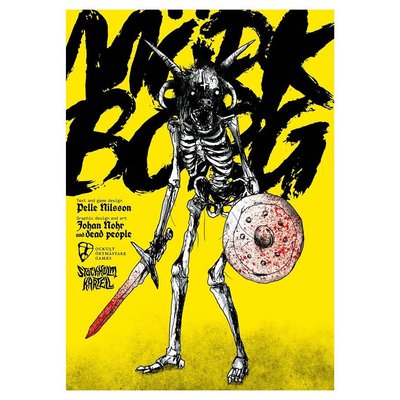
Um another idea would be to take the moves in something, you know, like Ironsworn or something like Solitary Defilement for Mörk Borg, is to take those moves and apply them to uh combat using strong, weak, and uh misses. Strong hits, weak hits, and misses. So, for instance, with that, you could take a combat maneuver, a combat move, and instead of rolling a single attack die, instead of rolling a single d20, you could roll two d20. And if both of those d20s, if both of those hit your target number, if both of those are hits, then that's considered a strong hit. And then strong hits would always do maximum damage. So, you would you would take your your damage die, if it was a d8, and you had a plus three, then you would do 11 points of damage. You wouldn't roll damage. A weak hit would do half of your maximum damage, and a uh a miss would apply no damage, or maybe even minimum damage. You know, take your weapon. If you're at a D8 + 3, then a one would be the minimum on the D8, and then you would add three, so you would do four damage. So, you're always applying damage. And I do like that system a lot because it you still get to roll dice, and it's still fun, and getting those strong hits, rolling for both of your D20s to hit is always fun in those kinds of systems. It's fun in Solitary Defilement to get that strong
hit. You know, it feels bad to get a miss, but, you know, I look at combat like these are, you know, you're you're you're you're playing heroes most of the time. You're playing people who are good at what they do. And they should be able to always do something good on their turn just to kind of, you know, progress the heroic narrative that we are so interested in. Another way would be to use a kind of a modified damage table or damage chart, and that is something that Scarlet Heroes does as well. But, you know, instead of when you hit and it's time to roll your damage, rather than rolling your weapon's damage, you roll a single die for all weapons, and then you look at a chart, and you apply the results from a chart that kind of governs, that kind of dictates the damage that you do. You know, if you were using a D6, let's say, and you made a simple little chart where you roll a one, you do minimum damage.
On a two, you do like minimum plus something, you know, minimum plus a D4 or something like that. On a three, you would do half of your max damage. On a four, you would roll damage as normal according to your rules. On a five, you would do maximum damage. And then on a six, you just win. It's a strong critical hit, and you get to do something really heroic. And I think that would work because that is something that I like in Scarlet Heroes. In Scarlet Heroes, you roll your damage based on a little chart, and then that damage is applied. And there is the uh damage chart right there. You can see that. But then also uh what something that Scarlet Heroes does that I like a lot is the fray die. So, every hero just has a die that they roll along with their normal attack, and that fray die always hits. It always applies damage.
So, I think that's really cool. But again, Scarlet Heroes kind of you you kind of need it to work within systems that are built around the OSR with hit dice and things like that. So, it doesn't work for everything. And uh my favorite way to play combat in a solo RPG is basically just kind of simulating combat. Um I don't like my characters to die when I play solo role-playing games unless that's part of the story that I want to create, the story that I want to tell. You know, character death to me is not fun. It's not exciting, especially when I'm playing solo because I want my characters to progress. I want them to continue to live so I can continue to play these interesting stories with them and have them do cool and interesting things. And so, what I like to do is often just kind of simulate combat without character death.
And one way you can do that is with some kind of a dice pool system where you know, you could take a single die for your hero. You could add uh dice for any bonuses they have. So, let's say your hero was, you know, levels 1 through 5, that hero would be represented by a D6. And then they have a plus two to attack. So, each plus two to attack, you could uh throw in a D4. And so, you that would be your heroes uh uh dice pool for that combat. And then you take a look at the enemies that you're fighting. You know, maybe a boss is a D20 or a D12. Uh maybe a lieutenant is, you know, a D8 or something. And maybe minions are a D4. And so you take all of the dice for whatever uh enemies you are fighting and you roll those and you roll your heroes uh pool of dice.
And the you take a look at the dice and the single highest die on whichever side is the winner. You know, so if you know in your hero dice pool, if you had rolled whatever your dice were and your single highest die was a four and the in the enemies pool of dice, their single highest uh value was a three, then the uh hero would win. And then you would kind of narrate the outcome. And you can, you know, you were able to kill enough of the minions to where the boss uh escaped and you know, vowed revenge to come back uh another time. If the if the uh enemy side wins, then you have escaped and you have to take, you know, something more impactful than just damage. You know, maybe your weapon broke and you were able to escape or maybe, you know, you were on your way to a dungeon or a castle and you came across this group uh this group of enemies and they win the combat, but they push you down a cliff and now you have a new adventure where you have to scale back up that cliff to get to that dungeon or to get to that castle.
You know, narrating the outcome for me is always more interesting than just ticking down points of damage until one side dies. That is just almost never exciting for me. And so I do like just kind of combat simulation where you don't go through each roll one at a time applying damage and it just it just kind of alleviates some of that tedium that I do find. And, you know, in the game that I was working on, I'm still working on it, uh Land in Peril, but I I I designed myself into a couple of corners, and it's been very discouraging. And so, I'm kind of uh resetting and just looking at the things that I really liked about my system, and, you know, kind of just getting rid of some of the things that were preventing me from making progress. But, I use a system like that, like a a dice pool system without uh character death, unless death is the story you want to tell.
You know, when I think about interesting combat in a game, in a tabletop game, I prefer it from a more narrative side, rather than from a tactical or skirmish side. Because that's just what I prefer. So, if you have explored some, you know, different house rules for handling combat, if you're like me, and you find that kind of typical RPG combat to be a little tedious, let me know what you have used. Let me know if you found any cool systems that are already out, or if you have anything that you like. And if you'd like to get really in into that needy-greedy and get really tactical and make the combat dynamic on the table, let me know that, too, because that could be interesting. There are some things that could be fun about that. Um just recently, I bought a bunch of stuff for Pulp Alley, a little narrative skirmish game that seems really cool, and I'm hoping I can learn a lot. I think the combat in Pulp Alley seems pretty interesting. The whole system is really cool, and it's completely miniatures agnostic, and it's genre agnostic, so you can play this game with any miniatures, any kind of genre, science fiction, war, horror, fantasy, western. It's It's pretty cool and I think I'm going to learn a lot while I am playing that as well. But yeah, I just wanted to talk briefly about combat cuz I've been playing some solo RPGs again and just every time I get to combat it's just Oh man, I got to do
this again. This enemy has 20 hit points. I don't want to whittle them down to zero. Can I just do one round of combat and then see what happens? So all right, well we'll talk to you later. Bye-bye.