

Pulp Alley Deep Dive
What the Community Thinks About Pulp Alley
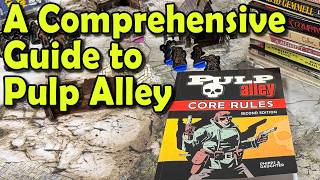
Pulp Alley draws its strongest praise from Daniel of The Dungeon Dive, who describes the game as one that has left them absolutely obsessed and calls it brilliant. The extended overview is framed around solo play, which they say the rules support alongside competitive and cooperative modes. They find the rulebook thoroughly written and full of examples, and while they acknowledge that the game is not super simple, they say nothing was unclear to them after reading it. Daniel returns to the game in a second video about solo tabletop combat, where they say the combat seems pretty interesting and highlights that the system is both miniatures agnostic and genre agnostic. Tabletop Minions offers a briefer endorsement during a livestream, pointing viewers toward Pulp Alley for players who enjoy pulp-style skirmish play, even though the hosts say they are not especially drawn to the pulp genre themselves.
Core Mechanics That Define Pulp Alley
Dice Pool Combat With Give and Take
Daniel explains that Pulp Alley runs on dice pools. A character rolls a number of D6, D8, D10, or D12 dice for each skill, including brawl, shoot, dodge, might, finesse, and cunning, and every die showing a four or higher is a success. Bonuses and penalties add or remove dice from the pool rather than changing die sizes. Combat is interactive because the defender responds: a dodging character can use high dice to cancel attacker successes, a character can answer a rush with defensive fire, and when both fighters brawl and neither can block the other, both sides take damage. Health works through checks. Injuries step a character's health die down from a D8 to a D6, and a fallen character can attempt a recovery at the end of each turn, with a failed recovery removing them from the battlefield. Daniel stresses that the actual values matter, since a five and a seven are weaker successes than a six and an eight.
Fortune and Solo Cards Drive the Plot Points
The second core system is a card layer that sits on top of the dice. In competitive games each player holds fortune cards that can be played on their own characters or on opponents, adding bonuses, penalties, or fresh challenges, and every player draws another each turn. Most scenarios are won through plot points rather than combat, and interacting with one is perilous. The character first passes a challenge set by a card, then draws a scenario card that reveals what the discovery is, what must be overcome, and what reward follows. Solo play swaps the fortune deck for a solo deck, makes the player always the director who chooses which side activates, and has each of the first three activated characters draw a solo card.
The Pulp Alley Experience
Chaotic, Reactive Adventure
Playing Pulp Alley feels like reacting to a story that keeps shifting. Daniel credits the fortune and solo cards with adding "all of the randomness, all of the weird things" that simulate chaos outside the player's control. A solo card can hold a character in place for the turn, and a card attached to that character can later be discarded to power another character's ability, so careful planning gives way to improvisation. Daniel says reacting to unplanned events is their favorite part of tabletop play, and that this is what gives the game its pulp adventure feel.
Imaginative Genre Freedom
The other prominent feeling is the freedom to make the game into almost anything. Because the rules are generic, the player has to translate them. A ranged attack might be a flintlock in a 1930s adventure, a magic missile in fantasy, or a laser blaster in science fiction, and a sword can become a lightsaber. The core book doubles as its own source material, with a few pages of guidance at the back for shaping fantasy, science fiction, and other genres. Daniel plays a basic fantasy campaign on a Hero Quest board, and describes the result as a chance to build a world from the cast of a favorite adventure novel, comic, or movie.
What Makes Pulp Alley Stand Out
Character and League Creation
Daniel says league creation is the aspect that pushes Pulp Alley over the top. A league is built around a free level four leader plus 10 points spent on sidekicks, allies, followers, gangs, perks, and associates, and a league can field as few as two models or as many as 60. Each character rates six skills with dice and gains abilities according to level, so a level one character can only use level one abilities. A single perk can consume an entire league's points, which is how Daniel built a league of four level three characters. Daniel describes the character creation as the most flexible they have seen in a skirmish game, and the example characters and blank character cards make it easy to translate favorite fiction into a roster.
A Solo Toolkit That Generates Stories
The second standout is how well the game supports a single player. Daniel describes scenario cards as a way to build an adventure on the fly: a player can lay out plot points, draw a matching card for each, and connect the results into a story, with trap cards mixed in for extra danger. Opposing leagues can be played by a bot following obvious tactics, or by NPCs that activate after all leagues and treat everyone as an enemy. Daniel values the character book and the Lemuria campaign for showing how designers link scenarios, carry persistent effects forward, and build toward a finale. The horror deck adds curses that can be used as spells, which they say makes every new purchase leave them wanting to play more.
Potential Drawbacks
Dense Rules Without an Index
Daniel's central criticism is that the rulebook has no index. They praise the layout and the abundance of examples, and say the book is organized so well that they usually know where to turn, but they still wish for a rules index because indexes are highly valuable. Daniel also notes that the game carries a lot of rules and is more involved than the simpler skirmish game Forbidden Psalm. Solo play adds to the cost, since they say that anyone wanting to play solo needs the solo deck, and suggests the scenario and rewards packs and several add-ons for a fuller solo experience.
Generic Rules Leave Setting Work to the Player
Because the rules are deliberately generic, things are not strictly defined, and players must use their imagination to apply abilities to a particular genre or setting. Daniel sees this as a strength for builders but a demand on groups who want the rules to define a world. They also wish for an expanded bestiary with more monstrous, fantasy-style characters, noting that the existing monster sections are valuable but leave room for more creatures that fit weird fantasy play.
If You Enjoy Pulp Alley
Daniel's main point of comparison is the skirmish game Forbidden Psalm, set in the Mörk Borg world, which Daniel loves and describes as simpler than Pulp Alley. Players who want the same style with fewer rules to track can start there and move up when they want more depth. Sun Rot shares Pulp Alley's card play, but Daniel finds its rules threadbare and lacking coverage for many situations, which makes Pulp Alley the more complete choice for players who want rules for everything. For terrain, Daniel recommends reusing what you already own, and uses the boards and tiles from Hero Quest and Warhammer Quest as dungeons for Pulp Alley.
- Forbidden Psalm: a lighter, Mörk Borg-flavored skirmish game for players who want Pulp Alley's style with fewer rules.
- Sun Rot: a card-driven skirmish game with a leaner rules set, for players who enjoy card play but want a lighter table experience.
- Hero Quest and Warhammer Quest: not rules alternatives, but ready-made dungeon boards and tiles that serve as terrain for Pulp Alley.
What Reviewers Are Saying
"Even when you are the attacker, there is always a chance that you are going to take some damage. So combat is a real give and take, you know."
— Daniel, The Dungeon Dive
"I think the combat in Pulp Alley seems pretty interesting. The whole system is really cool, and it's completely miniatures agnostic, and it's genre agnostic, so you can play this game with any miniatures, any kind of genre, science fiction, war, horror, fantasy, western."
— Daniel, The Dungeon Dive
"Pulp Alley, they're out there if you're interested in that type of thing. Pulp Alley does a lot of skirmish kind of like pulp stuff."
— Tabletop Minions