Let's Talk Board Games #38 – Worth Playing These? (Black Forest, Katmai & More)
Games in This Video
2 games are featured in this video — they unlock as you watch.

Transcript
Hi everyone, my name is Monique and I'm Naveen from Before You Play and we are back with another episode of Let's Talk Board Games where we talk about a few games that we've been playing recently and how we feel about them. Yes. Today we have four games that we're going to be talking about. Uh three of which came out last year, one of which is fairly new. Came out earlier this year, right? Um and so we've played all these uh several times and now we want to talk about them. Yeah, a few of them are actually two-player only games. So, we do have some smallbox two-player only games followed by a nice uh grander euro. But before we get into the games, today's episode is kindly sponsored by Sordane Publishing for their new game called Wear Tigers that is coming to Kickstarter tomorrow. Wear Tigers is a fast-paced, fully cooperative dice defense game that features Southeast Asian aesthetics and a vibrant papier-mâché art style. In this game, players are wear tigers who must defend their village from escalating threats under the light of a shifting moon. Each round, players will roll dice and assign them to various actions that include revealing and attacking threat tokens, gaining XP in order to unlock additional dice, activating villagers abilities, and even recruiting villagers to join their cause. Players can also build traps and defensive walls to keep enemies at bay. However, the moon deck is both dangerous and unpredictable, so in order to win, players will need to survive until the final moon card is revealed. Now, we actually have a full playthrough video scheduled for this game. So, if you'd like to see it in action, the link to the video will be in a pinned comment down below as soon as it's live. Otherwise, for more
information regarding the game as well as a campaign, feel free to follow the link in the description below. And thank you so much to Sordane Publishing for helping sponsor this segment. All right, thank you so much for that. Now, these four games that we are going to talk about were sent to us by the respective publisher for review. So, just be aware of that. Now, let's go ahead and talk about these four games. The first one we want to talk about actually came out last year. Um, but we had anticipated it, I think, back in 2023. I want to say we put it on a most anticipated list going into last year. We did because it is a follow-up of sorts from a previous game of a similar name. So, so this one, this is Jackal and Hide introduction versus Scotland Yard. Yes. This is a uh two-player only trick taking game. Uh, but cooperative. Uh, so this is based off of the Jackekal versus Hyde game, which we both really enjoyed as a two-player head-to-head trick-T game.
Uh, and so this kind of uh is in the same uh line, I guess, of games, but now it's a cooperative game. This one is designed by Olivier Sepier as well as Gioil and published by 25th Century Games here in the United States. Yes. So, it's sort of a combination between two games of sorts. Jackal versus Hyde, which is the two-player only competitive trick-T game that we were mentioning. Really enjoyed that one. It felt thematic in the sense that one player is Jackal, the other one is Hide, and you have a different sort of uh win condition. Uh Scotland Yard is a classic game of sorts where you are trying to it's a hidden movement game. And so it's sort of a play on those two titles, I think. Or maybe it's just a play on both themes. Who knows? That's kind of just how I interpreted it. But basically in this game, this is a fully cooperative game where basically both players will win if you can outrun Scotland Yard and get to the end of the board by the second round. So, it's played over the course of two rounds. Now, there are several different uh chapters that the game comes with. The first three chapters are sort of like the tutorial.
Chapter four is a standard game and then five through 10 are like extra challenges that you can play. Although, the game is quite difficult. It is hard. So, uh, just to let you know, we didn't really get to dive too deep into these 5 through 10 chapters. We were having a lot of trouble just winning chapter 4. We were, but we did win it eventually. We did. And so, the way the game works is one player plays as Dr. Jackekal, the other the other one plays as Mr. Hyde. And the game has a total of three suits just like in the original game. And each suit is numbered 1 through eight. Yep. Now, each round is split into two phases. There's a night phase where each player is given a hand of cards and then we have to secretly choose four cards to give to the city. And the city is like the third not neutral but also neutral player. Like it is the AI that we're sort of going up against. Yeah. And like because this is a two-player only game, you will always build out this this AI Scotland Yard's deck basically. It's the city. It's not necessarily Scotland Yard. And then four cards from the deck are just taken out. So you can't perfectly card count. Now the thing is if you have any eights which are the highest value of the suits they must go to the city. So you know you're going to be giving the city some very strong cards. Then once that's done you go into the day phase where it's a standard trick- taking game in the sense that somebody plays a card and at the end of the hand the player who played the most valuable card wins the trick. But the twist here though is the definition of most valuable. Now there's going to be a ranking system for the different suits in the game. And I think that is also from the original the strength of suit.
Y the first time a colored card is played that suit that color will go to the very bottom of the the ranking. So it is now the weakest suit. Now just like in a standard trick taking game if you don't have that suit it is a must follow game. Yep. So you have to play a card of the same suit if you can. But if you don't have that suit you can play any other suit. And as soon as a second color is introduced, then that becomes the middle tier and then the third color is automatically the strongest suit. So even if you played off suit because you didn't have a card of the leading color, you could still win the trick because you happen to play the most uh valuable of the colors. Yeah, cuz there's not like a trump suit like some other uh trick taking games. Uh it's just the strength will be determined as you play over the course of the round. Mhm. Now the other thing is the deck of cards also has these potion cards and these are suitless. So anytime a potion card is played consecutively either before or after a color card then its effect triggers and the potion basically takes the suit of whatever that color card was. Yeah. So if it was like the blue uh and you're using the potion then you can actually rearrange the strength of the different tokens or the different uh suits in the in the particular round.
Right. Because what I was going to say is each suit has its own power. So that's why it's important not only because it determines the effect of the potion, but also because it determines the strength of the card at the end of the hand. And like Naveen was mentioning, these effects are going to be like the blue one requires you actually to rearrange the colors on that hierarchy. These are not uh these are not optional. When you trigger an effect, you have to do it. And keep in mind that the effect can uh be triggered by the city because there's a turn order of sorts. You have to follow the turn order. The city actually always goes first to start the entire round. Um, one of the other effects allows you to switch cards from the top of the city's deck because you know that the city the the likelihood of the city having really strong cards is much higher. Yeah. Because you have to give away all your eights that you start the night phase with. So, you're never going to start with eights in your hand, right? And this could be good or bad as you'll see.
And then the other effect uh allows you to take the last trick that the city won. Now, the reason why taking tricks is not always ideal is because at the end of the round, once we played out our entire hands, we are going to count up how many eights we've won. We're also going to count up how many tricks each player has won because whoever won the fewer amount of tricks. The number of tricks they won is the number of steps our pawn will move on this board. Yeah, cuz we have this board and we're trying to get to the end by the end of the second round. Yes. So you want to balance with your teammate uh having an equal number of tricks. So if I won three and you won three, then we both know that we are going to move at least three spaces. Yes. However, you have to make it to the exact last space because any additional spaces that you have to move past that space. You actually move Scotland Yard and that is where the Scotland Yard aspect of this game comes into play because depending on which chapter you're playing, the rules for winning and losing will be different. In a standard game, if Scotland Yard either reaches our space or passes us, then obviously we lose. And also, if you don't reach the end of the track before the end of the second round, you also lose. But the other thing is for any of the ones and twos and threes, sorry, ones, twos, and threes that any of us have won, uh, Scotland Yard also moves up a step. Yeah. There's a little like, uh, Scotland Yard like police symbol on the very top, and that's how you know that like you do you want to avoid these tricks that comprise of the ones, twos, and threes. anything that's on our side, uh, meaning our our one tricks, we are
going to then move the Scotland yard pawn towards us. So, you really want to balance how many tricks we each win, you want to somehow try to find a way to win the eights based off of the hierarchy, cuz maybe red is the lowest and and the um we I I guess we didn't say this, but when it's the AI or the city's turn to take an action, they're just going to flip over a shuffle deck of cards, so they're not going to have to follow or anything like that. So sometimes you can maybe try to get an eight because of the hierarchy of the different values of the different suits and their entire deck is made from cards that we chose. So if you can remember which four cards you contributed, you know half of their deck, right? So it's really interesting. Um and we're also obviously trying to avoid taking those ones, twos, and threes. So it's this big game of balance. Uh it's really interesting because there is no trump. So, it really just depends on how we play the different colors when we activate the potion effects because obviously you're not going to be giving the city your potion cards unless you're playing some of the later chapters. And it's just it's a big puzzle. It's a big puzzly cooperative trick taking game for two years. It's really good. I really, really like it. There's also no communication until you get to the point where you're playing a potion. You're resolving the potion, but you have to be very like on point about what you're discussing at that moment. You can't be like, "Hey, we need to win a blue." Uh, but you could say I think blue should be the highest value now at this point.
Yes, you know, something like that. Or like who wants to take the card because one of the potions is the taking of the top card. Uh, maybe Naveen is playing next. So, he will exchange a card from his hand and maybe the city is going to go third. So, he can kind of set up that trick knowing what we need to win. Yeah, because again, you're just going to flip over the top card. So, the I think that's the white potion uh effect. So, I can set I can take their card. Maybe I took an eight. I can exchange it with a really bad card, put it on top of there because I really need for me to win the very next trick, right? Something like that. So, that's the puzzle aspect of it is when do you use the potion? Um, how do you get the right values and how do you maintain uh the ability to win tricks, but then you don't want to be the only one winning the tricks because then the person that's your teammate, if they only win one trick, you're only moving your pawn one space. So, there's a lot of things to consider in such a small game. Yeah, it's so interesting.
It's very goal driven without actually having goals. You know, you you play fully cooperative uh trick- taking games and it's they're usually set up in a way where it's like they the goals are laid out for you. It's like somebody has to win a five or like the crew. Yeah, the crew. And which I really really enjoy. So, keep that in mind. There's a bit of a bias here cuz I actually really really like uh cooperative trick taking games. I think it's a really interesting way to play trick taking. M but with this there are no explicit goals besides the fact that you have this race that you're trying to get to the end of the board. But you know that during the round we're trying to figure out as we win tricks like okay I've won three tricks. Naveen, you need to win three more. So that is our next goal. Get him to win. I need to switch everything. Like I need blues to not be so valuable because I have no blues. I'm just going to get trounced on this. So right how but I do have this potion. So, I'm waiting for somebody to play the blue so that I can use the potion so I can switch it around and have enough tricks or opportunity or turns or hands to actually win some of the tricks. So, it's very very clever game. It's really clever. Really interesting, very difficult. Um, but I like that there are also different modes of play. Like they're not necessarily modes of play, but if you feel like you if you feel like chapter 4 is too difficult and you play chapters one through three, you kind of build up to it. There are different challenges per chapter, too, that you can uh you can sort of incorporate if you want to do that. Uh or you can just do what we did and just play the standard game over and over and over again until we won something. I will say though that in the original Jackal versus Hide, the Jackal and Hide aspect was more thematic. In
this game, you're sort of just choosing a character. I feel like that aspect of it was I think the only like part of the theme here is like at at after like all the hands have been played and you're actually moving. It's like Scotland Yard's after you, you got to get away. But that one is more uh the original one, the the competitive one, it's like there's this like tugof-war like internal struggle between you know Jackal and Hyde. This one you don't really feel that. Yeah. You're just choosing two characters. Also, the uh turn order mechanism can sometimes be a little confusing. like we have to give pause every time we're like wait whose turn is it because you basically flip a token that shows either Jackal or Hyde and the city will always go first and whoever's uh face up on that token goes next and that changes in the second round. So you always have to kind of be mindful of like wait who who was supposed to go next after that triangle clockwise versus counterclockwise. Yeah.
But other than that I really really loved it. This is definitely going into our now ever growing trick taking game collection. But I actually like this one more than the original Jackal versus Hyde. That one I found, you know, there were some split opinions as to which character won more. For for some reason, I don't remember now which one I thought it was, but whenever we played, I always thought like when you're this character, it's much easier to win in Jackal versus Hyde. Yeah. And that one, it's like one character wants there to be almost like an even amount of tricks won, and then one character wants a trouncing. Yeah. Something like that. And that's how you create the separation between uh turning into jackal or or sorry or turning into hide or staying as Jackekal. Um this one um I I would say it's right on par. I don't know which one I like better. I I like both of them for their own uh kind of uniqueness. I do like the fact that we're playing against each other and like every single card that is being played in the original game is meaningful. this one technically like the the AI or the robot of the city city uh is just going to flip over a card and it just kind of is what it is. But it's the cards that you give them. It is the cards that you give them. And because there are three suits times three of those like bad helmet symbols on there like you're you're thinking like the first three the ones, twos, and threes.
You're like I I can't just hold on to all these ones, twos, and threes cuz then I'm not going to win any tricks and that's bad. So I have to give them some of them. But which ones do I give them? So there there is still like that decision making in there that is clever. So when they finally reveal and you're like, I really need to win a trick and you see that it's a one that they've played and you're like, all right, so if I win this trick, we're going to move, but they're also going to move. Okay. Um, so it it is clever in that sense, but it's still it's still just an AI deck that's getting flipped over. Yeah. to Navian's point, there is aspects of that even though we are the ones giving them the cards, there's there are aspects of that that are out of your control because you don't know the timing of when the card is going to come out. So, there are some times where it's like, well, we couldn't have planned for that, right? And that does happen, but I think it's so interesting just trying to get out of those holes. Yeah, it it creates a puzzle as it as it kind of exposes itself. So, it's it it's it is its own unique game and uh you cannot play with the original components for this. Oh, there's the the original components uh is only 1 through six.
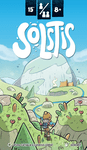
This is uh 1 through eight. Oh, from my understanding. I cannot confirm. I think I remember. I don't remember that. Maybe maybe it's 1 through seven. I don't remember. But definitely doesn't go up to eight in the uh competitive game. Well, there you go. That is Duckland Hide versus Scotland Yard. My final consensus is I absolutely loved it going into our collection. Love these trick takers that are coming out. Lone Wolves was such a hit was such a big hit for us and now this one. Oh, anybody that has the question, you will only play as Jackekal and Hyde. We will never play a Scotland Yard going after Jacqueline Hyde. You are just one-sided here. All right, moving on to the next game. This is going to be the tiniest box of today's video and it is another two-player. It's actually one or two-player game, but we have only played it at two and it is called Solstice. So, this tiny cute art game is designed by Bruno Cthala and Quarantine Liberat, and it's published by Hashet Board Games.
And uh just like the the the image at the front suggests, the theme of the game is we are trying to climb up a mountain. I think it's a right of passage within this world. Okay. And it always occurs during the summer solstice. So as cute as this design is, it's actually a trickier game than it looks. Now it is still a small box game that plays quickly. So in about 15 minutes, which is about right. And it's actually a tieing game. So in this game there is this mountain, this journey up a mountain that we are trying to go up on and it's actually laid out as a panorama. This panorama image has six different layers. Some layers have up to 10 tiles and the when you go further up the mountain, there are fewer and fewer tiles that are part of that that row. Yep. And each tile is unique. So over the course of the game, we are basically trying to take tiles from the display and play them into our own panorama to make enough of this mountain so that we can I guess thematically go up the journey and score the most amount of points. There are also spirit tokens that you'll sort of encounter along the way, but it is both simple and complicated in a way. So the way the game works is each player starts with a hand of tiles. I believe three tiles I think so. Y and there's also a display in the center of the table. It's going to be six face down tiles with six face up tiles on top of them. Yep. So basically six pairs. And on your turn, you're going to choose one of the tiles from your hand to play to basically compare to the display. And each tile is going to have a color and a number. And that basically tells you exactly what
position in that whole uh panorama picture that tile is from. Yeah. Cuz like the bottom row might be red, the next row is all greens. I don't remember the exact order of the colors, but so every single tile is unique. And so whenever you are going to put something into your panorama, it will go in the relative position as if you were building out the entire mountain. While you're comparing your tile to the market, you're going to see which tiles in the market are either the same color or the same number because those are the tiles that you're allowed to take. Um, if there is one, if there are many, then I choose which one I want to take. And I would take both the tile from the display as well as a tile that I played and place them both into my panorama building out this this scene. So, if you played like the uh seven red and there was a uh a seven green out there, then you can take that because they're both sevens and then put them and stack them on top of each other because it's like red, green, and depending on what the actual order of the colors is. Of course, these tiles are unique. So that means now the tiles that I placed into my display are going to go into Naveen's display, right? Which might be a problem or not depending on which tiles you actually have uh going on for you. One of the things that you're trying to do is you're trying to form a cluster of tiles. You want your your tiles to be grouped together because at the end of the game, you'll score one point uh per tile that are in your largest cluster of tiles. So you definitely don't want to have like a super you don't want to be all sparse all over the place. Yeah. You want to try to build as much of this panorama as you can. Anytime you make a
2 by two, which is basically a square, then you also attract a spirit animal token. And there are a ton of these animal tokens in the game. Some of them give you endgame points, some of them give you immediate effects. You basically draw the top two from the stack. You choose one to keep and the other one goes face up into the display. And now from now on, whenever a player gains another spirit tile, they can either take from the face down display or just take one of the ones that are face up. Yeah. So you have some uh I guess choice whenever you make a 2 by 2, a perfect 2 by 2. You could take the one that you actually know or you can just kind of gamble and take two that are face down. Yes. And there is a mean spirit tile by the way. It's kind of like a hot potato mechanic that you don't have to play with. It's red. So just keep that in mind. Now the other thing that we didn't mention is if you go and you play a tile compared to the display and you don't have any legal possible tiles to take, then you actually put your tile into the display.
So that is one of the main ways in which the display continues to grow tiles. And you have what's called a second chance. You draw a tile from the top of the draw deck. And then you do the same thing. You're taking a chance with a tile that was not in your hand. Yeah. And then you'll compare it to the entire display. If something matches, then you can go ahead and take those two and put them into your panorama. Yes. If for a second time it doesn't match, then that goes into the display and you get what is called a rainbow tile. They have actual rainbows on them. And these tiles are actually quite nice because you can place them anywhere in your your panorama. They act like a wild. They act like a wild. They just don't score you a point at the end of the game, but they are nice for being able to uh attract those spirit the spirit tokens. Yeah, you could put them in a 2 by two grid uh to make that to get the spirit token. Or if you're like, I will never get this six red. I absolutely need the six red, but Monnique has it. this rainbow can create that junction for me so I can get my five and my seven red to actually connect. Yes. Or whatever I'm trying to get done in the in my uh particular tableau. Yeah. So, you might actually try to get those because they're quite versatile. If in the future you do get the tile that's supposed to go in that spot, then as long as there are no spirit tokens on top of that 4x4, then you can relocate the rainbow tile. So, they're very, very useful in that sense.
Another reason why is because at the end of the game, uh the topmost tiles, the topmost row, they all have fire symbols on them and they will score you a point if you are able to trace a path between that tile and the very bottom row of the mountain, which is the red colored row. Uh it's considered to be lit and you'll score a point for that tile. But so that's why rainbow tiles could be useful because maybe I don't have that happens quite often where you're missing just this like one cuz diagonals don't count. Yeah, it's everything's orthogonal. nothing diagonal is not considered adjacent, right? And that's essentially it. As soon as neither player is able to legally capture a tile, then the game ends immediately. And you basically score at the end of the game for those three things. Your largest cluster of tiles, your lit fire icons, and any spirit tokens uh at the end of the game because they each give you a set number of points, I believe. Yes. And then some of them have endgame scoring. So, it is very simple. It plays very quickly. It's simple yet a little complicated because to tell you the truth, I read the rules and it took me a little bit to really figure out how to play this game to go from words to actually like game on table. Yeah, that that procedure of like capturing a tile and then realizing like what exactly it's trying to get us to do and realizing that it's not going to be that simple was actually a little bit complicated. So, the way you set up the game with these six uh tiles face down with six on top of them all face up early on you're going to make matches, right? like I'm going to play this red, there's a red in the display. I'm going to play eight, there's an eight in the display. But as you start to dwindle down, um you don't actually refill the
display just from the deck. The only way you refill is if you cannot actually uh make a match. That's going to now go into the display. So over time, that 12 tiles that are out there are just going to get whittleled down and you're like, I don't see any greens and all I'm holding is greens in my hand. Yeah. Like uhoh, how am I how am I going to get these into play? And these are so perfect. It's like 6 seven eight. I need this to I need to be able to to make this happen, but then now you're going to lose it. And so there's a lot of like um I guess like taking your chance there. There's some push luck on it, but it's still enjoyable. Um yeah, it's it's actually I find it to be a bit strange because it looks like a cute relaxing game. You know, usually when you see a game with this kind of art and like it plays 15 minutes, it's usually like a casual tiling, but this one is oddly strategic where you kind of have to roll with the punches and like you have to figure out opportunities for yourself, especially in the late game. Which tile to draft? It's like I have I have these three options. Every single one of these matches up with something like that, but what's a realistic thing that I can try to do it? How can I try to push a rainbow tile? Yeah. Or like which of the spirit tiles am I going to add to my area? And you also want to be aware of what your opponent is doing because if like wait Mon'nique has got a lot of the sixes. She's trying to make a straight like six bar all the way up. I should probably grab one of those that that way she can't just run away with it. So you definitely there is some hate drafting in there because you don't want your opponent just to completely just take one whole section of the mountain and be able to make the largest cuz I think
you're going to score most of your points from just having the largest cluster. Um, so you got to be aware of as to which which tiles you are supposed to draft relative to what your opponent actually has out on on the board. So it's interesting. I like it. I actually really like the game. I like how uh quick it is, but how I don't know. It's like crunchy, but also it's strange. It's nice, right? It's a good little filler. Um, it's not difficult. It's just it's not as satisfying as you would expect it to be. And I think out of that feeling it you're constantly thinking like what do I do here? It's more satisfying than you expected it to be is what you're saying. I think it's No, it's less satisfying. It's less satisfying because when I play a Thailand game, you know, you try to make the complete picture. You're never going to make the complete picture. You feel unsatisfied by the fact that you're not going to be able to get get it your way.
Yes. You're not going to be able to just like bang out all of these scoring criteria. like you're going to be scraping for these points basically. Like I just need a cluster somewhere. You know what I mean? Like I need to fill in these holes. Like that's how I feel when I'm playing. There's a tiny little bit of anxiety of like I've got three in this nice window. I just need that one tile to be there and you see it come and then your opponent has the opportunity and they take it and you're just like and now there are only three tiles in the market left. Like when is the game is going to end very soon and I don't have a cluster at all. Like that's how some some games that's how it felt. But I imagine the more you play the game, the more strategies I guess will open up for you to sort of go around that. And then the spirit tiles, if you can make those 2 by twos, which I think is a good goal to go for uh the first few times you play, then those spirit tiles can really help. Yeah. But overall, despite the oddly unsatisfying aspect of the game, I actually really liked it. This is one that I want to play more and more, and I think there's an expansion for it. I'm not done exploring the base game, though, for me to feel the need to incorporate that. I think I want to play it more and like really see all the spirit tiles first.
But if you're interested in more gameplay, there is that out there. Yep. So anyway, that is Solstice. All right, the next one we want to talk about is another two-player only game, but this one did come out this year earlier this year, and it is called Katmmy. Now, this one is Oh, Katmmy, the bears of Brooks River. Yes, there are real bears uh that they kind of model some of the cards after. This is designed by Peter Rididgeway and published by Osprey Games. Now, this is a two-player only game uh where there is going to be a river out in front and the ultimate goal is to have your bears eat the most amount of fish by the end of the game. Yes. The theme of this game is modeled after real life. You know, there are uh bears in the Alaskan region who are trying to prepare for hibernation by trying to eat as much salmon as possible. And so these are brown bears and thematically or I guess in real life the stronger the bear usually the more the better the river spot they get. Yes.
But there are bears who are also highly skilled. They might not be the strongest bears but they are highly skilled and they have other tools in their tool belt to be able to catch these fish. Maybe they're great at diving. So it's not just about being the strongest bear. You also want to use your actions wisely. So, the way the game works is like Naven was mentioning, there is a river in the center. It's comprised of several tiles. They're double-sided, by the way. And each tile has four uh quadrants on them. And each quadrant has like a specific feature of the river. Maybe it's shallow water. Maybe a waterfall. Maybe there's a uh one of these things like an eddy. An eddy. Yeah. Or a rock. Or a rock. So, there's going to be some sort of feature in each of the quadrants, right? And like N was mentioning, this is a two-player only game. So each player has their own deck of cards, their own deck of card bears. 12 cards. 12 cards. One is Sandy and the other one is Cinnamon.
So I think these are real bears, which I thought it was really cute. Yes. One is like a lighter brown and the other one's a darker brown, basically. But I I believe the decks are identical. I think they're identical in the abilities. So like we have a balanced deck, but um it's one of those games where you take your 12 cards at the start of the round. Yes. Shuffle them up and and put out two cards. Yeah. And then you'll only have so many cards in your hand when making a decision as to which card to play. Right. And by the way, this is a 30inut game. So it's not supposed to be a very long game, but it is a card driven sort of tactical game in that sense. Very tactical. Now each round is split into four phases. The first phase is where you sort of ready your deck by discarding the two cards like Nun's mentioning so that you cannot card count and then you set up your starting hand and you'll always only have a hand of two cards. So when you're making your decisions, you're just choosing between two bears, which I thought was was nice, honestly. Yeah. It it eases the burden of the thinking. Yes. Then you move into the next phase where players are going to be taking turns playing a card to their side of the river. So each sort of tile can only hold up to three bear cards of your own your own character of bear. You can only play three cards max to your side of a tile. And when you play a card, you're literally just going to choose an area. And actually, we both do this. It's it's in turn order, but you play it face down. Then the next player plays their card to any any tile on their side of the river face down, and then you simultaneously reveal them.
These bear cards have numbers, and some of them also have actions that will either come into play immediately or maybe they'll come into effect when you're trying to compare the values because at the end of the day, this game is a I believe it's an area majority game. Yeah. So, each bear will have a different uh set value on it. It could be as low as zero because it has an ability or it could be like four po value points on them. Uh because at the end of the round or the end of the day, you are going to count up for each tile whoever has the strict majority uh mathematically. Yes. And they are going to have access to putting out their bare meeples, their beuples. Their beeples onto one of those four quadrants of the river where that tile is. Yeah. Yes. So you basically do this until both players have played out their entire hands. You're going to play 10 cards each per round.
And then once that's done, you go into the scoring phase where you're going to start from one end of the river going down and counting up those majorities and whoever won gets to place their people in any open space of the tile. It does not have to go on your side of the river, which is important because every time we place out a uh depending on the mode of play, there are two modes of play. There's like the easier game and then the more advanced game. You're going to have a certain number of objectives, either four or six objectives, and they are going to, this is how you score your salmon. They're going to score you a certain number of salmon tokens that you place on the card if you meet the objective after placing your people. Yeah. So, one of the objectives that's a public objective, let's say you're playing with six of them, one could be be next be on the same tile and be next to uh the a waterfall space twice. Yeah. So, if you can do it uh in your turn, let's say you have one bear on on the same tile twice next to a waterfall feature, then you get to put out a salmon piece onto that particular uh objective card so that at the end of the game, you're scoring at least one for that. Yes. Because at the end of the game, it's just going to be whoever has the most salmon is going to win the game. Now, if you're playing the easier mode, the objectives, which are all public by the way, they're going to be more um abstract spatial. They're going to be more like you want to have your bears in this configuration along the river. And you get to score those every time you place a bele as long as that newly placed bele now meets that objective, right? There are about 15 of these cards that come with the game. So you're always going to play with a different uh configuration of them, I guess. And you know, some of them are
like for the more advanced game have a bele on this specific feature on one side of the river and then this other feature on the other side of the river. So that is when the different features of the river actually matters. And again, the only way you actually get your bear mele out onto the river spaces is by having an area majority at the end of the day. So your placement of your bear cards is very very important relative to those public objectives because if you're very very close to scoring multiple public objectives with just the same bear, then you can try to maximize the amount of fish that that one bear is going to get you. Yeah. So there is a sort of journey that you kind of go along. You know, in the beginning, you're sort of just trying to gain your initial placements, and then as you progress through the game, it gets a little bit more heated as to where you really need to place your beles. Yeah.
And that is sort of just the basic structure of the game. There are actually other aspects of the game that make it a little bit more strategically complex. There's an initiative uh aspect where one player starts with the initiative, which allows you to go first. But if you decide that I actually don't want to go first, then before I play my card, I can pass Naveen the initiative and now he's required to play first, right? And then I'll be going first initiative on the very next card to be played, but then I can pass it right back to Mon'nique. So, it's not like you have to wait until the end of the day or the end of the round. But one of the benefits of having initiative is in the case of a tie, there are some cards that have this like mama bear symbol. I forgot they actually call it now, but it basically represents a mama bear. And if in that tie, in that lane, uh you both have a mama bear, then in initiative order, you can decide to play out your tiebreaker token, which you can only play once per round, and then you you basically win. You break the tie.
Yeah. But that's essentially it. The game ends as soon as either one player has basically run away with the game and they have uh four beles or more already on the board than their opponent. Yeah. myself like you've played out seven and I'm lagging behind and I've only played out like two or three then it's just like a kind of a wash. It's like well it's not a wash. The game ends immediately after that round and whoever has the lead wins. Sorry. Yes. But if you get to a point where one player has zero one or two people left in their supply, then at the end of the round the game naturally ends and you get to go into final score and you count up all your salmon tokens. Yeah. So most of the game uh you know there's simp there's like big bears that you can just put out for like a big value but a lot of the abilities on the cards is there might be something like move a bear here to a different river spot. So if you know you're getting trounced somewhere and you're like you know what this this really nice bear I could really use them somewhere else. I could play this card with its text ability that says move one of my bears away or I can move one of my opponent's bears away. Um, so a lot of it has to do with uh kind of like how you utilize just the two cards in your hand. Uh, and then also there's going to be an element, what I really appreciate about the game is there's that element of like we both have the same abilities.
It's just about when it actually comes into your hand and when can you actually deploy that that ability because there's times where you're like Mon'nique early on and around like we're both competing over the same area because we know a public objective really wants waterfalls to be a thing. M. So, she's like completely like taking me out of my element over here. She plays a ability that gets one of my really powerful bears to move and I'm just like, man, I cannot wait until I get that ability back in my hand so I can actually use it against you. So, uh it's it's pretty clever. Um so, yeah. So, on that note, your strategies will open up the more you play the game because you'll become more acquainted with the cards. I know the very first time we played, we had a little bit of difficulty about that because it's a little overwhelming. It is it can be a little overwhelming to just know what can happen and like keeping track of what abilities are already on the table. There are symbols on the cards that sort of allow you to to to see that at a glance because as you play cards, as you play several cards to one lane, you're actually going to overlap them. And now the ability that's written out at the bottom is no longer seen. So, I know we ran into one situation the very first time we played where I thought I would be able to score one area of the river, but I didn't realize that Naveen had a tile had a had a bear that was like it takes the power of the bear above it or something like that. Like it made it so that I was clearly not going to win that, but strategically you were still playing to it. Yeah. Yeah. So, the more you play it definitely the more you'll become more acquainted with the actions. You can kind of foresee Waveen still has this other bare possibility in his hand. Um,
but there are, you know, 12 total bears. So, you really kind of just go with what you have. And by the way, uh, of the 12 cards, we we did mention that you will, uh, discard two out of the game. So, there's no card counting. Uh, and you will, the round will end once you've played all the cards. So, you will play 10 cards on your side of the river, and so will your opponent. And again, you can only play three cards to a particular tile every single round. Yes. And I appreciate that restriction. I think that restriction is very strategically uh sound because you can kind of see, you know, you can kind of see that there's no way that this player is going to win. It's like, well, Naveen's invested so much into that river spot. Why would I waste my time there now? Now I'm going to go and just drip drip drip drip on these other places. Or if I really want that spot and Naveen has already played three, then I know what I need to play to win it. Yeah. So, the restriction, I think, is good. Yeah. Um, if you are like us and you have analysis paralysis when playing two-player games like this, then it potentially will play longer than 30 minutes. Just keep that in mind. Ours definitely ran longer than that for sure. Especially with those public objectives and it's like you're trying to like well in the previous round I put this bear mele here and like the next round it's like ah that okay well actually that bear mele does meet that other criteria if I if I keep going this way. So how am I going to get my cards here and oh wait that effect is wait that effect is going to move this.
There's a lot of thinking that goes on in you can definitely overthink this game but I think it's really interesting. I think it's really well done. Um, it's really clever in the way that you go back and forth with the cards and the fact that it's card driven, but you're trying to meet these like spatial objectives with beles. And I love the theme. I love We're always I think people in the board game space like want to see fresh themes, right? And I've never seen a bele. I think that you use this way that's not just from like an animal game that features them. Okay. Like maybe that's not true, but I really appreciate the theme. I love that it's based off of real life. And I think the bears are real. All the bear cards, apparently, according to the rule book, are real bears that have been observed in nature. And they've been named by It's so cute. I don't know, scientist.
Yeah, they all have names. All the cards have names when I'm playing them out. It's just really adorable cuz I like to say their names while we play them. But anyway, I thought it was solid. Two-player only, though. So, so sorry for people who don't play two player. Two-player. Players are eating really well right now. They are. Just like these bears. Uh, this is I like the shape of this box, by the way. Like, you know, on a call where you have that little sliver above a bunch of boards stacked, you can just slide it in there. Really appreciate the form factor on this particular one. Doesn't take up too much space. Nice and thin. Um, plays really, really well. Again, for us, like for me at least, I have a ton of AP playing it, but I did enjoy my play. Yeah, Naveen is not on the spatial gaming kind of train. like the e the simple like have a bear on an eddy on one side of the river and have one on the waterfall on the other side. Sure, I can do that. But the like make sure it's in this configuration. It's like well I set that up kind of Yeah. Uhoh. How am I going to get that done? Yeah. The the easier game objectives are like you can't have a bear in this space. You have to have it in this configuration.
Very specific. So anyway, that is Catmy the Bears of Brooks River. Yep. All right. Moving on to the final game of today's video. This is not a two-player only game. This is actually a larger uh big box Euro this time that we've actually been anticipating for a while. This is none other than Black Forest designed by two designers. U Rosenberg as well as Tito Lauren. So two designers, not just uh U Rosenberg, although the initial things that we had heard about the game was that it was a play on glass road with the wheels. with the wheels. And this this version of the game was published by Capstone Games. Now, if you're not familiar, we did an entire U Rosenberg series that where we basically played through as many of his games as possible. It was extremely hard games, but we finished it eventually.
Um, it included all of the big box games, including a game called Glass Road, which was a game that has it has one of his like resource wheel mechanisms that we hadn't seen until that point that basically you have a resource wheel and there are basic resources and more valuable resources. And the more you gain and more you spend, the wheel moves to automatically make those more valuable resources. At the end of the day though, Glass Road was a card- driven game. So you would play cards from your hand. There was sort of like a a card matching mechanism, following mechanism, a following one where depending on if other players around the table also chose a similar card. Then it determined what you could actually do with the card. And then outside of that, you're building buildings in the form of tiles and placing them on your board. So that was Glass Road. Now this game came out, I think last year. Last year. And it wasn't super on our radar, I will admit, because we were told that it was basically Glass Road 2.0. it. So, it it was on my radar cuz I when I didn't know anything about it, it was the new Uber Rosenberg, the big box Uber Rosenberg, not like a small Thailand game. But then when I found out that it was being compared to Glass Road, um spoiler alert, Glass Road was not in when we finally ranked uh it, it was not in the higher tier of the ranks for us. It was like more in the mid to lower. I still like Glass Road. Still like it, but you have to rank them, right? Yeah. But in comparison to the other U Rosenberg games, definitely not my favorite. So when we heard it had a comparison to Glass Road, it was like okay like maybe I'm not as interested as as I as if it
was compared to maybe like a piece road or something. Right. Right. Right. Now obviously keep in mind these are two designers that designed this. We don't want to just you know give all the credit for Rosenberg. But whenever a new game comes out either dually designed or by by U Rosenberg just by himself we always kind of think like okay because he's made so many games which one is it going to be most like? just so it kind of prepares our mind for like oh is it more of like the tile laying because there are basically a few mechanisms that he tends to innovate on y like he'll like base it off of this like feast for Odin was entirely tile laying and worker placement I guess with like a huge menu and then there's like a kerna very similar yeah is this going to be a farming is it going to be and then this one was based off of glass road from what we had heard now that is a little bit misleading I suppose because there is way more to this game than there was in glass road So, in this game, players are traversing uh an actual board, a town, a city. Yeah, there is a main board. Each player has their player board that does have the the two wheels that where you have to manage your resources that is very similar to Glass Road. Very specific to Glass Road. Um and you also have your this entire area of your your player area is called your estate, I believe. So, you also have another board that is going to house the building tiles. You have feature tiles starting on them such as lakes and forests and such that you have to plains or prairies where you grow food that you have to clear off in order to gain wood.
All cover ora at labboraish like where you're trying to clear off your little estate so you can build onto it. So you can build buildings onto it but also some of the actions that you'll take depend on how many of a specific tile you still have on your board and that is also a lot of games feature that but Glass Road had that definitely. And then uh the the different actions are going to be very similar to Glass Road where you're gaining resources, you're building buildings in the form of these tiles, which is very much so Glass Road, onto your estates, and you're gaining or clearing off more of these feature tiles. Now, where the game differs is literally everywhere else because you now have this board, and the board is split into different villages that you are going to be forced to move around in. So on your turn, the turn structure is very simple. And I actually really really appreciated that about this game because on your turn, you're moving and you're taking an action and that's it.
So movement is either going to be uh in the same village, which is basically a cluster of tiles on the main board. You can move from one space to a different one as long as it's unoccupied. Yep. Or you can move from a village to a different village. And whenever you do so, you have to pay one of the valuable resources provisions. Yes. That's another one. That's on your cooking wheel, the right side wheel. And you can go as far as you want. You just have to be able to pay for that. Then when you take an action, your pawn is going to be sitting in between two tiles. Two tiles. And you're either going to take the actions of one or both in any order of your choosing. It's as simple as that. And the actions themselves are quite simple. I will say there's a lot of tiles. There's a lot of tiles spread out over a big board. Yes. The first time you play the game, it's going to be like, "Oh my gosh, what do all of these tiles do?" But as you become more acquainted with the game, especially if you're familiar with other Uie Rosenberg titles, then it's pretty straightforward. Iconography wise, it's pretty straightforward. But it's just ic the icons are spread out between the building boards, between what's on the board, your player board, and then another set of building boards. Yes, it's almost like sensory overload when you first build. This game requires some setup, I will say, especially for the the ratio of setup to game. But as you play it, you'll get used to the actions more and more. They're going to be just gaining more resources on your board, chopping down your forest to clear out to get wood. That wood you'll then go to a specific area so you can construct buildings so that each building has a different criteria for what are the construction goods that need to go in
there. So, how are you going to get the resources to kind of turn on your wheels, have them at the right time so you can build these different buildings. Exactly. Gain animals so those animals can go into like pens so that they can score at the end. You can gain animals this time. Yep. because I don't think you gain animals in Glass Road, right? I don't think so. And you it's it's very a Gria uh and Cara in that sense where it's only two different types of animals, but you still have to be able to store them, but if you want to score points for them, you have to build a stable. So, it's it's a new type of tile, which means you have to clear off some of the space in your terrain to actually house the stables. But how do you go get the stables? You have to move your pawn around to those different cities. M uh one of the elements that we didn't talk about is if an opponent is in the city or the town that you're moving into, you must uh give them a basic resource. Yes. So, there is player interaction in that player interaction.
It's like it sort of like blocks out village options for you. Um in a two-player game, you also play with a neutral uh worker, so you also have to pay them if they are in that situation. And before taking your movement action, you can optionally move one of these tiles. I think it's called the traveler tile or something. You can relocate it. It's an action tile to any other spot on the board. And that way I I thought that was really interesting because that way you can bring actions to you or away or away. And the the actual traveler tile itself is useful. It gives you like two of the same resource and everybody else gets one. So it it switches places with another tile that's on the board. You just have to pay a resource for it. Yeah. You might be short those provisions. So you're like, I don't want to have to go town to town to town to get to the action I want. I will bring that action to me by by basically swapping taking the action and then hopefully you have enough resources to do what you have to do and then move out to somewhere else. Something else that is in this game is the ability to complete jobs. So instead of taking those standard actions, you can move to either villages that have a job in it already, or you can move to specific spaces on the board that have jobs. And these are going to help you gain a lot of resources quickly or just gain you things that you need. Maybe it's feature tiles or there's a wide variety of these job tiles that come in the game and they get placed on specific spots on the board. And and these jobs all have input costs. So like one job could be like turn in seven brick, like go to this
village, turn in seven brick and get XYZ rewards for doing it. So it kind of gives you a justification for like well I I have six brick. I could make one brick and then find my way over there and get this taken care of so that I can use these new resources that converted right into something else. Um, so the jobs that come out basically kind of give you a little bit more justification for why you're converting certain resources or trying to make sure you have a certain amount of resources by the time you get to that village. Right? And to be clear, you're either completing a job or you're taking actions that are in these villages. Um, outside of that, there's also I forgot what it's called, but there's also the ability to to expand your estate by taking more of these estate tiles that will score you two points each at the end of the game. But they also give you more room to build more buildings.
Because the other thing is in comparison to Glass Road, there are a ton of buildings. I think there's 36. There are 36 on that left side board. What is it? It's like eight rows times three. Yeah, there's like a large building display and a small one. I think it's 36. And they're reversible. So you just randomly choose 10 of them to flip to their Bside. So it's always like, you know, you always kind of mix it up from game to game. Yeah. And then there's also a display for large buildings. You always play with these four large buildings that take up two spaces on your board. They're more expensive because they always require uh three glass, which is that really valuable resource that you can only make by moving your A lot of the the more valuable buildings um are going to have an input cost of glass. Yeah. Whether it's one, two, or three pieces of glass, the most glass you could ever have on your resource wheel is three. Yes. So, just be aware of that. And any glass you don't spend at the end of the game is converted into one victory point each. Uh, each. Yeah.
And so, these buildings, by the way, they give you abilities. They can give you oneoff abilities or they can give you converting abilities uh or endame scoring criteria. So, there there's a very large amount of them. I will say if you are going to go into this game uh because the board is so big, you have action tiles all over the board, you have buildings all over the place, I highly recommend uh for your first maybe even all plays, take a nice picture of each different um building like display. That way you just have it on your phone or something when you're playing so you can so you're not constantly like, "Hey, what is that one in the second row? Second from the right. How many how many is that? Oh, okay, never mind. What about the one below you know, so you have something just so that you can easily reference, zoom in, zoom out. That way you're not going to slow down the game. Especially if you're playing like a four player game. In a two-player game, it's obviously not as bad because they're both laid out. But when you lay out all these components, this is a table hog because of all of those display boards and then your own player boards that can potentially expand, you know. So that's pretty much it, though.
Like I love the duality of like how simple the turn structure is, but also it's option overload because there are a ton of buildings. There are a lot of travelers that you're going to be visiting on or a lot of villagers on the actual village board that you have to keep in mind. Which combination of actions do I want? What position is that on the board? Can I pay for it? So it has a lot of really interesting decisions. Managing two wheels, you know, uh because some resources are present on both wheels. So when you gain the resources, you can only gain them all on one wheel. So you can't be like, well, if I get four coal, I'll take two on this wheel, two on this wheel. You can't do that. You have to take it all. So even that is like a decision point. Um, you can spend them on both. You can spend them on both. Yeah. Uh, so I could spend two from this wheel, two from that wheel, but anytime you gain, it's only from one wheel. Yeah. We play a ton of U Rosenberg games a lot. And even when we The first time I played this, I was like, I have no idea what to do here.
Your first turn. the first turn I'm like there's so many resources I know I need to get them all moved so I can get the better resource manufactured on its own automatically okay what actions like actions are kind of all over the place like how do I get my mele here to there provisions okay I need to make sure I have provisions and I have to make sure that I can justify giving away a b a basic resource to one of my opponents if I go and visit their village um so I was very like give me a second here like I this is a little bit too much for me right now especially like it'll start in that tip. Now you're like, I really want that building cuz it has that ability. I need to make sure I get two glass, two wood, and two brick. Perfect. I will find a way to do that, you know. Yeah, that is an interesting point. It is because it's option overload. It's really hard to focus initially on what you need to do first because just like Last Road, it's not a highscoring game. Like I think scores are going to be like average 50 or below. Yeah. Around that. It's not like you know the other games where it's like hundred something points like a piece for Odin or something. I was trying to look online like what people were saying about uh their scores after we played it. And um it was all like solo scores so it's like hard to Yeah, it plays solo. Yeah, it plays solo and I imagine I I have not played it solo but I would be interesting in hearing what your thoughts are if you have played it.
I think this plays really well at two. First of all, I really, really, really like this game. I Same. This I was so sold the first time you played it. I was like, "Wow, this game is great." Like even with everything that we said, how overwhelming it could feel, how you really need to be familiar over time, you know, with the different uh actions, the different buildings, etc., so that you can really know what to do. It was really fun. This is the game that I wanted without even knowing it when I played it, but I think this is what I wanted the Glass Road experience to be. Like Glass Road was fine and I really enjoyed the wheel more than anything else and the the buildings I guess getting getting the building tunnels. I like the follow mechanism also in that one. I for me I thought that was just okay, the follow mechanism. Um, so that's the thing. If you really like Glass Road for that, then you might be missing that in this game because it's not card there are no cards. It's not a card driven game. No. So it's they completely went in a different direction these two designers. So this is a board where you're going around and you have visual actions and it doesn't matter what your opponents are doing. So I think people like that about Glass Road because of the uh player interaction and that's not going to be in this game.
There is player interaction by in the sense that like you're competing over the same buildings like just like any other Euro but not not like direct like I played this card and you also did so therefore we're both going to get a benefit, right? It is more though along the lines of you're building out your own area. Nobody else can really do anything about it. And the mult the player interaction really comes in when you have to pay them resources by placing uh out onto the board. As well as when you take that traveler action, you gain two two resources. Everybody else gets one. Other than that, you really don't interact. You compete for jobs because the jobs there's only about three of them really at any given time depending on player count on the board. You compete for jobs, you compete for buildings. There's also, especially in a two-player game, you get to move that um the third player marker and Monnique is like, "He's going to go chop wood. I'm going to go put this in the place where you have to clear out your forest. Now, you have to pay him. You have to pay the bank." So, there is a little bit of that. You can you can slow your opponent down just a little bit by forcing them to pay. Um, but yeah, I I actually really enjoyed this one. Even though I did mention like the overload with so much icons and like not know where to go, after my first play of it, I was like, "Okay, I I definitely see like what you need to do. You need to get those buildings. You need to make good use of those buildings." Um, also, you need to be able to get your animals uh and then also put them in pens so that you can score. So, there's a lot of different little things that you can do uh in this game. And the fact that there are so many different buildings uh to explore, it just gives you more variety for the next plays. Yes. And you can
flip them over. you you randomly flip over 10 of them. Now, also keep in mind this is not a very long game, which I really liked about it because, you know, Rosenberg is sometimes known for long games, although his games specifically range really. Some of them are really long, some of them are not that long at all. It says 60 to 120. And this is going to be player dependent. Two-player game will be shorter, followed by three, then four. Yeah. But for the experience, like you're feeling like you're going to build up this big thing and it just ends sooner than you think. Because the way that the game ends on your cooking wheel, there's a specific area that's marked and basically as soon as one or two of your provisions markers reaches that spot, that triggers the end of the game. And each player gets one last turn, including the player who triggered it. So that's going to be really dependent on how much people are making resources. The first time we played the game, I think I pushed up on that wheel a lot. I think he did it a little faster than Yeah, I was also very paranoid because if you cannot take an action on your turn, then on your turn, you're basically just going to go begging, which is placing your uh your worker in the middle of the village and gaining one provision. And I never wanted that to happen because that's another thing that I liked about this game is it was it put a lot more pressure on you to have those valuable resources because provisions, you need them in order to move around the board. So, you always need to make sure you're making them.
And that is the timer of the game. So I kept on pushing up on that wheel so much so that I think I ended the game early. Yeah. Yeah, we had pretty close scores. All our scores were within like five of each other. Um so I I enjoyed it. I enjoyed the fact that you can expand your estate so that you can do different buildings and put them on there. Um trying to find your way around the board. So Mon'nique was doing the provision pushing. So I I constantly felt like man I I need to like be very like careful of when I'm spending these provisions. So that now I need to call in that tile instead. So I can take the action here instead of having to work my way around and kind of take all these different actions along the way. So I really enjoyed it. Also, it's like somewhere in like that mid tier for me. It's probably not going to shoot up like to like the top five or top, you know, top eight of my Ube Rosenberg games. Um, but it's definitely like right dead center in the middle. This is definitely one of my favorite that have been released in the past few years. Like I think before this was at Attiwa. Awa was like just I Rosenberg though and I definitely enjoyed this one much more but eventually I imagine we'll have to redo our entire ranking video and we'll see where this lines up. But otherwise I would love to hear your thoughts on Black Forest. This was a nice sort of sweet euroy experience that we were able to sort of go back to after not really playing too many Euro games lately. So anyway, that is Black Forest. Well, there you have it. Those are the four games that we wanted to talk about today. All solid games. Solid four games. solid four games. I really was really happy about being able to play these games that we enjoyed back to back. Yeah. For let's talk board games
like we we we pick games and we're like we are going to play them and we are going to talk about these four. So it was nice to see four uh in a row that we were good good. Yeah. So that's great. Otherwise, thank you all so much for watching the video. Now if you've played any of these games, please let us know your thoughts in the comments down below. Uh specifically for Black Forest, I'm very intrigued to know what uh the community thinks about that game. Going into it, I try to avoid any um kind of like reviews ahead of time. Yeah. Uh like like normal. Um so it now I'm want to digest what everybody else's opinion is of that game. Yeah. And if you've played solo, let us know your thoughts as well. Also, yeah, cuz Monnique does like playing uh some solo games. Um thank you again to Sordane Publishing for helping sponsor this segment. If you are interested in their campaign for wear tigers, uh there is a link in the description which you can check out. And once again, thank you all so much for watching the video. We hope you enjoyed it. If you like to see more videos like this in the future, please consider subscribing. Thank you. Bye.