/pic8194217.jpg)
/pic5895433.jpg)
/pic8194217.jpg)


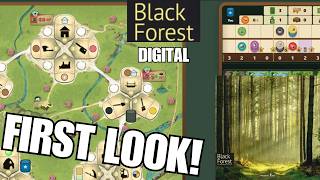















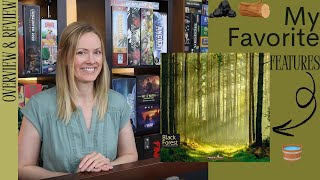









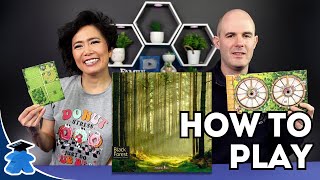







Black Forest Deep Dive
What the Community Thinks About Black Forest
Black Forest has emerged as a fascinating evolution in Uwe Rosenberg's catalog, drawing enthusiastic responses from the modern board gaming community. Reviewers consistently highlight its intricate resource management systems and beautiful medieval theme. While some consider it a worthy successor to Glass Road, others view it as a distinct experience that stands confidently on its own merits. The game has garnered particular appreciation from solo gaming enthusiasts and players seeking deeper strategic puzzle-solving.
Core Mechanics That Define Black Forest
Resource Wheels and Production
At the heart of Black Forest lies the elegant resource wheel system inherited from its spiritual predecessor. Players manage glass production and commodity production through dual-sided wheels where basic resources automatically convert to refined goods when space permits. This automatic production mechanism creates a satisfying puzzle where careful timing becomes essential. Gaining sand forces the dial to rotate, consuming one each of the basic resources to produce glass, but this happens involuntarily. Players must plan ahead to prevent unwanted production that consumes resources they had intended for other actions. The puzzle of managing provisions alongside production materials adds tactical depth, requiring players to consider not just what they need, but when they can afford to need it.
Worker Movement and Dynamic Villages
Black Forest replaces Glass Road's simultaneous card selection with an innovative worker movement system across five villages. Players move their pawn to access adjacent tradesperson actions, paying provisions to travel between settlements. The traveling Merchant can be repositioned by spending commodities, creating shifting combinations of available actions that evolve throughout the game. This mechanism encourages constant tactical repositioning and ensures that board state remains dynamic rather than static. The ability to swap the traveling Merchant with other action tiles adds a layer of player-driven board manipulation, allowing skilled players to position themselves strategically for upcoming turns while potentially forcing opponents into less favorable choices.
The Black Forest Experience
Beautiful Medieval Atmosphere
The game's artistic presentation brings 13th-century Black Forest glass-making culture to vivid life. Rather than presenting an abstract puzzle, Black Forest grounds itself in historical place and time through thematic consistency. Players become glass-making entrepreneurs establishing estates across neighboring villages, with each settlement, building, and landscape tile reinforcing the rural industrialization narrative. The gorgeous artwork transforms what could have been a dry economic engine into an immersive journey through a specific historical region, making resource gathering and building placement feel purposeful rather than arbitrary.
Satisfying Engine Building
Black Forest delivers the characteristic Rosenberg experience of watching a scattered collection of tiles coalesce into a humming machine. Early turns feel tight and challenging as players struggle to gather basic resources, but strategic building choices gradually unlock production capabilities and transformation options. Discovering synergistic building combinations, particularly around animal husbandry and resource conversion, rewards careful planning. The satisfaction comes not from explosive power turns but from gradual acceleration where each new building opens previously unavailable strategies. Players chasing animal-based strategies, for instance, can unlock cascading benefits through stables, specialized feeding buildings, and late-game scoring objectives.
What Makes Black Forest Stand Out
Estate Expansion and Tableau Growth
Unlike many Rosenberg designs with static player boards, Black Forest allows players to expand their estates by advancing their glass hut track. Reaching the top of this progression unlocks additional estate boards, providing more space for buildings and revealing additional stable slots for livestock. This creates meaningful long-term goals that intersect with immediate resource generation needs. Players must balance spending glass-production resources on buildings versus advancing this track. Multiple expansions are possible, giving the game a strong sense of growth and development that unfolds naturally from player choices rather than being predetermined.
Variable Building Availability
The dual-sided small building tiles introduce meaningful variability while maintaining organizational coherence. Each row groups buildings by resource type, and each column indicates glass cost, making navigation intuitive despite having 36 small buildings available. Ten random tiles flip to their B-sides at setup, creating different strategic opportunities each game. Large buildings are individually randomized, offering distinct endgame objectives. This design elegantly balances exploration (discovering different building synergies) with accessibility (organized display prevents overwhelming analysis paralysis). The Smokehouse, hardware store, and specialty animal buildings create diverse paths to victory that shift based on available options.
Potential Drawbacks
Job Randomness and Swinginess
Jobs, randomly revealed high-value opportunities tied to cooking wheel progression, can significantly impact game outcomes. When beneficial jobs like the Captain (building a small building for free) appear at precisely the right moment for one player, it can accelerate that player's development disproportionately. Some reviewers noted that opponents receiving timely jobs that matched their strategy could swing decisive advantages, while other players watched opportunities pass by. The randomness feels at odds with the deterministic puzzle-solving tone of the rest of the game, particularly given the 90-minute playtime investment. While this mirrors the card-draw variability in Hollertau, players seeking pure strategic control may find jobs create unwelcome unpredictability.
Provisions Economy Restrictiveness
The provisions wheel introduces a movement cost system that, while thematic, creates artificial constraints in early rounds. Players frequently find themselves unable to afford travel between villages, forced into provisions-grinding turns or begging for resources to continue moving. This transforms turn structure into a race against dial progression rather than pure strategic choice. Some players view this as brilliantly tightening resource decisions; others find it creates a forced, somewhat inelegant early game where everyone must pursue similar provision-acquisition strategies before meaningful engine-building becomes possible. The tight economics make Glass Road's more fluid flexibility appealing to players who prefer planning over resource scarcity pressure.
If You Enjoy Black Forest
Fans should explore Glass Road, Rosenberg's earlier exploration of resource wheels through simultaneous card play, quicker but less spatially interactive. Feast for Odin and Ora et Labora offer similar tableau-building satisfactions with different mechanical frameworks. Fields of Arles shares estate expansion and animal management systems in a slightly more streamlined package. Players drawn to Black Forest's solo elegance should seek out Agricola, which established many tableau-building conventions, and Hollertau, which shares job-driven variability and thematic agricultural flavor. Caverna provides deeper dungeon-building counterpoint to Black Forest's outdoor domain expansion.
What Reviewers Are Saying
"The best thing about this game and kind of the best thing about Glass Road as well was the resource wheels and this is a very interesting puzzle because it's like oh I need wood to make that building but I also need glass so now I get some sand oh I now have the glass I need but I know don't have the wood I need anymore and that is a very interesting concept."
— Board Gaming Ramblings
"The traveling Merchant really helps alleviate the resource tightness and so I do appreciate having the commodity tile or resource rather to switch up the action spots maybe you know using it as a reverse action where you send it away and bring another action tile to the village that you want to be in to use that in combination with another action and so there there is a lot of strategy that happens with the traveling Merchant."
— The Board Gaming Doctor
"I really enjoyed the solo experience of it because almost unanimously people enjoyed the solo game of black forest and provided an experience in about an hour or so for me to solve a puzzle and to move around the board."
— The Board Gaming Doctor