Tiwanaku, ArcheOlogic, Break the Code Reviews - Chairman of the Board
Games in This Video
3 games are featured in this video — they unlock as you watch.


Transcript
hey everybody today I'm taking a look at three logical deduction games the games I'm looking at are Break The Code by yellow we have tiwanaku by sit down games and we're also going to be taking a look at archaeologic by ludonna now before I get started on my reviews of these three titles I want to give a shout out to the show sponsor Kender do.uk who are my go-to online retailer and if you use the link in the show notes or the QR code then you can get 5% off your first order okay so the first game I'm taking a look at here is archo logic this is a one to four player game takes around 40 minutes to play on average now the idea of this uh deduction game is that you are trying to place these tiles I think there's six tiles in the exact right Arrangement on your little player sheets here so you've got kind of a 555 grid um you know a to e one 1 to five and you're basically trying to deduce um the orientation through the use of this pretty cool um Contraption uh that comes with the game so each scenario comes with one of these uh kind of little disc things and what you're trying to do is that you're going to ask a question to the game essentially so you could say um you know how many of um let's say these symbols here these traps are on a particular line or column and what you're going to do is you going to have a look at line or column by arranging um
the number so let's say it's um the number three I want to look at I'm going to put it onto the sheet like so put this on the traps um question and then through the holes peering through the sheet it will show you which is um which is on that line so in this one you're going to have one of these Circle traps and one of these triangle traps if it shows up um on this um on the camera but there's lots of different questions you can ask you can ask how many empty spaces are going to be on that line or column how how many different tiles get how many traps how many from one of the particular shapes are on that um line or column but there's an additional Twist on this game where whatever you ask the game will um basically charge you a different amount of time through this time track system so think of something like um Patchwork where the more detailed question you want to ask the more time it's going to take and you do not get another turn until you are right at the back of that time track so sometimes uh ask you know a question that's going to be very pertinent to you um could mean that you're not going to get another time another sorry another turn for quite some time now as you'd expect and with all these three games it can be a bit of a brain burner know I'm not the best at deduction games um but I do enjoy them and I'm always fascinated about how how well put together and constructed they are because you know there's there's no margin for error in these games because they are perfect um information but I think um that time track system mixed with deduction is actually a very nice hybrid that's been used before in games like um the search
for Planet X um you know this one has some similarities to that and again uses that time track system to a a really high standard and again I think those two mechanisms work hand in hand really well now one thing I really do like about this game is the fact that these um tiles are in fixed shapes which means you actually have another layer to the deduction because sometimes you can work things out on the back of other information simply through this spatial element on the board which which is quite nice so know if you know four of the squares on a line and you know for a fact that there's another symbol on it there might there might only be one tile where that symbol can possibly fit um in the grid so you can again just by another route of deduction you can work uh that out so the deduction side of this game is is really interesting it works extremely well and again that time track works well um too now my only issue with this game uh is the fact that there is next to no player interaction um in it so apart from obviously the race to um to find the answer which is again the correct orientation of those tiles on the on your player sheet um and that time track system where you know sometimes you can manipulate it to get back toback turns Etc um when you're asking the question using this device you are not showing the answer to anybody else so you know with most deduction games normally you'll give a a little piece of information when it's not even your turn you you'll get a little kind of nugget of information that you can kind of hold in your back pocket and this one um if you're not
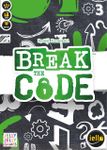
answering well if you're not be asking the question yourself you're getting no new information meaning that you can go quite some time and without actually getting any information and you can end up just kind of twiddling your thumbs not doing much now the game is brain burner enough for you to kind of have your head down in your sheet and try to work things out ready for your next question so it's not as big of an issue as a first thoughts but it is there and I generally prefer it when you at least get again scraps of information even if it's it's not optimal um when it's not your turn so I like this one I think it works well um you know as deduction games do um but I think because of the spoils of deduction games we have out there with so many and that idea that there is pretty much no interaction does hurt it a bit for me um and yeah so that's kind of a bit of a dampening effect on my overall review of this one again the deduction side is is pretty damn excellent um but that lack of interaction does hurt the game quite significantly I'm meaning that I put it around a 6 maybe a 6 and 1/2 out of 10 because the game playay is solid the next game I'm talking about here is break the code at two to four players takes around 15 minutes to play uh on average now break the code is a lot more familiar to me to the the classic logical deduction games thinking games such as sleuth and in fact I think this game has quite a lot of crossover to a game uh like sleuth now now depending on the player account you're going to have different objectives in this one so in a two-player game you're
trying to work out the code behind your opponent's um kind of visor here and in a three or four player game you're trying to work out the number tokens or the code that is kind of in the middle and it's not being selected by any other player now at the start of the game you're going to get five of these number tokens which come in um black and white in duplicate so you got like a black white sorry a two black and a two white a three black and a three white and the five come in a completely different color and when you take these tokens you're going to put them in numerical order from low to high and on your turn you are going to select one of these pre-selected questions from the center so again much like sleuth you do not have free reign to ask what you want to ask you are somewhat restricted by the tokens or the cards questions available at that time and these questions can be things such as you know where do you have consecutive numbers and whereabouts is your um four in the arrangement and so so on and of course as you drip fed this information you start to build up a picture about what the what your opponents have and unlike archaeologic um you are at least from my memory you are discovering this information no matter whose turn it is so you're always getting information at all times which is again a nice step a nice touch that I prefer to a game like archo logic now if you're familiar with deduction games again like sleuth that's pretty much what this consists of the only difference being the fact that what you're trying to discover is that arrangement of numbers and using the extra layer of the you know the numerical order um Etc um but I suppose the strength of
this game more than anything is how fast and Punchy it is you know if if you remember I mentioned this game was 15 minutes long um if you're incompetent like I am it might be a little bit longer than that but it certainly doesn't out State as welcome um and you know you well at least for me um when I get into playing this game I'm almost resigned to the fact that I am going to um going to be pulling my hair out and I'm really struggling to work out the code um because again I find it quite stressful and I'm not the best at deduction games but it is enjoyable and of course it is satisfying when you end up pulling off um or working out what that code is and you know for a very small box game very fast and affordable um and definitely one that's flown under the radar um break the code is certainly one to look at if you are a fan of deduction games and um if if I had to rate this one i' would say give it about 6 and a half out of 10 and the final game I'm talking about today is tiwanaku uh this one is a one to four player game takes around 60 Minutes to play uh on average now the method of deduction in this game is different to the other two um that I've talked about and that's because it takes place on a communal board and this game has a lot of similarities to the classic game mind sweeper where you are traversing this board and discovering different terrain types now depending on on the kind of size of that attached terrain type um you know for a fact that there's going to be different types of tokens on there so in a in a five sized
um group of terrain like this mountain area here you know there's going to be a one token in there there's going to be a two token a three token a four token and a five token there's never any duplicates if there was a say two surface area of terrain there's going to be a one token and a two token uh and so on and the way that the um the deduction is worked out here is that no token can be next to or adjacent to one of the same so for example you can see there there's a big four token here um any of the surrounding squares around it cannot be a four and of course as more information is revealed you can compile that together and work out which the remaining terrain types are now there's two sort all different token types are now there's two methods of gaining points in this game in fact there's three um the first of which is actually discovering the terrain in the first place which is where you're going to be using your meeples to travel around the map and when you bump into an empty space basically you are going to reveal um which type of ter that is by using this very cool Contraption um which I've been too lazy to get out and show you but it works very well um you know be assured on that and um depending on the terrain that you've revealed you're going to populate the board and you're also going to go up this um diversity track here which means that when you um when you discover a certain type of train you're going to go up on that particular trap um track and for every um different terrain type on that road that you've just gone onto you're going to get a point for so sometimes you're actually not incentivized to keep on finding the same terrain because you're
going to run away with one type and not keep getting those kind of compounded points whereas if you spread yourself thin you can um keep discovering one of each type and keep getting like two three four points per time which can definitely be a Difference Maker in this game um and I've had games that have proven uh that now the second way you um you actually find the or get points um is kind of the main point of the game which is the deduction part which is where you can guess which um which of the tokens are on that particular tole again using that logical deduction of no tokens being adjacent to other tokens and the size of the terrain um itself and what I like is that you can use your meols arrange them all as you see fit and then take as many guesses as you want um but there is a bit of a risk to this one because if you are unsuccessful with your guesses you're going to lose the amount of points equal to the points you would have gotten by guessing correctly so if you're guessing for a fourpoint token you'll get four points um but again if you're wrong you will lose um for points now there's a third way of getting um of getting points and that is what each time you discover a particular or specific tile um token you will get another token representing that and you basically trying to collect sets of these up and cash them in when you have all five essentially to get a big chunk of points there but the twist is that you cannot have duplicates of the same type because say I discovered a one
and then I discovered another one I can only ever have one token of that type at a time so therefore I've wasted the opportunity to collect that second one token um so again you got a little bit of a a storage system here where you want to build them up but not waste um not waste um collecting duplicates because again that's just points you thrown away now what I do like about this game is that hybrid of the board presence mixed with the deduction elements to it because you can do quite a few little twists here with the game by blocking people off um You can reserve spots because you cannot actually move on to spaces where other players are um so you know if you know you're sat on a high point region or space that you've worked out um you can sit there knowing knowing that nobody else can jump in there and steal it from you um and so on so do have that again that's nice spatial awareness and puzzly style of thing of not only the deduction but the actual again blocking people and reserving your spaces I'm coming on at the right places um and even as the game progresses it has a good way to keep the game moving at a decent pace by when more and more of these tokens are discovered you can travel through them or Traverse through them um as well as if that space was empty so you can basically travel through them really quickly and not have to spend your time just you know slowly plodding along going to a new space now uh I I really like the gameplay of this one again it's very polished quite a quite a refined um game now my biggest issue with it is the
fact that a lot of the time you are reliant or you are waiting for your opponent to slip up or to take a bit of a a Gamble and guess something so that more information is available and as soon as one piece of information is available then there's normally a Fallout and a kind of um you know a ripple effect where a bunch of other information is available um as well and sometimes it becomes a bit of a game of chicken and it become can become a bit a bit stagnant as people are waiting for someone to take that punt so I did find it could drag its heels a little bit at a time if that is the board State at the time and sometimes because the board is quite large especially if you're playing with the the long version of the game it can feel like like you know even though you've waited a bit and then you've had a whole bunch of information revealed here the other side of the map is still relatively unexplored and you don't have much information there so it can be a little bit start stop um but there is some pressure here and sometimes you are forced to make these mistakes because if you are say running away with it in terms of points you can actually just start exploring the board and try to bring the game to an end because as soon as that last terrain type is revealed and placed on the board then um then the game will will the game end is triggered so you know sometimes you are forced to take those gambles and sometimes they'll pay off sometimes they won't pay off but um yeah you have to be prepared to roll with the punches um at times and take those educated um guesses but the game is is a lot of fun again it feels different and distinct to a lot of other
um deduction games but again I think it can sometimes drag its heels not just in terms of that gameplay and hoping people make mistakes but also in the fact that I think it does Le in my experience it has um gone beyond the stated time of 60 Minutes on the box um but that might just be my game group I'm not sure maybe we're slow at working these things out um but that's what I have found in each time I I've played this game um also if you do want to play a game tons and tons of times which I generally don't and there are I think only 20 scenarios in the game box so you're going to have to um find a way to get more scenarios I'm sure the company will come out with them or there might be an app or something but bear that in mind now initially I did give this game um a seven out of 10 in terms of my latest ranking video um having paid it some more I might just creep it under that because of that kind of Mexican standoff feel at times um it just can feel a little bit stagnant um but I do enjoy it I think it's a very well-designed game um you know it's it's very polished and I do enjoy it a lot and it feels distinct which is quite you know quite an appraisal in such a saturated genre but um I think it's going to be an acquired taste um but I C I certainly play it again and I do you know give it a soft recommendation so that is tanaku um again you're looking at a 6.75 maybe a 7 out of 10 um on a good day so there we have it that concludes
uh the video enjoyed talking about these three uh deduction games you know similarities between them but also some quite distinct uh differences as well you got the punchiness of break the code um you've got the brain Burness of archaeologic but a little bit too multiplayer soliter for me and you've got that mind sweeper effect of um T Aku but with that slight weakness of sometimes being relying on an opponent to take a gamble or take a risk just to keep the game moving along and feeling um exciting now if you have enjoyed the video please be sure to hit like And subscribe to my channel and check my other content too but for everybody else I'll see you next time on chairman of the board bye-bye