Let's Talk Board Games #33 - Castle Combo, Middle Ages, Junk Drawer, Finding Atlantis
Games in This Video
3 games are featured in this video — they unlock as you watch.


Transcript
hi everyone my name is Monique and I'm navine from before you play and welcome to another episode of let's talk board games where we talk about a few games that we played recently yes we have h four games today that we're going to be talking about um they're kind of in the shorter lighter uh category I would say and the last time we did one of these segments it was heavier bigger games and so we want to do the segment a little bit more frequently and these are the four that we chose today yes we actually had a heavier game on today's list but we weren't able to play it enough times in order to make it to this episode so will have to wait uh another week one more but first we have a Dexter update Dexter is our 13-year-old miniature Doxon uh if you've been following the channel recently um Dexter had an injury about a couple weeks ago maybe about six weeks ago and in January January sometime so it kind of caused some backlog for us in terms of uh content and being able to film or even play games and so she was uh he was actually placed on very strict rest for a month uh pending the decision as to whether or not he would need surgery and he is now out of that strict rest period and hasn't had any relapse of symptoms at all yeah he's been doing pretty well um so thank you everyone for all the well wishes for him uh he took well to his medication he we tried as best as we can like to to Crate rest him or to room rest him really is what we ended up doing and he has strict no stair access so we are trying our very best to make sure he does not go up and down the stairs it is hard it's hard yeah that's like a it's like a something he look looks forward to or something that's
like not he likes his ears flopping up and down the stairs yeah so uh so we're not putting any pressure on his back as much as possible um and no relapses no issues so far so everything is going in the right direction the only thing is he didn't have to lift a finger for an entire month so now we have a spoiled rotten demanding Dotson so anybody out there who own who has a doson in their household will probably understand what we're talking about yeah so now it's time for walks for him again so we'll see how uh how excited he's going to be about those all right back to the electric all right so then before we get into the games today's episode is kindly sponsored by games for their new second edition of Shadows Heroes and monsters yes Shadows Heroes and monsters is returning to Kickstarter for a new second edition this is a competitive hybrid collectible card game for two to now four players set in a fantasy world where players will need to hunt monsters battle opponents and and earn the coveted Shadow Stones which are the key to winning the game these heroes are brought together by a mysterious portal that connects different ages Technologies items magic and species in a fierce battle for riches and Glory each character has their own deck of spells skills and creatures and as the game goes on you'll earn gold and experience to upgrade your deck unlock abilities and of course collect Shadow Stones every game plays out differently with a rotating mix of Heroes monsters and cards now again this game is coming
to Kickstarter so if you are interested in the campaign there is a link in the description which you can check out and thank you so much to K games for helping sponsor this segment okay thank you so much now we do have to mention the four games that we are going to talk about today were all sent To Us by the respective Publishers as review copies all right so let's go ahead and get into the first game shall we y this is the smallest box of today's episode and it is a card game called castle combo castle combo so this game was designed by two designers uh Gregory Gerard and Matthew Rosel and published by pandasaurus now this is a game about creating combos in your Castle as it says in your Castle as it says on the the box but basically it's a card game where you are just trying to uh purchase these character cards and place them in a 3X3 Grid or Tableau in your space so it's a very fast game because each turn you're basically just purchasing one of these cards and placing it in your Tableau and as soon as all players have filled their 3x3 grid then that signals the end of the game now the thing about the game is there are two different types of cards there's a brown deck and a gray deck and they're going to be laid out in a market with three cards face up in in its respective row and so on your turn you can only purchase a card from the row where the messenger Pawn is so there's this little messenger pond that's going to be going to be walking back and forth between the two rows and so you have to purchase from that row you don't have a choice of all of them uh when you purchase a card you pay the
cost in coins at the top left hand corner and then you place it into your Tableau if it's the first one you can place it anywhere but starting with your second card onwards it has to be orthogonally adjacent to one that's already in your Tableau and each card has an immediate effect which is going to depend on things that are in your Tableau which is why it's castle combo because you're trying to find cards that sort of synergize with one another yep so some cards might give you a discount for purchasing cards in the future some cards might give you Keys which are an important resource in the game which not only score you points at the very end of the game but also you can spend a key once per turn before purchasing a card in order to either move the messenger Pond to the other row yeah so if you don't like if the messenger Pond's in the brown row and you really want something that you see in the gray row you can spend one of those keys move the messenger pawn and then actually draft one of those cards yes or you can use the key to flush the row so if you just don't like your options in that row then you can flush it you can only spend one key per turn keeping in mind though that keys are worth one point each at the end of the game essentially spending a point spending a point yes exactly uh in addition each card has an endgame scoring criteria at the very bottom which also depends on what cards are in your your grid yeah it could be like uh score this card if you have no Blue Shields anywhere in your complete Tableau right or for every red shield you have you score one point so yes or you'll score points if uh this card is in this column so there's also some positional criteria as well in addition
at the end of the game your coins are going are going to be worth nothing essentially they're a tiebreaker but you really want to get these cards that have these coin purses on them it's like a coin sack because at the end of the game you can basically put your coins on those cards and now they're actually worth points so that's essentially it if you can't pay for a card then you can always take a card and turn it uh face down and it'll gain you I believe six coins and two keys so you you must always take a card you don't have the option of not taking one yeah so it's basically played over nine rounds right because you're doing a 3X3 grid so you're going to draft one thing then it just goes on to the next player uh in terms of play length it says 25 minutes on the box and that's about right yeah it's very fast very fast very quick game you just make a decision you know put in your Tableau and then if it has an instant thing then you do the instant thing then it just moves on to the next player there's a whole variety of different types of cards and so really just trying to find the name is exactly perfect you're just trying to find the right combo of cards that can work with what you have at any given particular time sometimes maybe you'll set something up and it's like no red flags in this particular or no red shields in this particular area but you have a red shield in every single row and you're like ah gosh this card is like not useful for me anymore but the benefit by putting a red shield here is going to actually be more favorable because maybe I can save those coins at the end so there's a bunch of different like things that you're just going to um try to score as best as possible and then uh in the end you know you're just going to see where kind of your chips full yeah it's very simple um I really like the game for what it is like it does exactly what it intends to do it fits that like
beautiful 20 minute space but you're thinky enough in those 20 minutes and engaging enough right yeah it's a nice little filler like uh I I don't even want to call it like a Gateway game like it's it's it's Gateway friendly but like it's something that like even you and I enjoyed playing our our game take this anywhere we can probably play with your parents it's and it's really uh Charming the the art on the cards is really really kind of funny really silly and the components are really good quality so that that messenger piece that just walks back and forth it's literally the only job of that piece it's nice and chunky very chunky and just and I just think they did a really good job with the production of the game yeah uh I have not played it on BGA now you said you have um a couple times now the implementation I'm assuming is good it's great yeah know it's a simple game so I I imagine it was I guess there are a lot of cards you know there saves the 70 or something unique cards it's all on there and you can still you know see other players uh Tableau so it yeah it plays really well on BGA yeah for me BGA I like playing lighter games on there I don't like to play those long kind of drawn out ones so this is definitely one that I will be checking out I like the long ones I know yeah you do yeah so anyway that is castle combo uh very light very simple but also still fun okay the next game we want to talk about we've had for a little while on our review shelf and so we are glad that we finally got to play it this is one called Junk Drawer this is designed by Dave Smith and published by 25th Century uh they are also in kind of the field of lighter games in terms of production this one takes about 20 minutes and it's
a polyomino uh placement tile placement kind of game yeah you're placing items yeah and you're trying to organize your junk drawer you're trying to make it as efficient as possible so you can score some points yes but it is not that simple so Navina is right they sat on our review shelf for a long time uh for some reason I don't know I wasn't really po she wasn't drawn to it I was very much so drawn to it all every time we were we would pull a game off the shelf he's like what about it says 20 minutes so my sister came over and we finally played it so we did play this with other people and the way that the game works is each player has their own junk drawer and your junk drawer is divided into four separate compartments that are colorcoded and in the middle of the table there is a replica of that drawer that you have to place these uh these goal cards on because those are going to be the rules that determine how you score in each compartment of your junk drawer and these rules might be something like score points for areas on the perimeter of your junk drawer that are scoring or that are covered up or points for completely covered uh squares in each row or something like that or have like one of each color in at least every single column yes stuff like that so they're different ways that you'll score for putting your items in your drawers but the way that the game works is there is a deck of item cards and these items are going to be stuff like a watch or maybe like loose Keys a cork screw a phone charger yes things that you would I guess commonly find in one's junk drawer Def and so uh each round
we're going to draw four of these cards and place them in a row face down and one at a time we're going to reveal one of these cards and everybody has their own set of these polyomino tiles that match these items and so for example if we flip over the phone charger everybody has to find their phone charger polyomino tile and place it in one of the four compartments of their junk drawer now the four cards that we have in a row must be placed in separate compartments so and they're only going to be revealed one at a time you won't know you can't plan ahead you can't see all four that have to be placed in the round you just see one card at a time and so there in lies kind of the issue with the game so as you're trying to be mindful of the four different scoring parameters for all the four different quadrants you're going to start deviating from your opponents where it's like okay I put that phone charger in there and then now the watch oo the watch is kind of perfect for me here because I kind of built it up this way but that's would have been really actually good if I put it over there but I've already used that kind of that square in this particular round so you're going to find yourself kind of just trying to figure out the best way to kind of keep your head Alat yeah and you can't foresee what shapes are coming up next because of that because it's hidden and they are kind of awkward shaped these compartments are not very big you know they're small sections of your drawer I think it's like a what is it like a 6x6 or something like that something like that and so the real problem is if at any time you need to place an item because all these items have to be fully enclosed within their compartment and you can't overlap tiles so it's like Standard polyomino Tile placement but if ever you cannot place an item then that triggers the end of the game for everyone one player was not
able if one player mess it up for everybody it ends the game and then you go into final scoring and you score based off of the goals that were uh pre-chosen I guing setup yeah a very light game um super light uh but also um just thinky enough in hard it is hard yeah is because at first like you're like I have all the space and okay I just got to be mindful of this one thing but the fact that you do not get to see the four cards that are laid out ahead of time so you're not thinking like okay this one will go in in the red area this will go in the blue this will go in the yellow um the fact that you have to make a decision the second you see a card and then you have to live by that decision for the rest of the game because you're like that would have been perfect had I known that was going to that was not that next card was not going to show up you know um because you're constantly trying to make sure that you don't mess up your scoring parameters cuz sometimes if you put the wrong thing in the wrong place you'll just ruin it for the rest of the game for you not in like a super punishing way cuz obviously it's really really light and very short it's very light yeah very short but the goals come in easy medium and and hard so you can also sort of cater The Experience around around the table based off of what types of goals you put on the board yeah it says 14 and up and I and I'm pretty sure that is just for uh Toy testing reasons because I think this one can play very well for kids as well Pro yeah probably the only thing to keep in mind is the scoring aspect so they have to understand like exactly how things are scoring and how to count that and keep that in in mind because it's it's fairly crunchy in terms of the puzzle aspect it's just a big puzzle like that's what the game is it's a it's a puzzle and so
I actually felt like it was crunchier than I was expecting it to be it's crunchier than what it looks like you know but this doesn't really tell you what kind of experience you're going to have with the game yeah I enjoyed it I was having fun with it um your sister who's not really a gamer I think she enjoyed it I think so too I think she was stressed out a little bit I think she she was like very like I she she was really hung up on the rule of like I can't put it in the same drawer it's like that there in Li is the problem in the game I mean there's only a couple of rules in the game so that's one of them yeah so she you could hear her saying like oh gosh I wish I could place it in the blue but I already previously placed it there so yeah so uh that is junk drawer all right moving on to the next game we have a deduction game this time and it is called finding Atlantis a thrilling deduction game thrilling this is designed by Andreas wild and published by synapsis games and in this game you are doing exactly what it says you are trying to find Atlantis using your submarine uh and your board yep so there's a bit of a deduction puzzle to it where uh each player is basically trying to to explore their own board and look for the different spaces that give you Clues is as to where Atlantis is and in this game Atlantis is represented by four foures spaces four triangles on the spaces yeah so you're going to have a grid uh and then you're going to Shield your grid off from your opponents because you're all looking for the exact same thing and the game is actually scenario based and so Atlantis is somewhere in that grid yes and so you're going to have to spend uh action cards
uh and also the use of an app to help you navigate around try to discover where exactly Atlantis is and then eventually solve kind of uh all four spaces as to where Atlantis is the first person to do that wins the game yes now Navin sort of uh briefly touched upon it but this game is run using an app I don't believe there's any way to play other than using this app and so the way that the actual gameplay occurs is each player has their own deck of action cards we have identical decks and if you want you can also play with uh the captain roles who are sort of give you um an asymmetric ability yeah gives every player one asymmetric ability you you represent this captain of the ship and so you might have something that differs from another player yes and each player has their own sort of starting space on their boards you're also sort of trying to keep track of where the other players are because this game can play I Believe up to four one to four players but we've only played it at two just so you know uh but the way that the turn structure works is on your turn you can take two actions and each action is represented by an action card and so when taking an action you have to actually scan it using that app by holding it just above the app using your front-facing camera which was was interesting a little different yeah yeah which we didn't realize I guess and then it it knows which action you're taking and you sort of uh point the direction that you're trying to go in wi because some of these actions are like move forward secretly two spaces or something or scan the two adjacent spaces on opposite sides of your submarine for
traces of civilization and the app will tell you whether you found traces of civilization or sometimes uh these mountain ranges which also give you some Clues as to whether or not you're close to finding Atlantis or finding an artifact which are also these items that you can pick up that help you along the way um but in order to pick them up you have to play a specific action card which is the exploration card and once you've played all of your cards or if ever you just want to pick up your deck because every time you take an action you have to discard these cards then you can Surface and that's the only way for you to pick up your cards again but surfacing tells everybody where you are so all Captain sonar kind of if you played that game where it's like okay surfacing I'm in this quadrant so now everybody knows because there are some modes in the game where you can drop mines and kind of hinder your opponents yes um so that is an optional variant that you can play with but a couple cards that if you are playing with the more aggressive uh style of play Then you add to your deck yes there's no health or anything like that like if you run into a mine then the penalty is you must give the player who owns the mine one of your artifact cards so that's sort of the the take that element there they're also sea monsters that you can run into depending on the mode of play but that is pretty much the game you just keep on taking turns taking two actions each until somebody has located all four spaces of Atlantis now when playing the game it requires you especially your first time it requires you to use the app tutorial uh because the rule book does not just lay out all the rules for you I think they want you to get used to using the app uh but for me that was not the most enjoyable way
to kind of get into the game uh because the app imp implementation is a little bit uh I don't know it's a challenging um there's sometimes like you have questions like mid app like and you're like is that going to get answered in a second oh they never answered that so how do I go and search that in the rule book oh I don't even know what where to look so it got a little bit kind of messy for us the tutorial was was not the best I will say in that app and I know that there are people who are already sort of on the fence about about whether or not yeah apps should be in board games and up until this point I don't think we've ever had a bad experience with an app for the most part they're pretty good the only time ever was when we used to play the early version of root and you couldn't you couldn't go back we couldn't go back yeah and then also sometimes we we've done like uh content for like prototypes and they're still working on the but typically it's a no back button issue always a problem for us but this game um there's something about the Slowdown of the app because everything every time you want to take an action in the game you have to scan a card yeah and um you have to kind of like perfectly line it up you're actually using the front-facing camera so you you kind of hold the phone here and then you put the the card here and you have to make sure it's in the right angle because there are these uh arrows on the cards which I think is what the app kind of picks up right and that dictates what the action you're taking is and that was what my point was going to be that I don't think we've run into an issue with apps before until now yeah because the rule book doesn't really tell you like
this is how you should be using the app and uh I'm not used to playing games with a scanning ability that uses a front-facing camera yeah and when you go to take actions like nothing pops up that says like okay scan the card now like it just like you take the action and then it just sort of Waits so you don't see anything change and a long time we trying to figure out how to disc scan a card like most apps you say I'm going to go into the scan menu and then scan but this one it's just like while you're in like the waiting menu it's it's just ready to scan at any point and so we see these like dots on the screen and I'm like how do I get to scanning yes and it took us prob like 15 minutes just to be like oh just just do this and then yeah because I I finally opened the rule book and saw like a little image of them holding the card and I thought wait are you using is it like this do you just hold it like that so eventually we got it to scan so that was our difficulty just getting to play the game it just soured The Experience going into it yeah but when we did finally play the game so this is the actual gameplay now it was just it was just sort of okay like we love deduction games so that's the I guess it's another bias that we have it's why we wanted to play it yes it's why so strongly wanted to play we played a lot of deduction games so I I don't know if our bar is a little bit higher just because we've play of but just even the puzzle of the G was a little bit it was just okay like yeah it's like I'll go here search oh Signs of Life okay now we explore yeah oh good I found one piece of Atlantis that's
lucky you know yeah but also like the experience around the table like there's no player interaction like you you it sort of hints to you that you should be keeping track of where your opponents are but it didn't really seem like I needed to you know what I mean it's like if I oh I have this nice artifact I'd hate to give you but like maybe or maybe if I know that you're finding traces of Atlantis and I know sort of where you are then that might give me H you into just ta it over towards me but it's just such a small puzzle space that it I don't know like the turns were very silent it was like I'll scan my card I'll scan another card and then I'll pass you the phone and that's pretty much the game experience yeah it it feels like a solo experience uh now it does say it plays one to four play I'm not exactly sure how the solo game works but we've only played it at two so that's pretty much as from that experience that we can talk about yes but again it does play up to four I don't know if the experience is going to change by that much uh adding more players so that was just our experience with the game um definitely not for us I would say I had really high hopes for it initially because it sounded really cool but unfortunately this one really fell FL yeah I think we we are okay with apps in games I no problem with many many games many deduction games um are the app is absolutely critical and so for this one it just yeah for both of us I think we both agreed at at the end of it that just wasn't a fan so anyway that is finding Atlantis okay last game now this is one that we picked up just shortly after Gen Con 2024 this was actually on
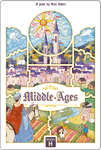
our Gen Con one of the most anticipated games finally got to play it after a while Monique actually played it at Gen Con yes it is called Middle Ages this one is designed by Mark Andre who is the designer of Splendor which is still a game that I really really enjoy um and this is one that is a reimplementation of a game called Majesty for the realm I always want to say Majesty of the realm it's Majesty for the realm which I had never played is published by Studio H Studio I don't know who published the the previous one but neither of us have played that one don't y yeah uh this one plays two to five players and it says in roughly about 30 minutes and definitely at the two-player count that is extremely accurate yeah I I mean if it's more than 30 minutes it's probably not by much because the the turns are pretty Swift now what you're doing in this game is everybody has their own fif y I believe and we are just drafting estate tiles into our Estates now in this game there are a total of eight different Estates and so your player board sort of organizes them by type yeah so you can have like churches the ramp Parts the barracks the the fields the Mills and so on your turn there's going to be um four rows of tiles and each row is going to have I believe it's the number of players plus one tile available and so uh at the start of the game we're going to start by placing out our pawns on a tile to sort of reserve it and then turn goes from left to right because whenever you lay out tiles you have to lay them out in ascending numerical order I assume because the tile the value of the tile increases just like sort of in like
like Domino stuff like that and so if I'm the leftmost player on the tile then it's going to be my turn first I start by placing my Pawn on a new tile that's in the next row so I'm reserving the tile that I take in the next round first and then I place my estate tile that I had reserved into my fif and they're going to be stacked according to type now whenever you place an estate into your your play area you're first going to activate their immediate effect and this is going to be different depending on the estate so some effects just give you stuff like the field gives you one coin for each farmer symbol which are located on all sorts of different tiles uh some of them are attacki such as the barracks which attacks all players around the table who have fewer ramp Parts than you have Barracks so these are two different types of so there's again there's eight different Estates eight different types of tiles so you want to have uh the most ramp Parts uh compared to other people's Barracks so anytime somebody drafts a Barracks you're going to assess everybody else around the table and if you have less Rampart tiles than their Barracks tiles then they are going to destroy one of your buildings that you've already previously built and they you have to pay two coins to yeah so it could be pretty pretty nasty at the right time there is an estate that allows you to rebuild tiles from your Cemetery so it's not horrible I mean these tiles aren't you know it's not like every round that this is going to happen it's something that you have to consider there are uh Mill tiles that do something similar but
require other people to pay you uh I believe a one coin if they have fewer Mills than you do yeah and then the uh going back to the which tile gets destroyed in your fum or in your Estates uh it is the tile that you have the or the uh estate which is one of the eight columns that you have the most amount of tiles in so you can't just run away with one thing they people kind of drag you back um the game is uh pretty simple uh it's very simple actually because there is no cost associated with a drafting these tiles you know sometimes in in games you have to manage your money where it's like if I want that tile I would love it but I don't have enough coins to have to pay these tiles gain you money because after you activate the effect of the estate you always gain income and each estate gives you different combinations of income so some Estates might give you one coin for every field and something I think that one's just Fields huh yeah it's like uh one I don't remember the combinations it's like one coin for every like house that symbol that you see along inside your entire fum and actually income is two coins uh like for example the market gains you two coins for every Mill and Market tile that's in your fif them so you're basically trying to see what Estates am I collecting a lot of and try to really maximize the amount of coins that you're getting each turn because at the end of the game your score is just how many coins you have that's all it is you're the most amount of money now the only thing is you do have to diversify in the game because you are penalized for not building um every single type of estate for each estate type at the end
of the game that you have not built in your entire fom you actually lose 10 coins which can be quite punitive so that's another thing that you're trying to consider you want to make sure that you have at least one of each type or weighing the cost of those 10 coins and four times throughout the game there's also a an event that occurs that affects everyone and that's going to change from game to game because there's a deck of cards and you sort of just randomly uh decide that but that's essentially it the game play is actually quite simple but the decision making is sort of where everything falls into place because it does play up to five players and I've played it at several player counts I think you've played it two and three two and three two and three yeah yeah so I played it at at at five because this is uh also on BG and the higher the player count obviously the more um I want to say a little chaotic but also the board game stress yeah the board game stress yes because you're really keeping track of well how many mills does this person do all these people have and like things your decisions are just a lot more impactful yeah you don't want to go fifth you know when you see you know like in a five cuz in a two-player game right there's three tiles laid out it's like well I guess I'll go I guess I go second I get um I get one choice I get I get to choose one of two tiles versus in a five player game it's like I'm probably going to be getting the last bottom two tiles here so but there's also an effect in the game that allows you to block off a tile so that can be really painful in a two-player game yeah that yes okay that part is yeah you've been shut out yeah I have been shut out filling some yeah Monique destroyed
one of my pieces and then didn't allow me to get it back so two players can to be meaner I would say it's easier to hide in higher player counts but that's essentially the game it's actually quite simple and is very fast yeah component quality of this game is excellent um everything in it is very very nice very good quality of it so uh A+ on that um in terms of did it meet my expectations I think playing it at the two and three player game I didn't get the full experience oh I I do want to play it at four and five I think I want to play it at four that sounds about more right up my alley uh five player games sometimes for me can get a little draggy how did you enjoy the mechanics I I do like the mechanics I do wish that there was um some cost associated with taking certain actions but you're already having to pay other players I know I know but like you to be meaner I guess it's just the cost and the time like sometimes like you'll look at the next row and you'll be like because all the tiles are laid out from the from A to Z like from the start to finish for a particular round you do kind of want us be like okay by the time the fourth turn comes around I definitely want to go first so how do I position myself on the third section to be in the first spot so then sometimes you have to kind of kind of map out a plan and then of course that's not going to happen because other people see that and they also want those tiles right um but yeah I I enjoyed it but it's not like a stellar game for me yeah that makes sense I think I'm sort of in that boat the more I play it the more I enjoy it I will say the very first time I played it I I don't know if I just didn't grasp the rules enough but
I was like what what does this estate do they eight Estates and like every iconography is very good iconography is it's actually very very good but I didn't grasp the concept of the effect and the income for some reason it's so simple it's so simple but I I mean the entire time what the game really is is you're just sort of trying to maximize your your income every turn while also trying to make sure you have one of every tile and trying to guard against taxs like that's that's what the game feels like to me there's also like a mid game scoring um and an endgame scoring there's like objectives that you uh no the events the events the four yeah there's the four events see them in advance you know that you know what they are it's not a surprise so you can sort of plan for them as well I do agree that this version of the game is gorgeous the art is really nice and the component quality is really nice like the way that the estate tiles fit on Tableau different cut it's like a puzzle but they all sort of create a larger picture it's really nice U but like I said we have not played the previous version of the game so we don't know what the differences are in between them but I like this game for the fact that it plays well at higher player counts I like that's to like was mentioning I think that's where it shines more I think you want to play it at higher player accounts and um yeah other other than that I love I liked the game didn't love it but I liked it a lot you said the BGA implementation also good yeah perfect another one I have not played yeah on BGA but uh I will get in the game soon yeah well there you have it that is
Middle Ages well there you have it those were four random games that we uh that we played recently um like I was mentioning we we're we have a couple more episodes of this planned in the coming weeks and so we are going to be talking about some heavier games next time hopefully goal that we weren't able to prepare in time for today uh otherwise please let us know what you've been playing I know that uh when I discussed a bit of anime last time we had some feedback from other uh viewers who also watch anime and uh I I just want to give an update that I finally finished freerun and it was amazing enjoyed that like amazing what right yeah it was tough sort of to get through if if anybody has started freerun it's the the the anime about it's a fantasy anime about an an elf who sort of continues her life after her adventuring party after her crew basically passes away she yeah some of them more eternal than everybody else right she's a really long life but you know it starts off really slow and then it just like picks up one day and it just does not sort of stop so amazing and I'm also finally finishing Demon Slayer ah yes that's like the really really popular anime of all time yeah also amazing so what's your update uh well I don't want really watch anime too much uh but I did finish the first season of Ozark if you have not seen that show and you are into uh adult game uh adult games adultes uh kind of um themes in games uh
or games what am I saying what are you saying games this is not a family show board games no it is uh TV show is what it is sorry adult TV adult TV shows do not watch it with your kids uh I highly recommend it all you need to do you'll know if you enjoy the show in the first 15 minutes oh wow after my cousin showed it to me in the first 15 minutes I was like all right I'm watching this nice I'm I'm sold yeah so yeah that is Ozark that is on Netflix um if you are interested in checking that one out cool otherwise let us know what you've been watching I guess and what you've been playing cuz we always love to hear from all of you thank you again Ton games for sponsoring this episode and uh thank you again for all of the well wishes uh for Dexter because it really helped you know it helped with the mental health mentally yeah yeah mentally a lot of people were telling us stories that they have about about their dogs and how it didn't go in the in the right direction or sometimes it did or just like what they had to go through to get to that point and it was really reassuring knowing that other people also knew that struggle it was a very very specific struggle he had to be helicopter over it was it was it was tough for for a couple weeks there but yeah he's he's doing great and so uh we'll talk about him again on the next one thank Youk bye bye