/pic6868701.jpg)
Game Info
Year
2023
Players
1-4
Age
8+
Playtime
14 min
Collection
Ratings
Creator Score
Mechanic profile
Not enough video data yet
Vibe profile
Not enough video data yet
Description
A real time cooperative puzzle game where players flip turn rotate and place polyomino circuit pieces to complete connections and escape before the fourteen minute timer expires
Featured Videos

Ask a Rules Question
All mentions
Browse transcript mentions, sentiments, pros/cons, mechanics, topics, quotes, and references.
Total mentions: 3
This page: 3
Sentiment:
pos 3 ·
mix 0 ·
neu 0 ·
neg 0
Showing 1–3 of 3
Video nRIWM0S1QT4
Gaming with Edo & Jessica Review at 0:04 sentiment: positive
video_pk 89317 · mention_pk 236987

Click to watch at 0:04 · YouTube ↗
Overall sentiment (raw)
positive
Pros
- The puzzles were enjoyable and varied.
- The random layout and card work didn't result in broken game states.
- The game delivers as a frantic circuit puzzle game, solo or cooperative.
- The progression of difficulty and the layout worked well.
Cons
- Disliked the rule about not touching other players' pieces, recommending to play without it.
- Could benefit from an app to visually track the mad scientist's location.
Thematic elements
- racing against time and a mad scientist while solving circuit puzzles
- circuit boards
Comparison games
- Relics of Rajavihara
Mechanics (from transcript analysis)
- cooperative play — The game can be played by 1 to 4 players cooperatively.
- Polyamino — Players use polyomino pieces to connect circuits on a board.
- Puzzle solving — Players must solve circuit connection puzzles.
- Real-Time — The game is played against a 14-minute timer, with specific time limits per room.
- Solo Play — The game can be played solo.
Video topics + discussion points
No key topics recorded for this video.
Quotes (from this video)
- It's called 14 frantic minutes it's because you have 14 minutes to get through the the seven rooms
- I didn't like that at all people I played with didn't like it at all I think you just let people touch other people's pieces
- I think as far as a circuit frantic circuit puzzle game that's Solo or cooperative it delivers
References (from this video)
No references stored for this video.
Video IzBLjkFgxi4
Gaming with Edo & Jessica Top List at 3:37 sentiment: positive
video_pk 89092 · mention_pk 236086

Click to watch at 3:37 · YouTube ↗
Overall sentiment (raw)
positive
Pros
- Nice execution
- Enjoyed the circuit solving aspect
Cons
- Not for players who dislike time restrictions
Thematic elements
- Mad scientist making circuits
- Multiple floors
Comparison games
- Gardens
Mechanics (from transcript analysis)
- Circuit making — Players are 'forcing you to make circuits'.
- Polyamino puzzle — Described as a 'polyamino puzzle game'.
- Time-based — It's a 'time-based sort of tiling puzzle game'.
Video topics + discussion points
No key topics recorded for this video.
Quotes (from this video)
- um my top five Kickstarter games now I'm coming in number five is floating floors
- um so coming in at number four is 14 frantic minutes
- um so then numb coming in at number three uh is hidden leaders forgotten Legends
- um so coming in at number two was a small game called philosophy
- um is leaf by Tim Eisner and weird City games
- please keep making fantastic beautiful welcoming nature games that's a great thing
- I think everyone's doing great from this entire list but like come on Tim keep at it
References (from this video)
No references stored for this video.
Video v_a3dXRdYus
Tabletop Tolson Review at 0:25 sentiment: positive
video_pk 88338 · mention_pk 232624
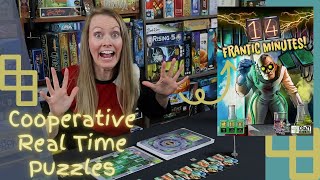
Click to watch at 0:25 · YouTube ↗
Overall sentiment (raw)
positive
Pros
- Fast-paced cooperative gameplay with tight time pressure.
- High replayability due to a large pool of room configurations and cards.
- Colorblind-friendly symbols and accessible color-coding.
- Tactile components and the option to rotate or flip tiles for fit.
- Engenders lively group discussion and strategic collaboration.
Cons
- Some rooms can be extremely challenging and may frustrate players on first plays.
- Requires active participation from all players and clear communication to avoid confusion.
- Pacing can be stressful for some groups, potentially reducing enjoyment if not aligned.
- Initial rule learning may be steep, especially for solo players who adapt to multi-piece control.
Thematic elements
- Cooperative real-time escape puzzle solving under time pressure with modular room challenges.
- A laboratory/puzzle-room environment where players attempt to escape from a pursuing mad scientist by connecting circuits under a ticking clock.
- Procedural, time-driven puzzle solving with escalating room difficulties and room-specific constraints.
Comparison games
- Kites
- For Science
Mechanics (from transcript analysis)
- Bonuses and modifiers — Bonus pieces such as bypass or switchers can modify or disable obstacles, or alter node colors to aid progress, but must be used before the final room.
- Circuit/connection puzzle — Players must link color-coded nodes (green, white, red, yellow, etc.) to satisfy a room's status override condition and progress.
- Communication and role-based interaction — Players must discuss and coordinate moves; only a player can physically move their own pieces, creating a social negotiation dynamic.
- Cooperative Game — Multiple players act simultaneously within a fixed 14-minute window to achieve a common objective, creating pressure and high engagement.
- Dynamic escalation and timer-driven tension — A mad scientist figure advances every two minutes, driving urgency and influencing strategic pacing across rooms.
- End Game Bonuses — Bonus pieces such as bypass or switchers can modify or disable obstacles, or alter node colors to aid progress, but must be used before the final room.
- Progressive difficulty by room level — Rooms level up in complexity (levels 1 through 5), increasing the number of nodes to connect and the constraints.
- Real-time cooperative play — Multiple players act simultaneously within a fixed 14-minute window to achieve a common objective, creating pressure and high engagement.
- Room-by-room progression with objective validation — Completing a room flips the card to reveal the next setup and any bonus pieces, framing a sequential puzzle journey.
- tile/board manipulation — Tiles can be flipped, rotated, or moved, revealing new paths or blocking obstacles, requiring spatial planning.
- Tile/Map Shifting — Tiles can be flipped, rotated, or moved, revealing new paths or blocking obstacles, requiring spatial planning.
Video topics + discussion points
No key topics recorded for this video.
Quotes (from this video)
- it's aptly named you will play for 14 minutes and hopefully you will escape this mad scientist who is chasing you throughout this puzzle
- super replayable
References (from this video)
No references stored for this video.
Transcript Navigation
Showing 1–3 of 3