








AI Space Puzzle Deep Dive
What the Community Thinks About AI Space Puzzle
Praise From Deduction Fans
Reviewers describe AI Space Puzzle as a cooperative deduction game where one player takes the role of a damaged ship AI and the rest of the table plays astronauts trying to reach the right rooms. Several reviewers say the game surprised them with how much fun it was once the clue system clicked. Reviewers who already love puzzle-style deduction games tend to be the most enthusiastic.
Mixed Reactions Across the Table
Not every reviewer is convinced. Some describe the game as more of a cooperative party puzzle than a strategy experience, and say that players expecting deep planning may find it light. The overall consensus is positive, but the reviews make clear that the game is aimed at a specific kind of player.
Core Mechanics That Define AI Space Puzzle
Limited Token Communication
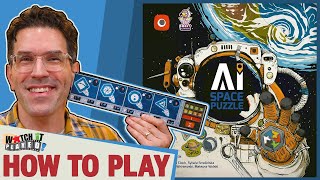
The AI player cannot speak during the scenario. Instead, the AI arranges clue tokens on the table within a fixed allowance for each clue phase, and the astronauts must interpret that layout. Reviewers note that the tokens carry the communication load, so the AI has to choose carefully which signals to spend. A check or X token can confirm a correct placement, but spending those tokens costs the AI flexibility, so the AI may instead redirect the astronauts toward a different problem.
Win or Lose Together
The game is fully cooperative. The players either all win by getting the astronauts into the correct rooms with the right keys before the scenario ends, or they all lose together. Reviewers point out that the AI player shares the same outcome as the astronauts, which keeps the whole table focused on solving the same puzzle. Because the outcome is shared, the discussion after a missed placement tends to center on what a signal was meant to say rather than on who caused the miss.
The AI Space Puzzle Experience
Collaborative
Reviewers describe the table as a shared puzzle the group works through together. The astronauts talk through hypotheses, test them against the tokens on the board, and then revise their thinking when a signal means something different from what they expected. The AI player watches the group work out the clues in silence, which gives the experience a tense, social rhythm. Reviewers note that the most memorable moments come from the group arguing over a layout before finally agreeing on what it means, and that those debates are a large part of why the game stays engaging from the first clue to the final placement.
Rewarding Mastery
Scenarios grow harder over time. Early tutorial and easy scenarios introduce the basic astronaut colors and symbols, and later scenarios add dice that must match both an astronaut and a number. Reviewers say the difficulty rewards groups that build a shared clue vocabulary over several plays, which is when the game starts to feel most satisfying.
What Makes AI Space Puzzle Stand Out
Tokens Replace Spoken Clues
Reviewers compare the game to Code Names and other deduction favorites, but they single out the way the clue giver works. Instead of saying a word, the AI places physical tokens on the table. One reviewer described the innovation as using little tokens to give clues where earlier games relied on verbal hints or markers placed on a board. That shift makes the clue giving feel less like a word game and more like building a visual code with the group, which is why reviewers keep returning to it as the defining feature.
A Scenario Book That Keeps Growing
The game ships with dozens of scenarios, each with its own limits on tokens, rounds, and actions. Reviewers expect more scenarios to be released over time, which gives the game long-term replay value. Crisis cards and optional rules add more variety for groups that want to raise the pressure.
Potential Drawbacks
Not a Strategy Game
Players who want heavy planning or long decision trees will find AI Space Puzzle light by comparison. Reviewers describe the play as a fun cooperative puzzle rather than a deep strategy game, and the short playtime means there is little room to develop complex plans. Reviewers suggest that players who enjoy the puzzle itself will get more from the game than players looking for an engine or a long-term plan to optimize.
Silent AI Role and Group Size
The AI player must stay quiet and cannot correct a misread, which can be frustrating to whoever takes that seat. Reviewers also suggest the game works best with a smaller group, since larger tables make it easier for someone to be left out of the discussion.
If You Enjoy AI Space Puzzle
Other Clue-Giving Games
Fans who enjoy the clue-giving format should look at Codenames, which shares the idea of giving hints to teammates. For a closer match to the limited communication, Landmarks is a cooperative game where one player relays only single words to help teammates escape an island.
Cooperative Survival Games
Players who like the shared survival stakes of Robinson Crusoe may appreciate the same sense of a team fighting to get out of a dangerous situation together. The puzzle focus here is much narrower, but the cooperative tension carries over well.
What Reviewers Are Saying
"all the people that love these puzzly deduction type games will love this game"
— Foster the Meeple
"the openness of the game play made it really interesting"
— Rolling Dice & Taking Names
"you build a language right you're like what does this mean"
— UndeadVikingVideos