
Game Info
Year
2023
Players
1-4
Age
14+
Playtime
80 min
Collection
Your Tier
Loading…
Mechanic profile
Not enough video data yet
Vibe profile
Not enough video data yet
Description
An archaeological tile-laying game where players rebuild ancient Egyptian murals and restore Hatshepsut's legacy
Featured Videos
Review

Cartouche: Discussion
Ask a Rules Question
All mentions
Browse transcript mentions, sentiments, pros/cons, mechanics, topics, quotes, and references.
Total mentions: 2
This page: 2
Sentiment:
pos 2 ·
mix 0 ·
neu 0 ·
neg 0
Showing 1–2 of 2
Video qhs5ifk2AUg
Board Games UnLocked Review at 0:16 sentiment: positive
video_pk 113706 · mention_pk 325512
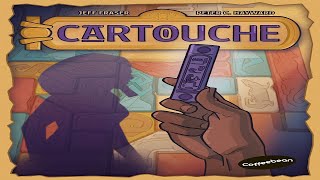
Click to watch at 0:16 · YouTube ↗
Overall sentiment (raw)
positive
Pros
- Surprisingly good
- Different type of polyomino game
- Best of both worlds (placement and connections)
- Enough variety with different achievements
- Not long
- Reduces analysis paralysis
- Solid gameplay
- Fun facts in the rulebook
- Enjoyed it quite a bit
- Would play again
Cons
- Not specified which board side is easy/beginner
- Ambiguity on one of the story cards regarding token types needed
- River objectives seem more restrictive
Thematic elements
- Egyptian
Comparison games
- Cats
- Feast for Odin
- Isle of Cats
- Cascadia
- Steam Up
- Petrichor
- Darwin's Journey
- Massive Darkness
Mechanics (from transcript analysis)
- Area Encasement — Encasement of certain symbols or hieroglyphs on the board grants points.
- Drafting — Players draft tiles and objective cards, typically picking two items.
- Objective Cards — Players have objective cards (called 'stories') that provide points when completed.
- Objective/Achievement completion — Completing randomized achievements and objective cards for points or perks.
- Polyomino — The game utilizes polyomino tiles for placement.
- scoring — Points are scored through completing objectives, encasing symbols, and the river.
- Set Collection — Collecting different types of story cards for points.
- wilds — Cartouche tiles (purple) act as wilds.
Video topics + discussion points
No key topics recorded for this video.
Quotes (from this video)
- and surprisingly I think it's actually really good
- it's kind of The Best of Both Worlds
- the complaint was you're not it's not specified which one is the easy beginner side and which one is the advantage
- I'm gonna go eight but I think with the repeated plays it might go higher
References (from this video)
No references stored for this video.
Video hsOE7dRpfiQ
kovray Kickstarter Preview at 0:34 sentiment: positive
video_pk 90298 · mention_pk 241106
Click to watch at 0:34 · YouTube ↗
Overall sentiment (raw)
positive
Pros
- Neat take on the polyomino drafting mechanic
- Strong historical theme around Hatshepsut
- High replayability due to variable stories and achievements
- Clear end condition with 10 rounds
- Good table presence and accessible via Tabletop Simulator
Cons
- Prototype version may change; components and rules could shift as development progresses
- Potential complexity for new players and learning curve
Thematic elements
- Uncovering the history of Hatshepsut; restoring murals and stories of the pharaoh's image
- Ancient Egypt
- Educational, history-driven with archaeological discovery
Comparison games
none
Mechanics (from transcript analysis)
- Drafting — Players draft both tiles and story cards from a shared layout, balancing resource access and scoring potential.
- End-game via ten rounds — Cartouche is played over 10 rounds with a fixed end condition.
- Point Salad — Points come from completing token, chamber, and river stories and achieving board bonuses.
- Reserve management — Drafted tiles go to reserve or board as appropriate, with a limit of four items per board.
- Resource Management — Drafted tiles go to reserve or board as appropriate, with a limit of four items per board.
- Story and achievement scoring — Points come from completing token, chamber, and river stories and achieving board bonuses.
- Tile Placement — Placed tiles must touch reeds or be adjacent to existing tiles; matching animal colors yields tokens.
- Wild tokens and cartouche tiles — Scarabs are wild tokens; cartouche tiles are wild but restricted to story completion.
Video topics + discussion points
No key topics recorded for this video.
Quotes (from this video)
- Cartouche is played over 10 rounds, the goal of this game is to score points through completing stories and achievements
- well i think it's a neat take on the polyamino theme of the game
- the theme again is what really drew me into this game
- the presentation of the game is quite great; it has a really good online table presence
References (from this video)
No references stored for this video.
Transcript Navigation
Showing 1–2 of 2