




Control Deep Dive
What the Community Thinks About Control
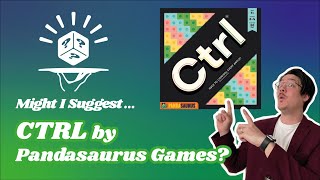
Control draws strong enthusiasm from board game reviewers who appreciate its elegant blend of spatial challenge and tactile gameplay. The game consistently receives praise for delivering a focused, strategic experience that doesn't overstay its welcome. Reviewers emphasize the game's accessibility paired with surprising depth, making it a refreshing entry point for players seeking quick strategic engagement. The design has earned comparison to respected games in the genre, though reviewers often note that Control feels like its own distinct entity rather than a clone or derivative work.
Core Mechanics That Define Control
Area Control Through Spatial Placement
Control's central mechanism revolves around competing for territorial dominance on a constantly evolving three-dimensional landscape. Players take turns placing blocks along the surfaces of a shared cube, snaking their pieces outward from previously placed blocks to claim visible space. This creates a bidding-like tension as players must plan ahead, anticipating how subsequent moves will block or open pathways for opponents. The physical act of placing each block carries weight, as the total number available ensures every placement carries meaningful consequences for final scoring.
Bluffing and Deception in the Two-Player Variant
At the two-player count, Control introduces an optional variant that elevates the game through hidden information. Players secretly assign themselves a color while designating another as a decoy, creating a layer of psychological gameplay. Opponents must deduce which color score represents the genuine threat while managing their own flag placement strategically. This deduction element transforms the game from pure spatial puzzle into one where reading opponents becomes as important as technical placement skill.
The Control Experience
A Puzzle That Demands Spatial Reasoning
The experience of playing Control is fundamentally cerebral. Reviewers consistently describe the game as a spatial reasoning challenge that stretches cognitive capacity, rewarding players who think in three dimensions and visualize complex board states multiple moves ahead. The compact playtime paradoxically intensifies this mental engagement, creating a game where every decision must be tactical and purposeful. Players report that the game never overstays its welcome, ending before mental fatigue sets in despite the cognitive load.
Tactile Satisfaction in Miniature Form
Control delivers surprising physical satisfaction through its colorful connectable blocks. The act of placing these pieces, watching them interlock, and creating a growing structure provides tangible feedback absent in many abstract games. This tactile dimension grounds what could otherwise be a cold puzzle experience in something more engaging and satisfying to manipulate. However, reviewers note that this same physical appeal creates occasional challenges when blocks disconnect during play.
What Makes Control Stand Out
Perfectly Calibrated Component Count and Game Length
Control's 88 blocks represent a masterclass in design restraint. Rather than overwhelming players with endless placement options, the finite component count ensures each block placement feels consequential and personally significant. The game wraps up in minutes rather than hours, creating a tight experience where players feel the weight of every turn without drowning in a prolonged session. This balance allows Control to maximize engagement while respecting player time and cognitive bandwidth.
Simple Rules Disguising Strategic Depth
The game's ruleset is straightforward enough to teach in minutes, yet the spatial and strategic implications run surprisingly deep. On a turn, a player places three blocks following simple adjacency rules, then positions a flag. This minimalist framework belies the intricate decision-making happening beneath the surface. Players must weave strategies around the three-dimensional landscape, block availability, and opponent positioning all at once. The elegance lies in how much strategic possibility emerges from this compact ruleset.
Potential Drawbacks
Fragile Components That Disrupt Flow
The colorful blocks that give Control much of its appeal also present practical challenges. Reviewers consistently mention that blocks can prove tricky to connect securely and may disconnect during play. This fiddliness occasionally disrupts game flow, requiring players to pause and carefully re-secure pieces rather than maintaining momentum. For players who prioritize frictionless gameplay, this physical vulnerability represents a notable drawback despite the tactile appeal these same components provide.
Fine Motor Skill Requirements
Control demands more dexterity than many abstract strategy games, as manipulating and connecting blocks requires steady hands and fine motor control. This skill requirement, while reasonable, adds an accessibility barrier for some players and introduces an element beyond pure strategic thinking. Players with motor control challenges may find the physical act of playing more frustrating than the strategic puzzle itself, potentially limiting the game's appeal to a narrower audience than its ruleset alone might suggest.
If You Enjoy Control
Players drawn to Control's spatial reasoning challenges will find similar satisfaction in Santorini, which shares Control's focus on constructing three-dimensional board states while introducing asymmetric god powers. For those captivated by the area control and blocking mechanics, Blokus offers comparable territorial competition on a more traditional two-dimensional plane. Those seeking comparable strategic tension in the quick-playing category should explore Air Land and Sea, which condenses tactical depth into an even more compact footprint. Each of these games scratches different aspects of what makes Control compelling, whether you crave the 3D puzzle element, the spatial control mechanics, or the tight playtime wrapped around genuine strategic decisions.
What Reviewers Are Saying
"Control is an awesome 3d puzzle that really stretched my brain capacity and spatial reasoning abilities. The number of blocks you place throughout the game is the perfect amount to make you feel like each one really counts. It also keeps the game short which is great because if it had gone any longer I think my head would have exploded."
— Might I Suggest A Game
"It reminded me of a more colorful version of Santorini or a more dimensional version of Blokus, but really the pieces and the gameplay made Control feel like it was in a league of its own."
— Might I Suggest A Game
"I want to try this game from a toy factory perspective. It seems really neat. I mean, it's definitely not my wheelhouse of games in general, but it just looks really interesting."
— Getting Games