








Dark Souls: The Board Game Deep Dive
What the Community Thinks About Dark Souls: The Board Game
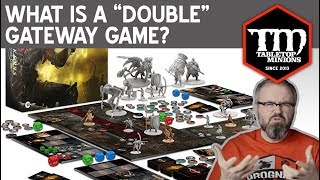
Reviewers tend to agree that Dark Souls: The Board Game captures the difficulty and combat tone of the video game, and they disagree more about whether its structure delivers that feeling across a full session. The game was a Kickstarter success from Steamforged Games, and reviewers approach it as an adaptation of a well-known franchise rather than a standalone design. Getting Games came in expecting not to like it and ended up enjoying it, but called the experience take it or leave it. Tabletop Minions praised the box as a gateway product, arguing that the big miniatures and the small board make it approachable for people who enjoy the video game and for players new to miniatures. All You Can Board summarized the reception as mixed, with some players loving the design and others unconvinced by it.
Core Mechanics That Define Dark Souls: The Board Game
Boss Battler
The most distinctive system in Dark Souls: The Board Game is the way its bosses behave. Each boss has its own deck of action cards describing movements and attacks, such as charging forward, turning to swipe with a tail, or grabbing a hero. The deck is shuffled once and then cycled in order without reshuffling until the boss enrages. Getting Games described the effect as a powerful boss whose early rounds feel unpredictable, followed by rounds where players recognize the sequence, position their heroes around the boss's weak point, and begin to plan a counterattack. The reviewer noted that designer Ignasi Trich answered rules questions quickly, which helped the reviewer work out the intended play. Publisher Steamforged Games builds its boss encounters around this predictable-but-punishing rhythm, which mirrors how the video game rewards memorized attack patterns.
Combat: Dice
Ordinary encounters with the game's minions rely on dice rolls to decide how much damage a hero deals. Getting Games said the combat feels decent and fits the dungeon crawler genre, with the dice providing the variance that keeps standard fights from becoming purely mechanical. Dice are the tool that turns careful positioning into a result that can still surprise the group. That balance matters because the minion fights are the game's slower phase, and the dice keep those encounters from feeling identical. The approach also reflects the design philosophy Steamforged describes: the goal is to recreate the feeling of the video game with board game mechanics, not to simulate every system one for one.
The Dark Souls: The Board Game Experience
Tension of Learning a Boss
The boss fights create the strongest sense of tension. Early in a boss encounter, heroes are reacting to attacks they cannot predict, and surviving the first round can feel like an achievement. As the cycle repeats, the group starts to anticipate each move and the fight becomes a choreographed dance around the boss's patterns. Getting Games described that shift as feeling powerful and skilled, and noted that the group barely won its boss fight. All You Can Board connected the feeling to the video game's own loop of repeated failure and mastery, describing the satisfaction of beating a hard boss after many attempts as one of the best feelings a game can produce.
Miniatures Theater and Atmosphere
Presentation adds a second layer of atmosphere. Tabletop Minions pointed to the large, detailed miniatures and described the design as close to a micro skirmish game played on a board. The reviewer also enjoyed the lid of the box, which reads "You died," a joke that will be familiar to anyone who has played the video game. For players who know the franchise, those touches make the table feel like the world they recognize, even when the mechanics take a different shape.
What Makes Dark Souls: The Board Game Stand Out
Boss Encounters With Real Pattern Recognition
Getting Games singled out the boss battles as the part of the game that brings something new to the tabletop dungeon crawl. Monstrous minis are common in the hobby, the reviewer argued, but the action card decks give bosses behavior that players can study and exploit over a session. Reviewers who value learning an opponent's rhythm tend to find these fights the highlight of the game.
A Design Built Around the Feeling, Not the Simulation
Steamforged's design process, as described by co-founder Matt Hart on Quackalope, starts by identifying the emotional response players have to the source material. Hart explained that the team relies on fans inside the studio to keep the voice authentic and that the board game is a board game first. Reviewers who appreciate this approach tend to credit Steamforged for choosing mechanics that serve the table rather than copying the video game's systems one for one.
Potential Drawbacks
Minion Grind Before the Boss
The most consistent criticism concerns pacing. Getting Games said the minion phase took an hour and a half to two hours, while the boss fight took around thirty minutes, and described the game as feeling like two different games. The reviewer wished the designers had cut the grind of killing regular enemies to earn experience and gear, and suggested that the game could have shipped with more bosses if development had focused on them. The same reviewer observed that a friend who loves the grind also loves the video game, which suggests the design may be tied closely to the video game's pacing, a tradeoff that not every player will accept.
Exploration Does Not Translate Fully
All You Can Board argued that the board game replicates the battles and the difficulty of the video game but not the exploration. The reviewer doubted that the design captures the open, interconnected world that makes the franchise memorable, and suggested that a campaign structure in the style of Tainted Grail would be needed to deliver that sense of discovery. For players who came to the game expecting a sprawling exploration experience, that gap is the main reservation.
If You Enjoy Dark Souls: The Board Game
Players who enjoy the boss deck's pattern learning will find similar satisfaction in Kingdom Death Monster, which All You Can Board named as a comparable approach to adapting a video game's difficulty to the table. Players who want the exploration that Dark Souls: The Board Game leaves out should look to Tainted Grail, which reviewers cite as the model for a campaign that carries a sense of discovery. Players who want the approachable, miniatures-driven co-op feel that Tabletop Minions highlighted will find a related experience in Zombicide, where big figures and small boards make combat the center of the table.
What Reviewers Are Saying
"The game really feels like two different games. The first game is fighting the regular boring minions, and the second game is fighting the boss, which is super interesting."
— Getting Games
"The board game that we're making is not a simulation of the video game. It's not, it's not a, it's not a one-to-one, it's not a one-to-one. And it's such a delicious track to fall into where you kind of go, oh, but the video game does this, this and this. You have to remember this is a board game first and foremost."
— Matt Hart, Quackalope
"It doesn't replicate the exploration. It replicates the battles and and the difficulty, which is good, but I don't know if they ever replicated the... I, I think you have to go the full Tainted Grail style campaign route."
— All You Can Board