/pic4718279.jpg)
Die Macher is a game about seven sequential political races in different regions of Germany. Players are in charge of national political parties, and must manage limited resources to help their party to victory. The winning party will have the most victory points after all the regional elections. There are four different ways of scoring victory points. First, each regional election can supply one to eighty victory points, depending on the size of the region and how well your party does in it. Second, if a party wins a regional election and has some media influence in the region, then the party will receive some media-control victory points. Third, each party has a national party membership which will grow as the game progresses and this will supply a fair number of victory points. Lastly, parties score some victory points if their party platform matches the national opinions at the end of the game.
The 1986 edition featured four parties from the old West Germany and supported 3-4 players. The 1997 edition supports up to five players in the re-united Germany and updated several features of the rules as well. The 2006 edition also supports up to five players and adds a shorter five-round variant and additional rules updates by the original designer.

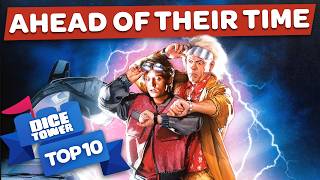
- First heavy Euro game
- Pioneered long, strategic gameplay
- Long playtime can be a barrier
- Not as widely recognized or popular as its modern counterparts despite its influence
- Campaign Management
- Politics/Business
- Lacerda games
- Fury of Dracula
- Labyrinth
- Tigris & Euphrates
Mechanics (from transcript analysis)
- Complex Strategy — A highly strategic game involving managing campaigns and political maneuvering.
- long playtime — Characterized by its extensive duration, typical of heavy Euro games.
Video topics + discussion points
Quotes (from this video)
- It's all about the narration, the story, the the you know, and that's I still get caught up in this map.
- It was called Remote Possibilities.
- Scotland Yard, it just it's one of those games that's way ahead of its time.
- Sid Sackson was Way ahead of his time.
- This game almost just This started a genre, but then didn't.
- Cosmic Encounter is the or one of the original asymmetric games.
- Also introduced the traitor mechanism, which was a really cool concept that again didn't really become a thing till years later.
References (from this video)
- deep political strategy
- historical flavor
- very long play time
- steep learning curve
- complex vocabulary
- political strategy and campaigning
- Germany political landscape; 20th century election campaigns
- historical, event-driven
Mechanics (from transcript analysis)
- Area Control — Control of political regions through actions
- Auction / Bidding — Players bid for political influence and campaign across regions
- auction/bidding / influence management — Players bid for political influence and campaign across regions
Video topics + discussion points
Quotes (from this video)
- this would be the game not to introduce a newbie to
- Arkham Horror second edition with multiple expansions can be a nightmare to introduce to new players
- Gloom Haven has got to be 18 pounds or so it's insane
- I believe that it is the job of the host of the event to play the part of host or guide
- Don't let that fear prevent you from trying new games and introducing people to a variety of games
- we were all newbies at one point
References (from this video)

- More decision points and player engagement
- Encourages creativity and personalization
- Extends deck longevity and player enjoyment
- Less predictability and potential for feels-bad when deck struggles
- May lengthen games or complicate play for new players
- Some changes may reduce overall power or consistency
- Strategic deckbuilding, customization, and interaction
- Multiplayer casual games centered on Commanders and the deck-building process
- N/A
Mechanics (from transcript analysis)
- Activated abilities — Using activated abilities to create meaningful choices on turns.
- Card Drafting — Strategies to increase options and decision points through drawing more cards.
- Card draw — Strategies to increase options and decision points through drawing more cards.
- Modal / multi-mode spells — Spells with multiple modes to increase flexibility.
- Redundancy management — Limiting overly similar cards to encourage variety.
- Tutor removal / restriction — Reducing or restricting tutoring to avoid repetition.
- Variance / chaos — Introducing randomness or divergent paths to keep play fresh.
Video topics + discussion points
Quotes (from this video)
- Power and consistency is sort of the enemy of intrigue.
- Paint with a wider brush.
- Decks are living documents like bonsai trees.
- Add variance/chaos to your game to keep it interesting.
- No two decks overlap except for basic lands.
- Chaos drafts are fun; open an old pack and see what happens.
- Paint with pastels vs watercolor contrasts.
References (from this video)
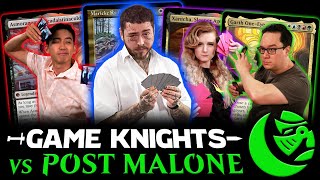
- High-power, dynamic interactions among four players
- Robust commander-based synergies and recursion loops provide deep strategic tools
- Celebrity guest adds entertainment value and broad appeal
- Nostalgia and classic commander-leaning archetypes with modern reprints
- Potential for overwhelming board states and lengthy turns
- Reliance on high-moise combos can slow the game for casual viewers
- Some content sections are sponsor-driven, which may affect pacing
- Power, control, resource orchestration, and political dynamics in a four-player commander environment
- Planeswalker-driven clashes across multiple planes; token generation and graveyard recursion feature prominently
- Array
- Rise of the Dark Realms
Mechanics (from transcript analysis)
Video topics + discussion points
Quotes (from this video)
- This is old school
- Let's do this old school
- What a cool commander
- Rise of the Dark Realms is back in play
- I win the game, I promise Josh it's not going to be a dab
- Oh boy this might be one of the best cards in post deck
- This is incredible—the board state is crazy
- I can't believe this is happening on stream
- What a line to re-growth back that rise of the dark realms
- Rise of the Dark Realms and the card draw engine
References (from this video)

- Rich political theme with depth
- Engaging auction/influence interplay
- Heavy/rules-dense
- Long playtime may deter casual players
- Political influence and campaigning
- Germany, contemporary political landscape
- Strategic, deep simulation of political processes
Mechanics (from transcript analysis)
- Auction / Bidding — Bidding to influence campaigns and outcomes.
- influence / area control — Distribute influence across regions to gain power.
- Resource Management — Manage limited resources to run campaigns.
Video topics + discussion points
Quotes (from this video)
- "we are going back in time to before Y2K"
- "starting with games from 2000 the year 2000 and before we call those the before times"
- "I am obsessed with that theme like making movies"
- "I just think it looks really really neat"